The Journal · Field Notes
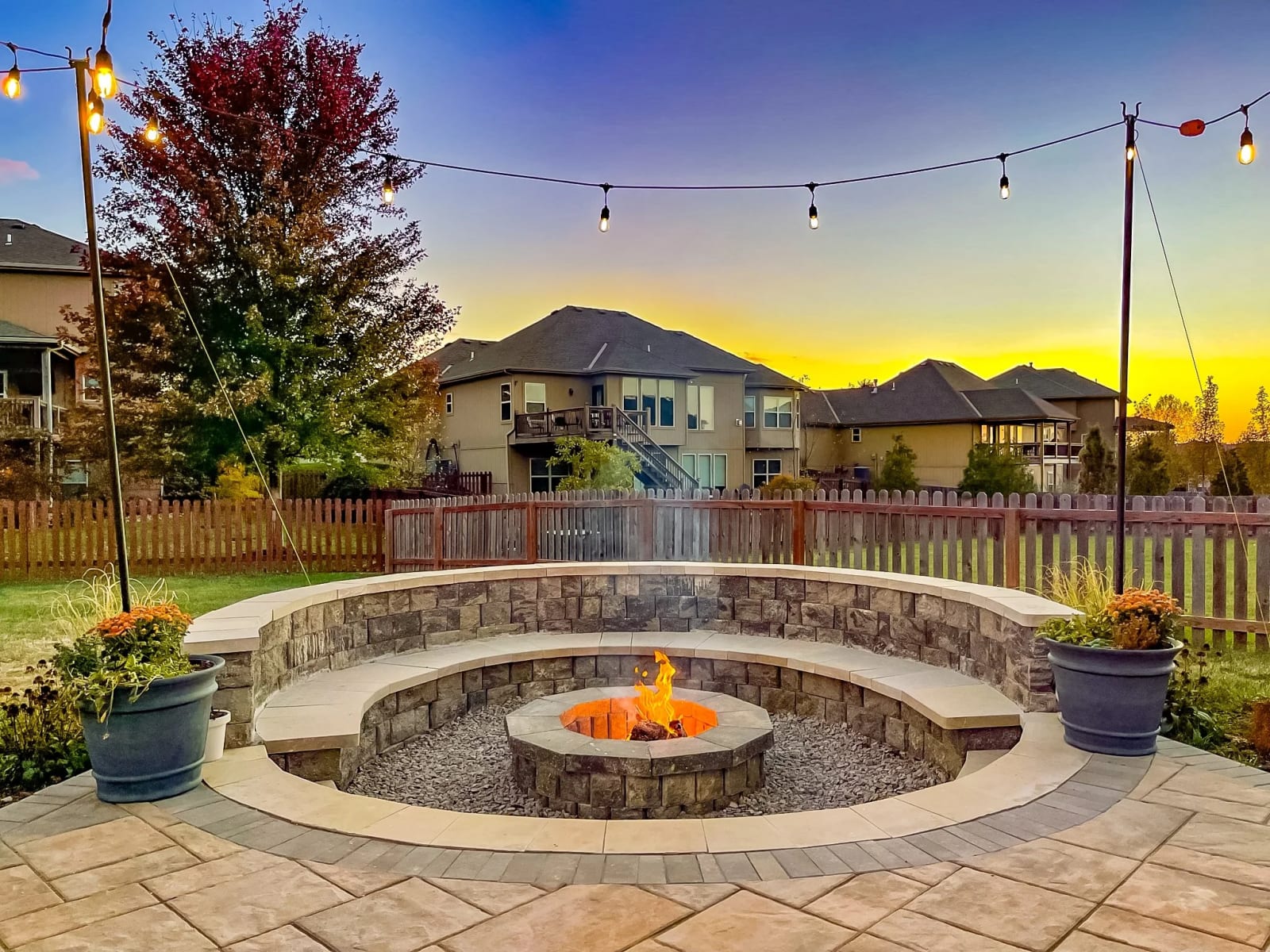
Summer in Kansas City is for shade and air conditioning. Spring is for getting the yard back. Fall is for actually using the patio. The temperature finally drops into the sweet spot, the bugs ease off, the football games start, and the backyard becomes the room you spend the most time in for about ten good weeks. The hardscape features that make that fall window work for you are not always the same ones a summer-focused patio needs. Here is the honest list of what we recommend for clients whose favorite season is the one with the cool nights, and what each one actually does.
Our fall is short and unpredictable. The first cool nights usually arrive in mid-September. The first frost typically lands between October 15 and November 5. The patio season effectively closes when daytime highs drop below 50 and nighttime lows drop below 35, which in most years is sometime in late November.
The good news is that the right hardscape stretches this window in both directions. A patio with a fire feature is usable from early September through the first hard freeze. With a heater or a covered structure, it stretches into early December. We have clients who use their patios for Thanksgiving dinner every year, including the cooking, with a properly built outdoor kitchen under a pavilion.
Designing for fall use is less about adding features and more about choosing the right ones for how cold the air actually gets here.
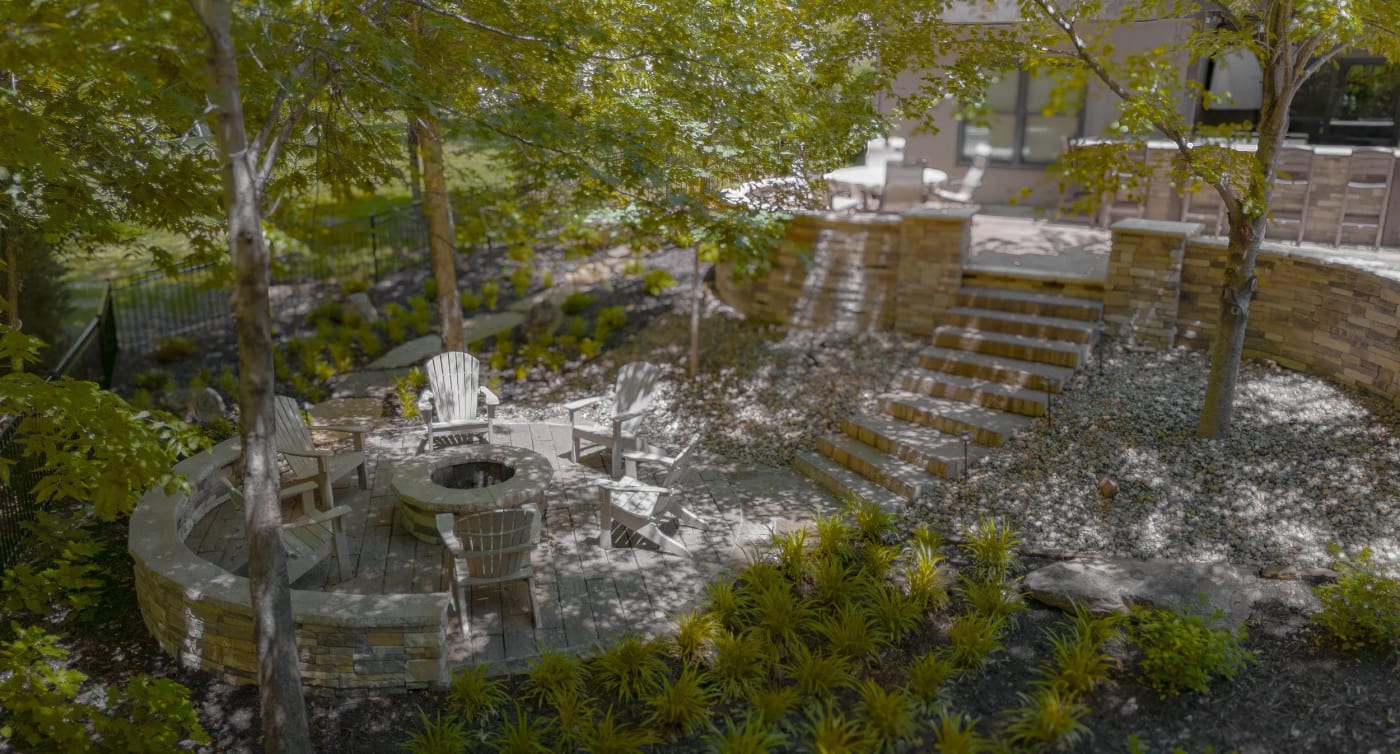
A fire pit earns its keep more in fall than in any other season. The cool nights need warmth, the kids need s'mores, and the conversation needs a focal point. The fire pit gives all three for a fraction of the cost of an outdoor fireplace.
Two real choices for fall use. Wood-burning gives you the crackle, the smell, and the campfire feel that pairs with sweater weather and a glass of wine. Gas-fueled gives you instant flame on a chilly Tuesday night when nobody wants to build a fire from scratch.
Most of our clients who entertain regularly install a built-in gas fire pit with a real seating wall around it (per the service page, starts around $2,450, most clients invest $4,000 to $8,000). The seating wall does more than the pit for fall use. It gives the cold air a place to land, it gives guests a place to gather, and it doubles the usable seating without crowding the patio with movable furniture.
For more on choosing between a pit and a fireplace, see our fire pit versus fireplace breakdown.
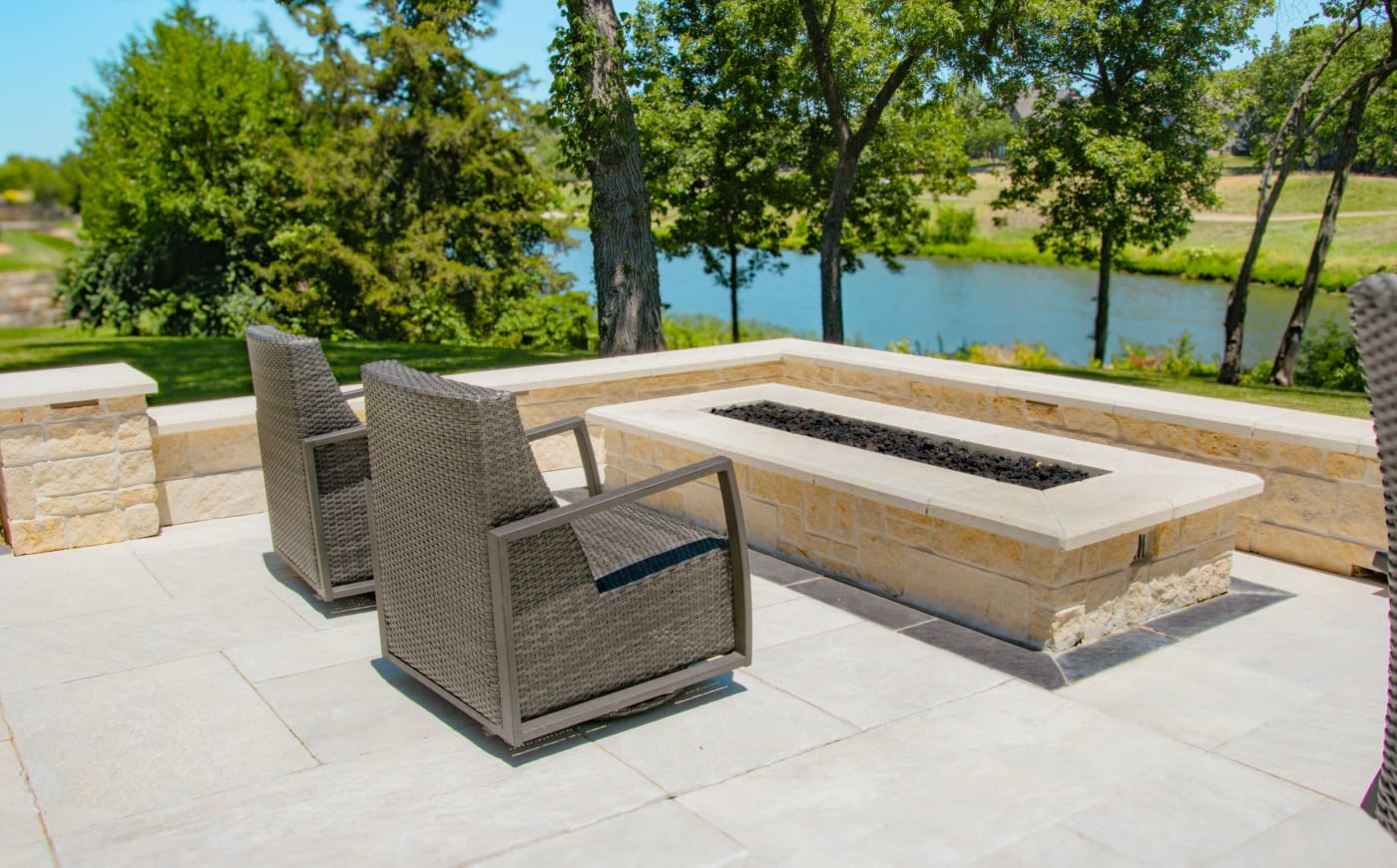
A fire pit is a gathering. A fireplace is a room. The difference shows up most in fall, when the heat output and the architectural presence both matter.
An outdoor fireplace throws heat in one direction. Seating arranges in front of it. The chimney pulls smoke up and away. On a 45-degree October evening you can sit close to the firebox and stay comfortably warm without bundling up. The mass of the stone holds heat well into the night.
Fireplaces also handle wind better than open fire pits. Kansas City fall has its share of breezy days that make a fire pit hard to keep going. The hearth and side walls of a fireplace shield the flame.
Per the service page, fireplaces start around $13,950 with most clients investing $18,000 to $30,000 for a basic block-and-stone-veneer build. Statement fireplaces with tall chimneys, premium stone, hearth surrounds, and integrated wood storage push to $30,000 to $60,000+.
The right choice depends on how much you entertain in fall and whether the patio is set up to organize around a single architectural focal point or a circle of seats around a central feature.
Cooking outside in summer is a survival strategy (keeping the heat out of the kitchen). Cooking outside in fall is a pleasure. The temperature is perfect, the air smells like leaves and smoke, and the grill does work the indoor stove cannot.
Thanksgiving dinner outside is one of the genuinely best ways to use a finished outdoor kitchen. We have clients who deep-fry the turkey on the side burner, smoke a brisket on the kamado, hold side dishes in the warming drawer, and seat 16 people at the bar and at adjacent dining furniture under a pavilion. The indoor kitchen stays cool. The dishes pile up slower. The holiday becomes the patio's biggest day of the year instead of the indoor kitchen's most stressful one.
The cost reality, per the service page: kitchens start around $11,900 and most clients invest $12,000 to $22,000 for a full build with grill, side burner, refrigerator, sink, and counter space. We covered the deeper planning question, including how to figure out which size fits how you actually cook, in our inspiration for your outdoor kitchen post.
The key feature for fall use is covered overhead protection. A pavilion or a pergola with a solid roof extends the kitchen's usable window dramatically. We will not recommend a full outdoor kitchen build without a plan for covered shelter unless the client is committed to grilling only in summer.
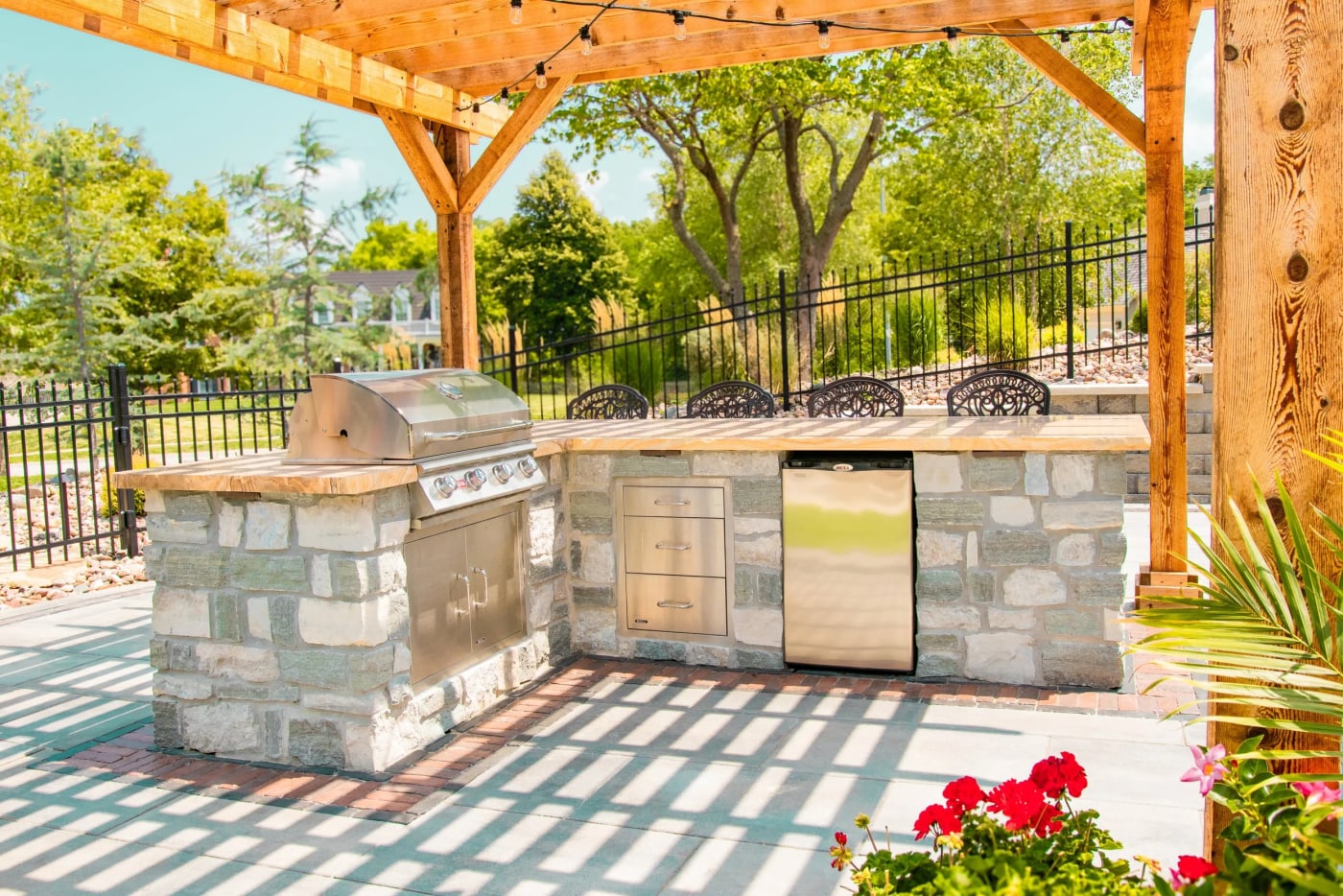
If a full outdoor kitchen is more than your patio needs, a grilling station gives you the football-season ritual without the full kitchen investment.
A grilling station is a single counter run, typically 8 to 12 feet long, with a built-in grill, gas line, side burner, counter space on both sides, and often a small refrigerator. Enough to feed a tailgate party of 10. Not the full kitchen, but enough for the way most homeowners actually cook.
The fall-specific additions that make this station shine: a built-in spot for a Big Green Egg or similar kamado smoker (low-and-slow barbecue is a cooler-weather sport), a small mini fridge stocked with game-day beer, a rotisserie attachment for the grill, and a power burner big enough for a fry pot or large stock pot.
Pair it with a comfortable seating area, an outdoor television (the Samsung Terrace and similar outdoor-rated TVs have become a real category), and you have built your home into the Sunday afternoon destination for the friends who currently watch the game at sports bars.
The sun sets at 8:30 in June and 5:30 in November. Almost all of fall entertaining happens after dark.
A patio that looks beautiful in summer daylight can feel cold and unwelcoming after sundown without proper lighting. We covered the full lighting strategy in adding lighting to your hardscape, but the fall-relevant short version is this: warm-color lighting (2700K), layered across multiple zones (steps, walls, columns, trees, pergola), on a smart controller so you can dim it to match the mood.
For fall specifically, string lights and lantern-style fixtures pair beautifully with the season's cooler palette. Pergola can lights on a dimmer give you flexibility from full bright for cooking to low and golden for after dinner.
A typical lighting package, per the service page, starts around $1,500 with most clients investing $3,000 to $7,000 for a full residential package. The best lighting investment a fall-focused homeowner can make is wiring it during the patio build, not after.
Fall in Kansas City is mostly clear, but the few rainy weekends are the ones that derail outdoor plans. A roof overhead changes that math.
Pergolas with open rafters give shade and architecture but not rain protection. Great for fall sun protection on warm afternoons. Less great when the forecast turns wet.
Pergolas with slat infill or louvered roofs offer more shelter. Adjustable louvers (commonly aluminum, brand examples include Renson and StruXure) shed water when closed and open to the sky when not. The louvered option costs significantly more than a basic pergola but is the best of both worlds.
Pavilions with solid roofs make the patio fully weather-resilient. The right choice for a homeowner who wants to entertain year-round, host Thanksgiving outdoors, or grill in the rain.
Per the pergolas service page, hand-built cedar pergolas start around $7,000 with most clients investing $7,000 to $15,000. Pavilions start around $18,000 with most clients investing $40,000 to $80,000.
For a deeper dive into pergola design specifically, see including a pergola in your backyard retreat.
A short list of small additions that punch above their weight in fall.
Outdoor heaters. Patio heaters mounted under a pergola roof or freestanding by the seating area add 6 to 10 weeks of comfortable use on the shoulder seasons. Gas, electric, or propane all work. Most cost $400 to $2,500 installed depending on type and integration.
Outdoor blankets in a storage bench. A finished seating wall with a storage bench in the cap, holding a stack of throws, makes the patio feel hospitable when guests show up underdressed for the temperature.
A weather-resistant rug. Defines the seating area, adds warmth underfoot, and softens the stone visually. Look for indoor-outdoor rugs rated for sun and water.
Pumpkin and seasonal planters. Cliché for a reason. A few large pumpkins, mums, and ornamental grasses along the patio edge transform the space for fall with no construction.
A coffee or warm-drink station. Cool morning coffee on the patio is one of the best fall experiences a backyard can offer. A small bar area near the back door, a thermal carafe, and you have a daily fall ritual.
If you are planning a hardscape project specifically to enjoy fall, here is how we would prioritize.
First, a fire feature. Pit if you want gathering and casualness. Fireplace if you want architecture and serious warmth.
Second, covered shelter. A pergola minimum, a pavilion if budget allows. The roof extends the season on both ends.
Third, proper lighting. The most affordable upgrade with the biggest fall impact. Wire it during the build.
Fourth, a place to cook. Grilling station for game-day weekends, full outdoor kitchen if you entertain seriously.
Fifth, the seating walls and storage. Built-in seating gives the patio capacity without crowding it with furniture. Storage built into the wall caps keeps blankets and outdoor gear close.
That is the spine of a fall-ready patio. Everything else is decoration.
If you are thinking about transforming your backyard into a fall destination, late summer is the right time to start the conversation. We can typically design and build the project in time for the next fall season if the ball gets rolling by August. Call us at 816-499-2547 or book a free consultation through the Get Started page.
Thirty minutes on site with our designer is all it takes to see what is possible. No pressure, no hard sell.
Schedule a Design Call