The Journal · Field Notes
A paver patio is the floor of your backyard, and it's one of the signature features of hardscaping. It's made from individual concrete pavers laid in a pattern, which gives you a lot more design options than a poured concrete slab. The fire pit, the seating walls and the pergola all go on it. Here's what a paver patio adds.

The biggest reason people pick pavers is the look. A paver patio has texture, color and pattern that a plain concrete slab doesn't, and it makes the whole backyard feel more finished.
There's a huge range to choose from, from smaller tumbled pavers with an old-world look to large, smooth slabs that fit a more modern home. Most come in a blend of a few colors, which gives the patio some natural variation and keeps it from looking flat.
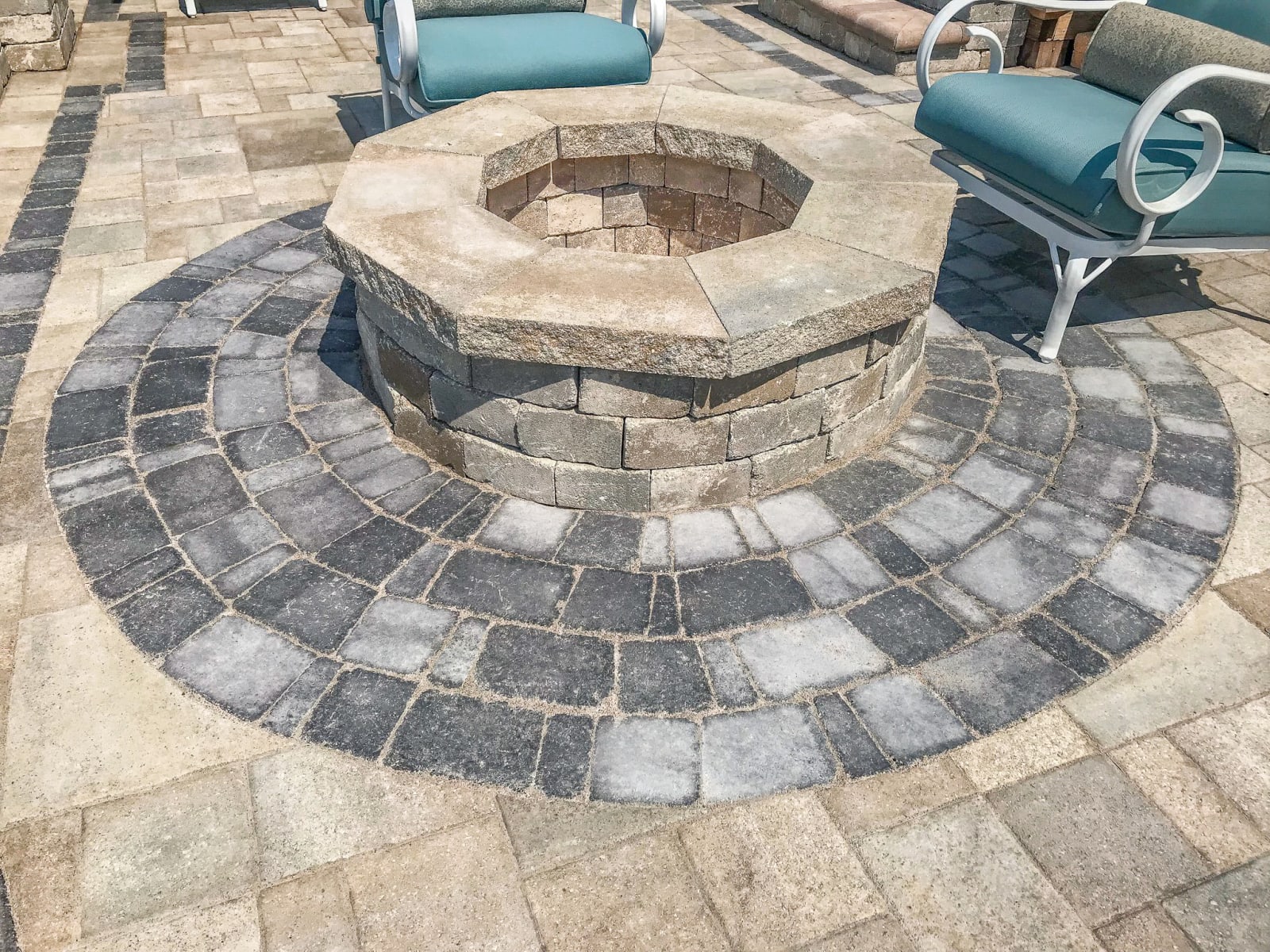
The pattern makes a big difference too. A herringbone field, a darker border, a circle around the fire pit or a band of a different color between the dining and lounge areas can all change the look. Most of the brands we install, like Belgard, Unilock and Techo-Bloc, also make matching wall block and caps, so the seating walls, steps and columns tie in with the patio. Our post on accenting with paver patterns has more ideas.
This patio we built in Kansas City lays large pavers in a woven pattern, with a darker herringbone strip along the house and a border around the edge.
A simple border in a darker paver frames the patio and makes the whole thing look finished.
Continue: a usable floor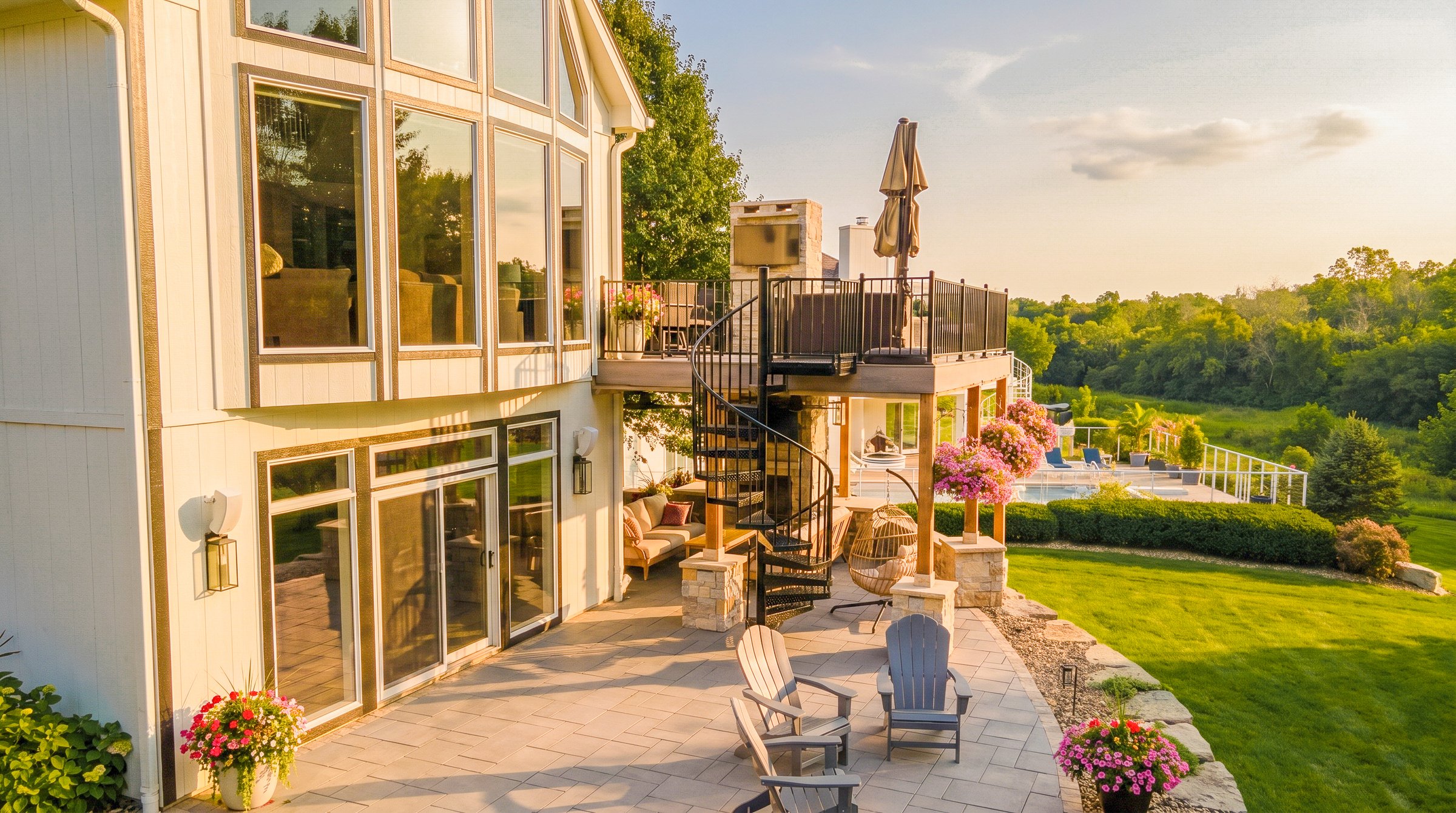
A lot of backyards are just lawn, which makes it hard to use the space for much besides mowing. There's no good spot for a table, a few chairs or the grill.
A paver patio gives you a flat, solid space for a dining table, a lounge area and the grill. It turns the area outside your back door into a space you can actually use, a lot like adding another room to the house.
It also gets you out of the mud. After a rain, you can still walk out and sit down without tracking the yard back inside.
This patio we built in Lenexa sits right outside the lower-level doors, with plenty of room for chairs under the deck and out in the sun.
Patios here go through a lot. The ground freezes and thaws over and over each winter, the summer sun beats down on them, and a lot of people salt the steps by the back door when it snows.
Concrete pavers are made for that. They're pressed and cured in a factory, and the industry standard calls for pavers that are roughly twice as strong as a typical poured concrete patio. They're also dense and soak up very little water, which helps them stand up to freeze-thaw cycles and deicing salt.
A plain poured concrete patio is just the slab, so every hairline crack, stain and bit of wear shows right on the surface. On our patios, the slab is underneath and the pavers are what you see and walk on. They're the part that takes the weather, and they're made to handle it a lot better than the top of a slab. Stamped concrete is still a slab with a pattern pressed into it, so it has the same problems. Our post on stamped concrete goes into more detail.
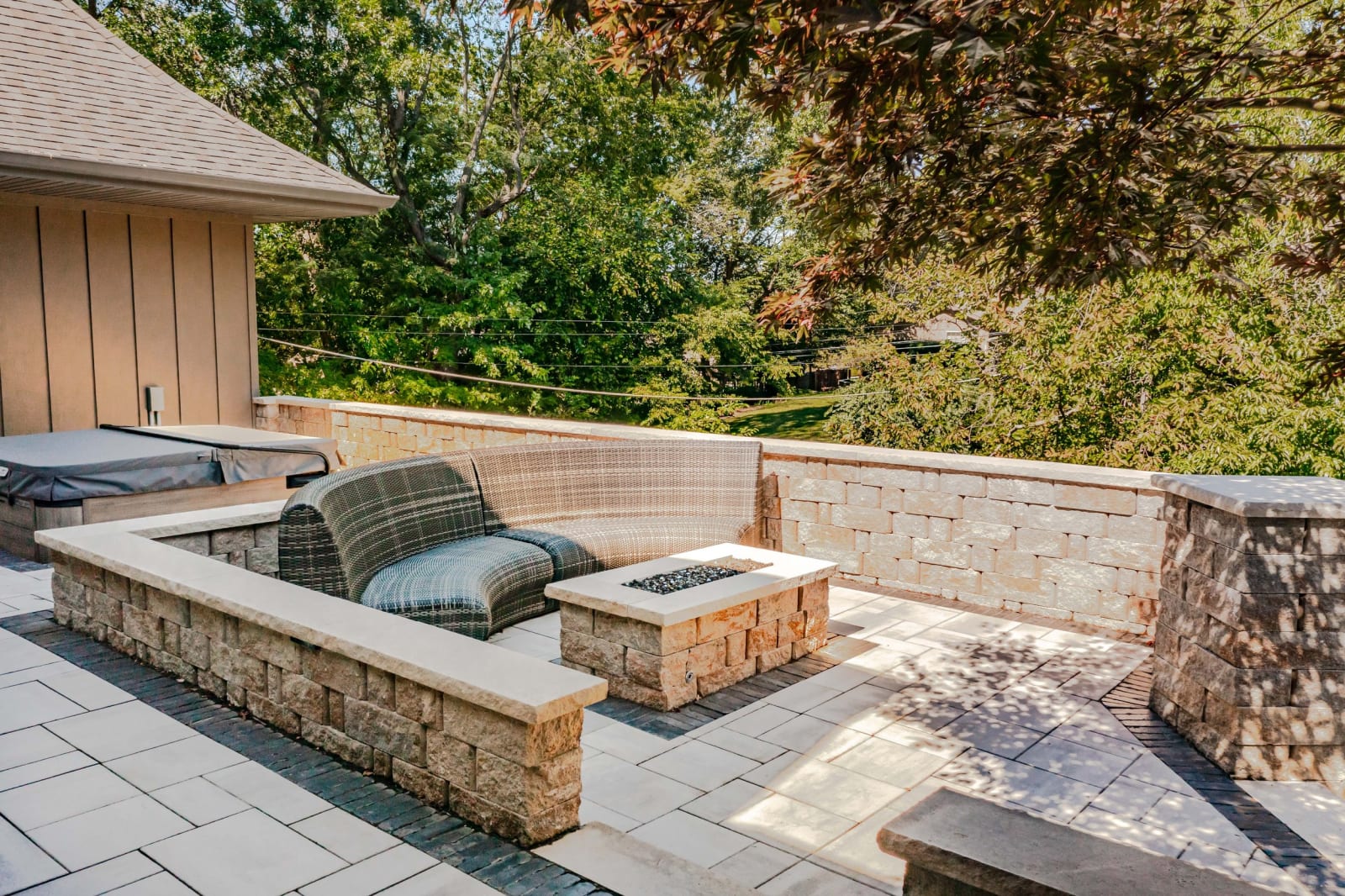
The textured surface also gives good grip when it's wet, which is one reason pavers are so popular around pools. We used large gray pavers with a darker border on this Kansas City patio, with seating walls built in along the edges.
Brands like Belgard and Unilock offer a lifetime transferable limited warranty on their pavers, so it carries over if you ever sell the house.
Continue: what's underneath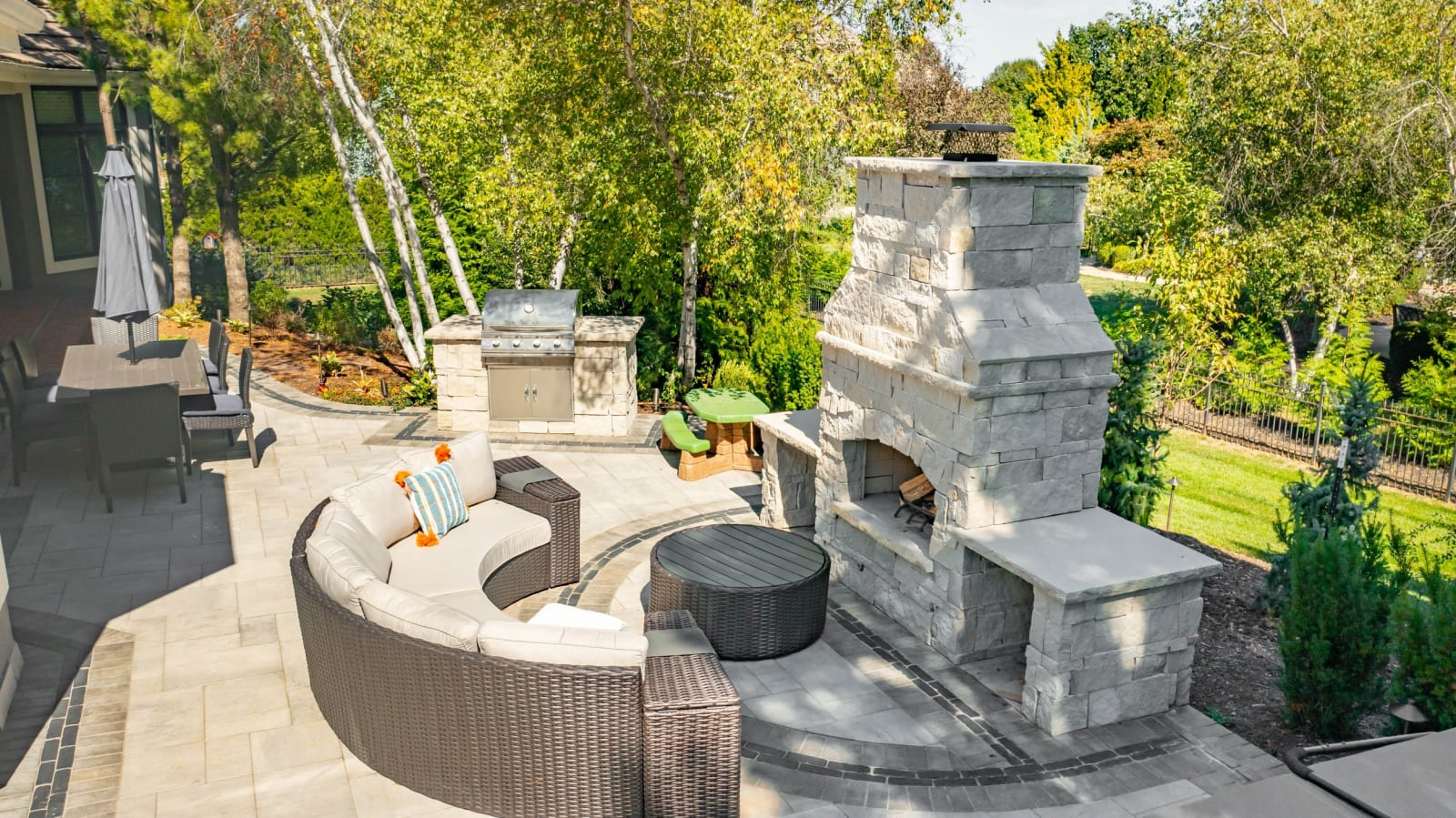
What's under a patio matters more than what's on top. A patio built on a thin layer of sand over dirt can sink, shift and get uneven within a few years.
We start with a compacted gravel base, then pour a concrete slab on top of it and set the pavers on the slab. The gravel helps with drainage, and the slab gives the pavers a solid surface that doesn't move with the seasons.
That's what lets a paver patio last for decades in Kansas City weather. It's also the part you'll never see once the patio is done, so it's worth asking about when you compare quotes. Our paver patio cost guide walks through what goes underneath.
This patio we built in Leawood ties into a stone fireplace and a grill station.
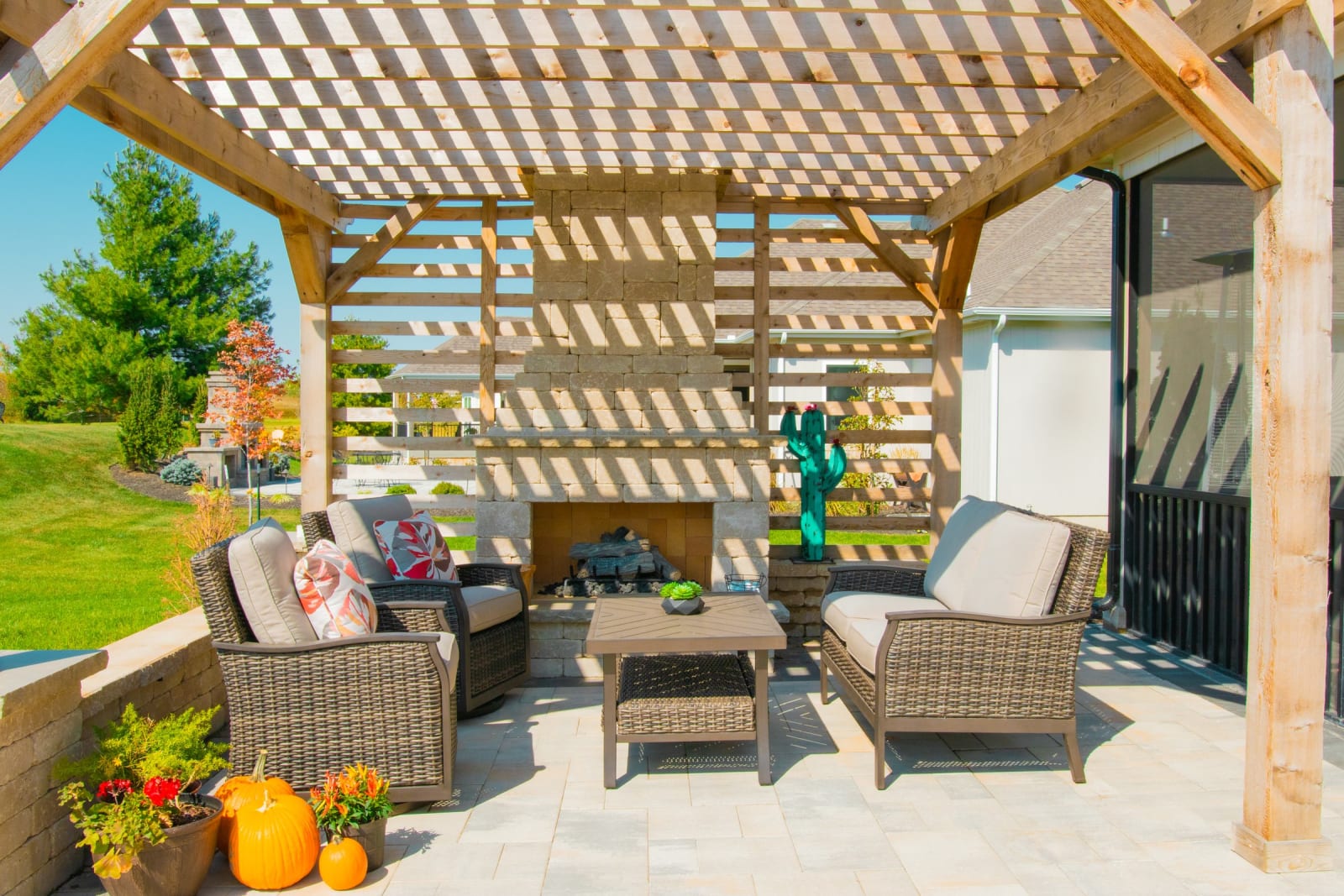
A paver patio doesn't need much. Sweep it off, rinse it with the hose now and then, and that's about it.
There are no boards to replace or railings to fix like on a wood deck. Our post on why a patio is better than a deck compares the two.
When the patio is finished, we sand and seal it. The polymeric sand fills the joints and hardens, which helps keep the pavers locked in place. And since the pavers sit on a concrete slab, weeds have nowhere to come up between them. The sealer helps protect the surface from stains and brings out the color of the pavers.
This patio we built in Basehor sits under a cedar pergola, with plenty of room for a sitting area.
A paver patio gives you a space you can use right away, and it's a solid base for whatever you add later, like a fire pit, a pergola or an outdoor kitchen. If you're weighing pavers against poured concrete, pavers cost more up front, but they hold up better and look better for a lot longer.
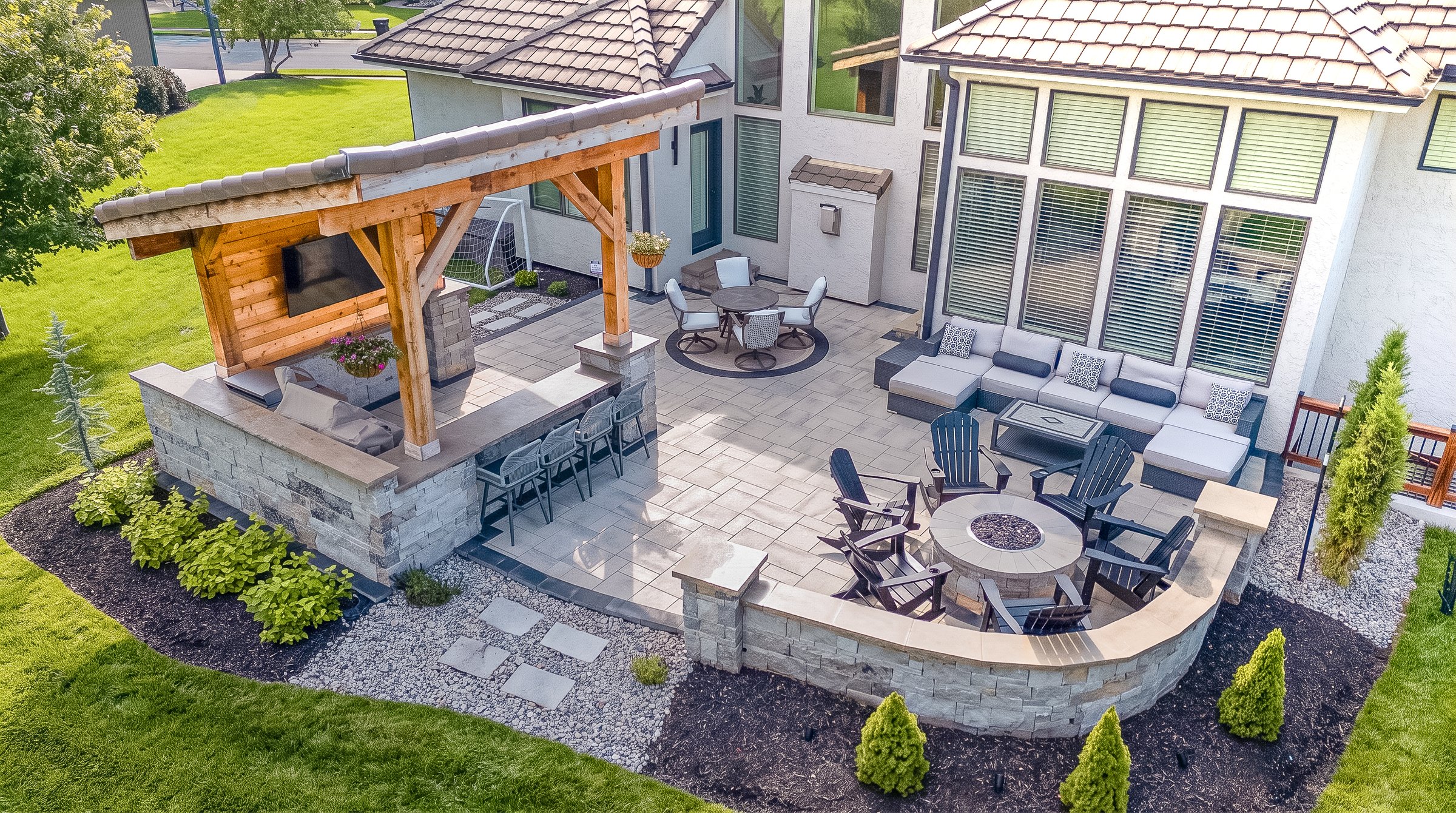
Built right, it holds up to our weather for decades, and it's something buyers notice when it's time to sell. This patio we built in Lenexa ties together a cedar pavilion, an outdoor kitchen and a fire pit.
We can sketch a patio for your backyard at a free design meeting, and our paver patio page has more of the patios we've built around Kansas City.
Thirty minutes on site with our designer is all it takes to see what is possible. No pressure, no hard sell.
Schedule a Design Call