The Journal · Field Notes
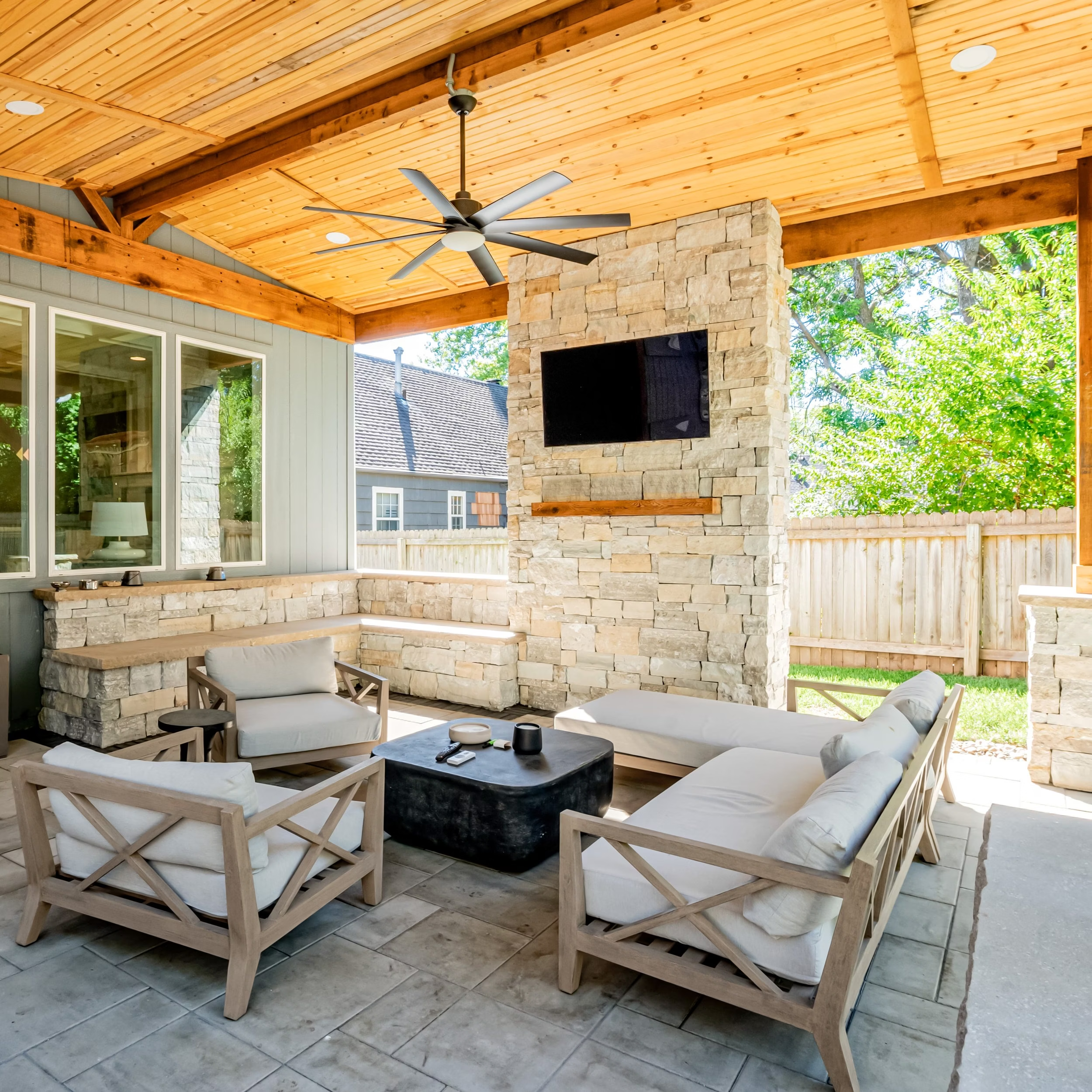
Kickoff is a few weeks out. If the plan for Sunday is everybody crowded around one television in the living room, there is a better version of that afternoon sitting just outside your back door.
A lot of the backyards we build get their heaviest use between September and December, not in July. Fall is when the weather in Kansas City finally cooperates, and a patio that was too hot to sit on in August turns into the best room in the house.
Here is what actually makes a yard work on a game day, and what we would build to get you there.
Every watch party has the same problem. There are four good seats and eleven people, and somebody spends three hours standing behind the couch.
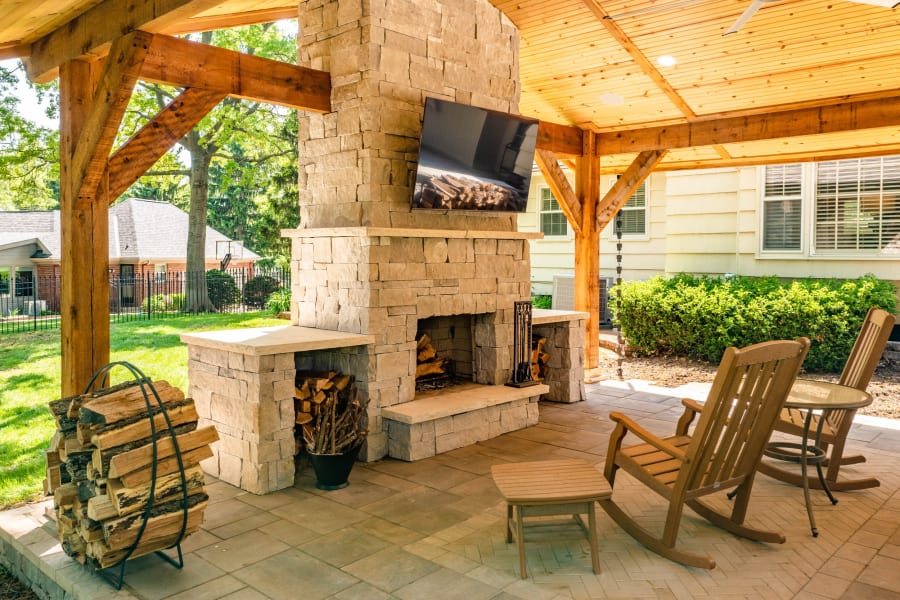
Outside, that gets easier to solve, though a lot depends on what the patio was sized for. A space built for two chairs and a side table is plenty for most evenings, and for a lot of homeowners that is exactly the right call. If bigger groups are something you host a few times a year, though, it is worth sizing around those days rather than the average Tuesday. It is a good thing to raise early in the design, since it is far simpler to plan for up front than to add on to later.
If more room to sit is what you are after, a seating wall around the perimeter adds it without adding furniture. Nothing to store, nothing to blow over in a November wind. It also gives the patio a finished edge, which is one of those things you never notice until you see a patio without one.
Continue: feeding people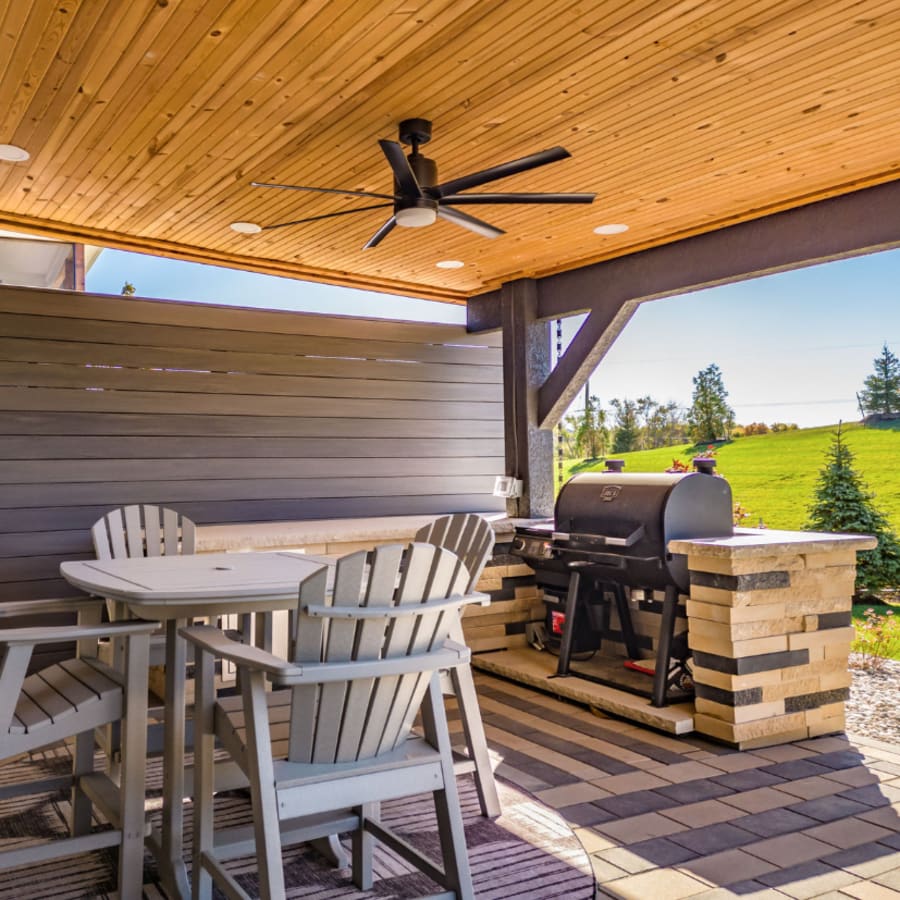
The whole idea is that everybody is outside together. A grill parked off the side of the house quietly works against that. Whoever is cooking ends up in one spot, everyone else is in another, and you spend the afternoon with two separate groups instead of one.
A built-in outdoor kitchen or a grill alcove keeps that from happening, because the cooking sits in the same space as the seating. The cook stays in the conversation and nobody has to pick a group to stand with. Counter space is the other piece we always encourage homeowners to think about, since with nowhere to set a platter down the food heads back to the kitchen island inside and the party tends to go with it. How much you need really depends on how you cook and how often you host.
Storage is the first thing people cut and the thing they miss most. Every trip inside for tongs or a towel is another person leaving the patio. We suggest drawers over doors where we can, and a trash pull-out is the most used piece in any outdoor kitchen and the one nobody asks for.
Continue: getting the game outside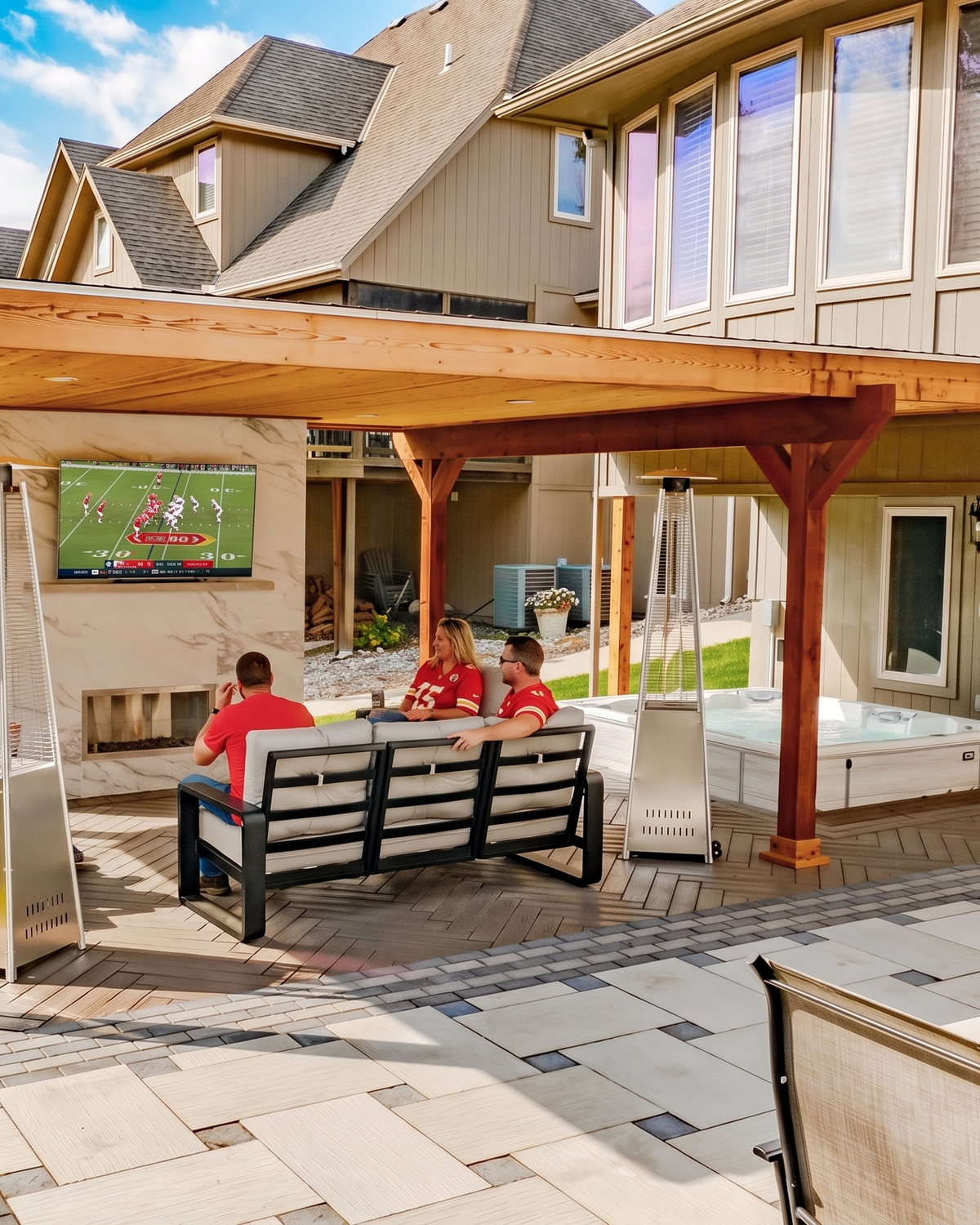
Outdoor televisions are their own category, built for temperature swings and for cutting glare. The part worth knowing is that they are rated by how much sun they will actually see, from full shade to partial sun to full sun. Matching that rating to the spot you have in mind is most of the decision.
Placement matters just as much. A screen facing west washes out around four in the afternoon in October, which is exactly when you want to be out there. When we lay out a patio we look at where the sun actually tracks across it, then put the screen under solid cover and high enough that the back row can see over the people in front.
Power and low-voltage runs cost almost nothing while the base is still open, and a small fortune once the pavers are set. Even when the television is a someday purchase, we sleeve for it during the build. The same goes for speakers and lighting.
Continue: heat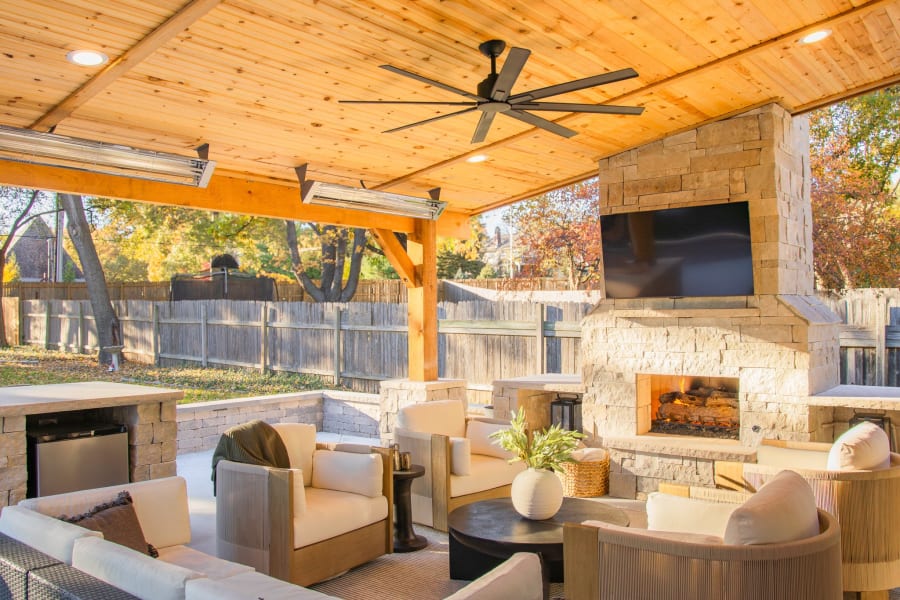
A patio with no heat source is a September patio. Add heat and it becomes a December patio, and in Kansas City that difference covers most of the football season.
A fireplace is the anchor most people picture, and it earns its place for more than the heat. It gives you a wall and a mantel to build the rest of the patio against, and it holds a space together the way an indoor one does. What it will not do is reach the far end of a large patio, which is where mounted heaters like the Bromic units on this Prairie Village build come in. They work on radiant heat, warming people and surfaces directly instead of trying to warm the air, which is why they still do their job with the sides open and a breeze moving through.
Stone and concrete absorb radiant energy and give it back, so a heater over a masonry patio holds its warmth better than the same heater over a deck. Sizing is the part worth getting right. A rough industry benchmark is around 46,000 BTU to cover about 100 square feet at a five foot mounting height, and the gas or electrical runs are far easier to place during the build than after.
Continue: light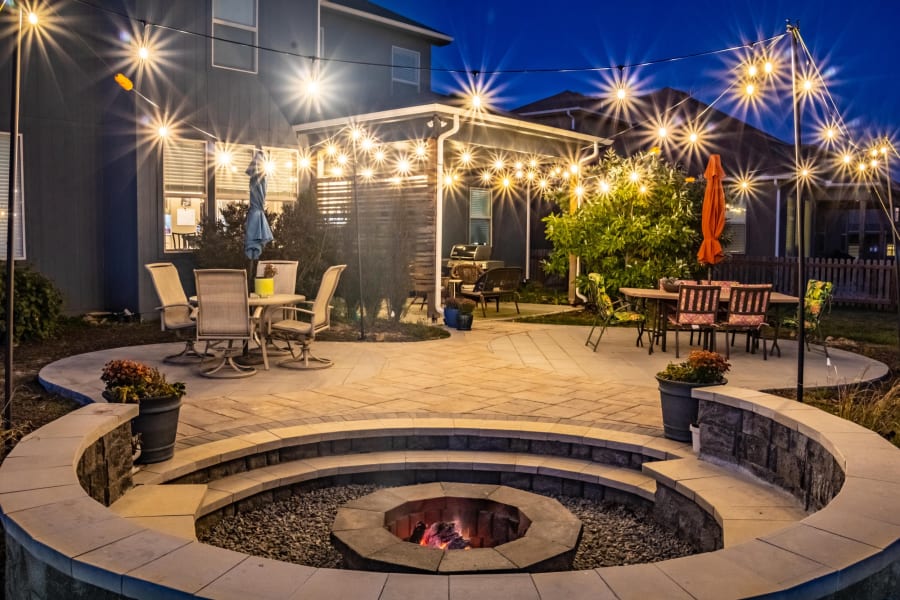
By late fall a three o’clock kickoff finishes in the dark. If the only light out there is a floodlight mounted off the back of the house, everybody goes inside at halftime and stays there.
We light the grade changes first, since steps you cannot see are a safety issue, then add enough on the walls to give the space some depth. String lights are the easiest and least expensive place to start, and they do more for how a patio feels at night than almost anything else you can add.
Low voltage lighting is safe to run under a patio and easy to expand later as long as the sleeves are already there. Put it on a photocell or a timer so nobody has to remember it. The lights that actually get used are the ones that come on by themselves.
A patio planned with heat and light in mind is one you use all year, not one you close down when the weather turns.
A game day asks more of a backyard than a quiet summer evening does. There are more people out there and it is colder, and that is usually when you find out what a space can really handle.
The yards that handle it well tend to have the same things going for them. Enough seating that nobody is left standing, a heat source, cover over the part that matters, and light that comes on by itself. Get those right and the patio stays in use well past the summer.
Forty-five minutes on site with our designer is all it takes to see what is possible. No pressure, no hard sell.
Schedule a Design Call