The Journal · Field Notes
Hardscapes are meant to last. When patios, walls, and outdoor living spaces are built correctly, they should hold their structure and appearance for decades. When they are not, problems often show up far sooner than expected.
Most hardscape failures are not caused by the patio surface itself. They are caused by what is happening underneath. Settling base layers, undersized drainage, soil that swells and shrinks across seasons. The pavers and stones on top are what people see, but the long term performance of any outdoor living space is decided long before the first piece of stone is set.
Understanding how failures actually happen, and what it takes to avoid them, is what separates an outdoor space that holds up for a generation from one that has to be torn out and rebuilt before its tenth birthday. The good news is that the patterns are predictable. The same handful of decisions, made early, are responsible for the vast majority of patios that age gracefully through Kansas City winters.
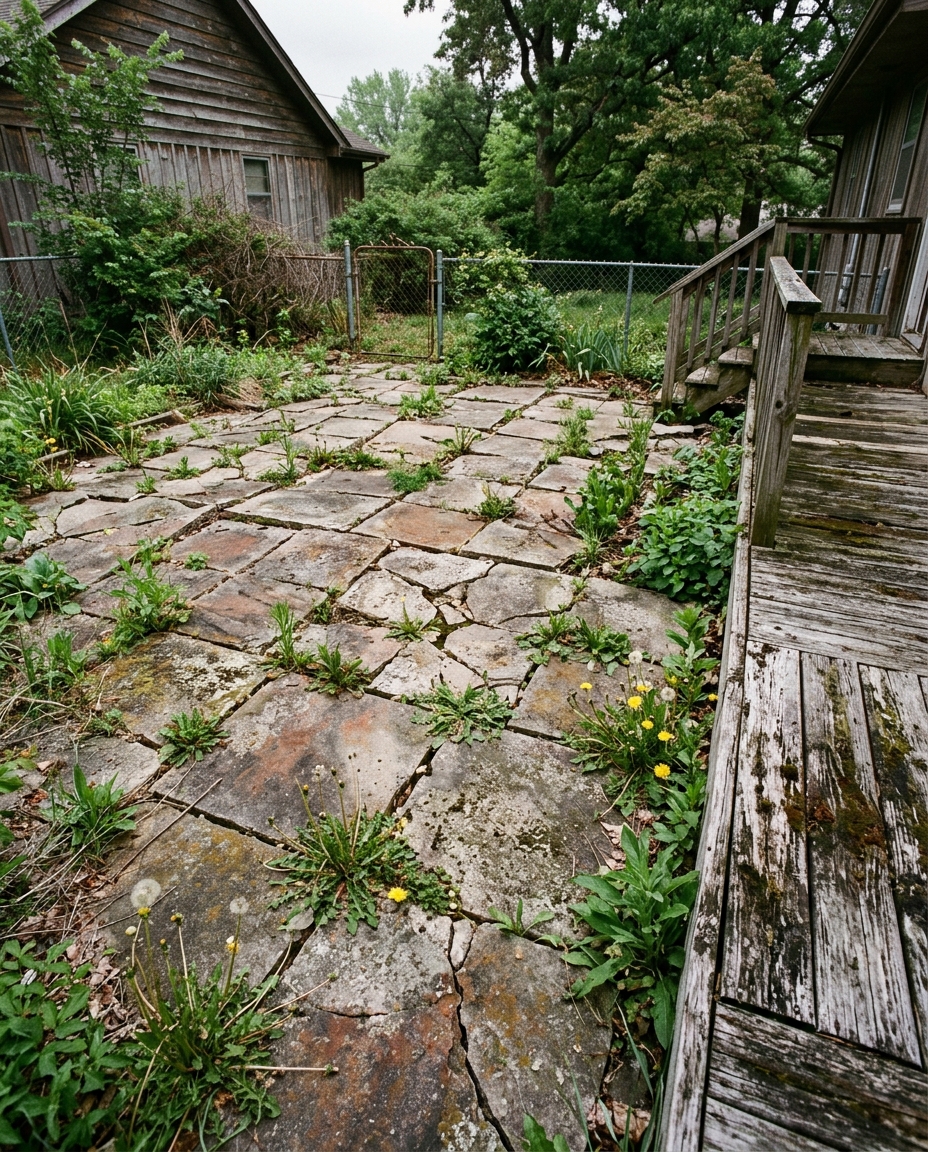
Hardscape failure does not always announce itself. Sometimes a patio simply settles a half inch in one corner over a winter, and the dining table starts to wobble. Other times the failure is dramatic: a retaining wall that has been leaning for two seasons finally bulges past the point of return, or a section of pavers around the pool deck shifts overnight after a hard freeze.
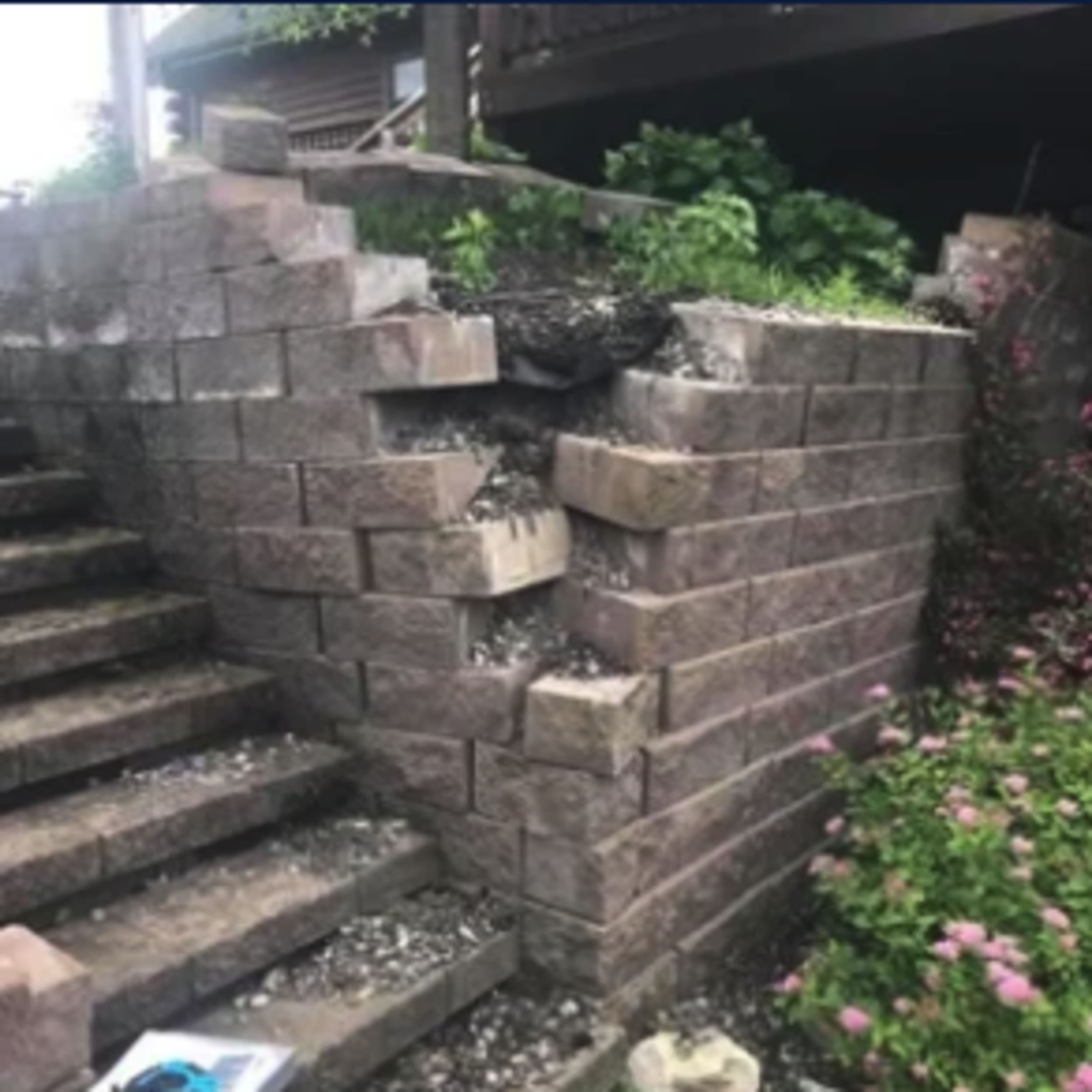
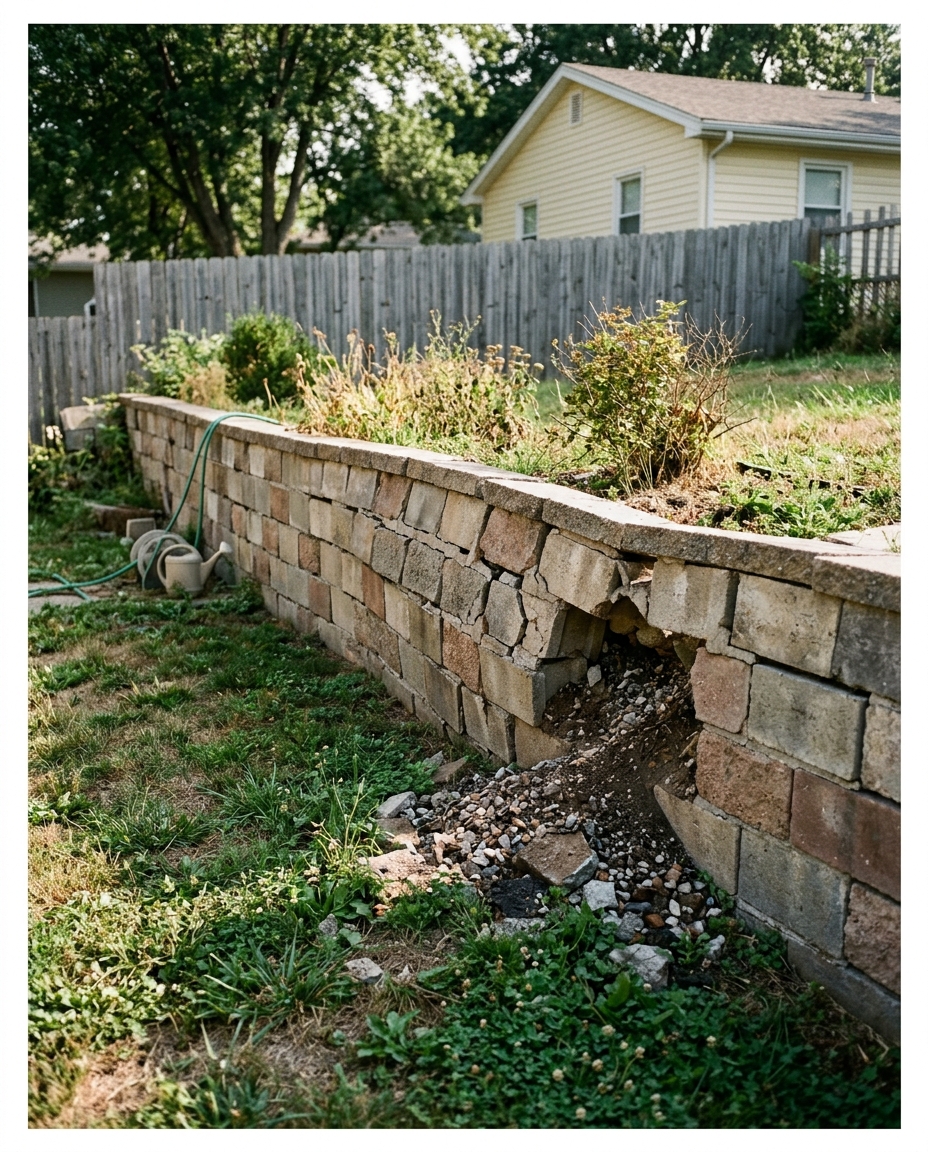
The patterns we see most often are sunken or uneven patio surfaces, separating pavers or collapsing edges, retaining walls that lean and crack, pool decks that shift and lose elevation, and drainage issues that quietly worsen year over year until water is finding its way somewhere it should not.
None of these are purely cosmetic. A sunken patio is a tripping hazard. A leaning wall is a structural one. And once the underlying issue is loose base, washed-out drainage, or soil movement, a cosmetic patch will not solve it. The honest answer in most cases is to remove the affected area, fix the root cause, and rebuild it correctly. That is expensive. Avoiding the failure in the first place is dramatically cheaper than chasing it after.
Hardscaping is largely unregulated compared to other types of construction. Many patios, walls, and outdoor living spaces are not subject to the same building codes or inspections as homes or additions.
Because of this, construction methods can vary widely. Some companies build with long term performance in mind, while others take shortcuts below the surface that are hidden once the project is complete.
Shallow excavation, poor compaction, and inadequate drainage may save time upfront, but they often lead to settling, cracking, and structural failure later. By the time problems appear, repairs are usually costly and sometimes require full replacement.
This is why choosing a reputable, experienced hardscape company is critical to the long term success of your outdoor living space.
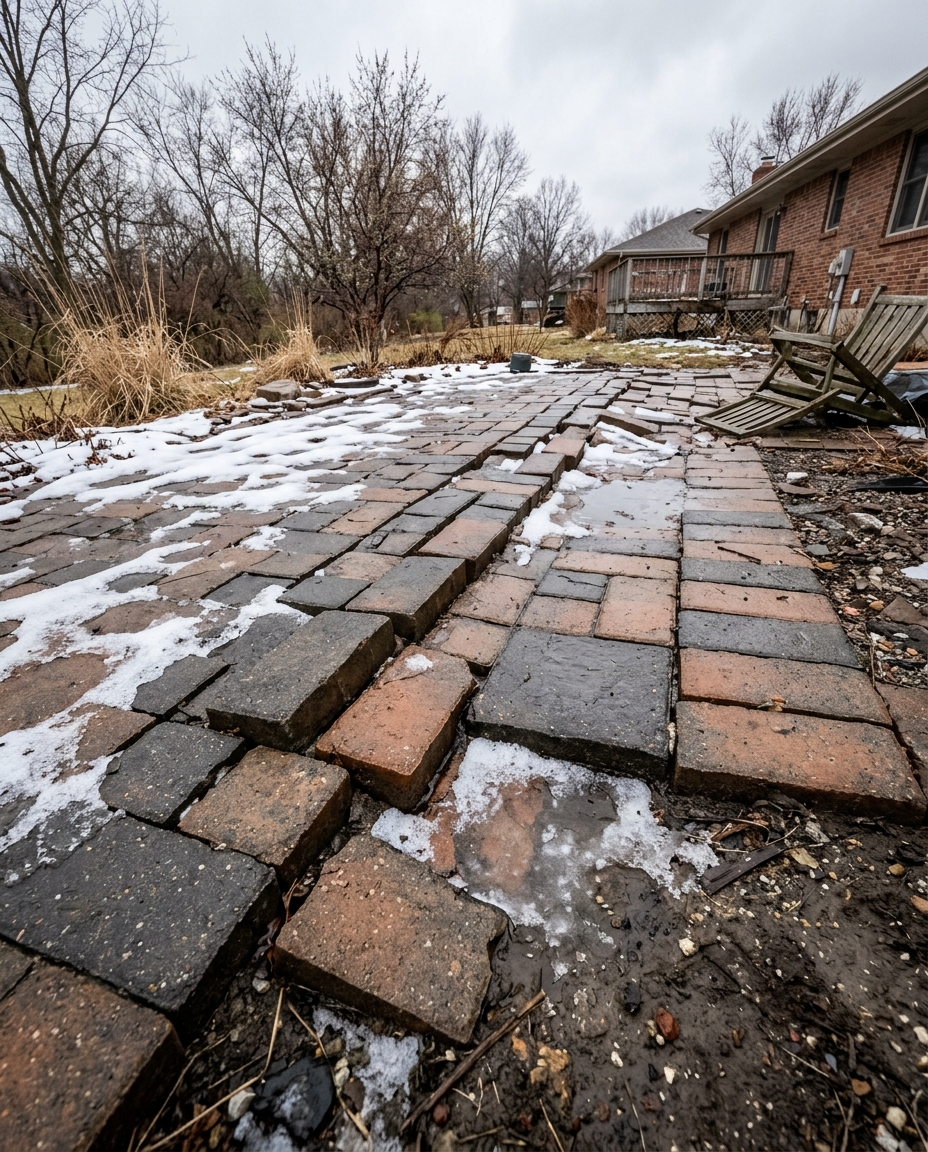
Kansas City winters play a major role in hardscape performance. If you have ever driven around town after winter and dodged potholes, you have seen freeze and thaw damage in action.
Moisture works its way into the soil beneath roads, sidewalks, and hardscapes. When temperatures drop, that moisture freezes and expands. As it thaws, the ground settles back down, often in a slightly different position. This cycle repeats many times throughout the winter.
Over time, this constant movement weakens what is built above it. Streets crack, asphalt sinks, and concrete shifts. Outdoor living spaces are affected in the same way. If a patio or wall is not designed to manage moisture and soil movement, the ground beneath it will eventually move. When that happens, surfaces become uneven, structures lose alignment, and failure begins.
This is why proper construction methods matter so much in our climate.
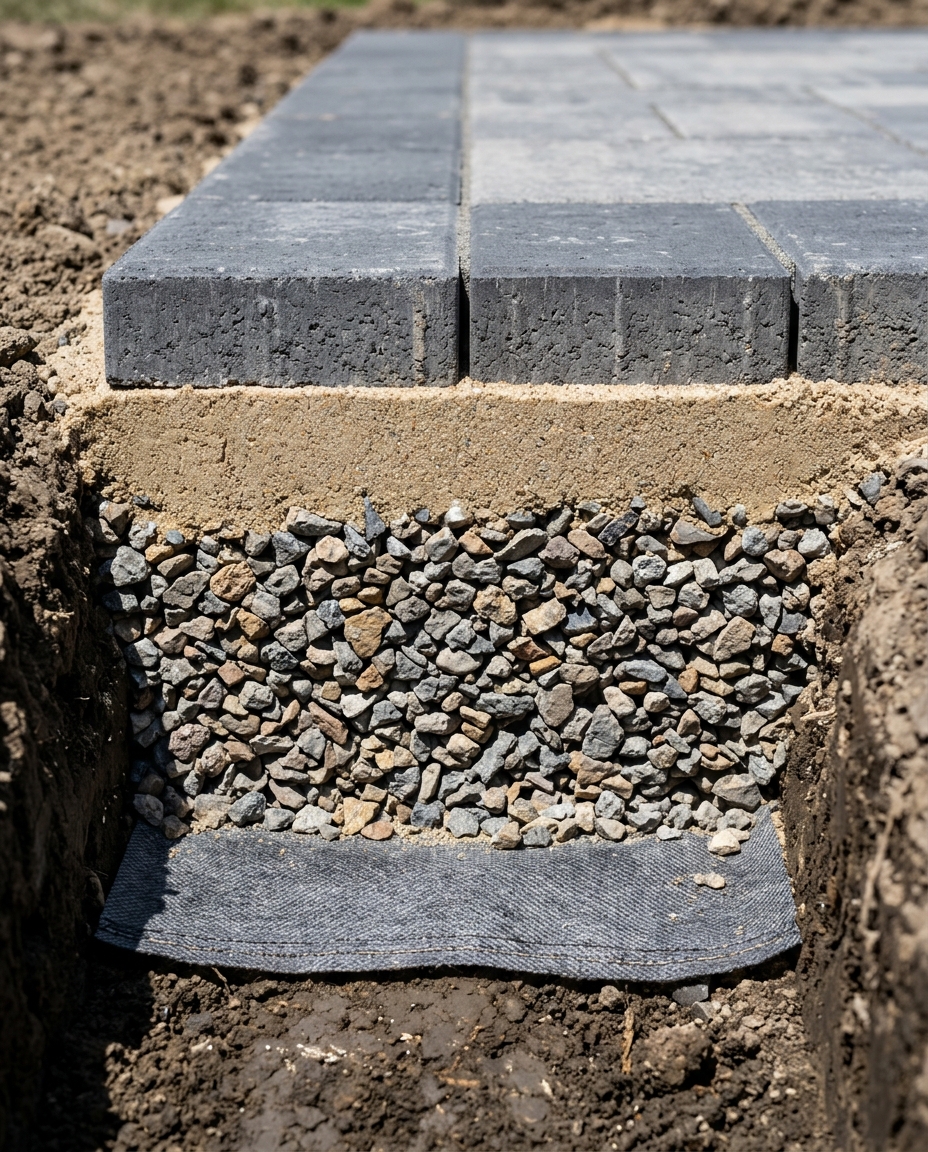
In Kansas City, the base beneath a paver patio is just as important as the materials you see on the surface. Two common approaches are used, and how they perform depends on how they handle moisture and soil movement.
Aggregate Base
Aggregate base systems rely on layers of compacted stone to support the pavers above.
While this method can perform well when installed properly, long term movement is more likely if moisture is not carefully managed. In areas with heavy soils and frequent freeze and thaw cycles, inconsistent compaction or trapped water can lead to settling and uneven surfaces over time.
Concrete Slab Base
A properly built concrete slab is one of the most reliable ways to support a paver patio long term, especially in Kansas City’s climate. When designed for outdoor hardscapes, a slab creates a consistent foundation that helps limit movement through repeated freeze and thaw cycles.
This approach requires more excavation, reinforcement, and planning, which is why it is often skipped in favor of faster and less expensive methods. However, those shortcuts are usually taken below the surface, where problems are not immediately visible.
When built correctly, a concrete slab prioritizes longevity over speed. It helps pavers maintain their elevation, alignment, and structural integrity for years, reducing the risk of settling and long term failure.
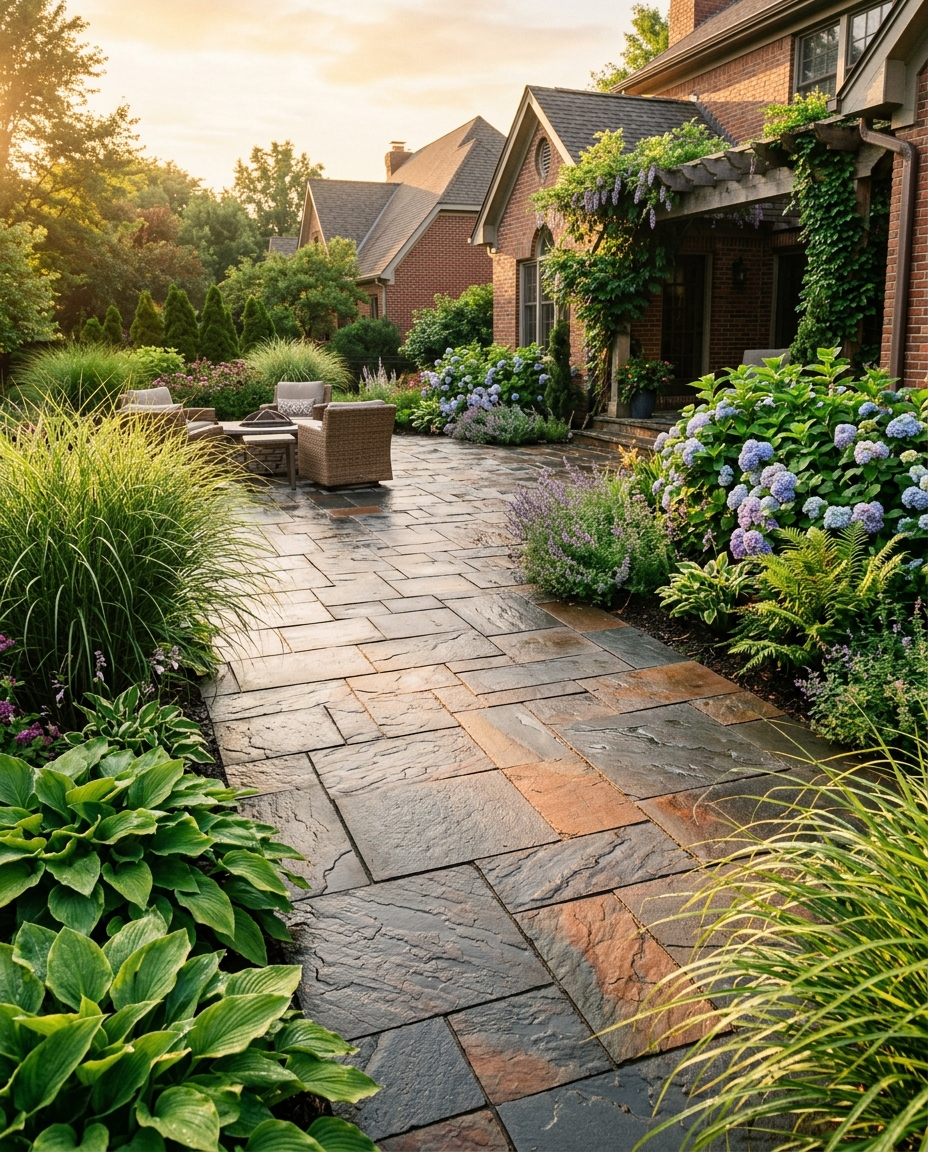
Building a hardscape that lasts means refusing to take shortcuts. It means doing what is right, even when it takes more time, more effort, and more attention to detail.
At Kansas City Hardscapes, our focus is on how a project is built, not just how it looks when it is finished. Every step below the surface matters. Proper excavation, careful base preparation, thoughtful drainage, and precise installation all work together to create a structure that can handle our climate year after year.
This level of construction is often skipped in the industry because it requires patience and discipline. But shortcuts taken during construction are the same shortcuts that lead to settling, shifting, and failure later on.
Your outdoor living space should not be built to last a few seasons.
It should be built to outlast us all.
Forty-five minutes on site with our designer is all it takes to see what is possible. No pressure, no hard sell.
Schedule a Design Call