The Journal · Field Notes
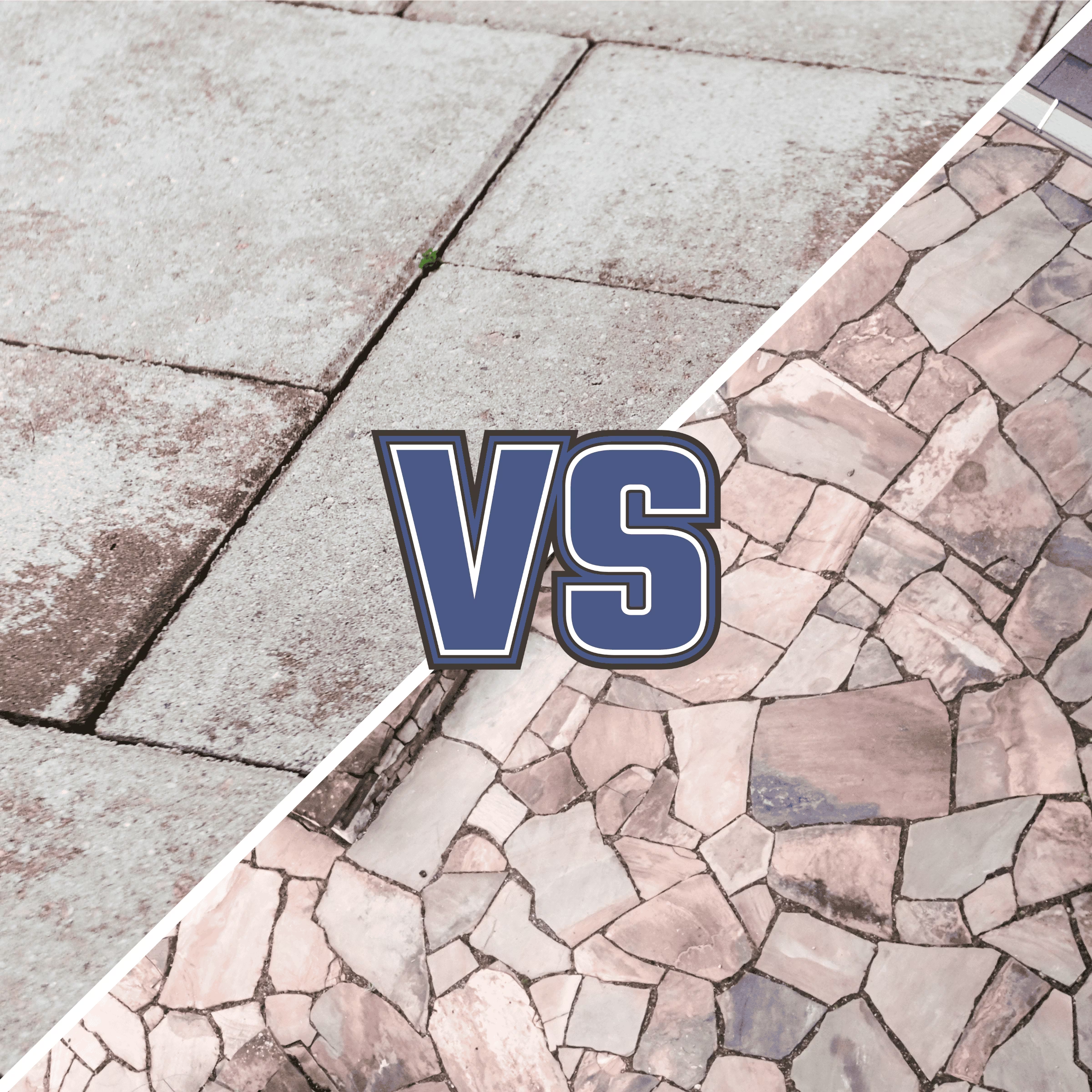
If you’re planning a patio in Kansas City, one of the biggest decisions you’ll make is the material. Most homeowners narrow it down to two options: concrete pavers or natural stone.
Both can look great.
Both can last a long time. But Kansas City’s climate plays a major role in how each one performs.
Before choosing based on looks alone, it’s important to understand how these materials hold up in our specific environment.
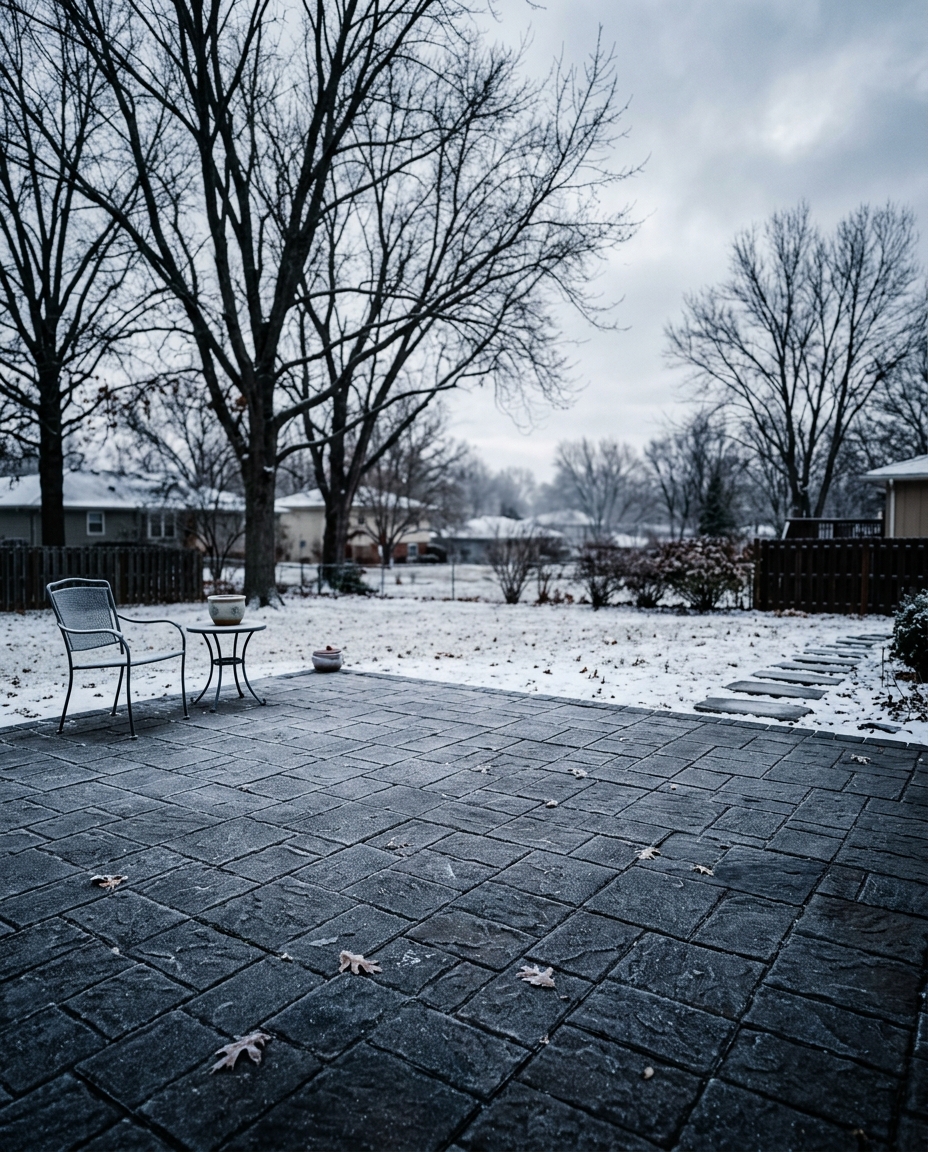
Kansas City weather is brutal on outdoor surfaces, and the reasons are stacked. We sit in the freeze and thaw belt, where ground temperatures swing across the freezing point dozens of times each winter. Water gets into joints, expands as it turns to ice, and pries materials apart a fraction of a millimeter at a time. Spring brings heavy rain that saturates the heavy clay soils underneath every patio in the metro, and that clay swells when wet and shrinks as it dries.
Then summer arrives. Pavers and stone bake under direct sun, soak up heat all afternoon, and radiate it back well into the evening. By winter we are throwing rock salt and ice melt across every surface that gets foot traffic, and salt is corrosive to softer materials over time.
All of that compounds. A patio system that performs flawlessly in Phoenix or San Diego is being asked to do something completely different here. Long term durability in Kansas City is not a function of the surface alone. It is a function of how the entire build, from the base up, was designed to survive twelve months of a Midwest climate working against it.
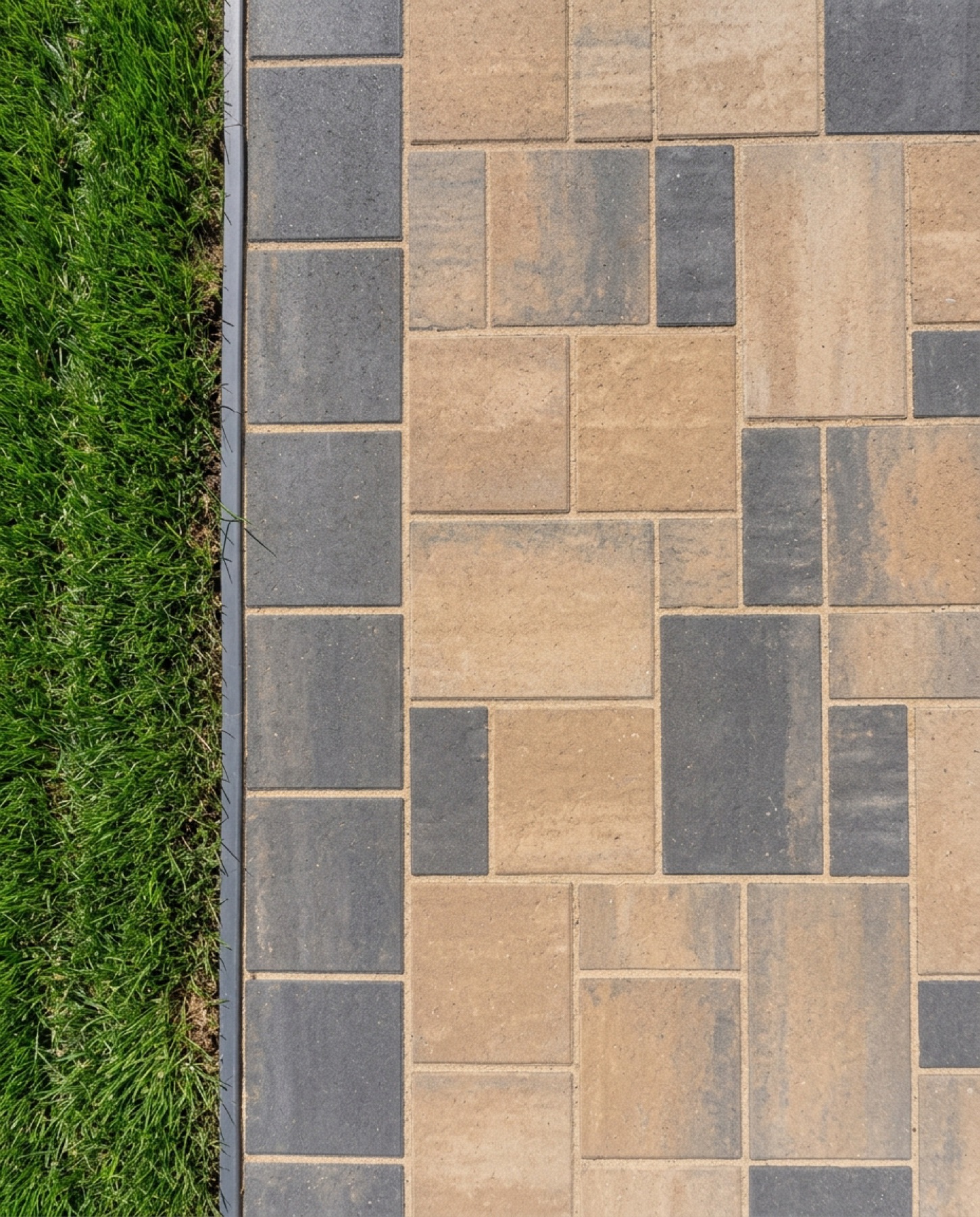
Concrete pavers are engineered products designed specifically for hardscape installations. When installed correctly, they perform very well in Kansas City.
Benefits of Pavers
Designed to handle freeze thaw movement
Individual pieces can be replaced if damaged
Wide range of styles and colors
However, there are a couple things homeowners should know.
Over time, paver color tends to fade from sun exposure and the elements. If a patio has been installed for several years and you replace a few pieces, the new pavers can stand out noticeably against the older, faded ones.
That does not mean pavers fail. It just means color aging is real, especially in full sun.
At Kansas City Hardscapes, we often recommend installing paver patios over a reinforced concrete slab rather than a traditional aggregate base.
Kansas City clay soil moves. A concrete slab provides a more stable foundation, reduces long term settling issues, and gives the patio added structural integrity.
Base preparation is everything in this climate. Material alone does not prevent failure. Proper support does.
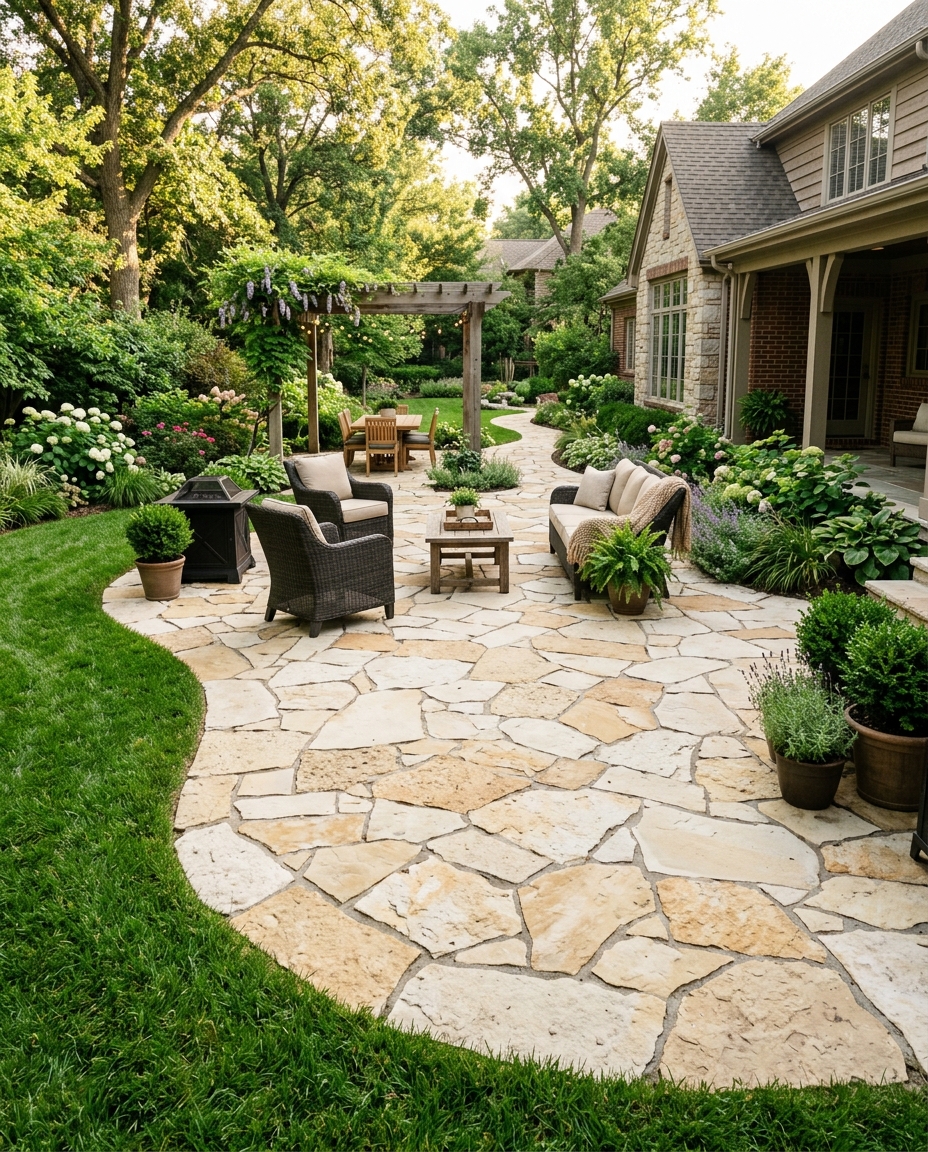
Natural stone offers a more organic, one of a kind look. Materials like limestone bring character and variation that manufactured products cannot fully replicate.
Why Homeowners Choose Natural Stone
Unique color variation
Natural texture
High end aesthetic
Timeless appearance
But stone selection matters.
Some natural stones are more porous than others. In a freeze thaw climate like Kansas City, moisture can enter the stone, freeze, and expand. Lower quality or softer stone can eventually flake or show surface wear, especially with salt exposure.
That does not mean natural stone is a bad option. It simply requires careful selection and proper installation.Building It the Right Way
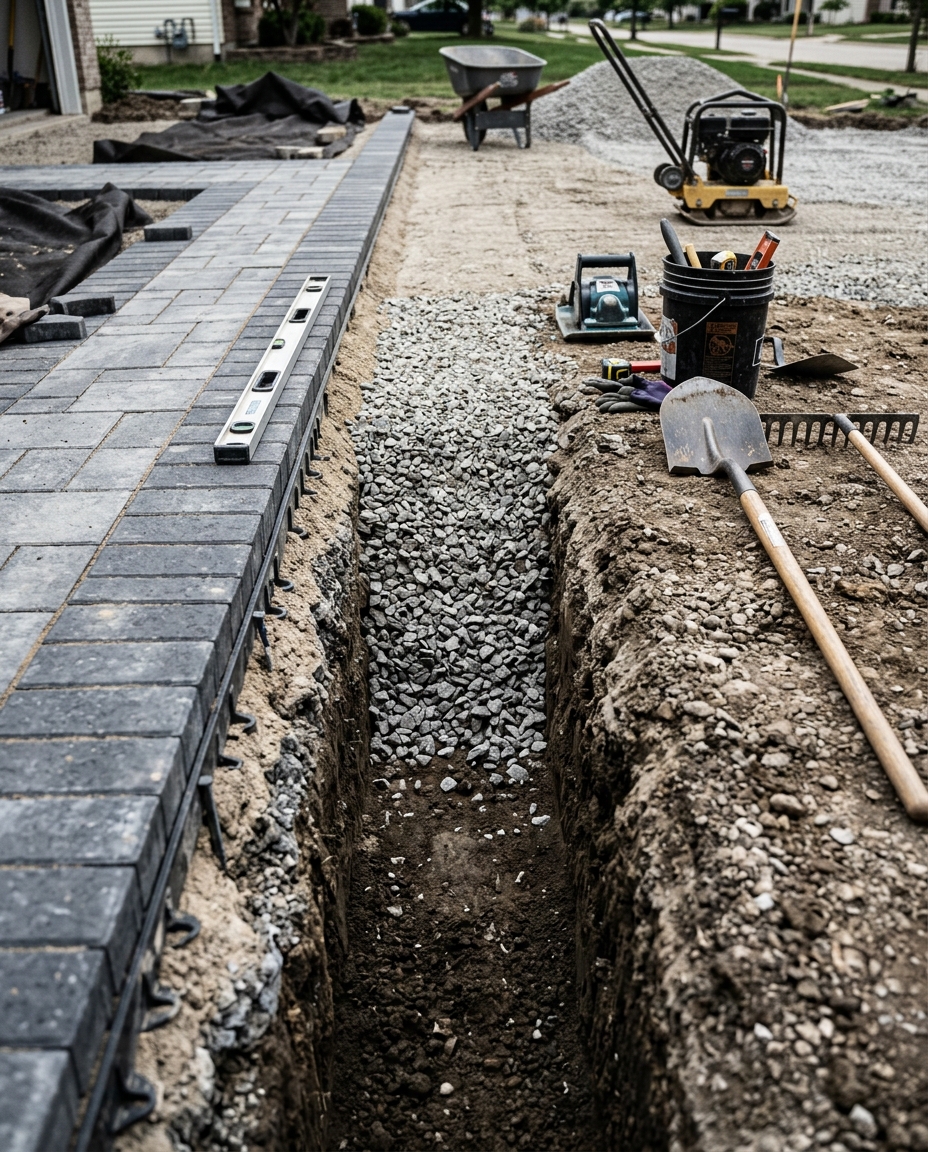
The honest answer to the pavers versus natural stone question is that neither one matters as much as what is underneath them. In Kansas City, the overwhelming majority of patio failures we are called to look at trace back to the base, not the surface. The pretty top layer is the last decision in a long chain of decisions that started months earlier with a shovel and a plate compactor.
If a contractor does not excavate deep enough to get below the topsoil, water sits where it should not. If they do not compact the base in lifts, the substrate keeps settling for years after the install. If drainage was not planned during design, every spring storm becomes a small disaster. And if nobody accounted for the way Kansas City clay swells and shrinks across seasons, the surface above will telegraph that movement back through cracked joints and shifted stones.
Both pavers and natural stone are perfectly capable of looking great a decade in. They just have to be built on a system that respects the climate. A well prepared base is what makes the difference between a patio that ages gracefully through Midwest winters and one that has to be torn out and rebuilt before its tenth birthday.
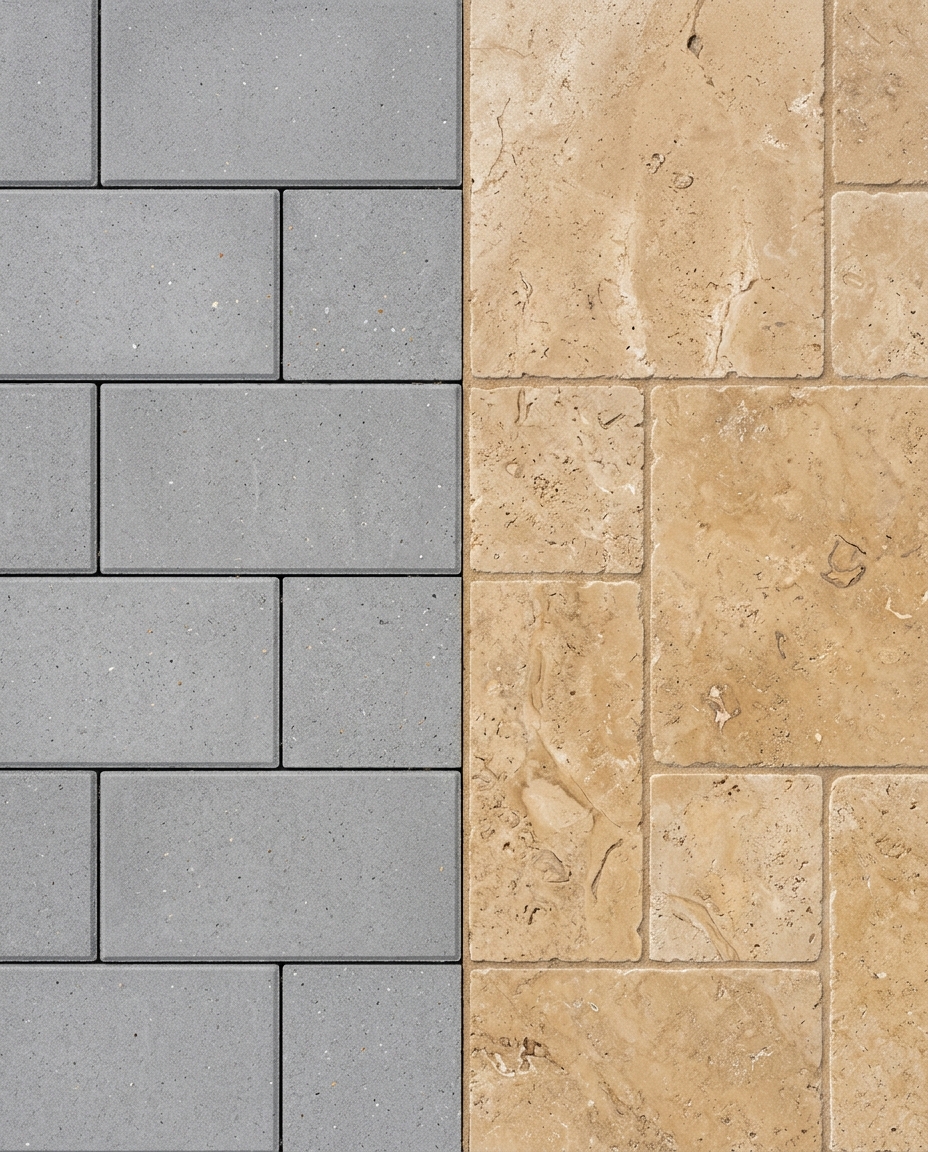
Natural stone is typically more expensive due to material cost, quarrying, and labor.
That said, this is not always the case. Pricing can vary depending on the specific stone selected, the paver brand, thickness, and the complexity of the project. Some premium concrete paver lines can approach or even exceed the cost of certain natural stone options. Overall, however, natural stone tends to come in at a higher price point.
Concrete pavers offer more budget flexibility while still delivering a clean, finished look.
The right choice often comes down to aesthetic preference, site conditions, and long term expectations.
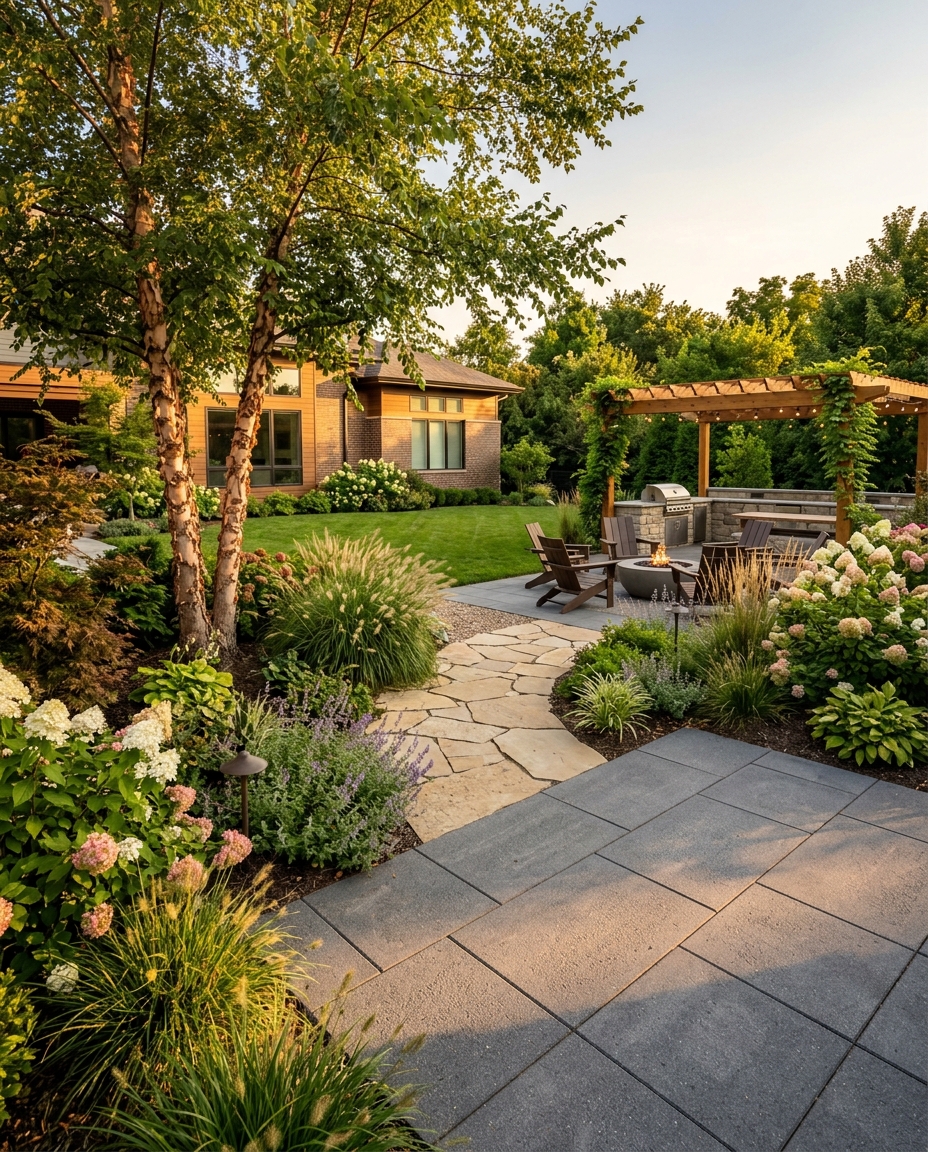
For Kansas City homeowners, both concrete pavers and natural stone can work beautifully when the install is right. There is no universally correct answer, and anyone who tells you otherwise is selling something. The right material depends on what you actually want the space to feel like, how you plan to use it, and what kind of long term relationship you want with your backyard.
Concrete pavers are often the practical choice. The lines are uniform, the performance is engineered and predictable, and you have real budget flexibility across product tiers. They tend to be the right fit for clean modern designs, for entertainment spaces where you want a smooth tight surface underfoot, and for projects where the math has to work to the dollar.
Natural stone tends to be the better fit when the goal is character. Every piece is a little different. The colors shift across the patio. There is variation in the surface texture that you simply cannot fake with a manufactured product. Stone is the choice when you want the space to feel inevitable, like the house was always meant to sit on top of it.
Plenty of the projects we are most proud of use both. A paver patio for the main entertaining zone, natural stone steppers leading into a quieter garden room, a stone wall anchoring the whole composition. Materials are tools. Used in the right place, they make each other look better.
Forty-five minutes on site with our designer is all it takes to see what is possible. No pressure, no hard sell.
Schedule a Design Call