The Journal · Field Notes
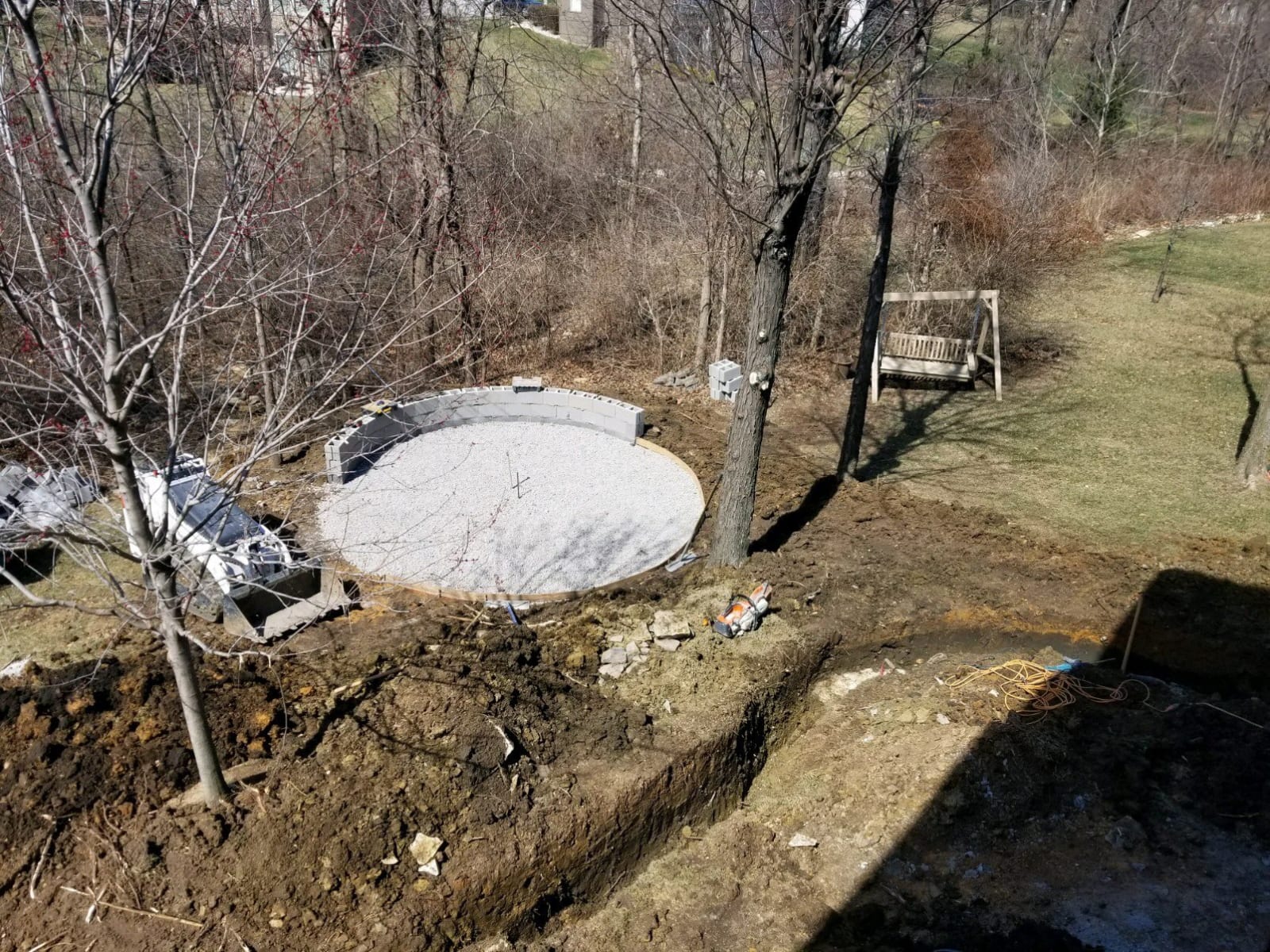
Every hardscape project goes through an ugly phase. The grass gets crushed, the equipment shows up, the patio gets torn out, and for a week or two the backyard looks worse than the day we started. We have built hundreds of projects across the Kansas City Metro and we will tell you straight, this part is normal. We do not love it any more than you do, but pretending it won't happen would set you up for a worse experience than walking in with eyes open. Here is the honest version of what to expect, what we do to limit it, and what the project looks like when the work is finally finished.
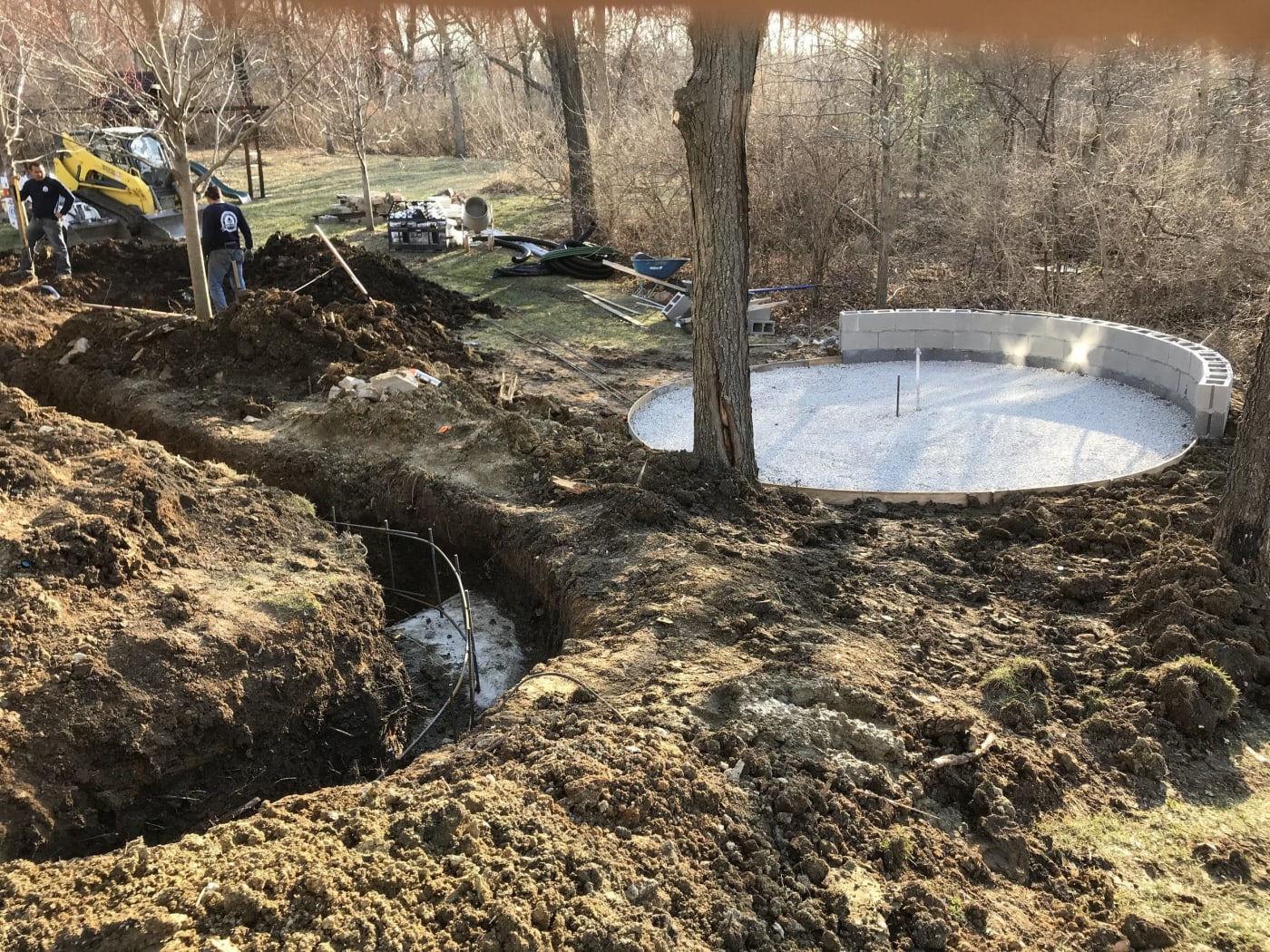
You will walk outside the morning after demo and wonder what you have done. The old patio is gone. The lawn has tire tracks across it. There is a pile of broken concrete waiting for the dumpster. The space looks bigger and more torn up than you expected, because torn-up always looks more dramatic than finished.
This is not a sign that the project is going wrong. This is what the start of a real build looks like. The same is true in remodeled kitchens (drywall dust everywhere, cabinets in the dining room) and in roof replacements (your front lawn covered in old shingles for a day). The space gets worse before it gets better. The depth of the "worse" depends on the scope of the project. A small patio rebuild stays moderately messy for a few days. A full backyard transformation looks like a war zone for two to three weeks.
Our job in this phase is to control the chaos so it stays within the project area and does not creep into the rest of your property. Yours is to brace for it and trust the process.
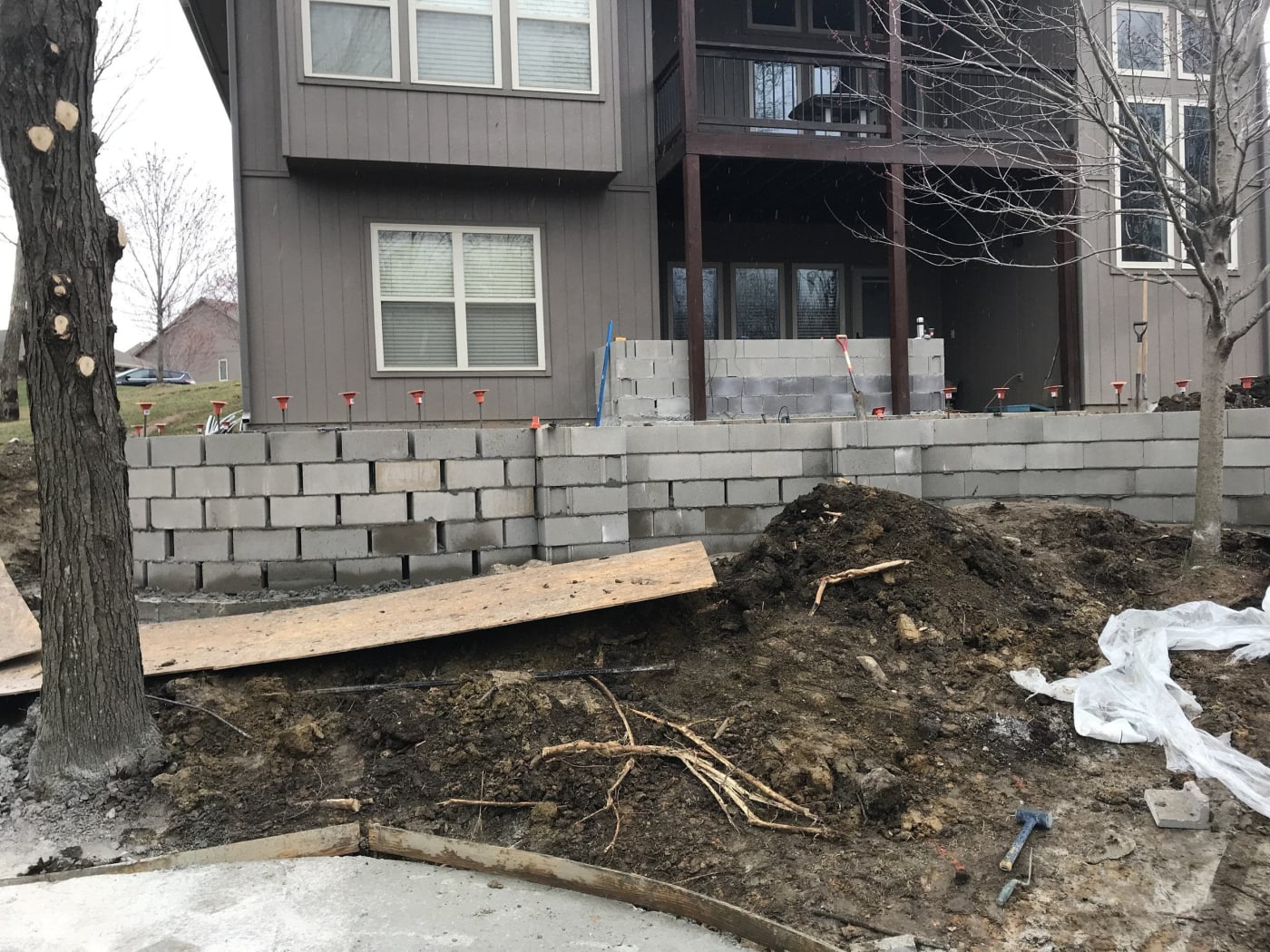
A few standard precautions we take on every job.
Plywood pathways across grass that the equipment has to cross. Skid steers and concrete trucks tear up lawn fast. Plywood distributes the load and keeps the grass alive underneath until the project is done.
Fence panel removal and reinstall for access. Many projects need a section of fence taken down so the equipment can reach the back yard. We remove it carefully, store it, and reinstall it at the end. The fence ends up exactly where it started.
Driveway protection when concrete trucks or heavy material deliveries are involved. Plywood or mats keep the drive surface from being scraped or stained.
Tarps and covers on outdoor furniture, garden beds, AC units, and any features near the project. We do not move your patio set into the garage for you, but we cover what stays in place.
Daily cleanup at the end of each work day. Tools go back in the trailer. Loose material gets swept or contained. Equipment parks where it does not block your driveway or your neighbor's view.
No precaution prevents the mess entirely. Demo is inherently messy. But the difference between a careful crew and a careless one shows up in your driveway, your lawn, and your relationship with the project at the end.
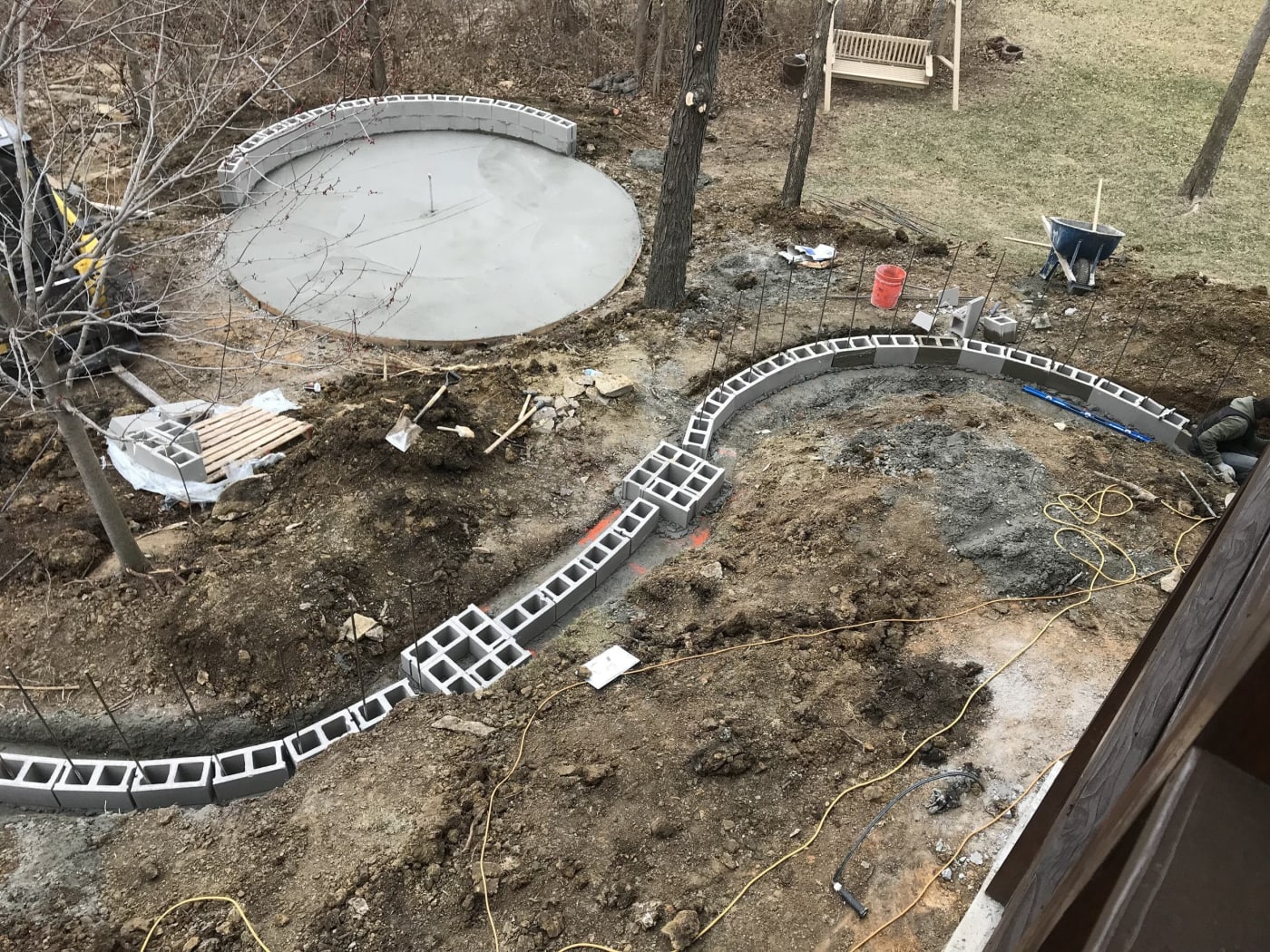
Days 5 through 15 of a typical larger project are the rough middle. The demo is done. The base is going in. The structure is being built. But nothing is finished yet, and the patio looks like a construction site because it is a construction site.
This is the phase where homeowners get nervous. The yard looks worse than it did before the project started. The dream you had in the design meeting feels far away. The crew is working hard but the visible progress lags the actual progress, because most of the work in this phase is below grade or inside walls.
We tell our clients to expect this. Pulling up a chair, having a beer, and watching the crew work is the right move on day 1. The middle is the part where most homeowners want to look away.
The trick is to remember that the work happening in this phase is the work that determines whether the patio lasts thirty years or three. Base compaction, drainage slope, structural footings, wall reinforcement. The boring part. The important part.
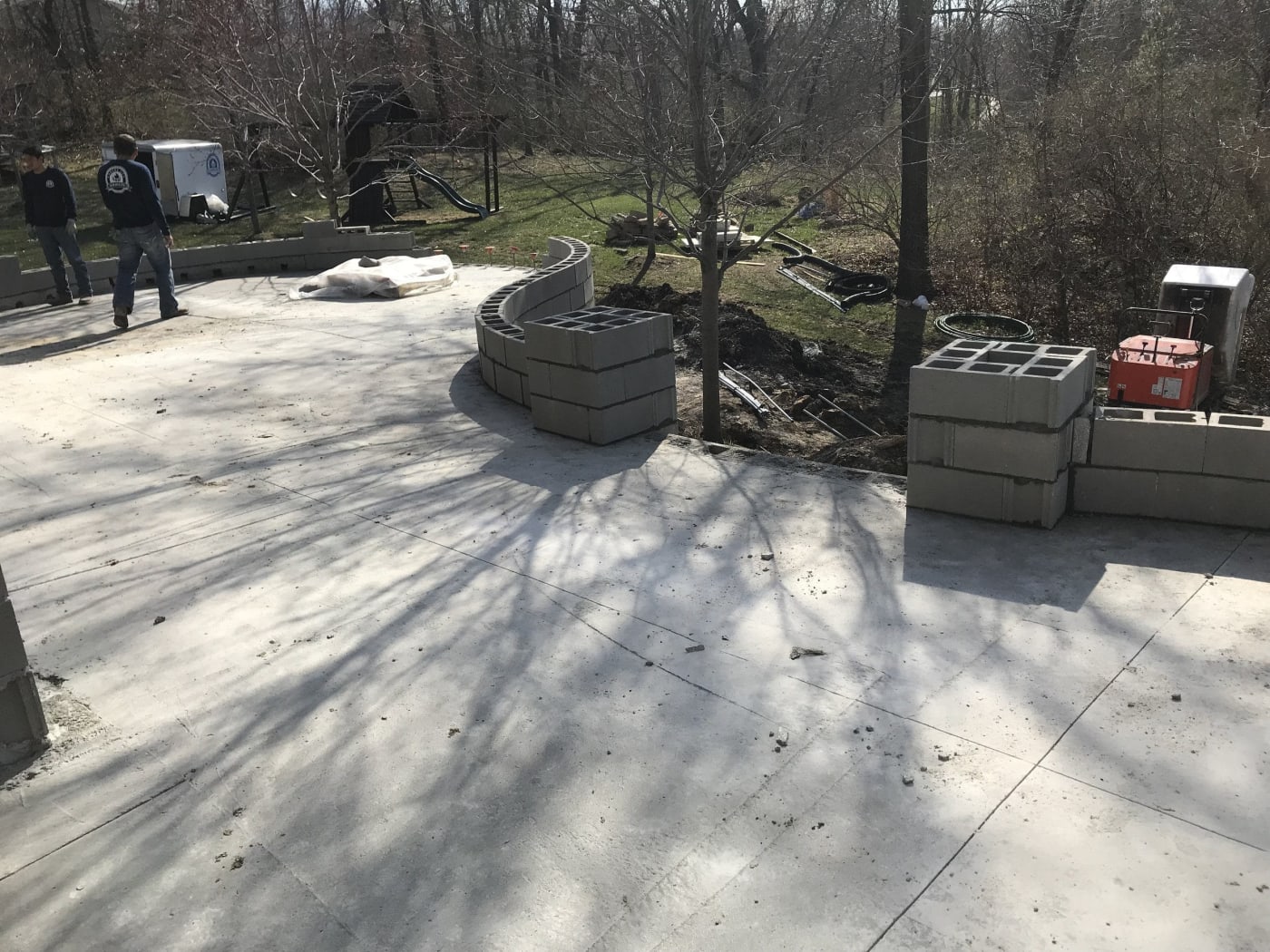
One day you walk outside and the patio is recognizable. The pavers are down. The fire pit is at the right height. The seating wall caps are on. The grass tracks are still in the lawn and the dumpster is still in the driveway, but you can finally see what we were building.
This is the moment we look forward to as much as you do. The vision from the design meeting suddenly exists in three dimensions. You can stand on the patio. You can imagine the dining table where it will sit. The discomfort of the middle phase is mostly behind you.
We are not done at this point. Edge restraints still need to go in. Polymeric sand has to be installed and activated. Lighting needs to be wired and tested. Final cleanup is several days of work. But the visible product is now coherent, and that is the moment most homeowners stop worrying about how the yard will look and start thinking about how they will use it.
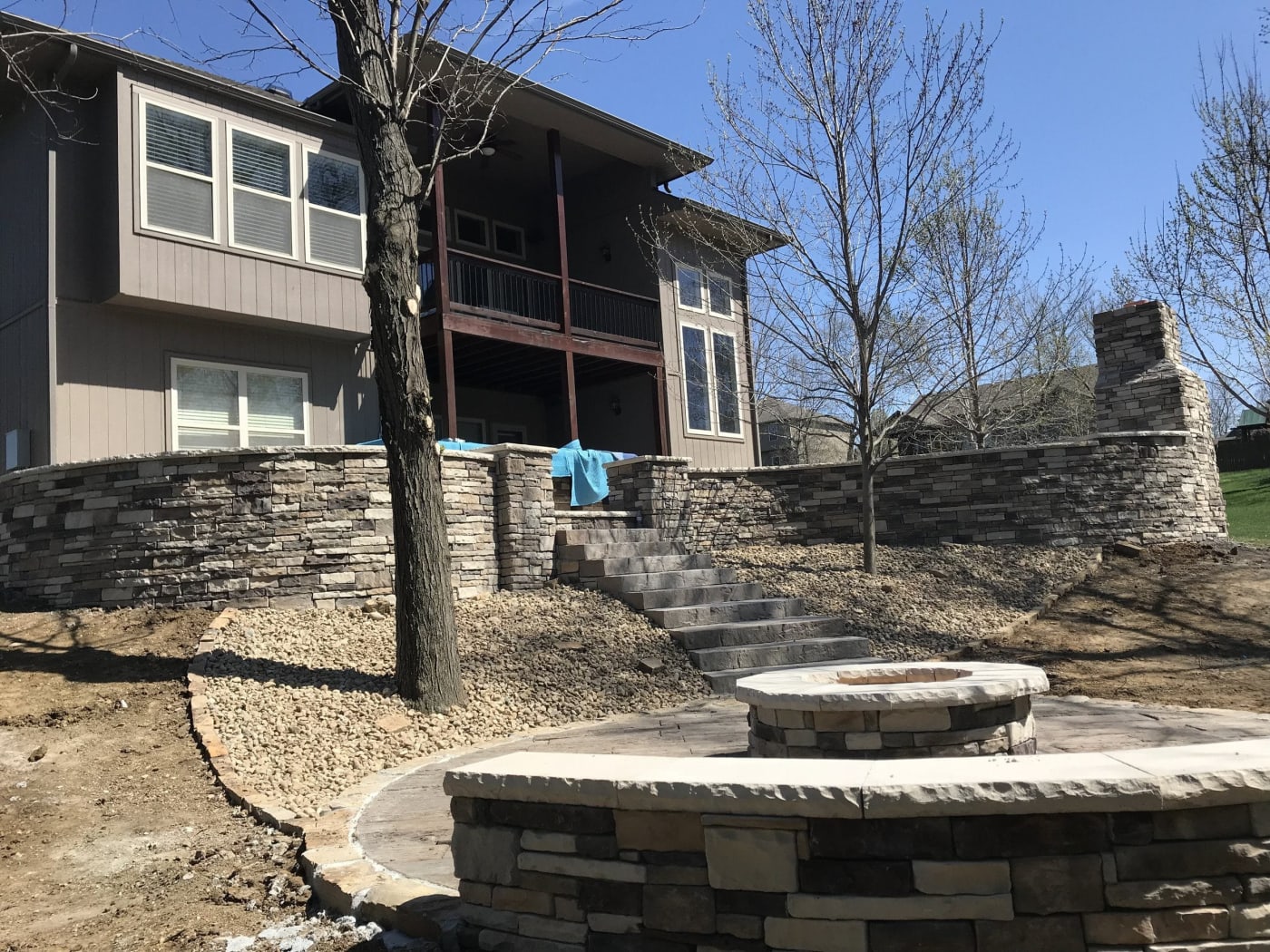
The final few days are detail work and cleanup.
Polymeric sand swept into the joints and activated. Lighting tested in the dark. Pergola stained or oiled. Furniture moved back into place. Tarps removed. Plywood lifted and stacked. Tools loaded into the trailer for the last time. Lawn raked. Plywood paths picked up. Tracks in the grass either rolled flat or marked for seed.
A walkthrough with us, on the patio, with you. We point out features, explain maintenance, hand off any documentation, and answer questions. We listen for anything you want adjusted. Most projects have a small punch list of cosmetic items we tighten up over the following week.
And then we are gone. The trailer pulls out of the driveway. The dumpster is hauled away. The yard, finally, is yours again.
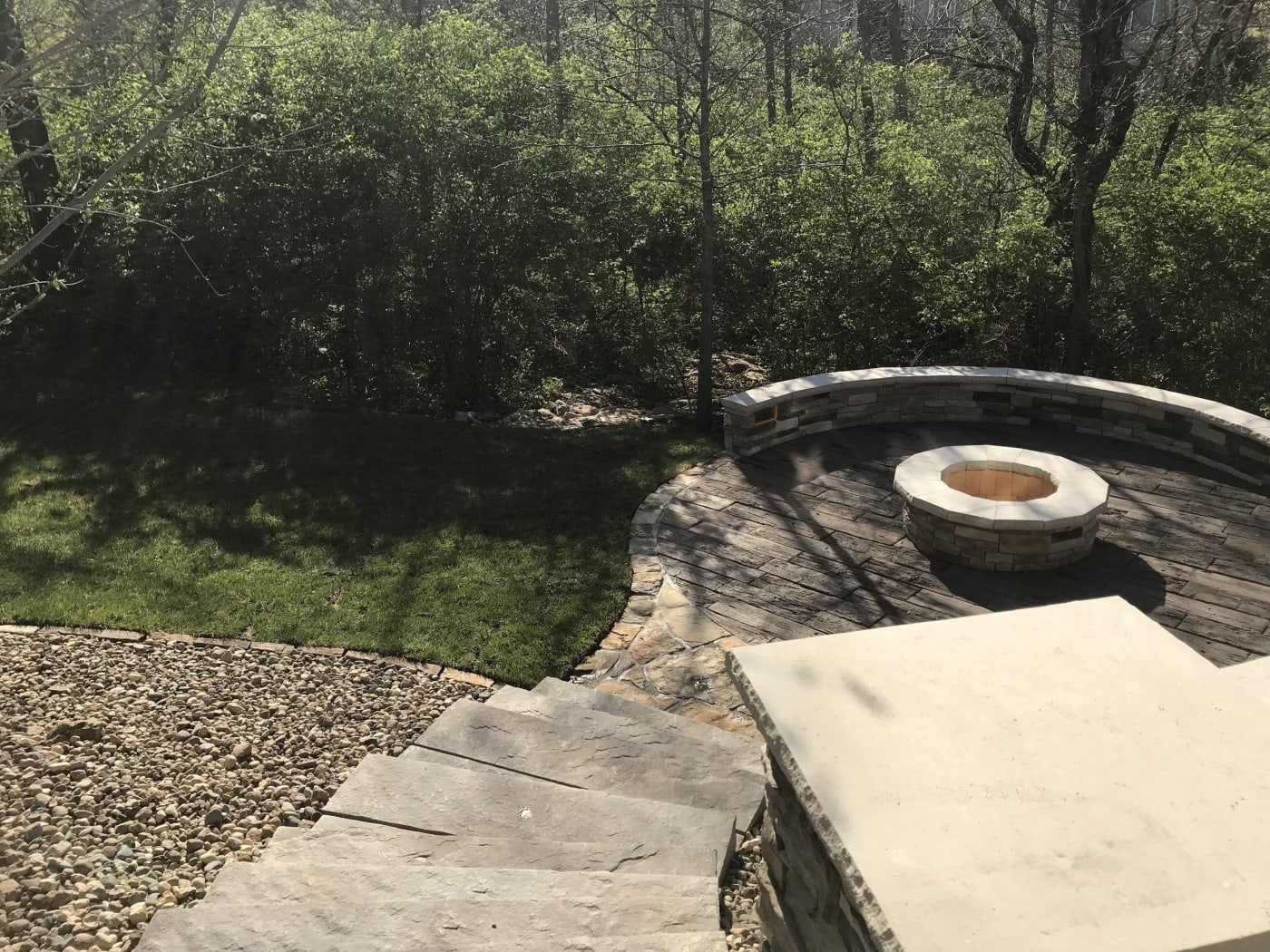
One thing we do not pretend to: the lawn does not bounce back the day we leave. Heavy equipment crushes grass. Tracks compress soil. Some areas need to be seeded or sodded. Spring projects recover faster than fall projects, but every project leaves some lawn work behind.
What we do: at the end of every project, we level the disturbed areas, spread fresh topsoil where needed, and lay grass seed with a starter fertilizer and straw. We water the area before we leave so the seed has the best start.
Your job: keep the seeded areas moist for the next two to three weeks. Light watering twice a day until the grass shows. Then back off to once a day, then to your normal watering schedule once the lawn is established. Avoid mowing the new grass until it is 3 to 4 inches tall.
In Kansas City, with average rainfall and a reasonable watering routine, the new grass is visible within 2 weeks, fills in within 6, and is fully established by the next mowing season. By the second summer, you will not be able to see where the equipment ran.
Some homeowners prefer sod instead, which gives an instant green lawn but costs more. We are happy to arrange either approach.
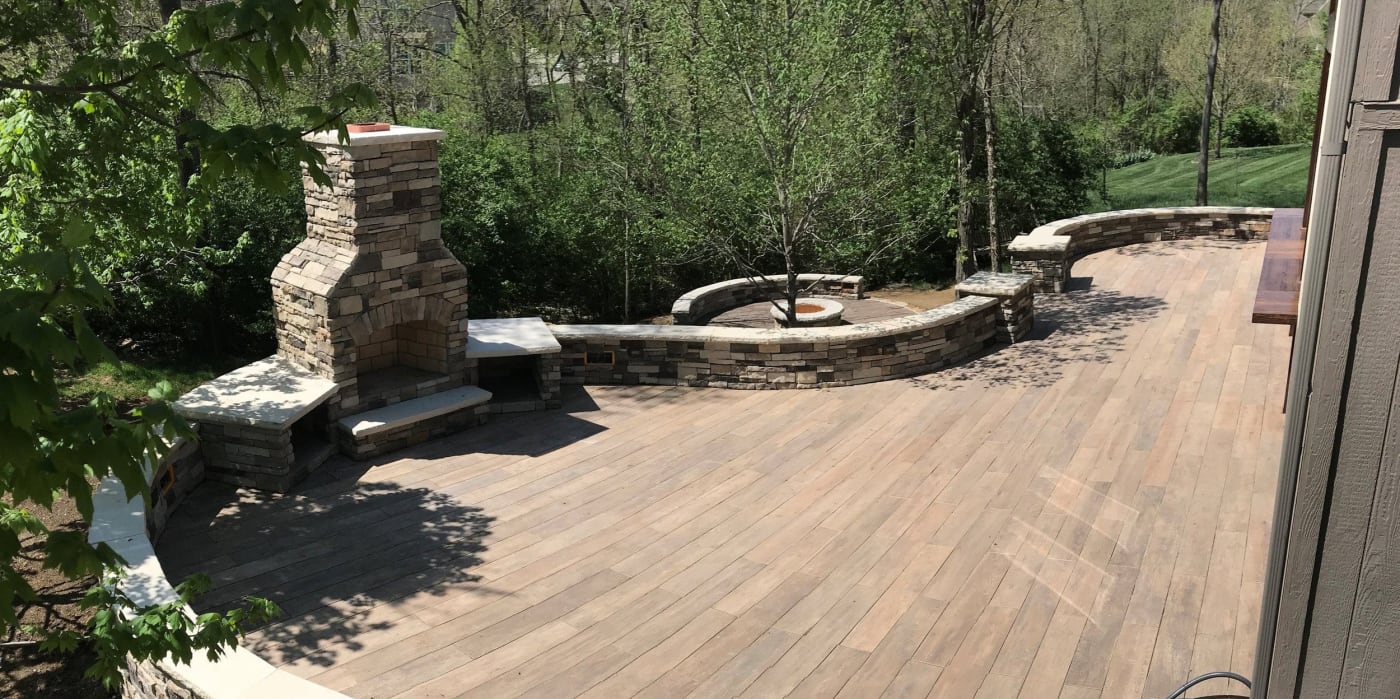
Walk outside a month after the project ends. The lawn has grown back. The fresh seed is filling in. The dumpster is a memory. The patio is in regular use. Friends have already come over. Dinner has been eaten outside multiple times. The space that was a construction zone for three weeks is now the favorite room in the house.
This is the part of the process nobody talks about in the design meetings. The reward you get is not just the patio. It is the transformation in how you use your home. The grill no longer lives on a small concrete pad next to the back door. It lives in an actual outdoor kitchen. The fire pit no longer sits unused in a corner. It is the center of October weekends. The pergola turns a sunny patch of grass into a place you actually want to spend a Sunday afternoon.
The mess in the middle is the price of admission to that result. Once you are on the other side of it, the discomfort fades fast and the reward keeps showing up every weekend for the next decade.
How long will my yard be a construction zone? A small project (a 200 square foot patio rebuild) is 5 to 10 working days. A standard backyard project is 2 to 4 weeks. A full outdoor living build with pergola, fire feature, and lighting is 4 to 8 weeks. We give a specific timeline at the design phase and update it weekly during the project.
Can I use my back door during construction? Yes. We design the work zones so a path to the back door stays clear most of the time. Some days the path is tighter than others, but we never block your access entirely.
Will the noise be a problem for the neighbors? Demo days are loud. The rest of the project is moderate. We start no earlier than 7 a.m. and stop by 6 p.m. on weekdays. If you have unusually noise-sensitive neighbors, let us know during design and we will plan the loudest work in single-day blocks.
What about pets? Most clients keep dogs inside the house during work hours and walk them out front instead of into the back yard. If your dog is in the yard, the crew will be careful, but the equipment and the open materials are not safe for a curious dog. Tell us your specific situation and we will work with it.
What if it rains in the middle of the project? We work through light rain. Heavy rain pauses the project for safety and for the work (compacting wet base is a bad idea). Rain delays add a day per heavy day. We rebuild the schedule and keep you informed.
Can I have people over during the project? Yes, but the yard is not the place for it. Most of our clients save the big entertaining for after the project is done. The first party on the new patio is one of the better parties of the year.
If you are weighing whether the mess of construction is worth the result, that is a fair thing to weigh. We are happy to walk the yard with you, talk through what your specific project will look like through every phase, and give you a realistic picture of the discomfort and the reward. Call us at 816-499-2547 or book a free consultation through the Get Started page.
Thirty minutes on site with our designer is all it takes to see what is possible. No pressure, no hard sell.
Schedule a Design Call