The Journal · Field Notes
Most homeowners think of a water feature as decoration. A nice extra. Something to add at the end if the budget allows. After ten years of building outdoor rooms across the Kansas City Metro, we see it differently. A patio without water tends to feel like a stage set. A patio with water feels like a place you want to be. The reason is not aesthetic. It is sensory. Water is the only element on a patio that you can see, hear, feel a small temperature shift from, and that brings other living things into the yard. Nothing else does all four. Here is the honest case for adding one to your space, the categories that actually exist, what each one costs in our market, and what we tell homeowners who can't decide.
The fastest way to understand it is to sit on two patios back to back. One has a fountain or a small waterfall running quietly in the background. The other does not. Within two minutes you can feel the difference. The patio with water has a center. Your attention has somewhere to land. Conversation slows down. People stay longer. The patio without it is fine, but it is fine the way a hotel lobby is fine.
That center-of-gravity effect is the thing nobody talks about in the catalog photos. A water feature gives a patio a focal point that does not demand to be looked at. A fireplace does the same thing in winter. A fire pit does it after dark. A water feature does it in the middle of a Saturday afternoon when nothing else is happening and the patio still feels alive.
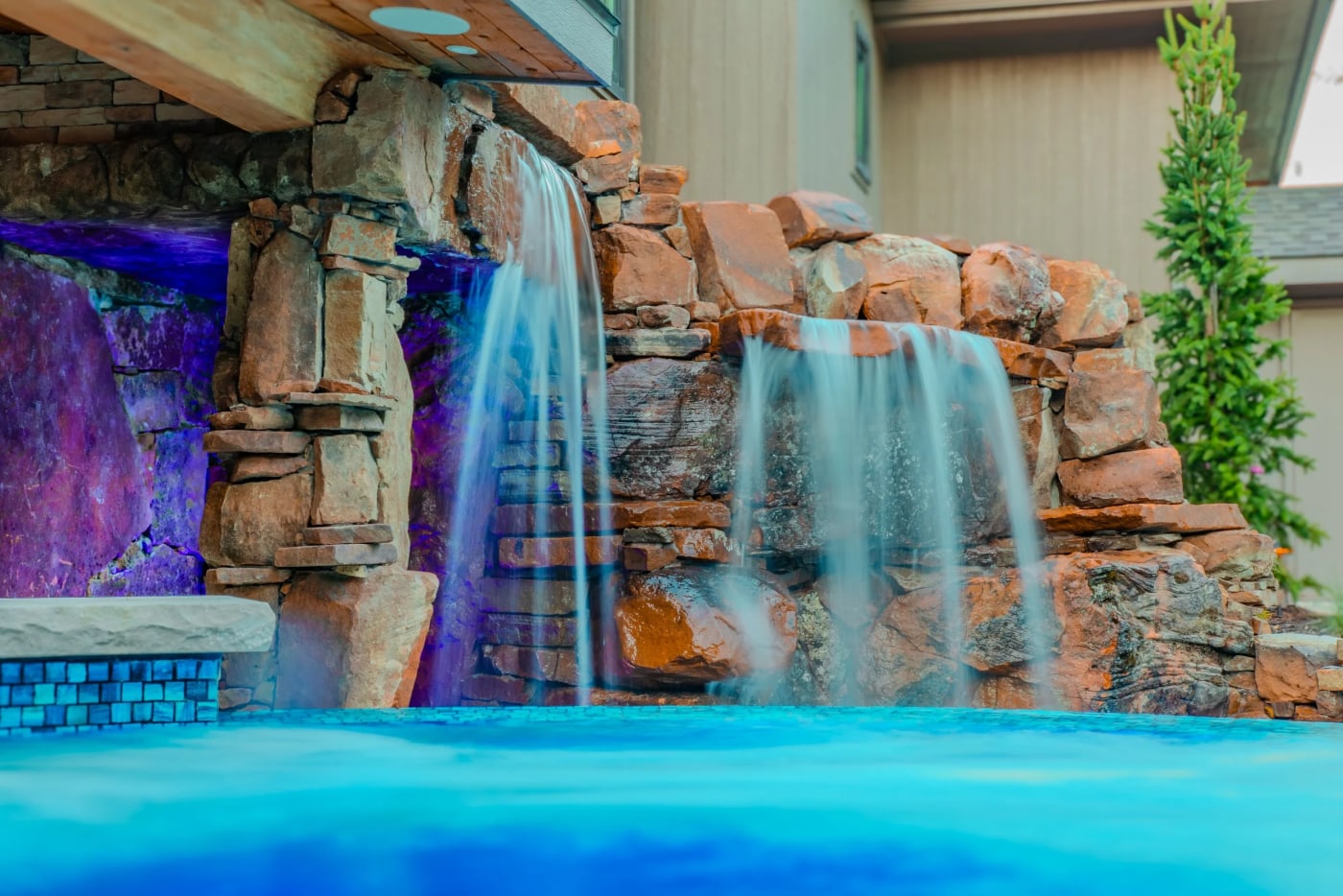
Sound is the first reason most of our clients ask us for water. Kansas City has good neighborhoods, but most of them sit close enough to a road, a highway, or a busy neighbor that you can hear the world from your own backyard. A small waterfall or a bubbling urn does not eliminate that noise. What it does is give your ear something else to listen to, and your brain will pick the closer sound every time. After about ten minutes outside, the traffic stops registering.
This works best when the water is between you and the noise source, or at least closer to where you sit than the noise is. Most of our installs use a pump with an adjustable flow rate so you can dial the volume to match the day. Loud enough to cover the trash trucks at 7 a.m. Quiet enough to talk over at dinner.
One thing to know: a water feature does not need to be large to do this job. A 24-inch glazed pot with a single bubbler can soften a small patio just as well as a four-tier waterfall can blanket a bigger one. Match the size of the feature to the patio and the budget, not to the loudness goal.
Real estate data on water features is messy because every installation is different. What we can tell you is what we see on the ground. Homes we have built water features for in Leawood, Prairie Village, and Mission Hills consistently photograph better in listing photography, which is the single biggest predictor of how fast a home sells in the metro. We have had clients call us a year after a project to say a buyer specifically asked who built the waterfall.
The honest number: a quality water feature returns roughly 60 to 80 percent of its cost at resale on a well-maintained home in a good neighborhood. That is on par with a kitchen island and better than most landscape investments. The catch is that a poorly maintained water feature with green water and a broken pump is a negative. So if you build one, plan to keep it running, or have us winterize it properly when you stop.
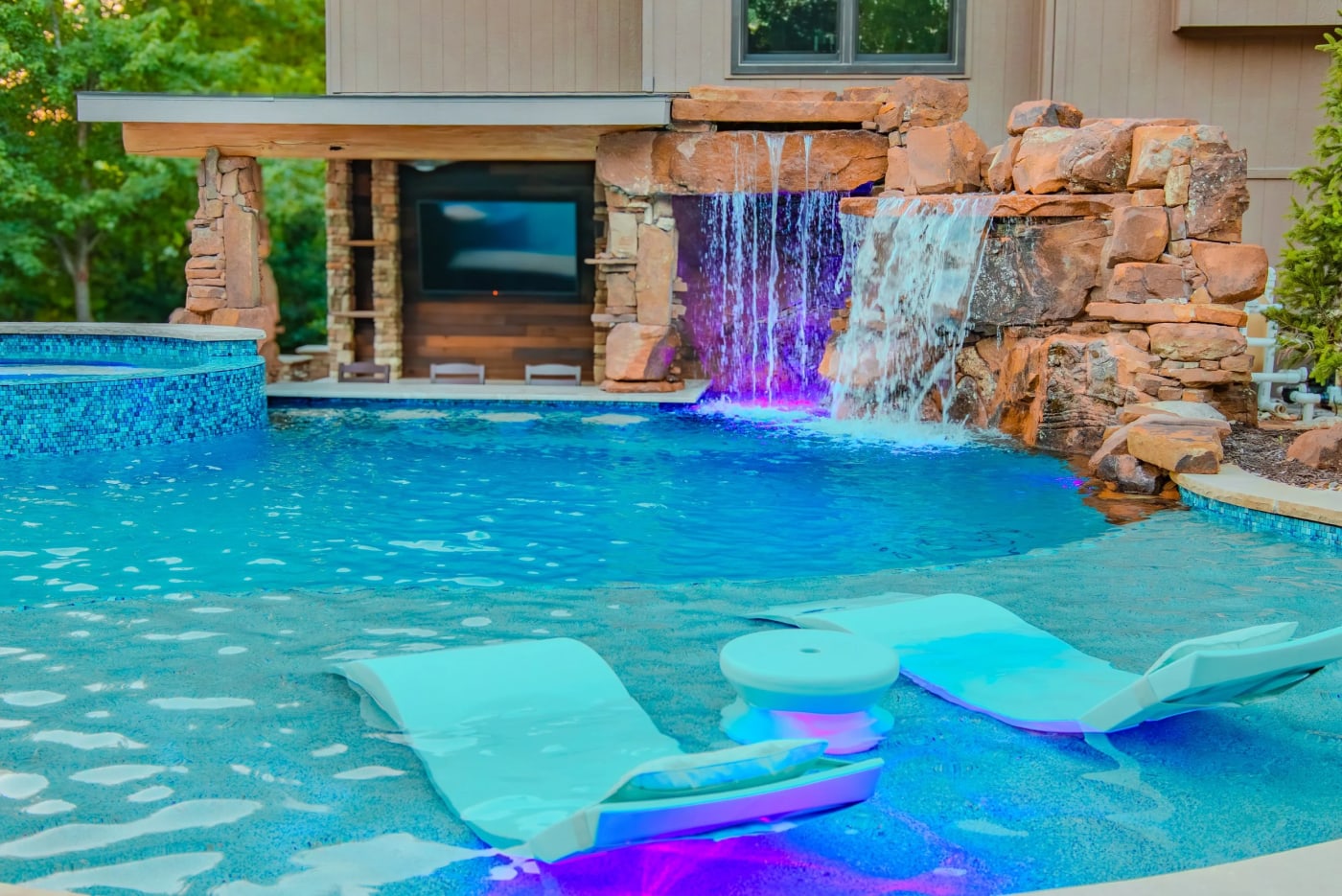
Birds find your water within a week. We have watched a finished pondless waterfall in Overland Park draw four species of songbird inside the first ten days. Add a flat rock in the splash zone and you have created a bird bath that you did not need to maintain separately. Dogs love them too, especially in the August heat. If you have a dog who drinks from the water, use only sealed pumps and skip the chemical algaecides. There are pet-safe enzyme treatments that work fine.
What we will tell you that the brochure will not: standing water that does not move is mosquito habitat. Every water feature we install moves the water through a pump and a filter, which prevents this entirely. If a homeowner builds a static pond with no circulation, they are signing up for a mosquito problem and probably an algae problem. Movement is non-negotiable.
Catalogs make this complicated. In practice there are four kinds of water feature we build for Kansas City homes, and the choice usually narrows fast once we know the yard.
Pondless waterfalls are the most popular by a wide margin. Water spills from a basin at the top, runs over stone, and disappears into a hidden reservoir under gravel at the bottom. No standing water, no fish, low maintenance, safe around kids. Fits patios from townhouse-small to estate-large. Most installs run 6 to 12 feet long.
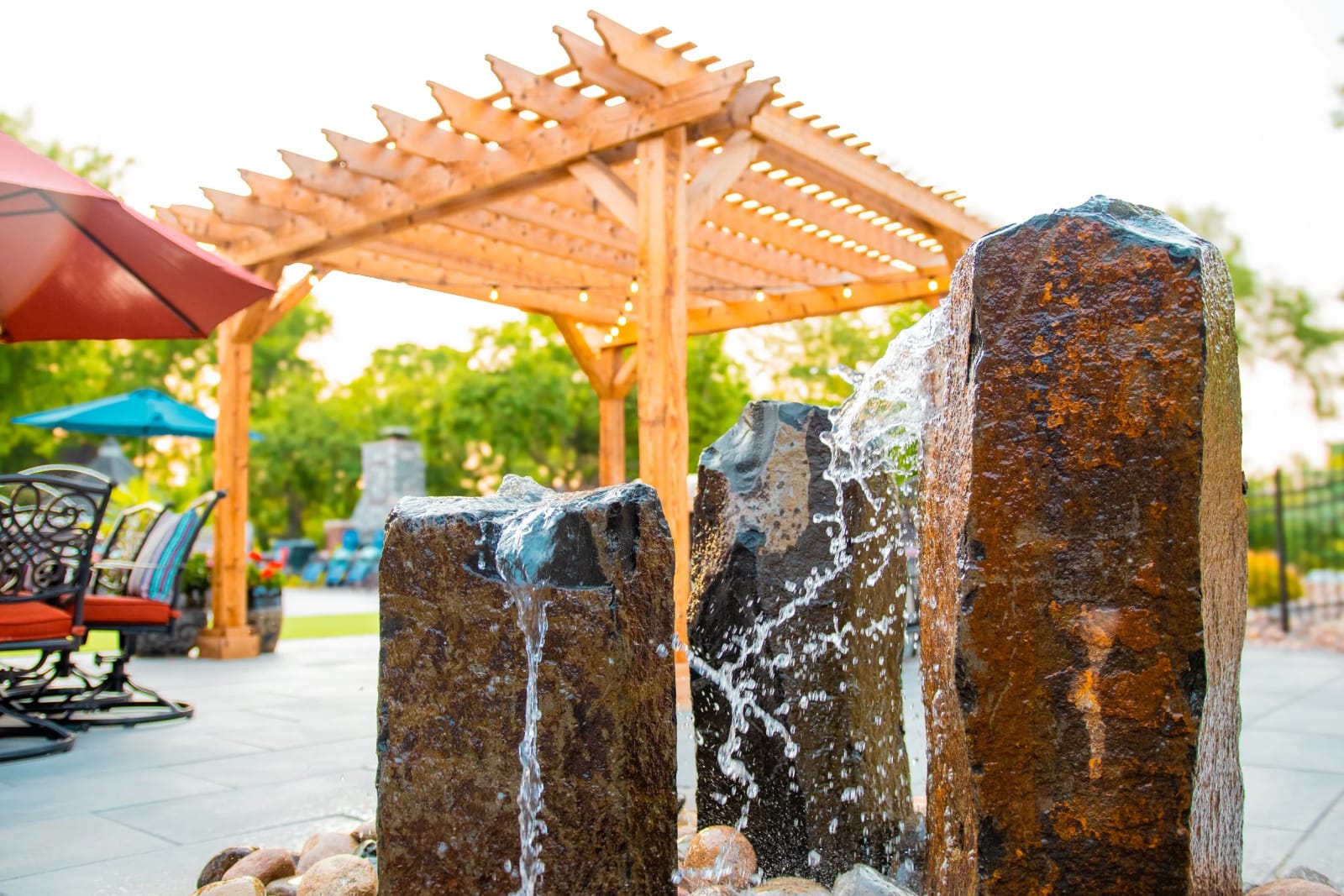
Bubbling urns and column features are pieces of stone or glazed pottery with water welling up from the top and running down the sides. They are the smallest and most architectural option. Great when you want the sound without the visual real estate. Often used in pairs to frame a doorway or a path.
Disappearing fountains are a middle option. Tiered concrete or cast stone fountains set over a hidden basin, so they look like classic garden fountains but with no standing pond. Good for formal gardens or front yards.
Koi ponds and naturalistic ponds are the ones with fish, plants, and ecosystem filtration. They are the most rewarding to live with and by a wide margin the most maintenance. We build them, but only for homeowners who genuinely want a pond as a hobby, not as a backdrop.
Pricing varies with size and stone selection, but here is the honest range we quote in the metro.
A small bubbling urn or column feature, professionally installed with the right basin and pump and electrical, starts around $6,000. Most clients investing in a built-in pondless waterfall, disappearing fountain, or larger water feature land in the $15,000 to $40,000 range depending on size, stone selection, and complexity. A true koi pond with biofilter, skimmer, and proper plumbing starts around $18,000 and climbs based on size.
What drives the price up: bigger boulders, more drop, longer stream, premium stone selection, integration with existing patio or wall, and electrical work if the panel is far from the feature. What drives it down: pre-cast basins instead of custom, simpler stone, locating it near existing power.
A properly built water feature is not zero-effort, but it is a lot less work than most homeowners assume. The pump should run continuously through the season to keep the water clear. Plan on topping off the reservoir once a week in summer when evaporation is high. Twice a year, give the filter a rinse with a hose. Once in spring, drain and refill if the water looks tired.
Winter in Kansas City means freezing temperatures, which means you do need to either run the pump 24 hours a day all winter (which works fine and looks beautiful in the snow but uses electricity) or shut it down properly in November. Shutting down means draining, removing the pump, and storing it indoors. We winterize for clients who do not want to mess with it. Allow about an hour.
The single thing that kills water features is owners who let them sit dry for months and then assume they will just start back up. The pump seals fail, the basin develops issues, and what was a small annual chore becomes a repair bill.
The right location is usually not the spot the homeowner first points at. Most people imagine the water feature against the back of the yard, far from the house. That spot looks great in drone photography. It is not where the feature does the most work.
Better placement is closer to where you actually sit. Off the corner of the patio. Beside the dining area. Beneath a pergola post. The point is for the sound to reach the seating, and for the visual to be enjoyed from the chair you spend the most time in, not from the third-story bedroom window. We always design the patio and the water feature as one system so the seating, the sight lines, and the splash zone all work together.
How loud is it? Adjustable. Most pumps have a flow valve. At the low end you barely hear it from ten feet away. At the high end it is a clear waterfall sound. We tune it on the install day with you standing where you usually sit.
Do I need an electrician? Usually yes, unless there is an existing outdoor outlet within about 30 feet. We bring a licensed electrician on most installs to run a dedicated GFCI circuit and bury the conduit.
Can you build one into an existing patio? Yes. We have retrofitted dozens of patios with water features. The basin tucks beside or behind the patio and the spillway integrates into the existing stonework.
What about kids and safety? Pondless waterfalls have no standing water. Toddlers can splash in the upper basin but cannot fall into anything deeper than a few inches. They are by far the safest option for families with young children.
Will it freeze and crack? Not if it is built right and either run all winter or properly drained. We use stone and basin materials rated for our winters. Cracked basins are almost always the result of trapped water in a fitting that was not properly drained.
How long does installation take? A small urn feature is a one-day install. A pondless waterfall is typically three to five days. A koi pond can take two to three weeks depending on size.
If you are a homeowner in Kansas City or the surrounding metro and you want to talk through whether a water feature fits your space, we are glad to come look at the yard. We design every install around the patio and the way you actually use the space, not from a catalog. Call us at 816-499-2547 or book a free consultation through the Get Started page and we'll come walk the yard with you.
Thirty minutes on site with our designer is all it takes to see what is possible. No pressure, no hard sell.
Schedule a Design Call