The Journal · Field Notes
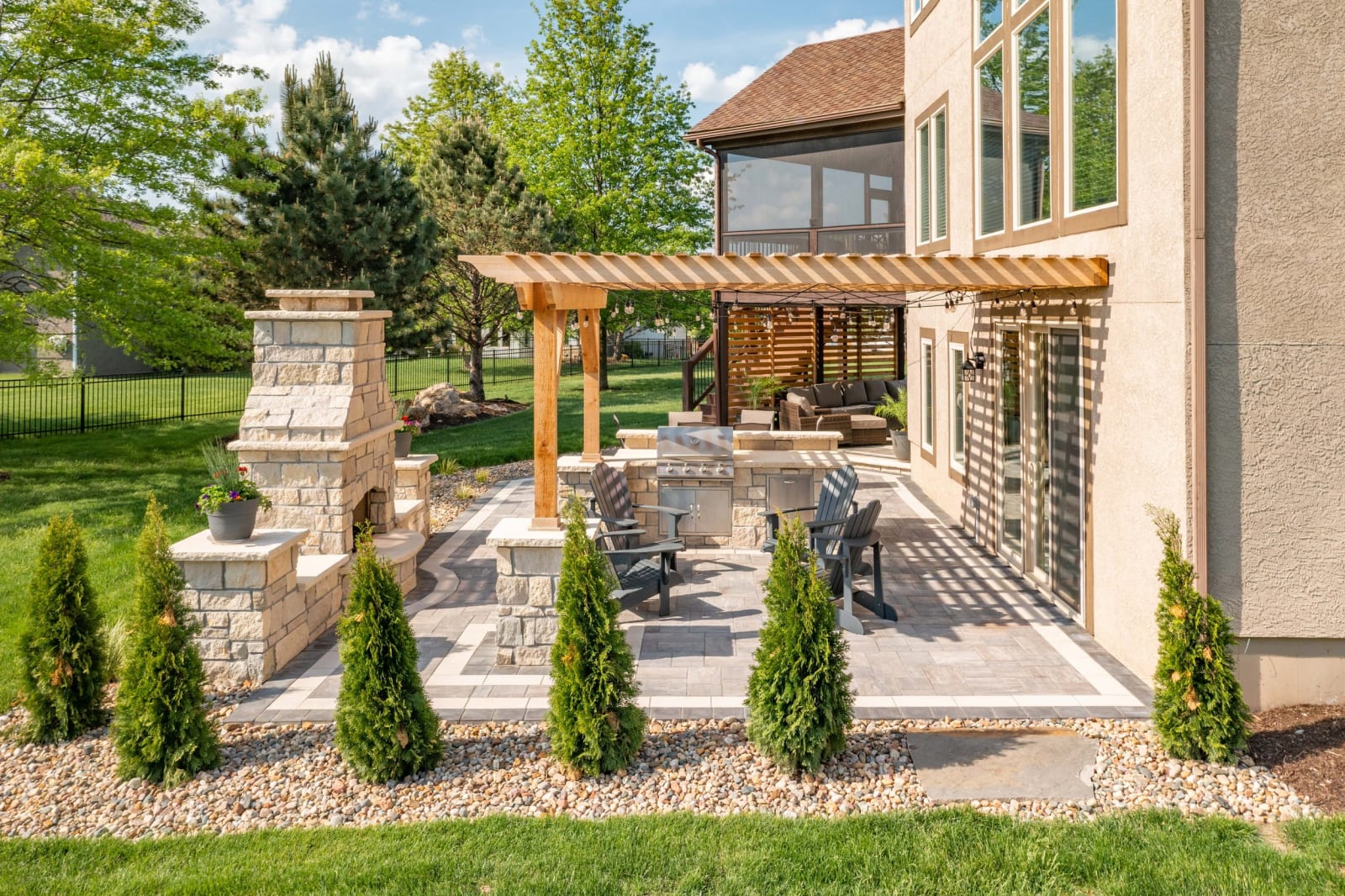
An open patio is a slab. Add a pergola overhead and the same patio becomes a room. The transformation is bigger than the structure suggests. Posts go in the ground, beams go up, rafters cross overhead, and suddenly the space has a ceiling, an edge, and a sense of intimacy that no umbrella or awning can match. Over the past ten years building pergolas across the Kansas City Metro, we have developed strong opinions about what makes one work and what makes one disappoint. Here is what we tell every homeowner before we draw the first design line, including the things that catch people off guard.
The catalog answer is shade. The real answer is depth.
A flat patio reads as one plane. The eye scans it and moves on. A patio with a pergola overhead reads as a three-dimensional room. The eye has somewhere to land. The light is filtered and softened. The furniture below feels grouped rather than scattered. The patio becomes a place you walk to, not just a place you walk across.
A pergola also defines where you put things. The dining table goes under the pergola. The grill goes outside it. The lounge area picks a side. Without the pergola, none of those decisions has an anchor. The structure organizes the patio in the same way an indoor ceiling organizes a living room.
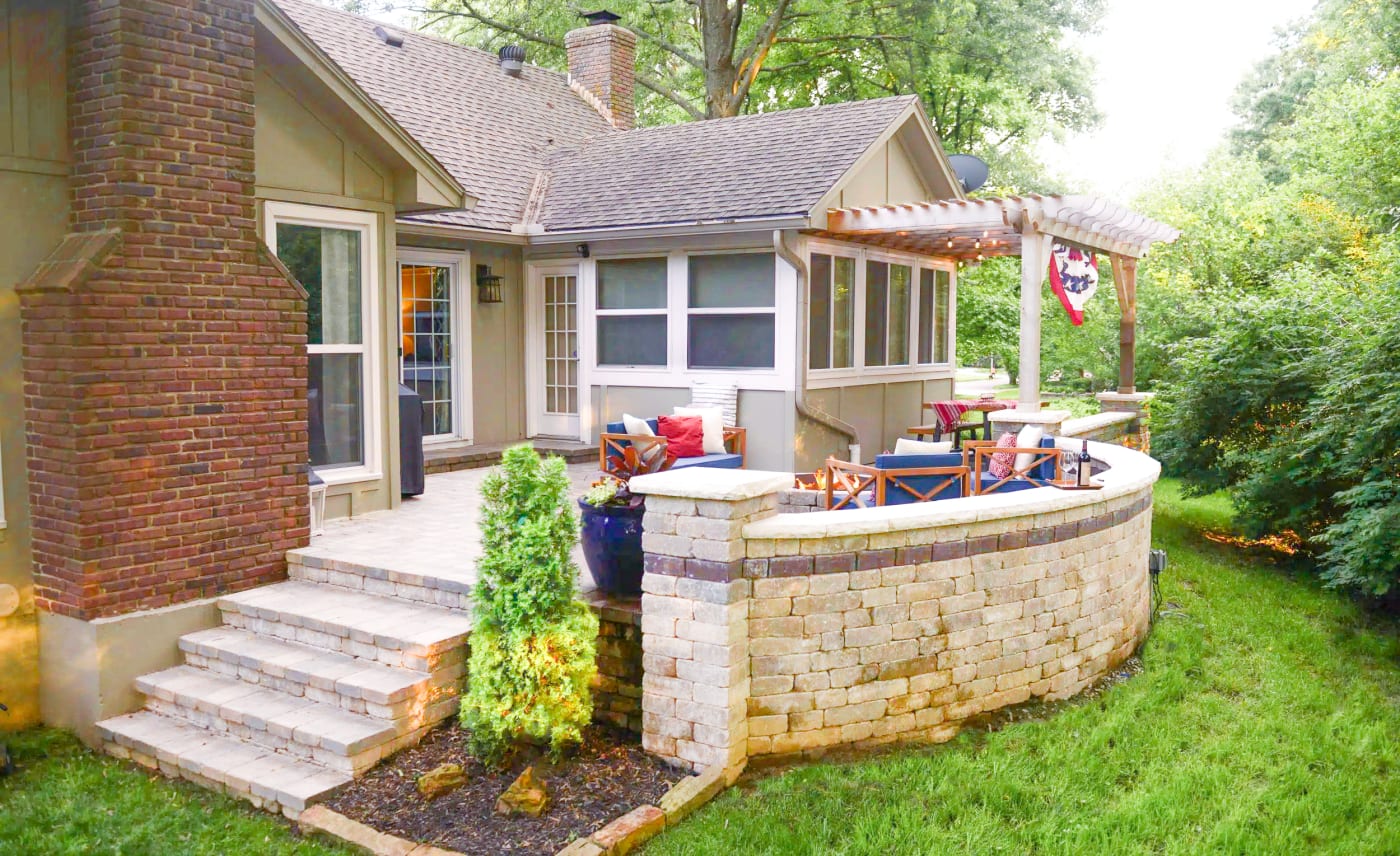
Almost every pergola we build is western red cedar. There are three reasons.
Cedar resists rot and insects naturally. It contains compounds (thujaplicins) that fungi and termites avoid. A cedar pergola in Kansas City regularly lasts 25 to 35 years without major repair, even untreated. Pressure-treated lumber, by comparison, looks worse year by year, warps unpredictably, and tends to develop checks (splits) along the grain.
Cedar holds finish beautifully. Whether you stain it, oil it, or let it weather to silver, cedar takes the treatment and stays looking intentional. Other woods either reject the finish or grey out unevenly.
Cedar is light, structurally strong, and stable. It does not move much with humidity changes. The joinery we cut on day one stays tight on day five hundred.
Aluminum and vinyl pergolas exist. They are cheaper up front, lower-maintenance, and at the right scale they work. But they always read as products instead of architecture. If the goal is for the pergola to feel like part of the home, cedar is the answer.
Most homeowners initially undersize their pergola. The most common mistake is making it too short.
Height: beam height (the horizontal beam atop the posts) should be at least 8 feet, ideally 9 to 10 feet. Lower than 8 feet feels cramped. Higher than 10 feet starts to lose the sense of room enclosure unless the footprint is large. We rarely build under 8'6".
Footprint: for dining, 12 by 14 feet is the minimum to seat 6 comfortably with chair clearance. For a grill area, 10 by 12 feet. For a lounge area, 14 by 16 feet or larger. Build smaller than these and the pergola will feel like it is hugging the furniture rather than framing it.
Post spacing: generally 10 to 14 feet apart along each side. Wider spacing requires beefier beams and looks more architectural. Tighter spacing looks busier but uses smaller lumber.
Rafter overhang: 18 to 24 inches past the outer beam, with the rafter ends typically cut at a 45 or 60-degree angle. The overhang is what makes the pergola read as designed rather than boxy.
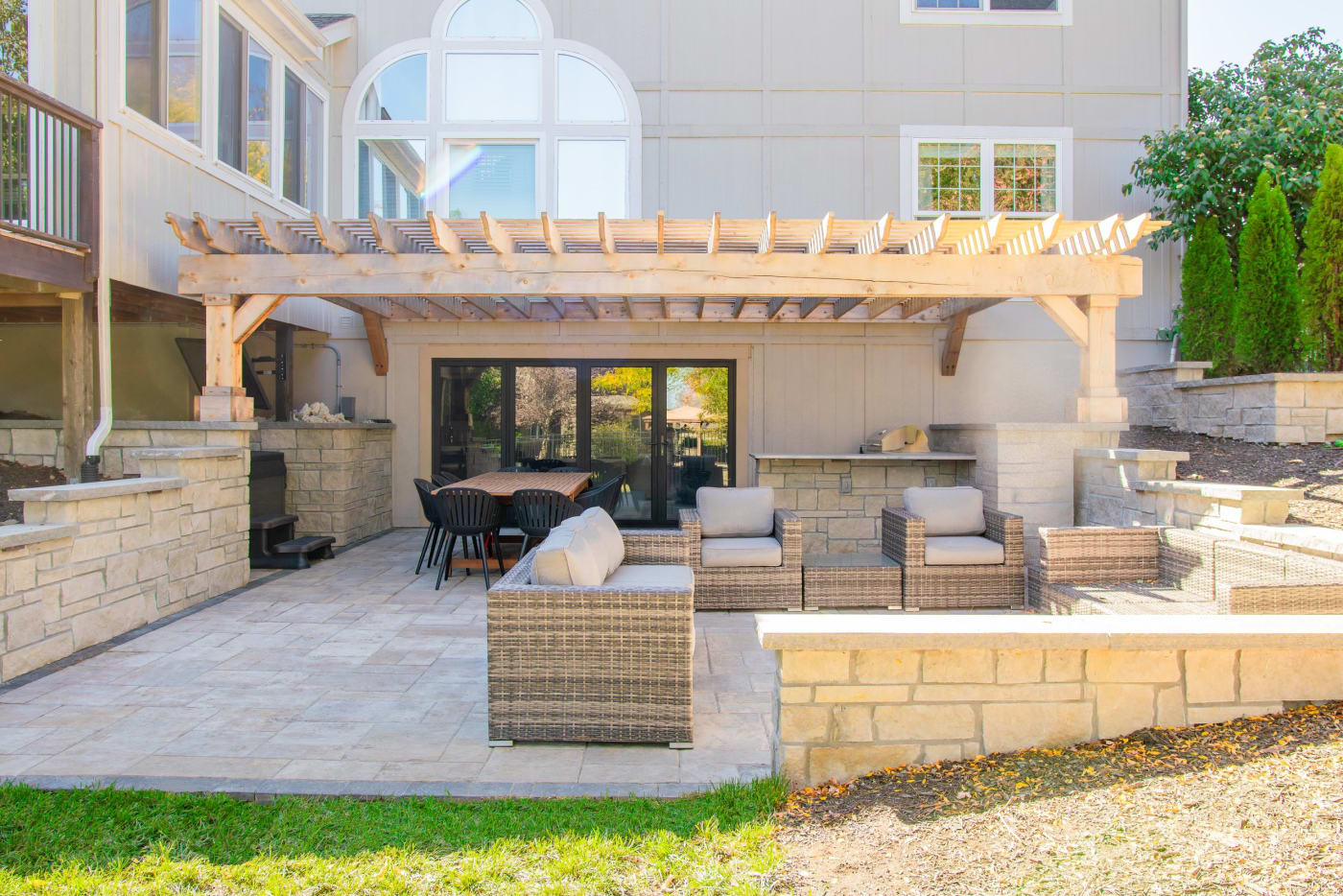
The "ceiling" of the pergola can be done four ways, each with a different feel.
Open rafters are the classic pergola look. Beams across the top with no infill between them. Throws dappled light, lets rain through, lets air move. Most "pergola in a Pinterest photo" images are this style.
Closely-spaced slats are rafters with thinner pieces (typically 2x2 or 2x4 cedar) running perpendicular and tightly spaced. Provides more shade than open rafters. Looks more architectural. We use this style often on modern designs.
Adjustable louvers are aluminum or wood slats that rotate to open or close. Fully open lets sun and air through. Fully closed creates a near-solid roof that sheds rain. This is the high-end option, runs $20,000 to $40,000+ for the louver system alone on a typical residential footprint, and is worth the money for clients who use the patio year-round.
Solid roof turns the pergola into a pavilion. Asphalt shingles, metal, or polycarbonate panels. Real weather protection. The structure stops being a pergola at this point and becomes something else.
The features that turn a pergola from a structure into a room.
Outdoor fans. A ceiling fan rated for damp (or wet, if exposed) locations, mounted to the underside of a 4x6 cross beam, moves air, drops the perceived temperature on a still 95-degree Kansas City afternoon by 6 to 8 degrees, and keeps mosquitoes from settling. The single highest-impact upgrade on most pergolas.
Recessed can lights. Wired during construction, these throw warm pools of light onto the patio below at night. Beats string lights for ambiance when the goal is sophistication rather than party. See our outdoor lighting post for full lighting strategy.
String lights. Cafe-style bulbs strung between posts or zigzagged between rafters. Warm, casual, easy to add. The pergola is the perfect mounting structure for these.
Patio heaters. Mounted to the underside of beams or to posts. Electric or gas. Adds 6 to 10 weeks of usable time on the shoulder seasons.
Screens. Retractable mesh screens that drop from the beams to enclose the pergola against bugs. Best for clients with serious mosquito problems or who entertain at dusk often.
Speakers. Outdoor-rated speakers mounted to beams or hidden in the rafter detailing. Wired to a controller inside the house.
The cleanest approach is to plan all of this during design. Conduit goes through the posts. Wires terminate at the fixture locations. The pergola goes up with no visible cables, just the features.
Three options, each appropriate in different situations.
Concrete footings (piers). The pergola posts sit on concrete piers that extend below the frost line (36 to 42 inches in Kansas City). This is the strongest and most permanent anchor, required for any pergola not sitting on an existing patio. Adds 1 to 2 days of work and roughly $1,000 to $2,500 to the project for excavation and concrete.
Surface-mounted on an existing patio. Steel base brackets are anchored to the patio surface with concrete anchor bolts, and the posts mount to the brackets. The pergola is anchored to the patio mass below, which itself is anchored to its base. Works well on existing paver, stamped concrete, or stone patios. The right call when retrofitting a pergola onto a patio that is already built.
Embedded in pavers. Posts pass through the pavers and anchor into concrete piers below grade. The pavers wrap the posts on all four sides. This is the cleanest visual but requires planning at the patio build stage. We do it on new builds where the pergola is in the design from day one.
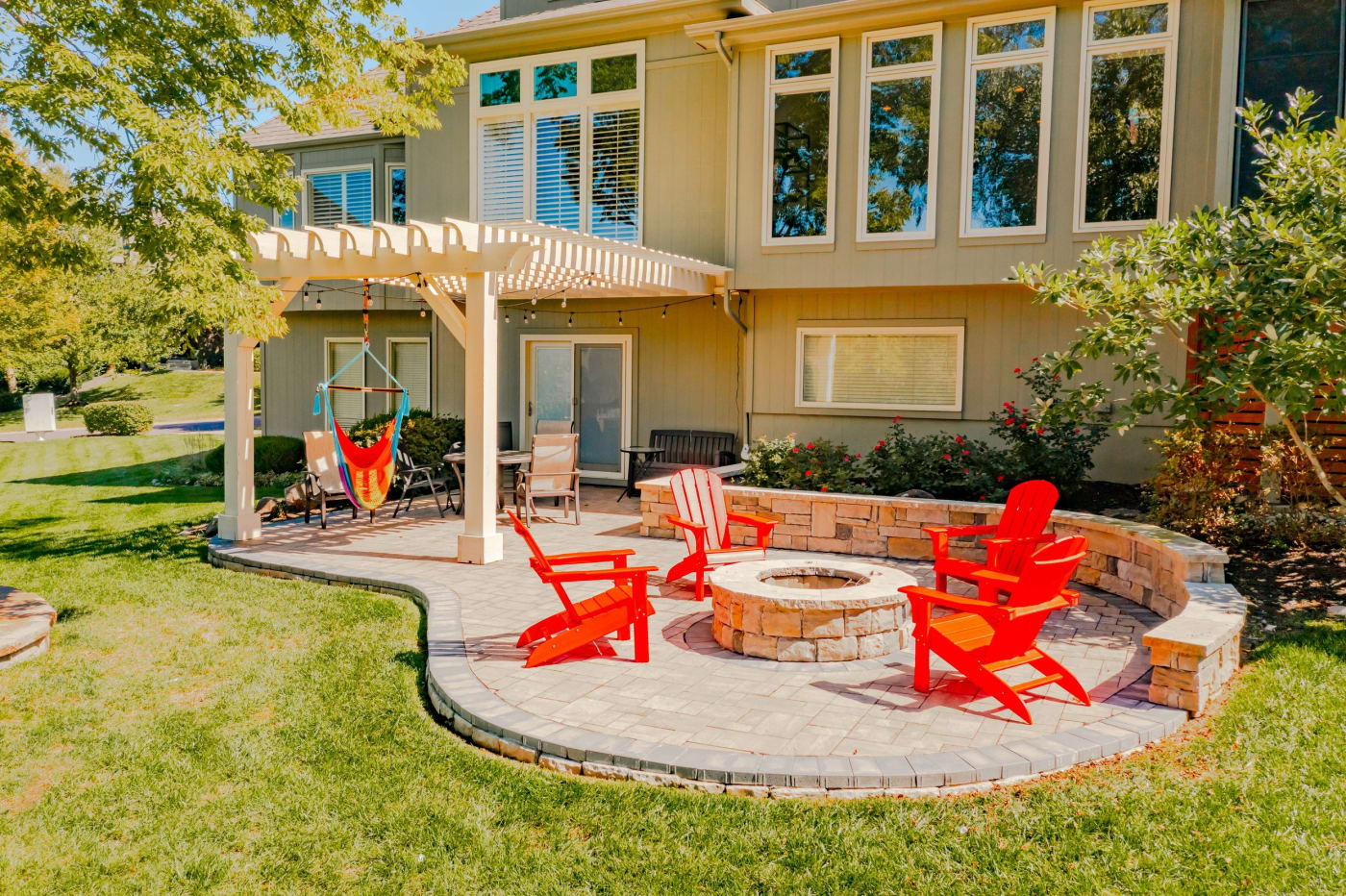
The catalog photo of a pergola with mature wisteria dripping from every beam is real, beautiful, and takes about 7 years to achieve. Here is the honest version.
Climbers that work in Kansas City:
Climbers we steer people away from:
The simpler answer for most homeowners is to skip the structural climbing plants and use seasonal annual planters and a few hanging baskets along the perimeter. You get the visual softness without the long wait or the maintenance commitment.
A cedar pergola is low-maintenance, but it is not no-maintenance.
Year 1: wait. Let the cedar acclimate, dry out from any kiln-drying or shipping moisture, and stabilize before applying finish.
Year 2: decide on finish. Three options: stain (renews the color and lasts 3 to 5 years between coats), oil (warmer look, lasts 1 to 2 years, easier reapplication), or weather (let the cedar grey to silver, no maintenance, structurally identical to a stained pergola).
Every 3 to 5 years if stained: re-coat. Light sand and re-stain, day's work for a homeowner or one of our maintenance teams.
Annually: check the hardware. The lag bolts and screws that hold the structure together can loosen slightly with seasonal movement. A quick walk-around with a wrench fixes it.
Every winter: clear snow load if you live somewhere it builds up. Kansas City pergolas are typically fine, but heavy wet snow on closely-spaced slats can stress the structure.
That is the full maintenance list. Less than a deck. Less than a fence. About the same as a wooden front door.
Per the service page: pergolas at Kansas City Hardscapes start around $7,000, with most clients investing $7,000 to $15,000 for a hand-built cedar pergola sized to a typical patio.
Custom timber-frame pergolas with engineered joinery, stone-wrapped columns, or larger footprints run $15,000 to $30,000+.
Add-ons that increase the price: louvered roof systems ($20,000+ for the louvers alone), integrated screens ($3,000 to $6,000), can lights ($1,500 to $3,500 installed), ceiling fans ($800 to $1,500 each installed), tongue-and-groove ceilings ($2,500 to $5,000), and stone column wraps ($1,500 to $3,000 per column).
A complete custom pergola with screens, can lights, fans, and stone column wraps can land in the $35,000 to $50,000 range.
Do I need a permit? Most Kansas City metro municipalities require a permit for pergolas over a certain size or those attached to the house. We pull permits as part of every install where they are required.
Can a pergola attach to my house? Yes. This is called a "lean-to" or "house-attached" pergola, with a ledger board bolted to the house at one side and posts on the far side. We need to verify the house framing can support the ledger, and we flash the connection carefully to prevent water intrusion.
Will it stand up to Kansas City storms? Yes, when built right. Our pergolas use 6x6 minimum posts, doubled 2x10 or 2x12 beams, and properly anchored footings. We have not lost a pergola to wind in ten years of building.
Can I add features later? Yes. Wiring through posts and beams can be retrofitted, though it is much easier to plan it in during the build. Fans, lights, and screens are commonly added later.
How long does construction take? A standard 12 by 14 foot pergola is typically 3 to 5 days from footings to final cleanup. Larger pergolas with integrated features take 1 to 2 weeks.
Can you match the pergola to my house? Yes. We match column wraps, stain color, and proportion to the home's architecture during design.
If you are planning a pergola for a Kansas City backyard, we are glad to walk the property with you and sketch out where it should sit, how big it should be, and what features will earn their keep. We bring stain samples, beam profile samples, and renderings of past builds so the decision feels grounded rather than abstract. Call us at 816-499-2547 or book a free consultation through the Get Started page.
Thirty minutes on site with our designer is all it takes to see what is possible. No pressure, no hard sell.
Schedule a Design Call