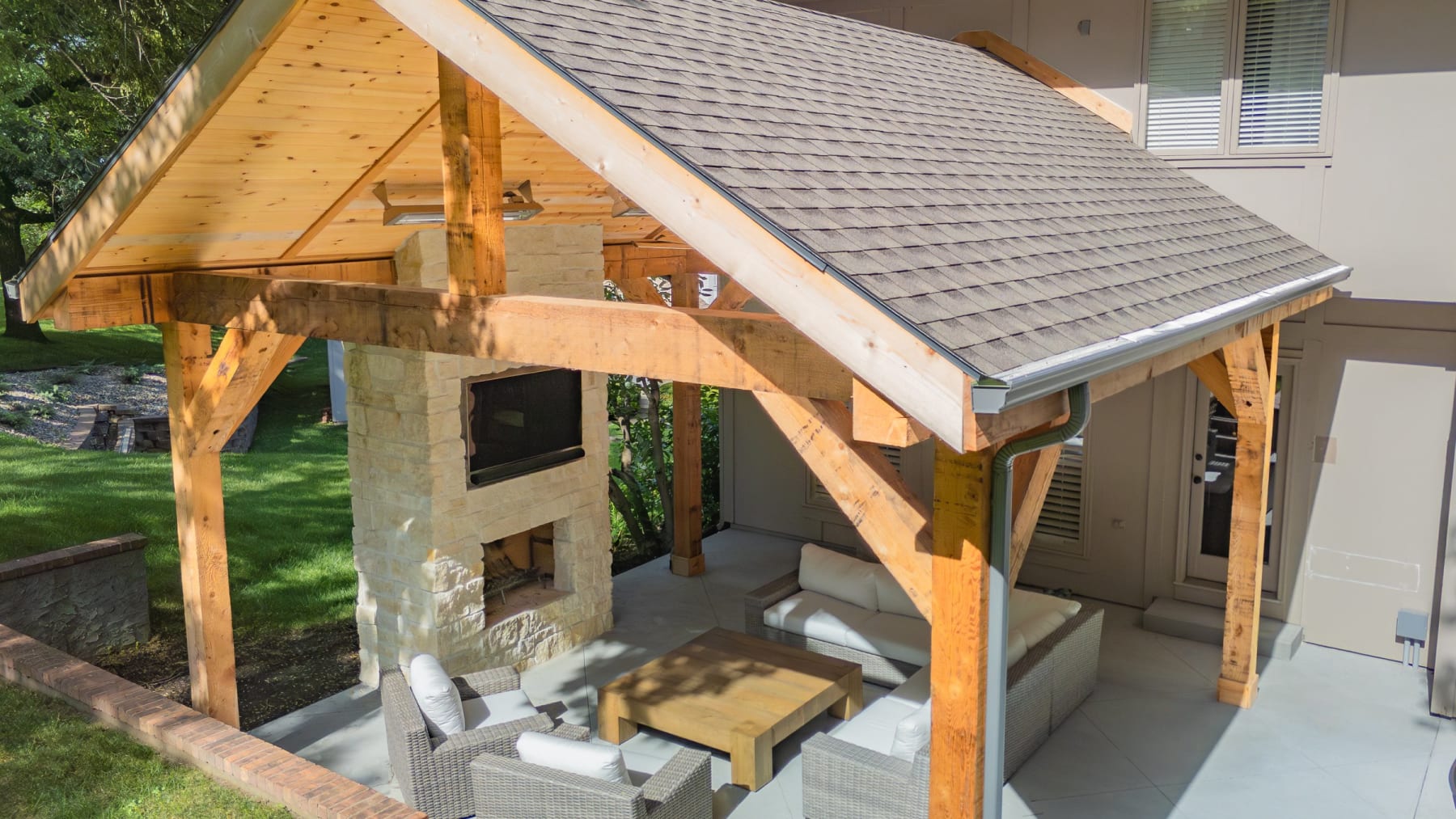
Kansas City, Kansas runs through the Unified Government of Wyandotte County and Kansas City, Kansas (the UG). In 1997 the city and county merged their governments. That was the first such consolidation in the country, and ever since then a single office has handled permitting for the entire jurisdiction. For a hardscape project, that means one set of rules and one permit office, whether the address is in Piper on the west side, in central Wyandotte, or out toward Bonner Springs and Edwardsville.
Two specific KCK rules matter at design. The pool barrier rule is 5 feet (not the 4-foot default most of the metro uses), and pool gates are self-locking (not just self-latching). Both are stricter than the JoCo cities or the Missouri side. Beyond that, the regulatory pattern is straightforward and the build runs cleanly when the contractor knows the rules.
One government for the city and the county.
The Unified Government of Wyandotte County and Kansas City, Kansas handles all permitting for KCK. Building Inspection runs through the Neighborhood Resource Center. The Code of Ordinances and Building Code provisions sit in Chapter 8, swimming pool rules in Chapter 33, and the Unified Development Ordinance (UDO) covers zoning and site development.
For residential hardscape work, expect to pull a permit for:
- Pergolas, pavilions, outdoor kitchens, and outdoor fireplaces on footings, under the adopted residential code.
- Decks over 30 inches above grade or attached to the home.
- Pools, spas, and hot tubs, with the 5-foot barrier and self-locking gate rules covered below.
- Fences, under Chapter 8 Article IV.
- Retaining walls over 4 feet measured from the bottom of the footing to the top of the wall, or any wall supporting a surcharge.
The advantage of the UG structure is operational. Where a homeowner outside Wyandotte might run their permit through both the city and the county on certain projects, in KCK it's one office. That speeds up turnaround when the package is clean.
5 feet, self-locking, no 3.5-inch openings.
Wyandotte County Chapter 33 on swimming pools is stricter than most metro cities on three specific points. All of them matter at the design step:
- In-ground pool barrier: at least 5 feet tall. Most metro cities run a 4-foot minimum from the base IRC. KCK is 5 feet. A contractor pricing a standard 4-foot fence is short.
- Openings in the barrier: no greater than 3.5 inches. Standard residential fence pickets can clear this rule, but a deliberate-air-gap or decorative fence with 4-inch openings does not.
- Gates: 5 feet tall, self-closing, self-locking, and kept locked. Self-closing and self-latching are the standard metro requirement; self-locking is the KCK addition. The gate hardware itself has to lock when it closes, not just latch. The hardware spec is different from what most pool fence kits ship with.
- Above-ground pools: either non-climbable sidewalls 4 feet or higher, or a 5-foot fence around the pool area.
The self-locking gate hardware is the rule we see the most contractors miss when they normally work the Missouri side or the Johnson County cities. We spec it correctly at the bid stage on any KCK pool job.
Chapter 8 governs the rest.
Fence and retaining wall provisions live in Chapter 8, Article IV. The structure mirrors most of the metro:
- Fence permits are required under the city code. Standard residential heights are governed by the zoning district.
- Retaining walls 4 feet or under, measured from the bottom of the footing to the top of the wall, with no surcharge load, are generally exempt from the building permit.
- Retaining walls over 4 feet, or any wall supporting a driveway, structure, or sloped fill, require a building permit and engineered drawings prepared by a Kansas-licensed Professional Engineer.
- Masonry fences and retaining walls often hit a 4-foot height threshold for a permit even when wood fence might be exempt at the same height. Worth checking specifically.
Lighter than the Missouri side.
The Kansas side of the metro generally regulates private-property trees more lightly than the Kansas City, MO side. Routine removal of a tree on private residential property in KCK typically does not require a permit.
Two practical rules still apply:
- Kansas boundary tree law. A tree whose trunk straddles a property line is jointly owned by the adjacent property owners and requires mutual consent before removal. The trunk location is the determining factor, not the canopy.
- Right-of-way trees. Trees in the public right-of-way (the curb strip) are managed by the UG. Removal or major trim work without authorization can carry fines.
Our crews protect mature private trees the same way on any build: barrier fencing at the dripline, hand excavation inside the critical root zone, no soil compaction inside the protected area.
Piper and the broader pattern.
KCK is wider in character than most metro cities. The neighborhoods we work most:
- Piper. The affluent suburban area on the west side of KCK, near I-435 and 91st Street. The largest concentration of our KCK hardscape work. Larger lots, newer construction, active building activity, the home values and the build budgets support full outdoor living projects.
- The Legends area and western KCK. Newer construction, suburban character, builds that fit the same template as the JoCo cities to the south.
- Central Wyandotte. Established neighborhoods with smaller lots and older homes. Builds tend to be more modest in scope, often patio-plus-fire-feature rather than full outdoor living.
- East of I-635. The UG's redevelopment incentive programs (CID, EDX, IRB, STAR, TIF) have brought new investment into areas historically overlooked. The build context here ranges widely, and we work with homeowners across the spectrum when the lot supports a real project.
- Edwardsville and Bonner Springs (KCK-adjacent). Technically separate cities but often grouped with the KCK service area. Generous lots, suburban character, builds tend to land in the same range as Piper.
Real ranges from real KCK builds.
These are the numbers we've been hitting on KCK and Wyandotte County projects through 2026. The cost band reflects the diversity of the area: Piper and the west-side affluent neighborhoods support upper-tier builds, central Wyandotte tends to fall in the middle, and east-side builds run the practical range.
Full outdoor living builds are where most Piper inquiries land. Central Wyandotte builds run more toward the patio-plus-pergola scope. Pool builds carry the 5-foot barrier and self-locking gate as line items the homeowner should expect on the bid.
Kansas City, KS homeowner questions.
How long does a UG permit take?
Are the pool rules really stricter than the rest of the metro?
What if my property is in a redevelopment district or Opportunity Zone?
Can a homeowner pull the permit themselves?
How soon can you start a build in KCK?
Do you handle the UG submittal too?
Kansas City, KS and the surrounding metro.
Our shop sits east of the river in Kansas City, Missouri. We build across Kansas City, KS and the surrounding cities every season. The map below shows the area we cover most often.