Lenexa runs its land-use rules through a Unified Development Code (Title 4 of the city code), which is exactly what it sounds like: zoning, subdivision, landscaping, and site design standards all consolidated into one document so the city, the builder, and the homeowner work from the same map. That's an advantage on a clean project and a liability on a careless one. The most distinctive line in the UDC for hardscape work is the accessory threshold. Lenexa exempts detached structures of 120 square feet or less from the building permit, which is tighter than the 150-square-foot line some surrounding cities use. A 10-by-12 shed is exempt. A 12-by-14 covered structure is not. Contractors who do not work Lenexa often miss this and bid the job without budgeting the permit.
What follows is what we'd tell a Lenexa homeowner before they sign anything. Real UDC rules, real HOA processes for the master-planned communities that dominate the city, and what a Lenexa hardscape actually costs.
What requires a permit in Lenexa.
The full set of residential rules lives in the Unified Development Code, Title 4 of the Lenexa City Code. The building department handles applications through the city's online permit portal. The Lenexa Legal Department line is 913.477.7620 for code questions; the building inspections phone is published on the city website at lenexa.com.
For residential hardscape work, expect to pull a permit for:
- Pergolas, pavilions, outdoor kitchens, and outdoor fireplaces with a projected roof area over 120 square feet, or any accessory structure on footings.
- Decks over 30 inches above grade or attached to the home. Site plan plus building plans required.
- Pools, spas, and hot tubs. Plan review references the 2018 IRC and includes the barrier and gate hardware specifics covered below.
- Retaining walls over 4 feet measured from the bottom of the footing to the top of the wall. Walls supporting a surcharge (driveway, structure, sloped fill) require a permit at lower heights.
- New or replacement fences and walls, regardless of height. Lenexa requires a permit for any new or replacement fence or retaining wall.
What's exempt from a building permit: detached accessory structures of 120 square feet or less in projected roof area, provided the UDC setback requirements are met. That's the storage-shed line.
The 120-square-foot accessory threshold is the line a careless bid crosses without realizing it. We confirm it at the design step, not after the foundation is poured.
2018 IRC, 4-foot barrier, 54-inch latch.
Pool projects in Lenexa run through a plan review that references the 2018 International Residential Code. Three rules carry the project:
- A 4-foot barrier minimum. Every residential pool requires a barrier (wall, fence, or combination) at least four feet tall that makes the pool inaccessible.
- Self-latching, self-closing gate at 54 inches. Any gate in the barrier must have hardware that self-closes and self-latches, with the latch positioned at least 54 inches above grade. The 54-inch height is the one that catches retrofits where the latch is mounted at hip height for convenience.
- Site plan submittal. The pool location, the barrier path, distances to the property line, distances to the home, and the equipment location are all required at submittal. Inspections happen against the installed barrier, not the planned one.
On Lenexa pool projects we walk the lot first to verify the barrier fits inside the setbacks and around any existing landscape we plan to keep. Lenexa lots in the older subdivisions are tighter than the newer Cedar Creek phases; the fit-check matters more on the older lots.
The 2001 Landscaping & Site Design Standards.
Lenexa's tree preservation rules come from the Landscaping and Site Design Standards Ordinance adopted in 2001. The headline mechanic is a tree credit system: a healthy existing tree larger than 10 inches DBH (diameter at breast height) is credited 2-for-1 against the site's required landscaping count, capped at 50 percent of the total trees a site is required to install.
The credit system is most aggressive on commercial site development. On a single residential hardscape project, the practical impact is that mature canopy is treated as an asset to design around, not an obstacle to cut through. Our crews work the same tree-protection protocol on every Lenexa build: barrier fencing at the dripline of any tree we're keeping, hand excavation inside the critical root zone, no soil compaction inside the barrier, no piled debris.
The other half of the standards governs the planting plan that goes back in around a finished hardscape. We design the patio and the planting beds as one drawing, not two, so the trees and the structures relate to each other instead of competing.
4 feet, footing to top, and a permit for every fence.
The retaining wall rule mirrors most of Johnson County: walls 4 feet or less, footing to top, are exempt from the building permit. Walls over 4 feet, or any wall with a surcharge behind it (driveway, structure, sloped fill), require a permit and engineered drawings.
The fence rule is the one that catches more Lenexa homeowners. A new or replacement fence requires a permit in Lenexa, even at standard residential heights. The UDC limits residential fence height to 6 feet, requires the fence to sit behind the front wall of the home in any front yard application, and specifies that fences are installed with the finished side facing outward (the framing faces the property owner, not the neighbor). Corner lots run sight-triangle restrictions worth checking before the post hole digger comes out.
We pull the fence permit as a line item on Lenexa hardscape projects that include perimeter fencing, and bake the finished-side rule into the framing detail so the inspector signs off the first time.
Cedar Creek, Falcon Ridge, and the rest.
Lenexa's identity is its master-planned communities. The HOA review weight on a Lenexa hardscape project is real, and on a Cedar Creek build it's the slowest leg of the schedule if you don't run it cleanly. The HOAs we deal with most:
- Cedar Creek. Lenexa's signature master-planned community. Multiple villages, multiple sub-association ARCs by phase. Submittals expect drawings to scale, material specs with colors, and a planting plan. Plan on 3 to 6 weeks for review depending on the village and the ARC's meeting cadence.
- Falcon Ridge area (Falcon Ridge, Falcon Ridge Estates, Falcon Ridge Villas, Falcon Valley, Falcon Meadows, Falcon Pointe). Built up around the Falcon Ridge Golf Club through the 1990s and early 2000s. Course-frontage lots run the same sightline-sensitive review weight as any course-adjacent community.
- Hallbrook. Established affluent community on the east side of Lenexa.
- Woodland Reserve. Wooded lots with mature canopy. The tree-protection plan matters more here than on most Lenexa builds.
- Arbor Lake, Bristol Ridge, Pinehurst Estates, Nottingham Forest, Whispering Hills. Each runs an active architectural review for visible exterior work. A standard submittal package clears the first round.
- Northwood Trails, Quivira Falls, Sunnybrook, Persimmon Hill. Older subdivisions with lighter review processes, sometimes none for visible work.
For any HOA not in this list, we pull the covenants for the specific lot at the design step and budget the submittal time into the schedule. The first submittal package is what wins the timeline; a clean package gets approved in one round, a sloppy one in three.
Real ranges from real Lenexa builds.
These are the numbers we've been hitting on Lenexa and west-Johnson-County projects through 2026. Ranges, not quotes. Final pricing depends on site complexity, retaining wall scope, drainage, demo of any existing concrete or wood deck, material tier, and the size of the finished project.
The full outdoor living range is where most of our Lenexa inquiries land, and Cedar Creek and Falcon Ridge builds tend to push the upper third of the range. The HOA submittal line is real money on these projects, not a token fee, because the drawings need to be tight enough to clear architectural review on the first pass.
Pergola, hot tub, and retaining wall.
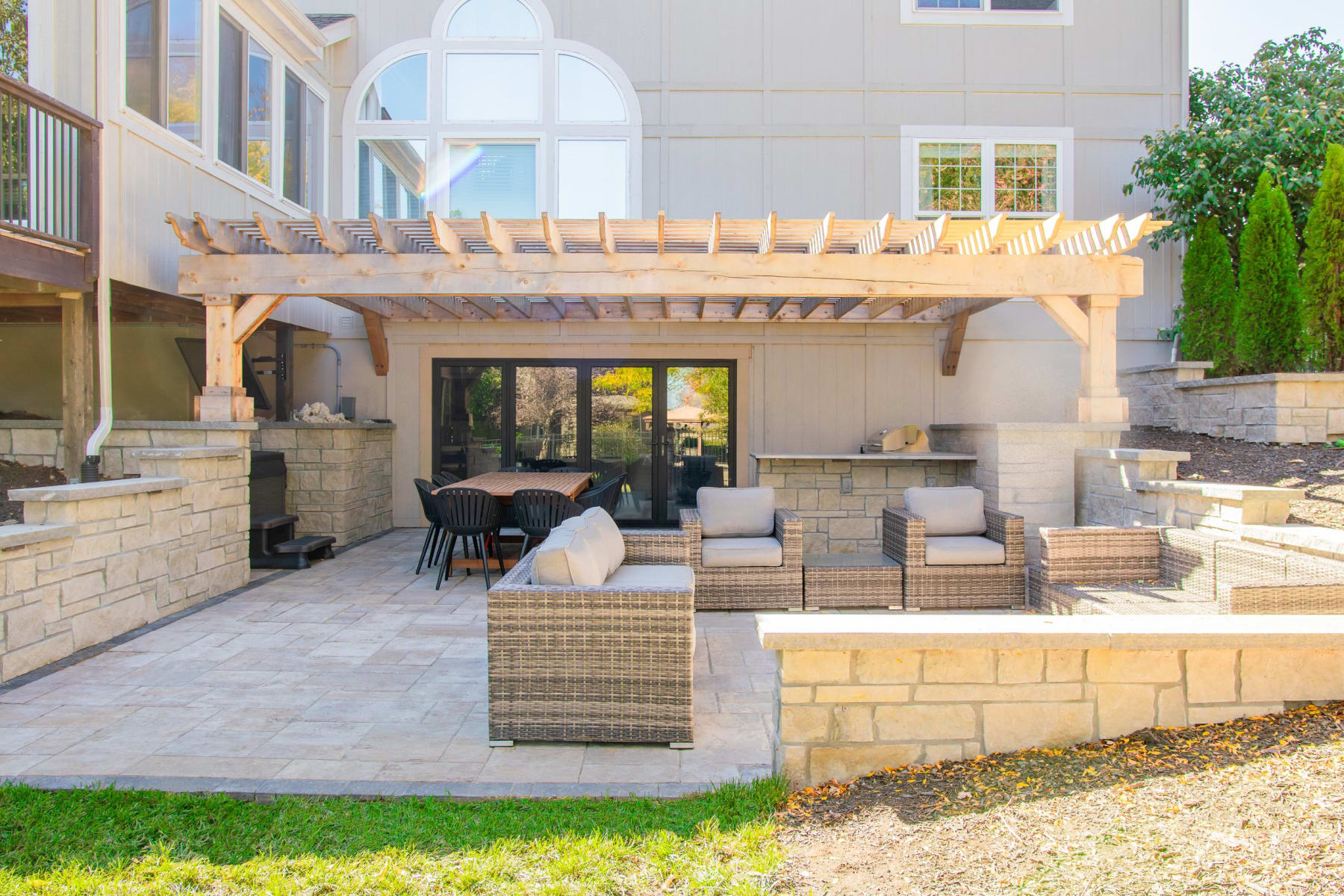
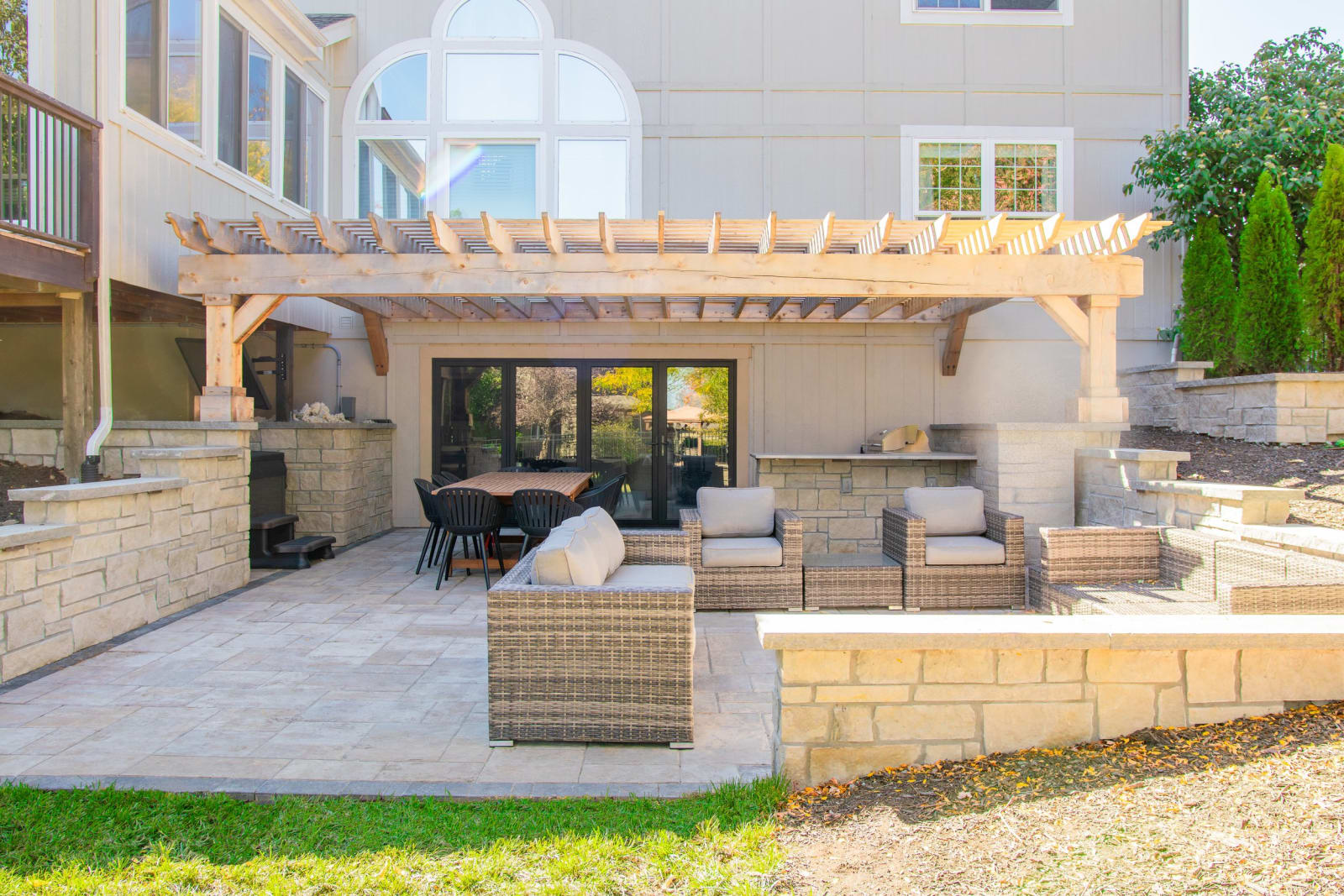
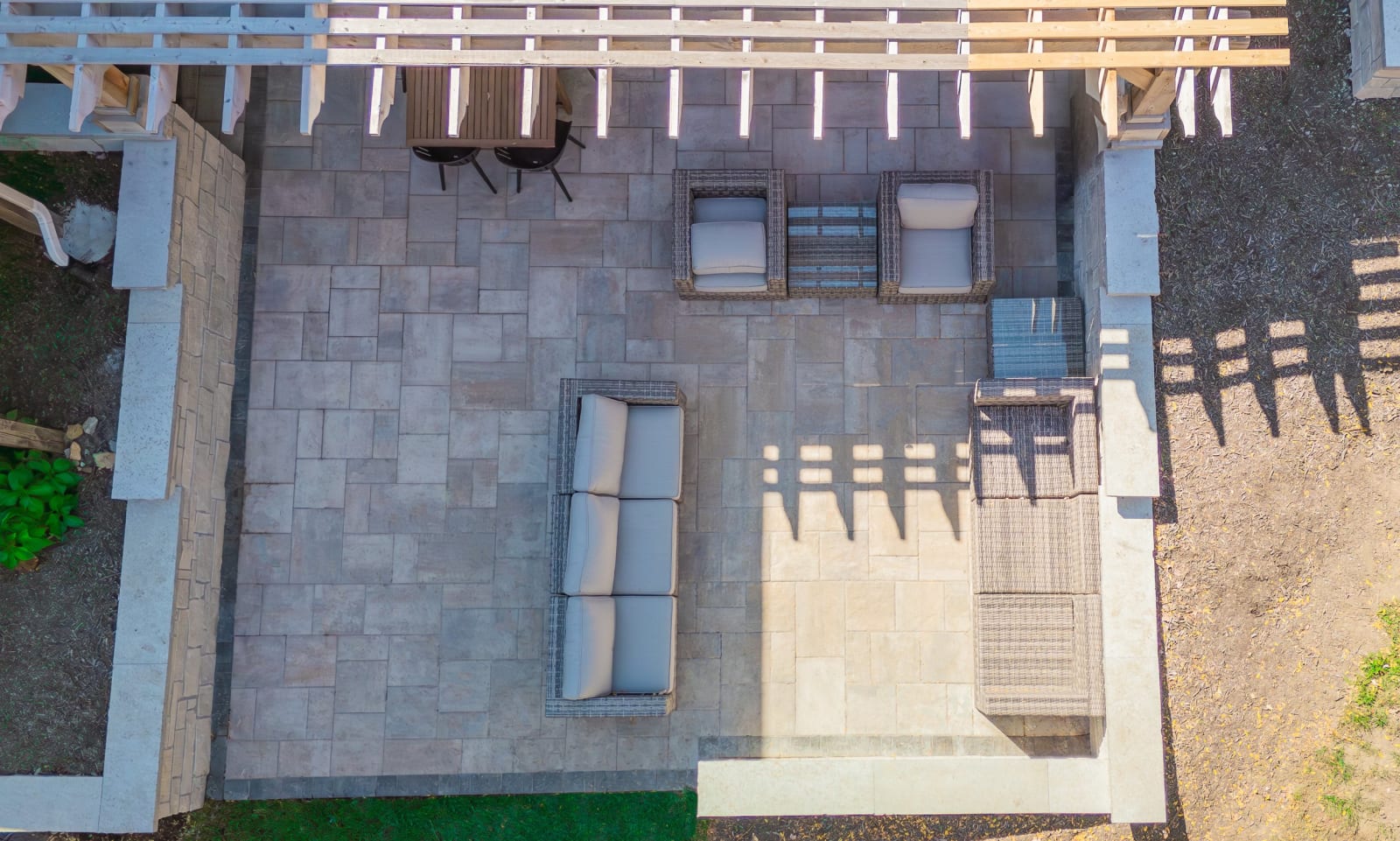
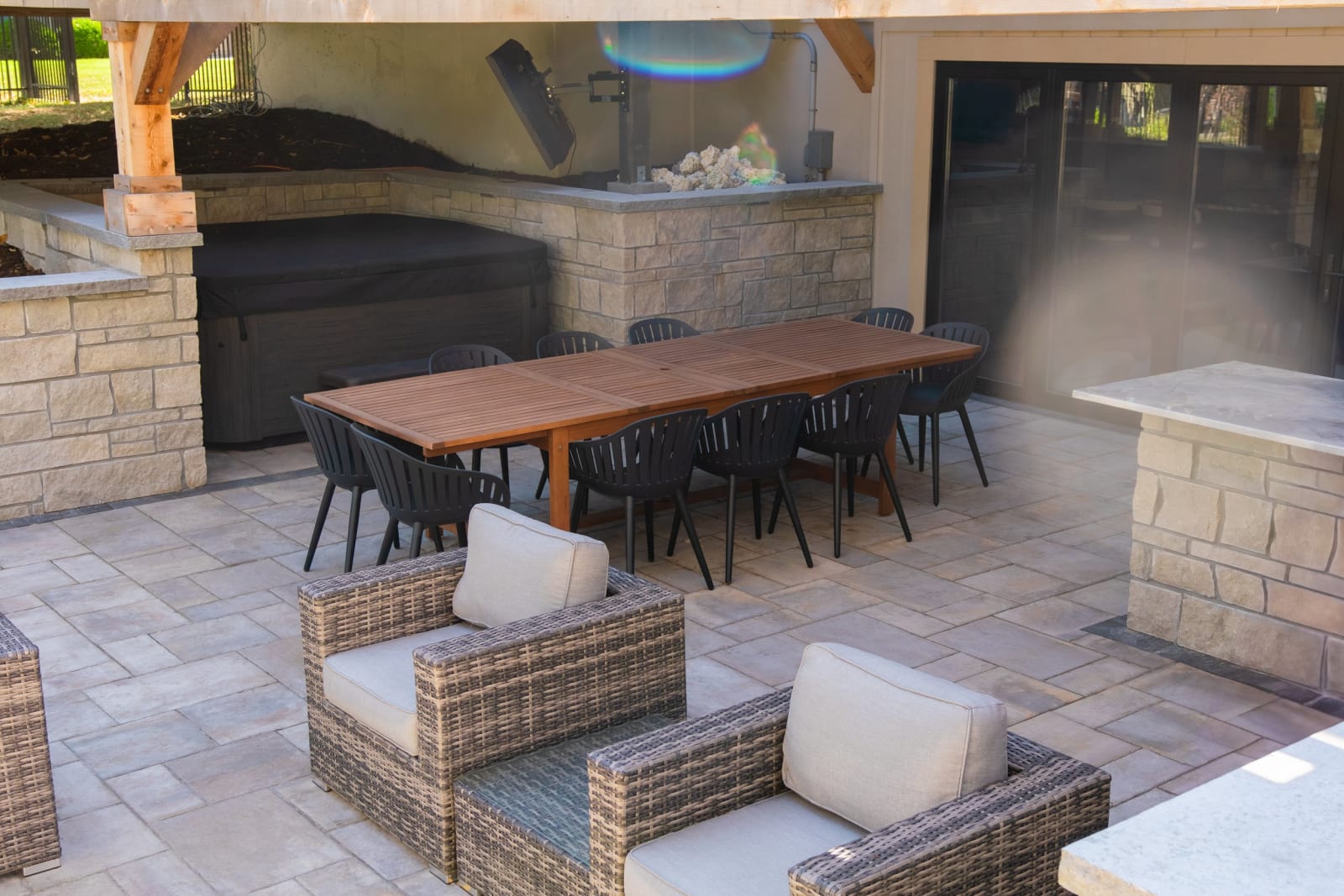
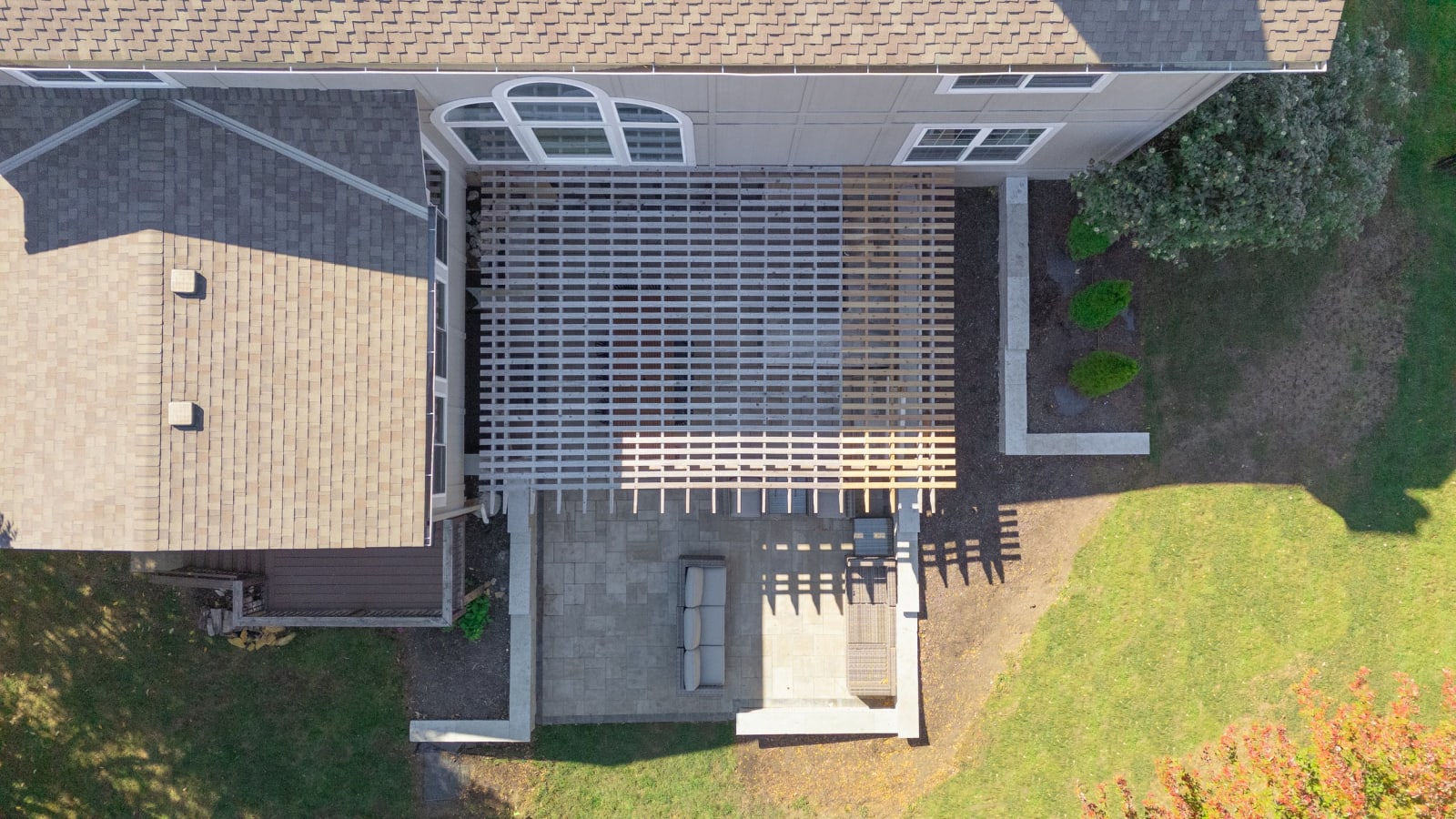
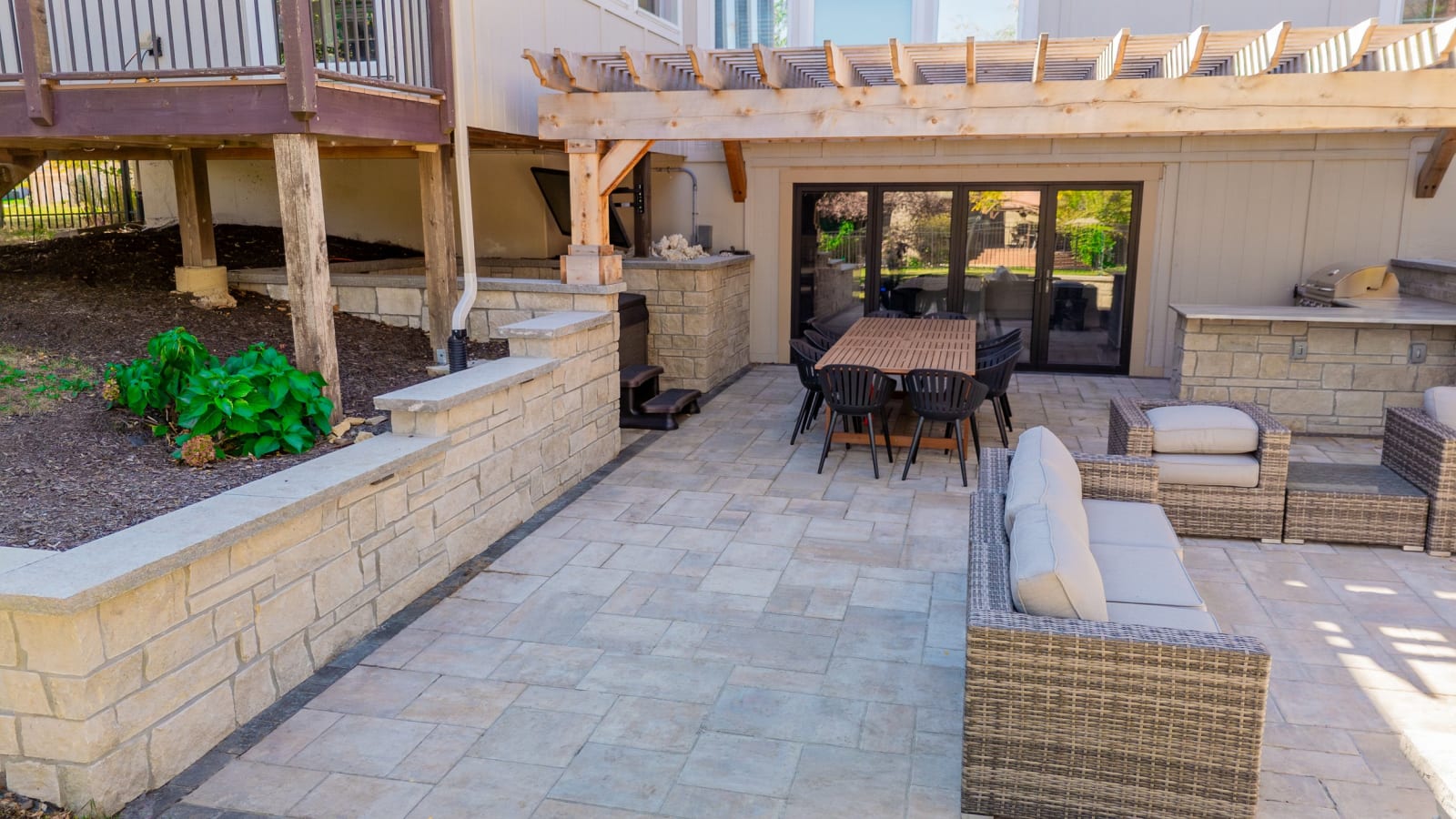
A Lenexa build that hits a lot of what this page describes in one project: large engineered pergola, hot tub on the patio, paver patio, and a retaining wall that resolves the lot grade. The kind of combined build that goes through HOA review and the building permit together.
Click any image to view full size.
What changes on the build side.
Lenexa shares the same Johnson County clay soil profile we describe on the Leawood, Overland Park, and Shawnee pages. The base specs don't change: deeper aggregate base than a sandy-soil install would call for, geotextile fabric to keep the clay out of the base, drainage planes, and a poured concrete slab under any premium paver build that the homeowner wants to last 30 years.
What's distinctive in Lenexa specifically:
- Real grade west of I-435. Cedar Creek, Falcon Ridge, and the Prairie Star area work elevation seriously. Walkout basements, sloped backyards, two-tier patios. Retaining walls are part of the design, not an afterthought.
- Older subdivision drainage. The older east-Lenexa subdivisions (Quivira Falls, Sunnybrook, parts of Hallbrook) sit on lots that were graded to mid-century stormwater standards. A new patio can shift surface water in ways the original grade didn't anticipate. We pipe and grade to a code-compliant outfall on every build.
- Mature canopy in the east-side neighborhoods. Trees planted in the 60s, 70s, and 80s are now major canopy. We protect them.
- Cedar Creek's drainage standards. Cedar Creek's community-level drainage rules sit on top of the UDC. We confirm both at the design step.
Lenexa homeowner questions.
How long does a permit take in Lenexa?
Do I need HOA approval before pulling the city permit?
Can a homeowner pull the permit themselves?
How does Cedar Creek's review work?
How soon can you start a build in Lenexa?
Do you handle the HOA submittal too?
Lenexa and the surrounding metro.
Our shop sits east of the river in Kansas City, Missouri. We build across Lenexa and the surrounding cities every season. The map below shows the area we cover most often.