Parkville is the Northland town that thinks of itself as a town, not a suburb. Downtown historic main street, Park University on the hill, the Missouri River at the bottom of the bluffs, and a residential pattern that climbs from the river up through Riss Lake, The Bluffs, and The National Golf Club community on the higher ground. The grade is the headline. Most Parkville lots work real elevation, which means most Parkville hardscape projects involve a meaningful retaining wall, real drainage planning, and a design that respects the slope instead of fighting it.
The code is current and clean. Parkville adopted the 2018 International Family of Building Codes in January 2020 via Ordinance 3027, with a July 2025 amendment to Section R602.10.4 (braced wall panels) via Ordinance 3265. The Building Code is Chapter 500 of the city code, and applications run through the Department of Community Development. What follows is what we'd tell a Parkville homeowner before they sign anything.
What requires a permit in Parkville.
For residential hardscape, expect to pull a permit for:
- Pergolas, pavilions, outdoor kitchens, and outdoor fireplaces on footings, under the 2018 IRC accessory-structure rules.
- Decks over 30 inches above grade or attached to the home.
- In-ground pools, larger above-ground pools, and any pool over 24 inches deep or over 5,000 gallons. Small prefabricated above-ground pools (under 24 inches, under 5,000 gallons, fully above ground) are exempt from the building permit.
- Retaining walls over 4 feet measured from the top of the footing to the top of the wall, or any wall supporting a surcharge.
What's exempt from a building permit:
- Fences six feet or under in height. Standard residential perimeter fence does not require a permit (it still has to meet zoning setback and visibility rules).
- Retaining walls four feet or under measured from the top of the footing to the top of the wall, with no surcharge load behind them.
Every plot plan submitted shows the proposed structure as staked, with setbacks from property lines, easements, platted building lines, and siltation control. Siltation control on a sloped Parkville lot is not a checkbox; it is a real requirement during construction.
On a Parkville bluff lot the engineering and the drainage are the project. The patio is what gets seen.
What changes when the lot drops 30 feet across the back yard.
Parkville's residential pattern is unusual for the metro. A meaningful share of the lots are working real grade. The Bluffs neighborhood is literally built on the cliffs above the Missouri River, with homes stepped down the slope on engineered foundations. River Hills Estates winds through wooded hills off Crooked Road. The National Golf Club sits on rolling course land. Riss Lake wraps a 134-acre private lake with elevation between the homes and the water.
What that means at the patio level:
- Engineered retaining walls as a major line item. A four-foot wall threshold gets hit on most Parkville projects. We engage a Missouri-licensed engineer at the design step on any bluff-lot project.
- Real drainage design. Surface water off a sloped patio cannot dump uncontrolled onto the slope, the neighbor's lot, or the lake. We grade and pipe to a code-compliant outfall, including the siltation control the city requires during construction.
- Slope stability matters before the patio matters. On a bluff lot, the patio sits on the slope. We work with the engineer to confirm the slope can carry the new load before we commit to a footprint.
- Tree-root protection on the slope. Mature trees on slopes hold the slope. Disturbing the root system of a slope-stabilizing tree is not a hardscape problem, it's a slope problem. We protect aggressively.
The Parkville communities we work with most.
The HOA picture in Parkville is structured. The biggest communities run real architectural review processes:
- Riss Lake. A 134-acre private lake community with a pool, tennis courts, and walking trails. Strong HOA, active architectural review on visible exterior work, lake-adjacent lots carry extra sightline weight.
- The National Golf Club. The premium golf community in Parkville. Course-frontage lots run a sightline-sensitive review process similar to Loch Lloyd: material selections push toward natural stone and premium pavers, lighting is reviewed for spill onto the course, structures are reviewed for how they read from the fairway.
- The Bluffs. The forested cliff-side neighborhood west of downtown. Unique architectural character, review considers how a build integrates with the woods and the river view.
- River Hills Estates. Winding wooded lots off Crooked Road. Tree-protection plans are the most common review topic.
- The Green Glades, Highlands of Weatherby, Riverview, Riss Lake Meadows, Thousand Oaks, Countrywood, Riverchase. Each runs an active architectural review for visible exterior work. Standard submittal package gets you through the first round.
For any HOA not listed, we pull the covenants for the specific lot at the design step and budget the submittal time into the schedule. On Riss Lake and The National Golf Club projects, the HOA submittal often takes longer than the city permit. We sequence both at the same time so the longer one paces the build.
Site and Landscape Design Standards.
Parkville's tree policy on private property runs through the city's Site and Landscape Design Standards. Trees to be preserved or removed are shown on development plans. A landscape credit can be awarded for preserved trees, and if a credited tree dies, becomes diseased, or is otherwise removed, the property owner has to replace it at the same ratio at which the credit was originally given. The Community Land and Recreation Board acts in an advisory capacity on tree policy, planting plans, and preservation.
For a single residential hardscape project, the practical impact is that mature canopy on a Parkville lot is protected from the contract on. Our tree-protection protocol on every Parkville build: barrier fencing at the dripline, hand excavation inside the critical root zone, no soil compaction inside the barrier, no piled debris.
Real ranges from real Parkville builds.
These are the numbers we've been hitting on Parkville and broader Platte County projects through 2026. Ranges, not quotes. Parkville's hill-and-bluff geography typically pushes projects to the upper end because of the retaining wall and engineering scope.
The full outdoor living range is where most Parkville inquiries land. The National Golf Club and Riss Lake builds tend to push the upper third of the range; The Bluffs builds run the engineering line higher than the patio line on the bid.
Paver patio, stone fireplace, seating wall, and pergola.
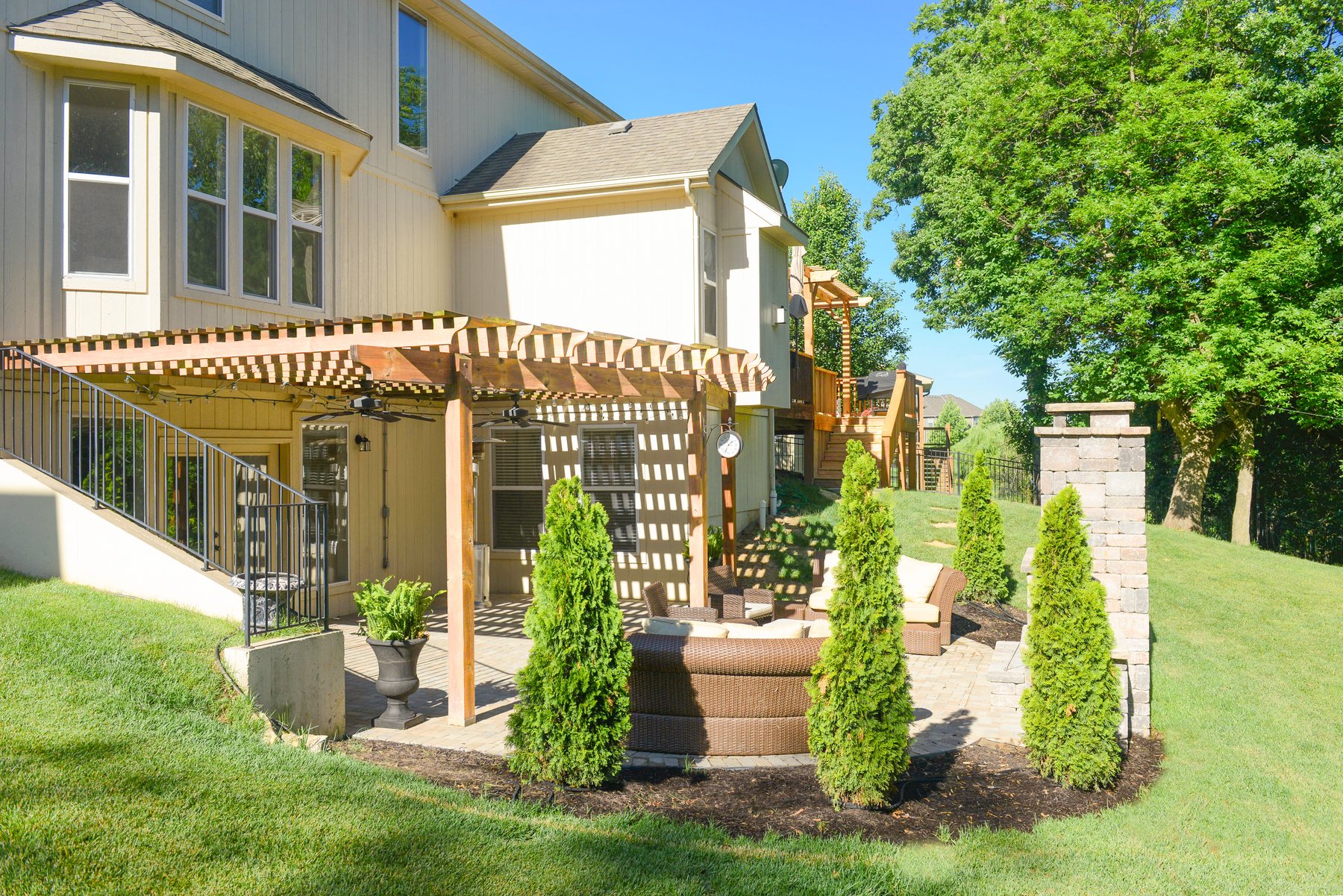
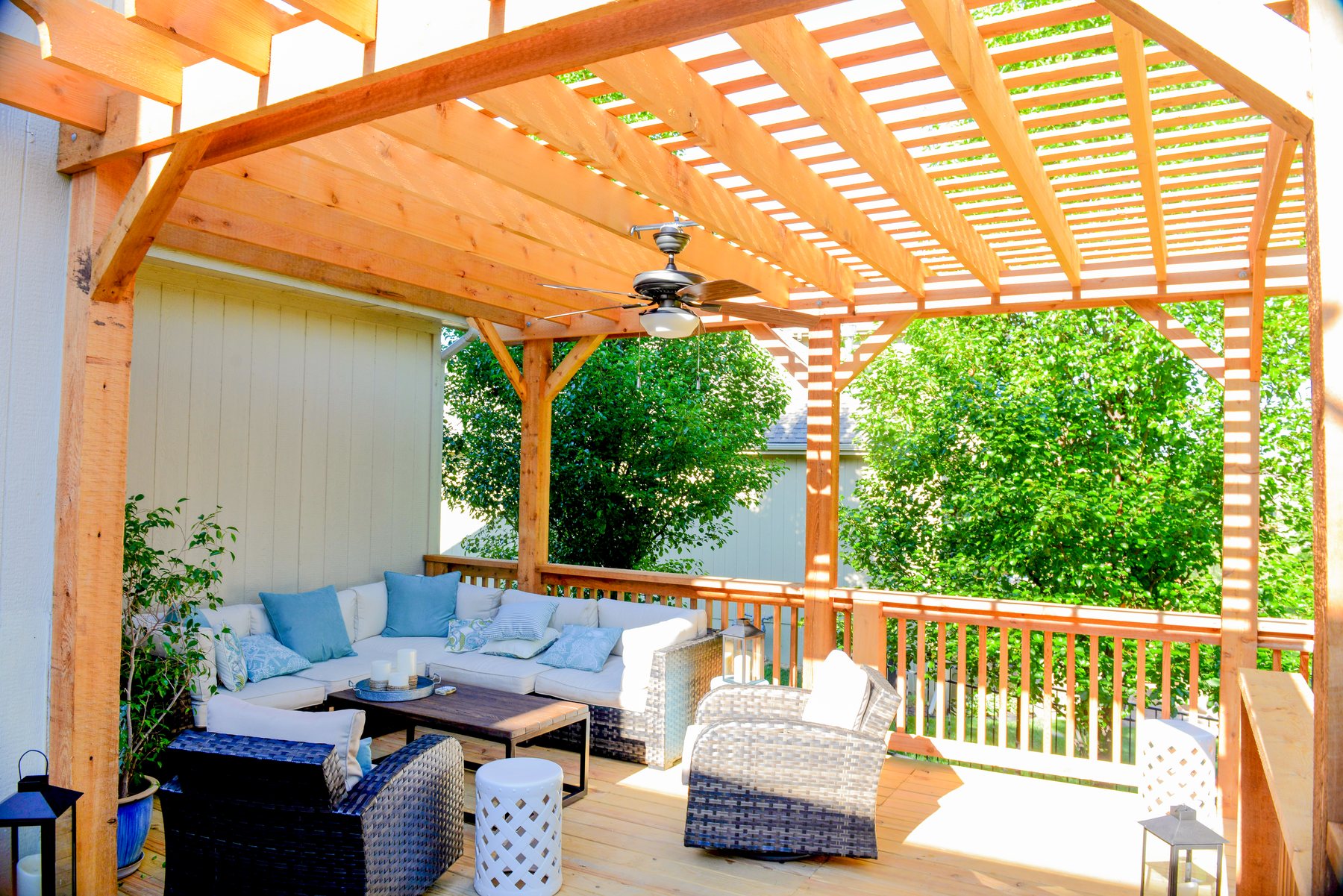
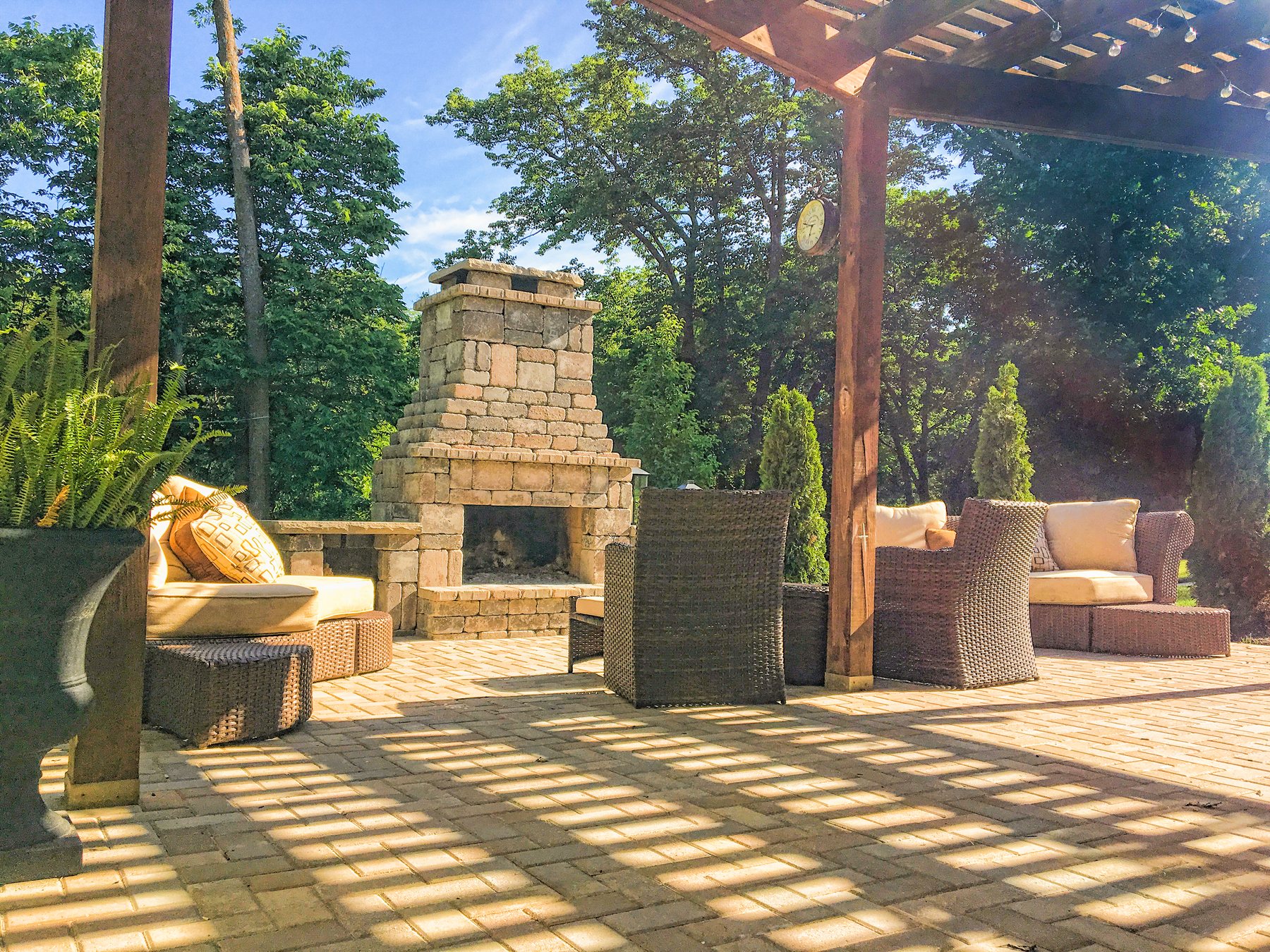
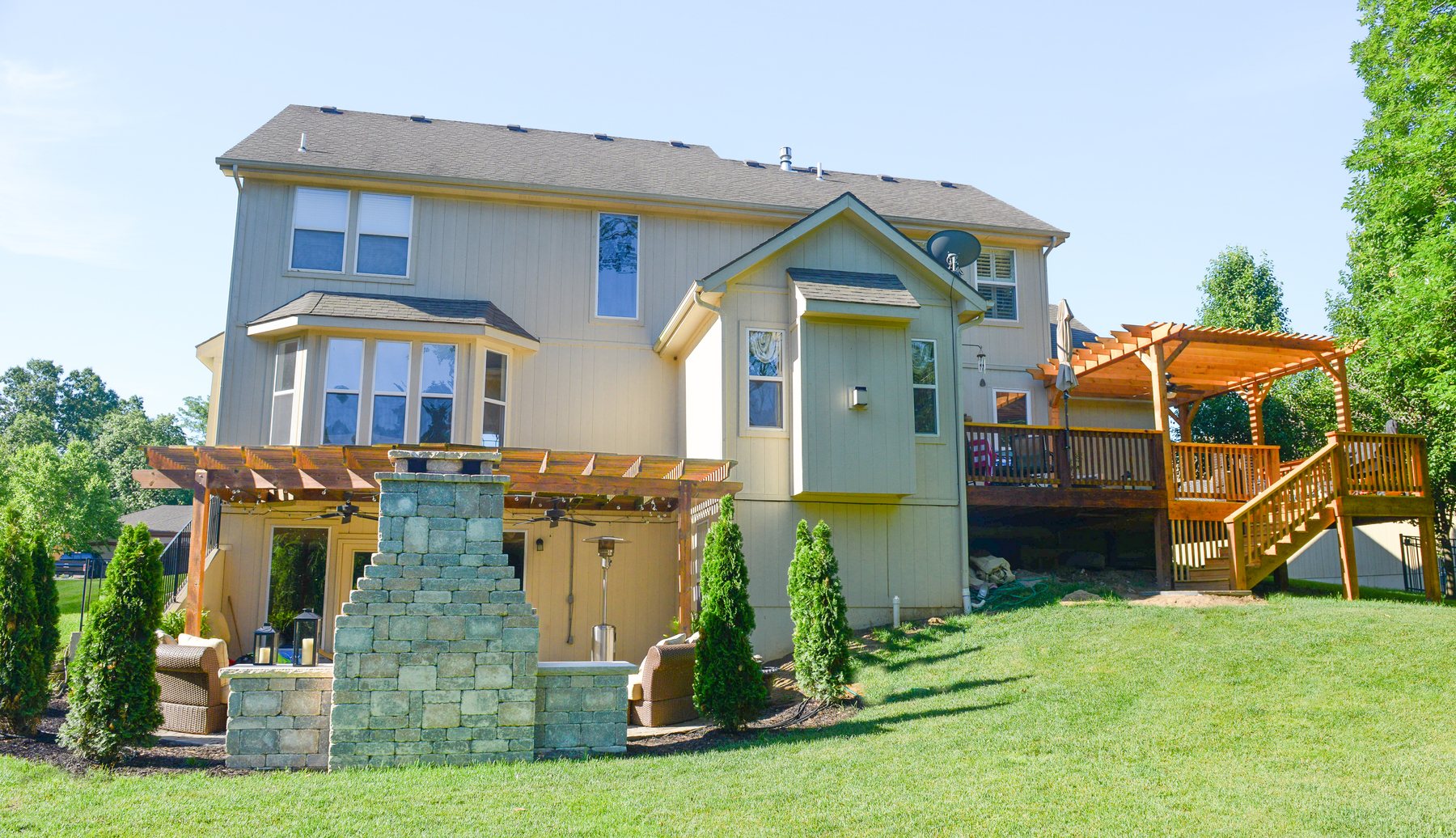
A Parkville build that hits a lot of what this page describes in one project: paver patio extension off the existing home, stacked-stone outdoor fireplace as the back-of-yard focal point, seating wall that wraps the lounge zone, and a cedar pergola overhead. The build sits on the sloped Parkville lot the rest of the guide talks about, and the design choices (material palette, sightlines, planting integration) cleared the HOA review on the first round.
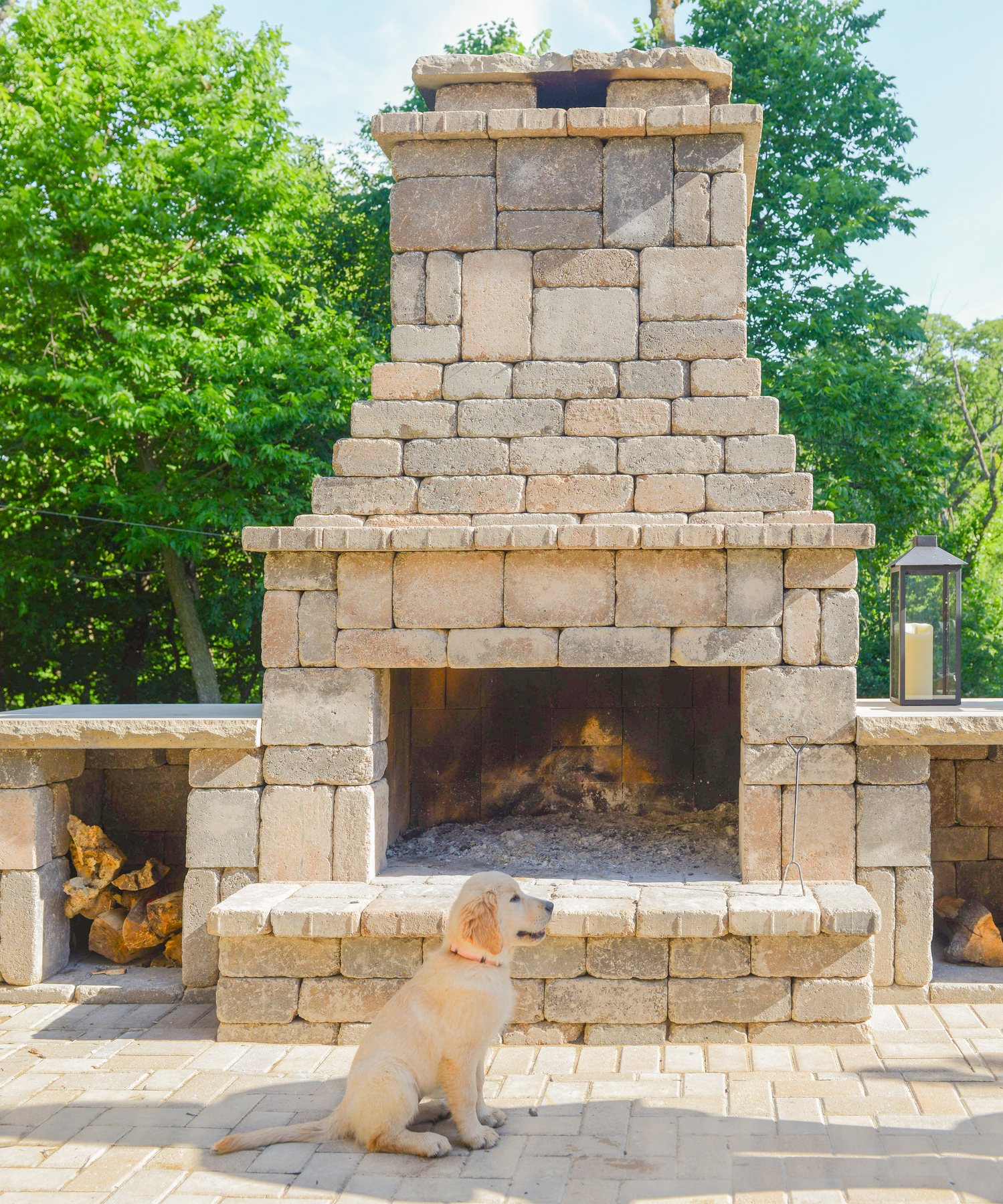
Click any image to view full size.
Real reviews from real Parkville builds.
"What an awesome company. Kansas City Hardscapes was one of three companies I asked to give a bid for patio and deck work behind our home. Their price was extremely competitive and the quality of their work outstanding. My husband and I were over the top pleased with how our patio extension with fireplace and deck extension with pergola turned out. The owners, Benjie and Kit Lewis, were great to work with throughout the entire process."
Beth SloanParkville, MO"Best ideas, no pressure, most professional people. Our patio came out better than expected."
Lori BuehlerParkville, MOParkville homeowner questions.
How long does a permit take in Parkville?
Do I need HOA approval before pulling the city permit?
What if my lot is in unincorporated Platte County, not Parkville?
Does Parkville require a soil report for a retaining wall?
How soon can you start a build in Parkville?
Do you handle the HOA submittal too?
Parkville and the surrounding metro.
Our shop sits east of the river in Kansas City, Missouri. We build across Parkville and the surrounding cities every season. The map below shows the area we cover most often.