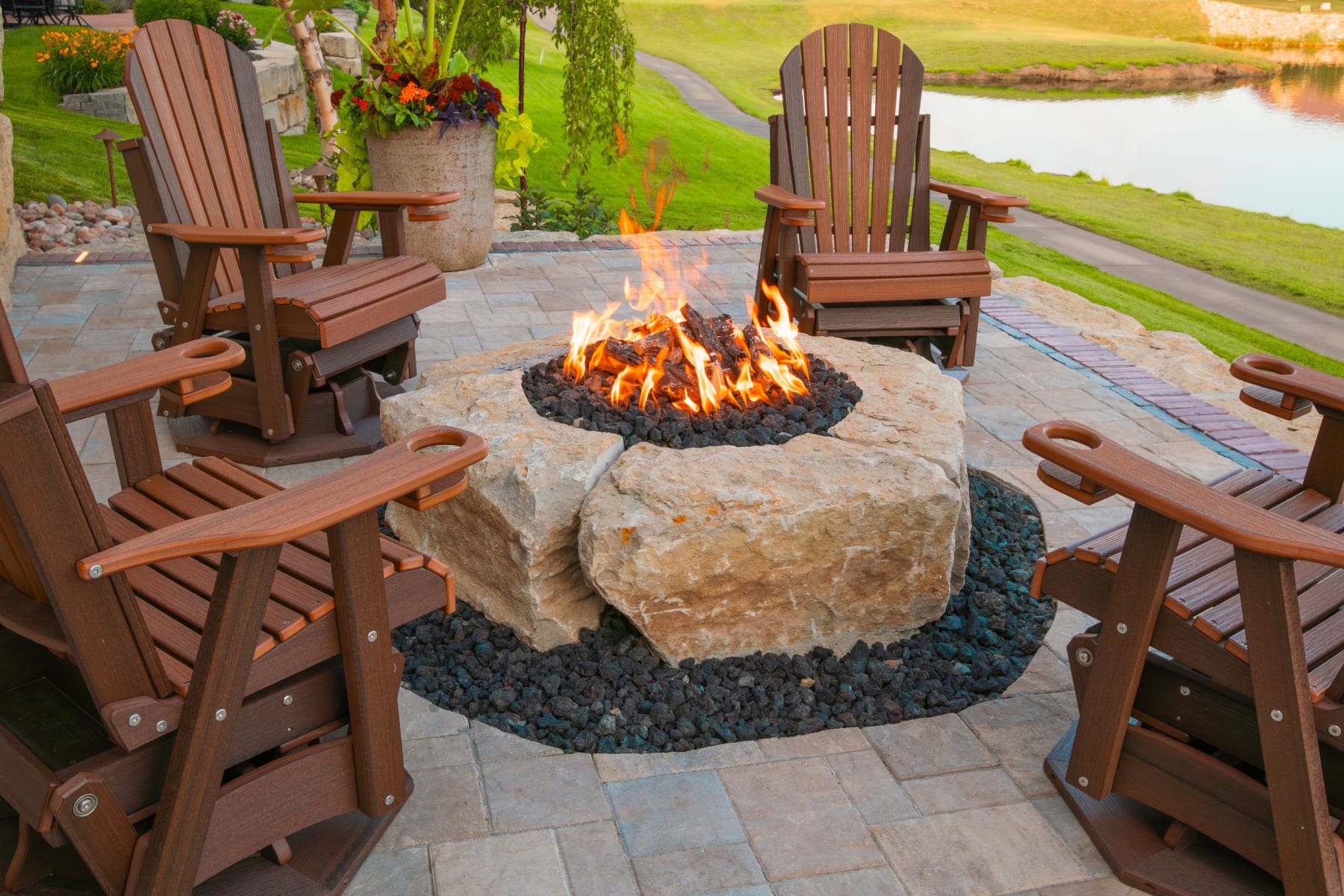
Shawnee runs the most current building code in the metro. Effective April 1, 2026, the city enforces the 2024 International Building Code and the 2024 International Residential Code, while most surrounding cities are still working from 2018. That changes a few things on a hardscape project. Footing depth on accessory structures, fastener schedules on decks, and a few of the prescriptive requirements for outdoor fireplaces are tighter or more specific than they were under the older code. A contractor who hasn't built in Shawnee recently can get caught flat by it.
What follows is what we'd tell a Shawnee homeowner before they sign anything. Real permit rules under the 2024 code, the Johnson County contractor licensing requirement that catches a lot of bids, named HOAs across the city, and what to budget on a Shawnee project.
What requires a permit in Shawnee.
Permit applications go to the Building Codes Division. Email codes@cityofshawnee.org, online at citizenserve.com/Shawnee, or in person at City Hall, 11110 Johnson Drive. The Codes phone line is 913.742.6010. Plans need to show how the structure will be built, including foundation details, attachment to the foundation, and the size, species, spacing, and grade of all framing members. Shawnee reviews thoroughly, and a clean plan set saves rounds of revisions.
Expect to pull a permit for:
- Pergolas, pavilions, outdoor kitchens, and outdoor fireplaces on footings. Anything over 150 square feet of projected roof area. Structures over 400 square feet require the foundation to bear at least 36 inches below finished grade.
- Decks attached to the home or over 30 inches above grade. Plan set should include the joist span, beam, post, and footing details under the 2024 IRC.
- Pools, spas, and hot tubs, with the platted setback lines and easements as the binding constraints.
- Retaining walls taller than 4 feet measured from the bottom of the footing to the top of the wall, or any wall supporting a surcharge.
- Fences taller than 6 feet. Standard 4-foot to 6-foot fencing is typically permit-exempt, but corner lots still hit sight-triangle restrictions.
What's exempt: detached accessory structures whose projected roof area is 150 square feet or less, provided the zoning setbacks are met. That's the storage shed line. Anything bigger than that is permitted.
Shawnee is the city in the metro where the 2024 code actually matters on a residential patio. Most cities are still in 2018. A contractor who isn't current gets revised twice.
The Class A, B, or C Johnson County requirement.
This is the rule that catches a lot of Shawnee bids. Every contractor working in Shawnee has to hold a current occupational license with the City of Shawnee. On top of that, for any accessory structure over 400 square feet, the contractor has to also hold a Johnson County Class A, B, or C Contractors license. The classifications determine what scope of work the contractor is licensed for under Johnson County code.
That means a perfectly good contractor based in Wyandotte County or on the Missouri side can put together a sharp bid for a 500-square-foot pavilion and then not be able to lawfully pull the permit. The permit will simply not issue. The homeowner finds out three weeks in, after a deposit has been spent. It's worth asking any bidder for a Shawnee pavilion or pavilion-sized outdoor kitchen to show their City of Shawnee occupational license and their current Johnson County classification before signing.
We carry both. The permit application can name us at submittal without a delay.
Platted setback lines, the 10-foot septic clearance, and the fence-before-fill rule.
Pool projects in Shawnee bind to three constraints up front:
- Inside the platted setback lines. Every Shawnee lot has platted building setbacks on file with the city. The pool has to sit inside those, and never inside any platted utility easement.
- Minimum 10-foot lateral clearance from any septic system component. Shawnee has both sewered and septic-served neighborhoods. On septic, the pool can't sit on the leach field and can't crowd it.
- The fence is installed before the pool is filled with water. Not after. Final inspection happens against an installed code-compliant barrier. Filling first and fencing second fails the inspection and slows the close-out.
Most Shawnee pool sites we estimate clear all three with room to spare. The ones that don't usually have a septic field where the previous owner thought a pool could go.
Section 17.04.400 and the clear zone.
Shawnee Municipal Code Section 17.04.400 governs tree protection and preservation. A permit is required to remove most trees on private property, with practical exceptions for invasive or diseased trees including Emerald Ash Borer-infested trees, gypsy moth-infested trees, and oak wilt-infected trees. Those can come down on a faster track because leaving them up is the worse outcome.
Shawnee also enforces a clear zone along streets and sidewalks: a vertical and lateral clearance for vehicles and pedestrians. Adjacent property owners are responsible for trimming their own trees and the trees adjoining their property to keep the clear zone open. On a hardscape build where mature canopy reaches into the right-of-way, we plan the access path with the clear zone in mind so equipment isn't trimming branches it shouldn't.
On private property, our crews work the same tree-protection protocol everywhere: barrier fencing at the dripline of any mature tree near the work, hand excavation inside the critical root zone, no compaction inside the fenced area, no piled debris. The roots win every time when a mature oak meets a careless trencher.
4 feet, footing to top.
Shawnee's threshold matches most Johnson County practice: no permit required for a retaining wall 4 feet or less, measured from the bottom of the footing to the top of the wall, and not supporting a surcharge. Walls over 4 feet or walls supporting a driveway, structure, or sloped fill require a building permit, and the permitted walls need engineered drawings by a licensed engineer.
Shawnee's older subdivisions south of Johnson Drive and the newer ones north toward 75th run different grade. A meaningful share of our Shawnee estimates include at least one wall, often a low seat-wall-height that doubles as a perimeter for a patio plus a sit-on edge near a fire feature. Those usually clear the threshold without engineering. The bigger grade-fixing walls in the newer subdivisions do not.
The footing-to-top measurement is the gotcha. What reads as a three-foot exposed wall is often a four-foot-plus actual wall when you measure from the base of the footing. We disclose this at the design step and budget the engineering when it triggers.
The HOAs we deal with most in Shawnee.
Shawnee covers a lot of ground, from the older neighborhoods near Johnson Drive to the newer subdivisions north toward Lenexa and west toward De Soto. The HOA picture is fragmented, with dozens of named subdivisions each running their own covenants. The ones we run into most often on hardscape projects, with the patterns we typically see at architectural review:
- Highland Ridge area (Estates of Highland Ridge, Highland Ridge, Highland Ridge Crossing, The Reserve at Highland Ridge, Woods of Highland Ridge): typical architectural review submittal for visible exterior structures, materials lean toward stone and brick to match the homes.
- Brittany Heights and Brittany Ridge: annual HOA dues, neighborhood pools, architectural submittal for structures and fences.
- Lakeview Estates: full amenity package with curbside recycling, play area, pools, sport court, tennis, and a stocked fishing pond. Submittal expected for any visible exterior change.
- Hills of Forest Creek: $150 per quarter dues, neighborhood pool, standard submittal.
- Wedgewood: HOA, neighborhood pool and play area, submittal for visible work.
- Crimson Ridge (Maplewood and Oakbrook sections), Canyon Lakes, Cedar Valley, Eagle Creek Estates, Deerfield Trace: newer subdivisions north and west, active HOAs, mostly standard architectural review.
For HOAs not listed here, we pull the covenants for the specific lot at the design step and budget the submittal time into the schedule. Shawnee HOA review is generally lighter than what Leawood or Mission Hills run, but it isn't nothing, and the wrong submittal package adds weeks.
Real ranges from real Shawnee builds.
These are the numbers we've been hitting on Shawnee and broader north-Johnson-County projects through 2026. Ranges, not quotes. Final pricing depends on site complexity, retaining wall scope, drainage, demo of any existing concrete or wood deck, material tier, and the size of the finished project.
The full outdoor living range is where most Shawnee inquiries land. Paver patio plus a pergola or pavilion, fire feature, lighting, sometimes a low seat wall and a grill station. The older subdivisions tend to have more demo (existing concrete pad, an old wood deck) which adds to the front of the project. The newer subdivisions tend to have more grade to solve, which adds retaining wall.
Fire pit, paver patio, steps, and a real retaining wall.
A Shawnee build that hits most of what we describe on this page in one project: fire pit, paver patio, masonry steps, drainage at the wall base, and a retaining wall that resolves the grade. Same playbook we'd bring to a Highland Ridge, Crimson Ridge, or Hills of Forest Creek build.
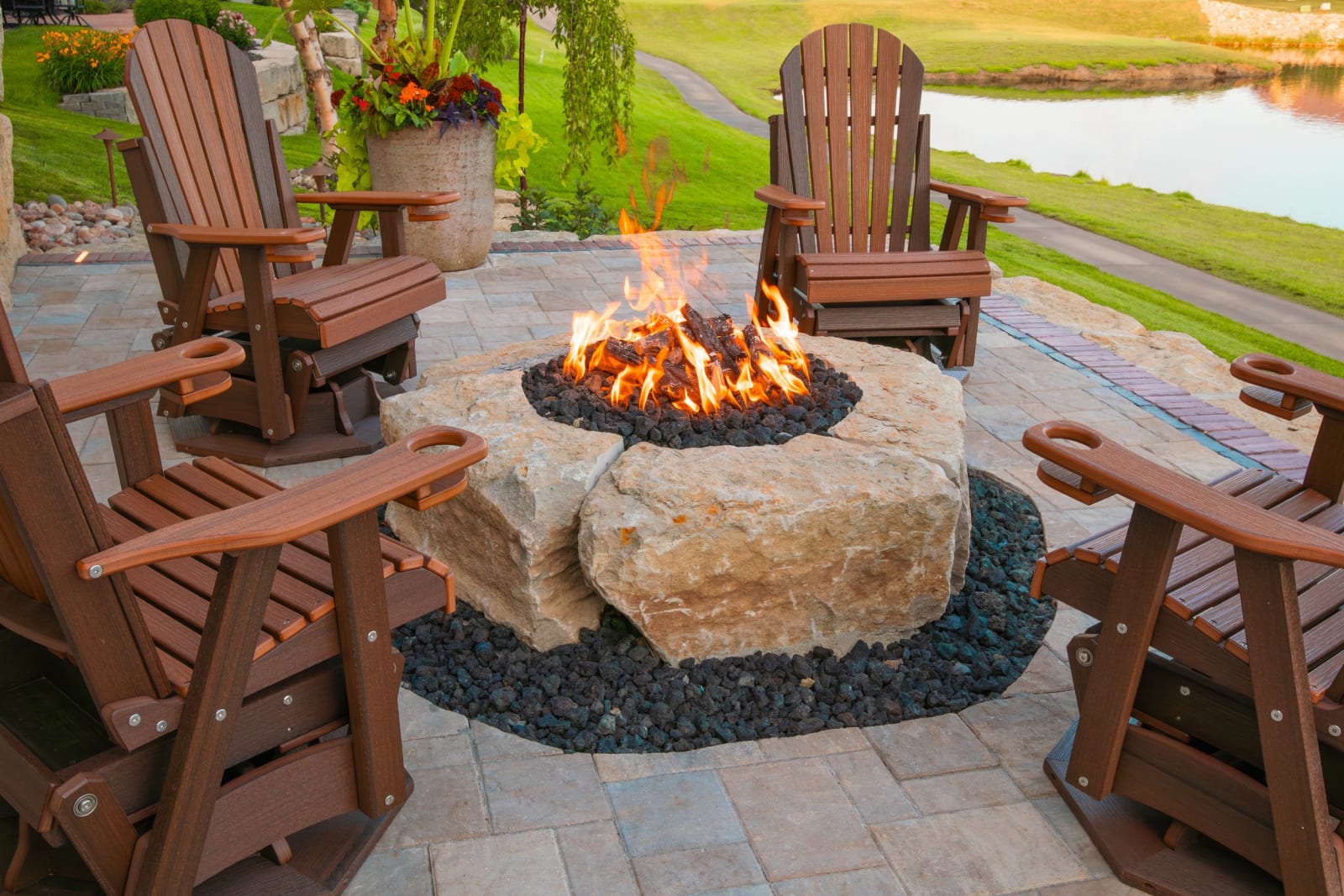
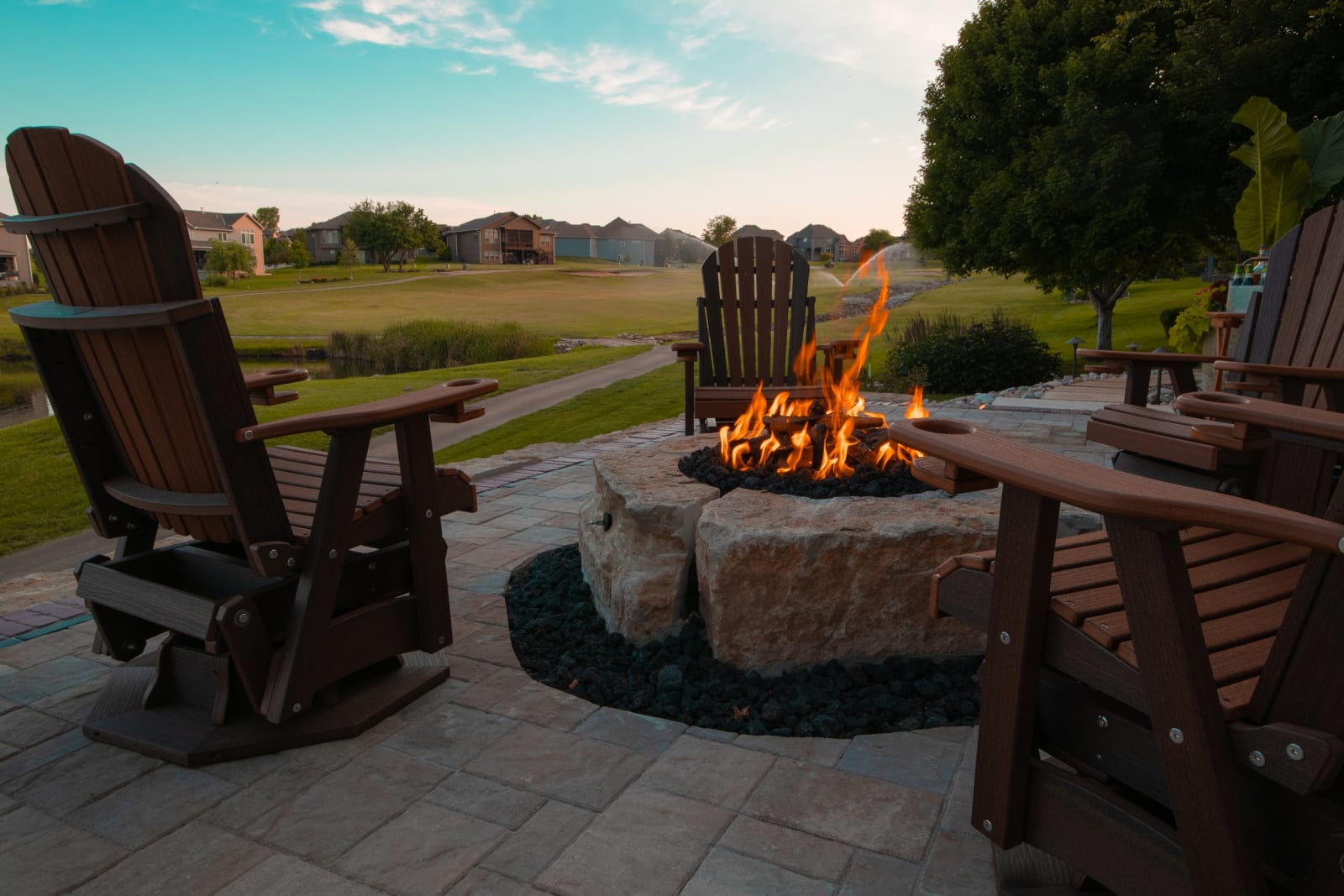
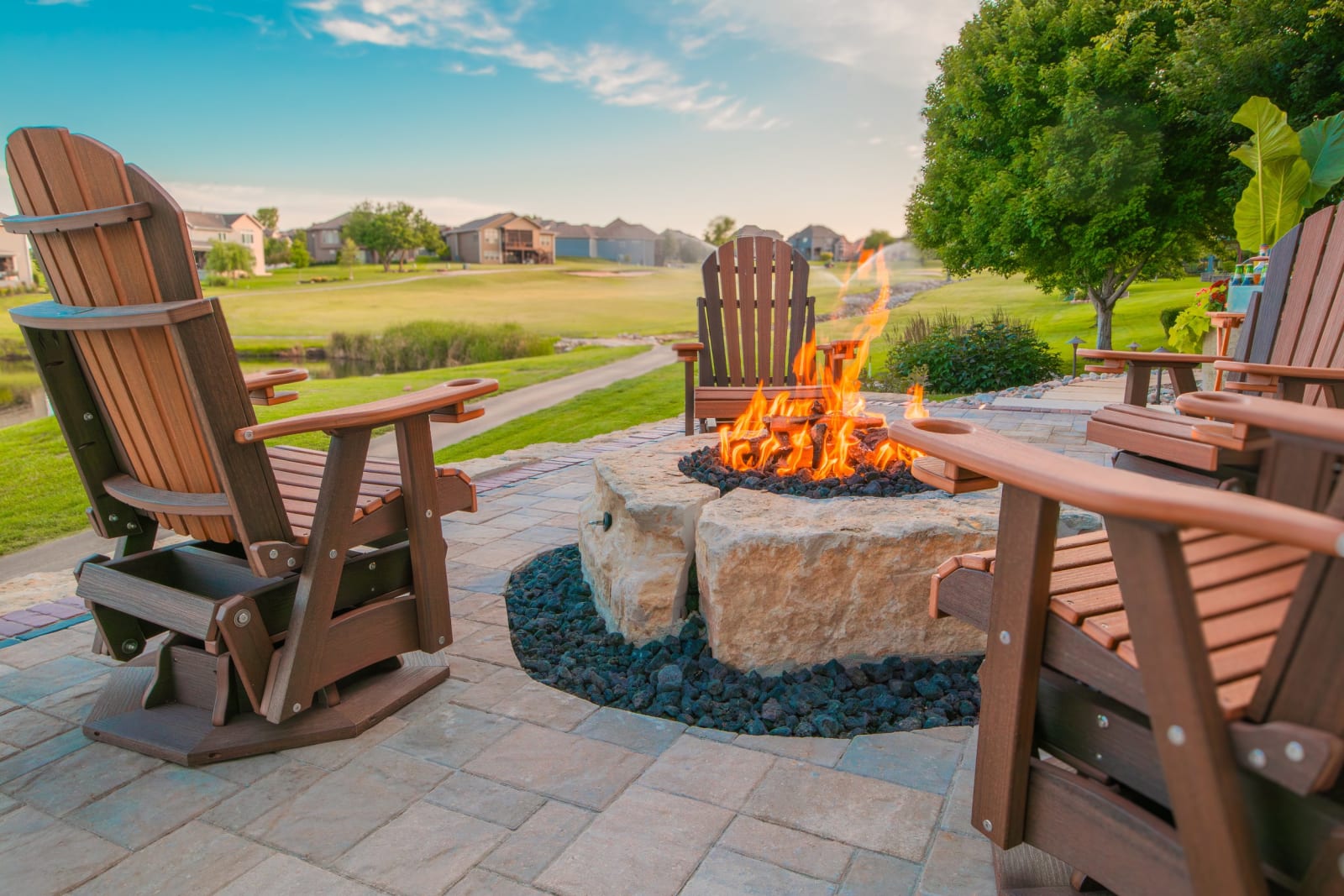
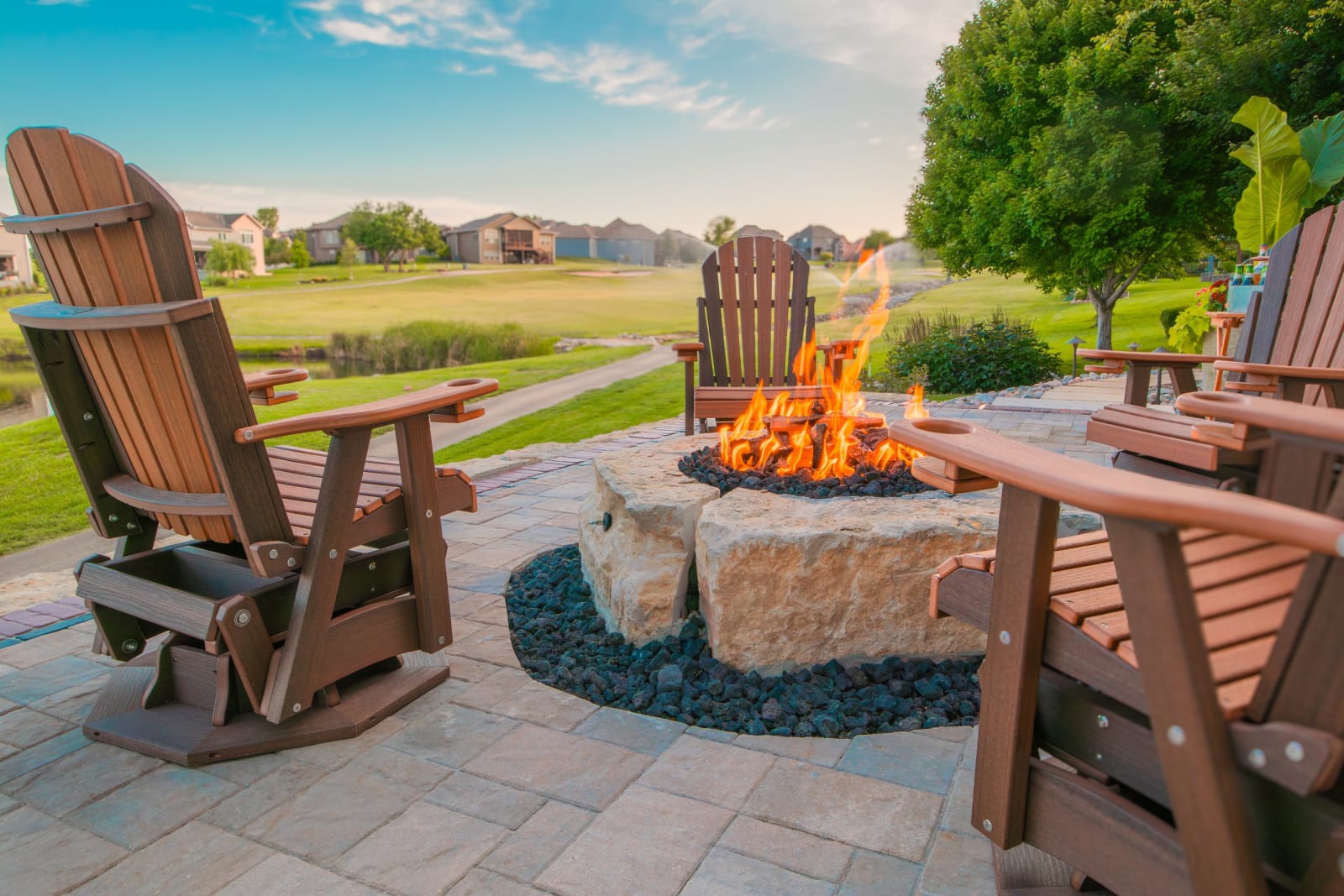
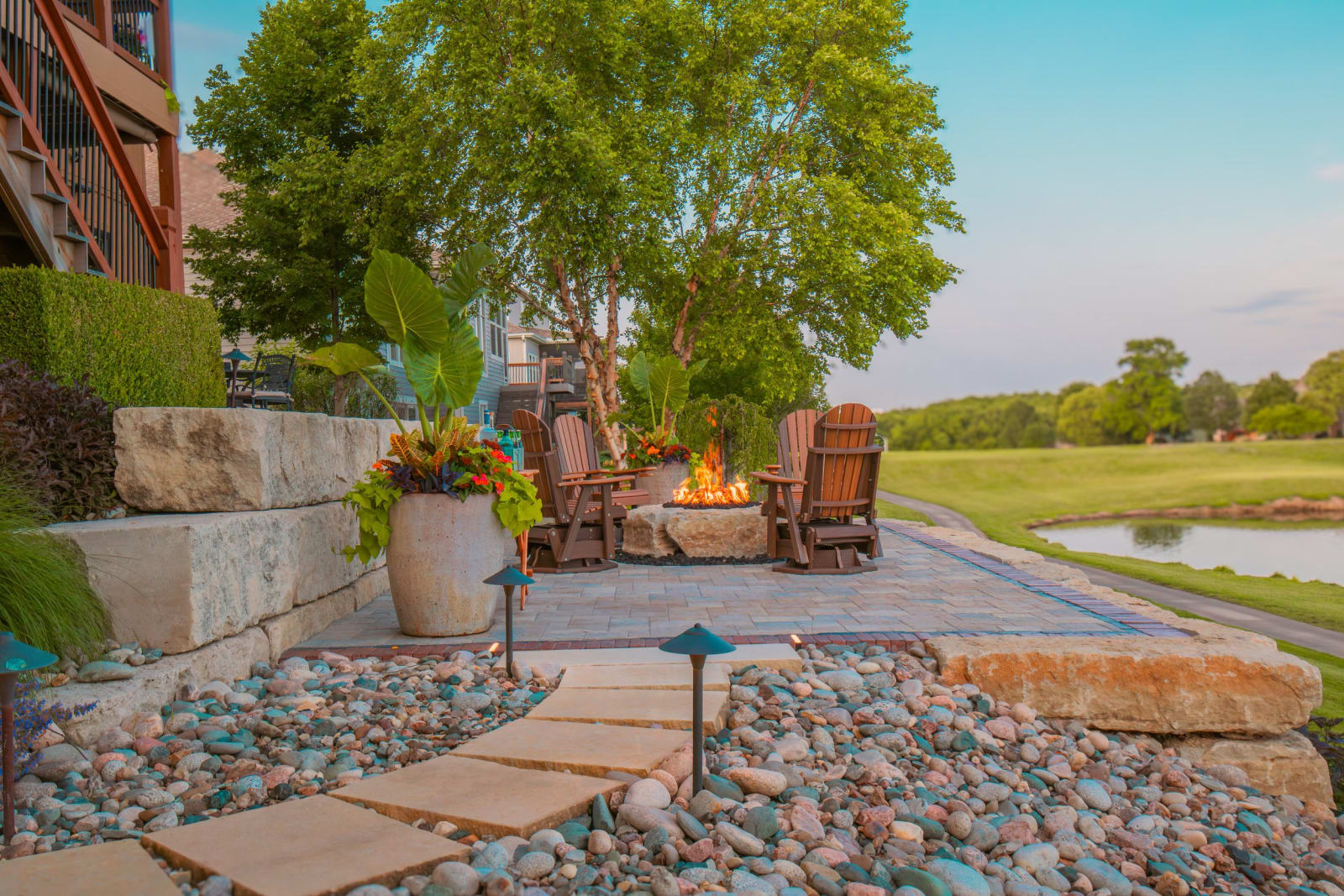
Click any image to view full size.
What changes on the build side.
Shawnee's soil is the same Johnson County clay we describe on the Leawood and Overland Park pages. The same rules apply: deeper base than a contractor used to sandy soil would build, a drainage plane, geotextile fabric to keep the clay from migrating up into the base material, and a poured concrete slab under any high-end paver build that the homeowner wants to last 30 years instead of 5.
What's different in Shawnee specifically:
- Older neighborhoods, more demo. A meaningful share of Shawnee builds replace an existing concrete pad, an aging wood deck, or both. We bid the demo as a known line item, not an unknown.
- Mature canopy in the older sections. Trees that went in when these subdivisions were built in the 60s, 70s, and 80s are now major-canopy oaks and walnuts. We protect them aggressively at every job.
- Septic-served pockets. Some Shawnee lots, especially in the older outer subdivisions, are still on septic. That changes pool siting and patio drainage routing. The 10-foot lateral clearance is the binding constraint.
- Grade transitions in the newer Highland Ridge area. The subdivisions north and west of the city center work real elevation. Walkout basements, sloped backyards, two-tier patios. Retaining walls are designed in, not bolted on.
Shawnee homeowner questions.
How long does a permit take in Shawnee?
What's different now under the 2024 IRC compared to the 2018 code?
Can I do my own permit pull as the homeowner?
Do I have to be home for the inspection?
How soon can you start a build in Shawnee?
Do you handle the HOA submittal too?
Shawnee and the surrounding metro.
Our shop sits east of the river in Kansas City, Missouri. We build across Shawnee and the surrounding cities every season. The map below shows the area we cover most often.