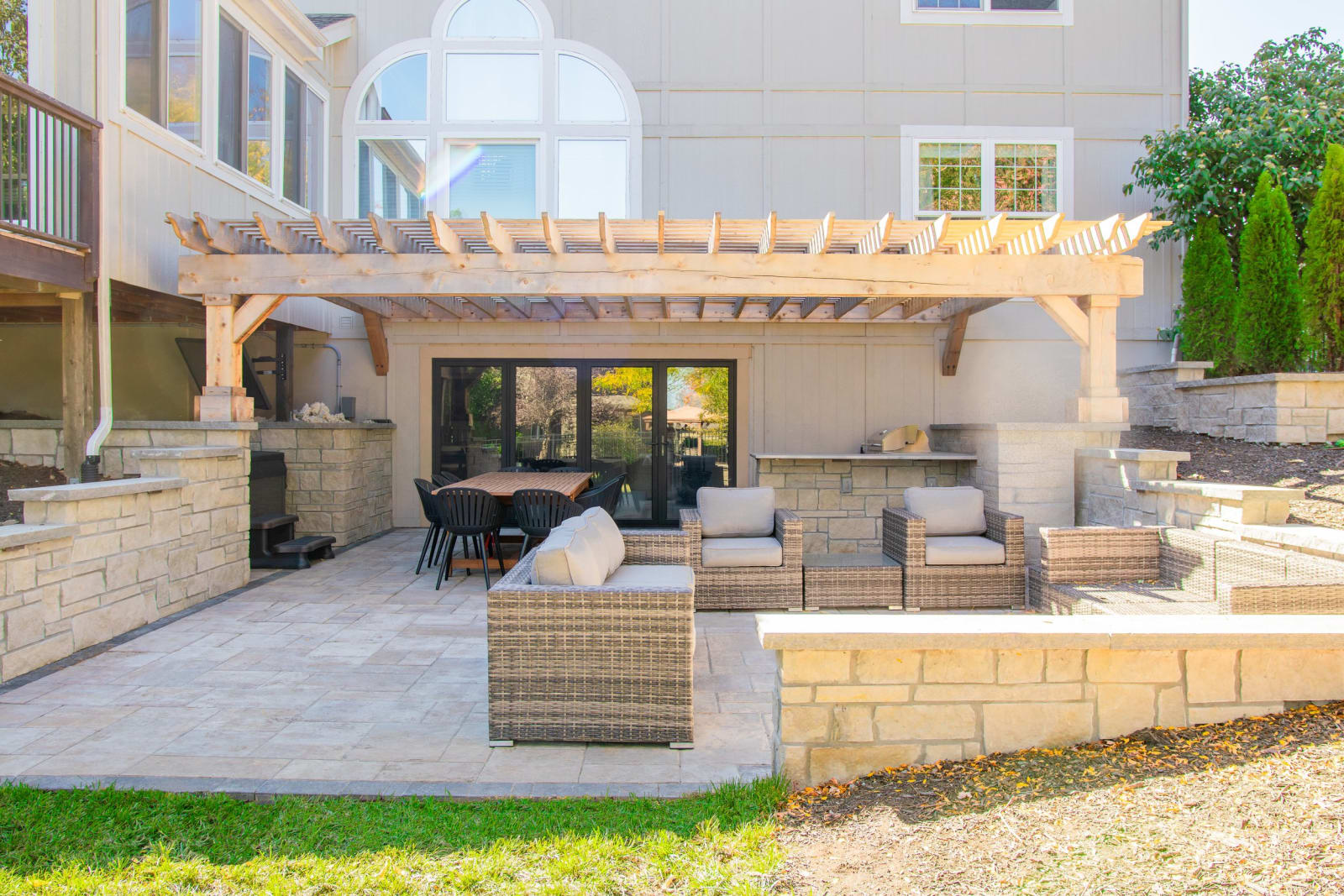
The Journal · Field Notes
A lot of homeowners who call us about a pergola have already been looking at aluminum ones, usually the sleek louvered kind with a motor and a remote. They look great in photos, and we understand the appeal. Almost everything we build is rough cedar, though, and we've been called out to enough struggling aluminum pergolas to have a strong opinion. Here's how the two compare in a Kansas City backyard.
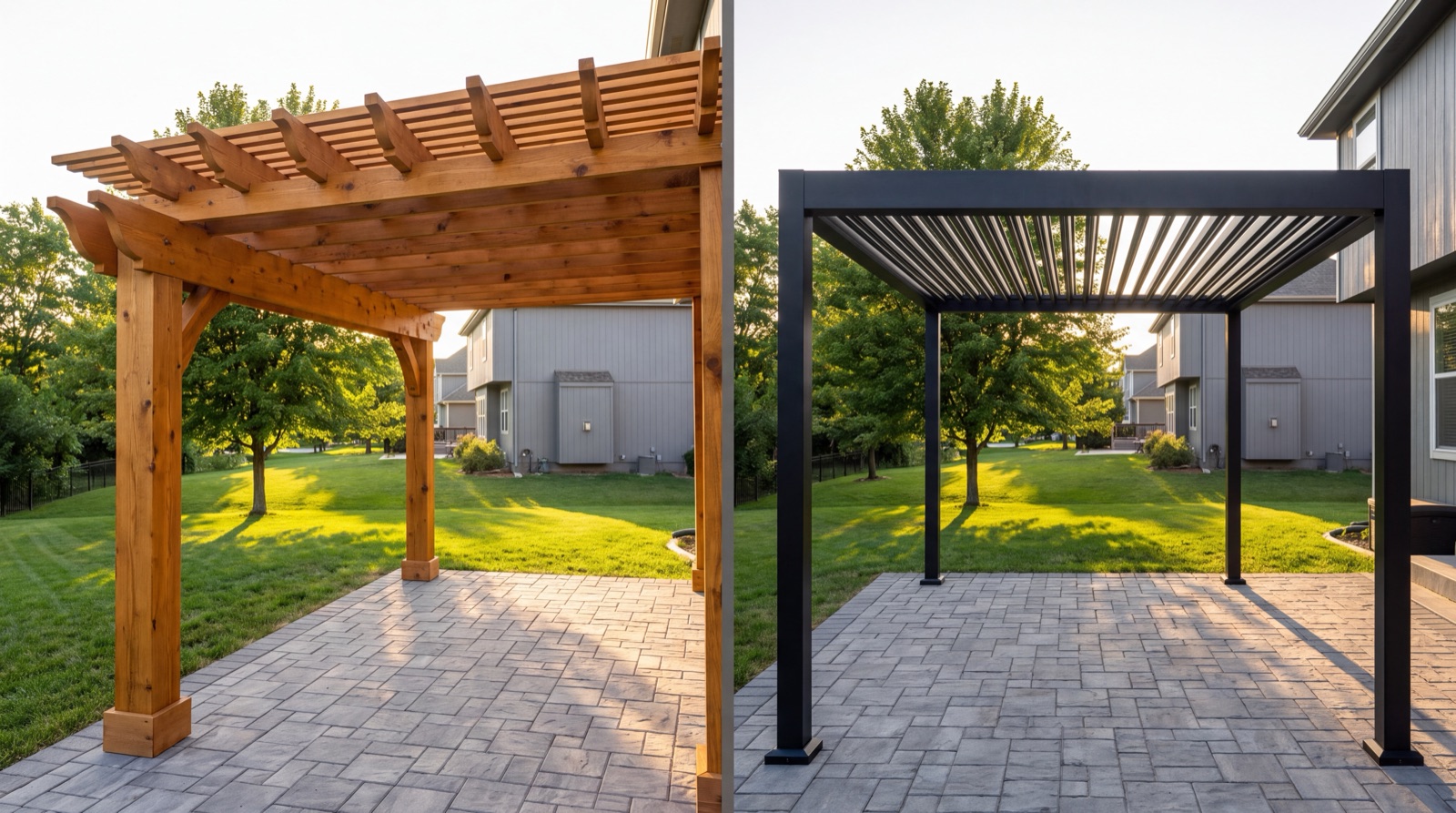
We build with rough cedar, which is cedar left with its natural sawn texture. It soaks up stain well and has a heavier, more substantial look than smooth lumber. A rough cedar pergola is cut and assembled in your yard. The posts, beams and rafters are sized to your patio, set at a height that suits your house, and stained to match it.
Most aluminum pergolas are factory kits. The frame is powder coated metal, the sizes are set by the manufacturer, and many of them have a louvered roof that tilts open and closed with a motor. Some dealers sell higher end custom aluminum systems, but most of what homeowners find online and at the big box stores are kits.
Most homeowners keep a pergola for as long as they own the house. When you compare the two, ask what each one will need five and fifteen years from now. The price to put it up is only part of what you'll spend.
Continue: sizing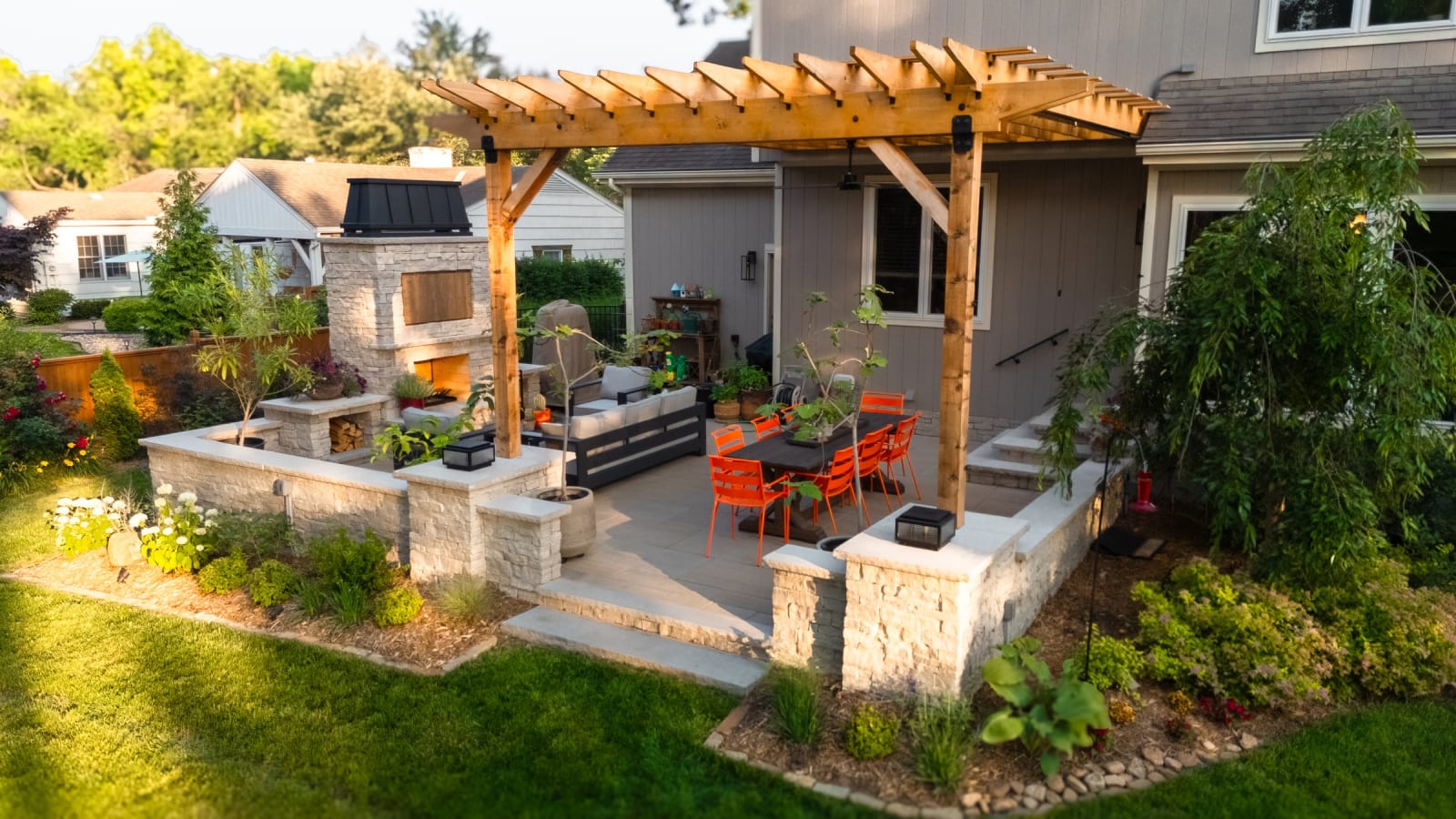
Because a kit comes in fixed sizes, the patio has to work around the kit. If none of the sizes match your patio, you end up with an awkward gap or a pergola that hangs past the edge.
A cedar pergola starts with your footprint. We size it around the dining table or the lounge set that will sit under it, and we can build around a hot tub, a fireplace, a grill station or a slope in the yard. Decorated piers, a privacy wall on one side and a stain color picked to match your trim are all part of the design. A rough cedar pergola can also attach to the house along one side, which makes it look like part of the home and works well when the patio sits right against the back wall. It can just as easily stand on its own out in the yard. The pergola in this Leawood backyard was built at 18 by 20 feet and covers the dining area beside the fireplace.
Before you shop either material, set the table and chairs where you want them and measure around them with the chairs pushed back. That gives you the smallest pergola that will work, and it rules out a lot of kit sizes right away.
Continue: where aluminum fails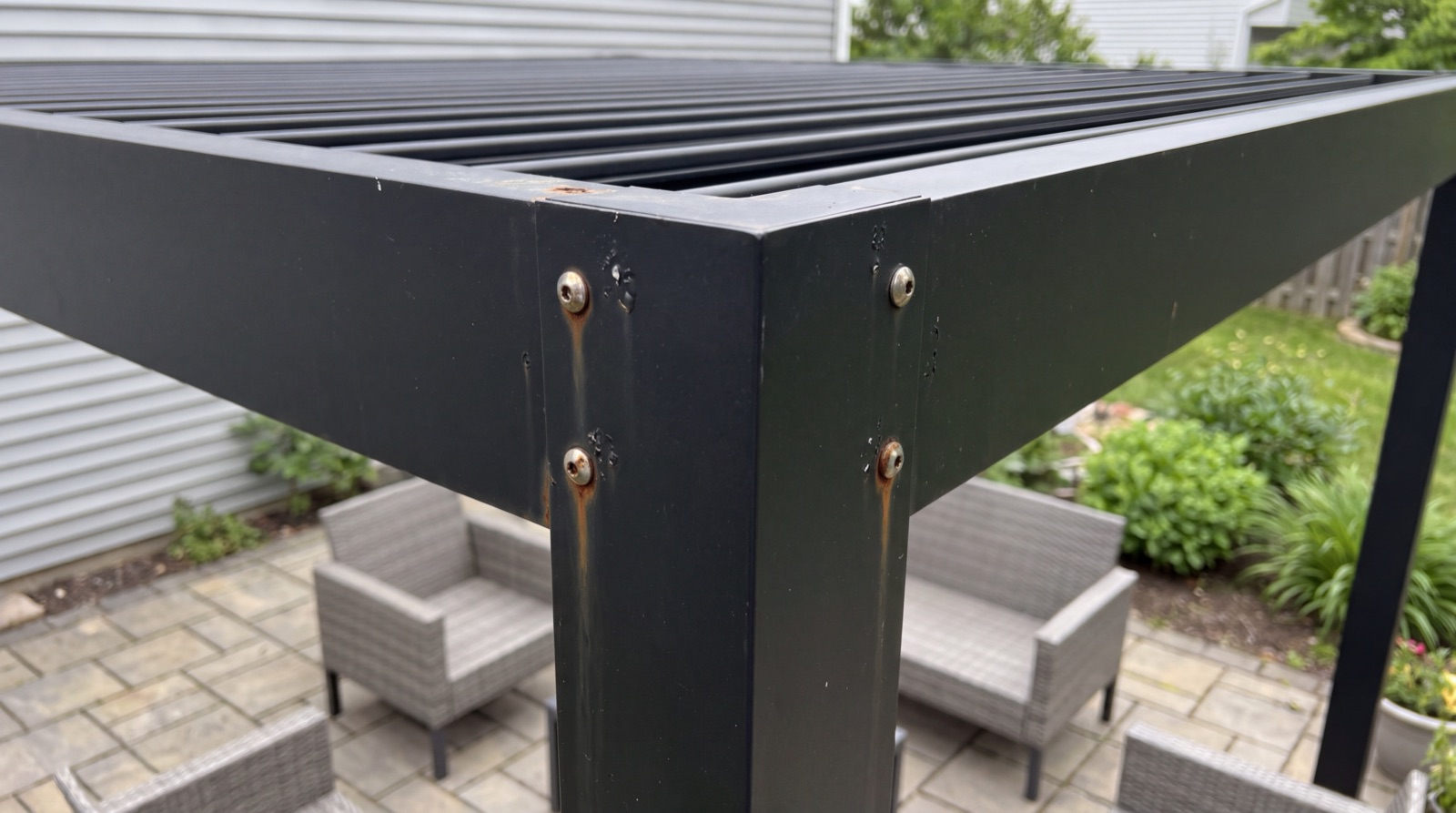
The problems we see with aluminum pergolas usually come back to three things.
The hardware. Kits are usually put together with steel screws and bolts driven through aluminum. Tightening a fastener cracks the powder coat around it, and once moisture gets into that spot the two metals start to corrode each other. On a lot of the kits we've been called out to, rust was already coming through at the hardware within the first year or two.
The motor. A louvered roof depends on a motor and a control board to open and close. When one of them quits, the replacement part comes from the manufacturer, on the manufacturer's timeline. If that company changes models or goes out of business, finding the part gets harder.
The snow rating. Snow load ratings on aluminum pergolas are all over the map. One budget louvered kit sold through a big box retailer lists a rating of about 8 pounds per square foot, while premium systems are rated several times higher. Some manufacturers also tell owners to open the louvers during heavy snow so it doesn't pile up on the roof. If you're shopping aluminum, find the snow rating in writing before you buy.
Many louvered pergola warranties cover the frame for years longer than the motor and electronics. Find out how long the motor is covered, and whether the warranty pays for the labor or only the part.
Continue: kansas city weather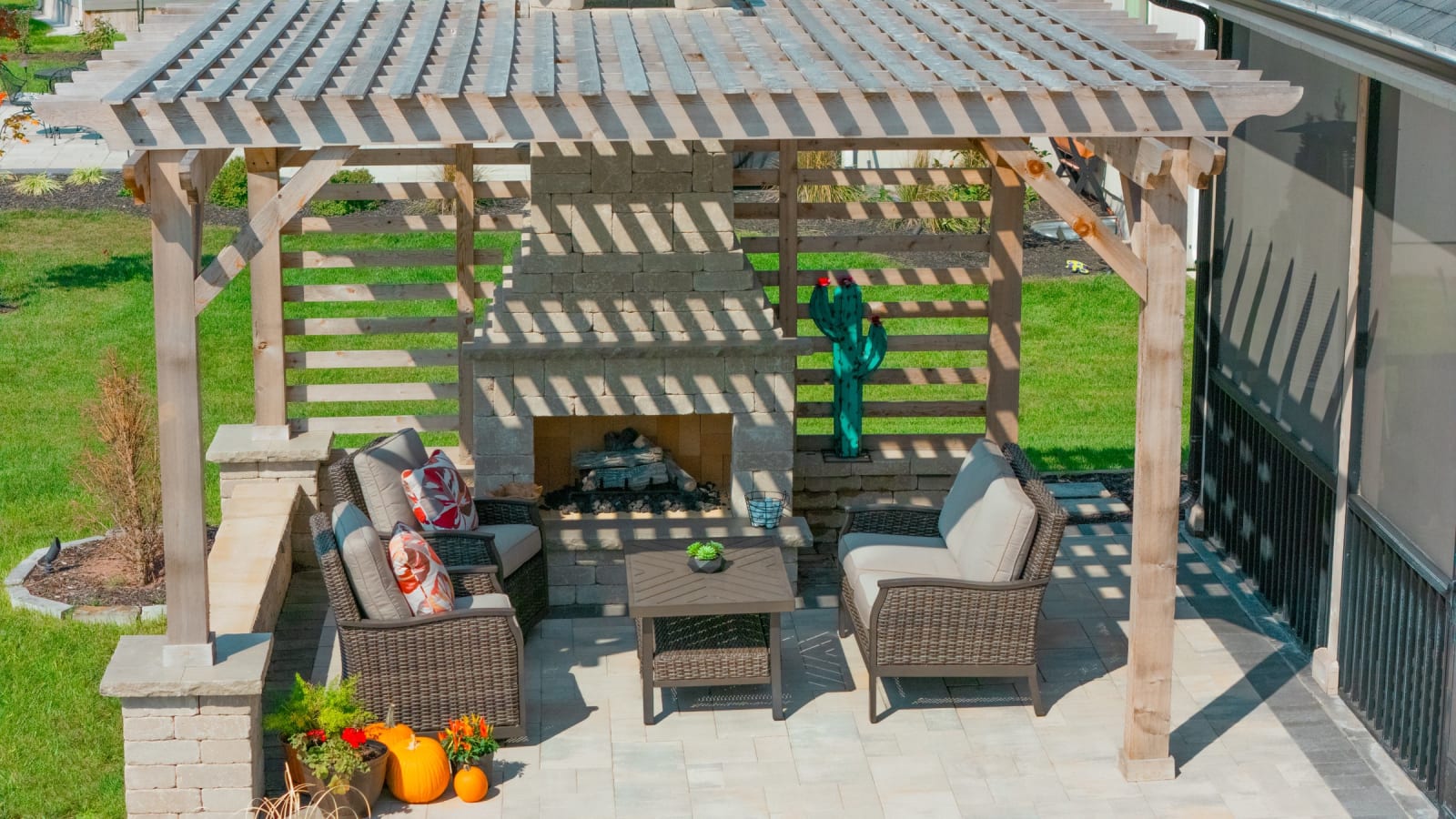
Cedar heartwood has natural compounds in it that fight off rot. The USDA Forest Products Laboratory rates it as resistant to very resistant to decay, which is why it has been the go-to wood for outdoor structures for so long. It also handles our humid summers and freeze and thaw winters well, and the joinery stays tight year after year.
Upkeep is simple. The first year, the wood is left alone to dry out. After that, most owners restain every three to five years. Oiling every year or two gives a warmer tone, and some people skip both and let the wood go silver grey.
If a board ever gets damaged, that one board can be swapped out or refinished. If something goes wrong with a pergola we built, we come back and fix it ourselves. This one in Basehor has a privacy wall built into one side and a fireplace tucked under the roof.
Rough cedar takes everything from natural honey tones to dark browns and greys. Picking a stain that matches your trim or siding is one of the easiest ways to make the pergola look like part of the house.
Continue: shade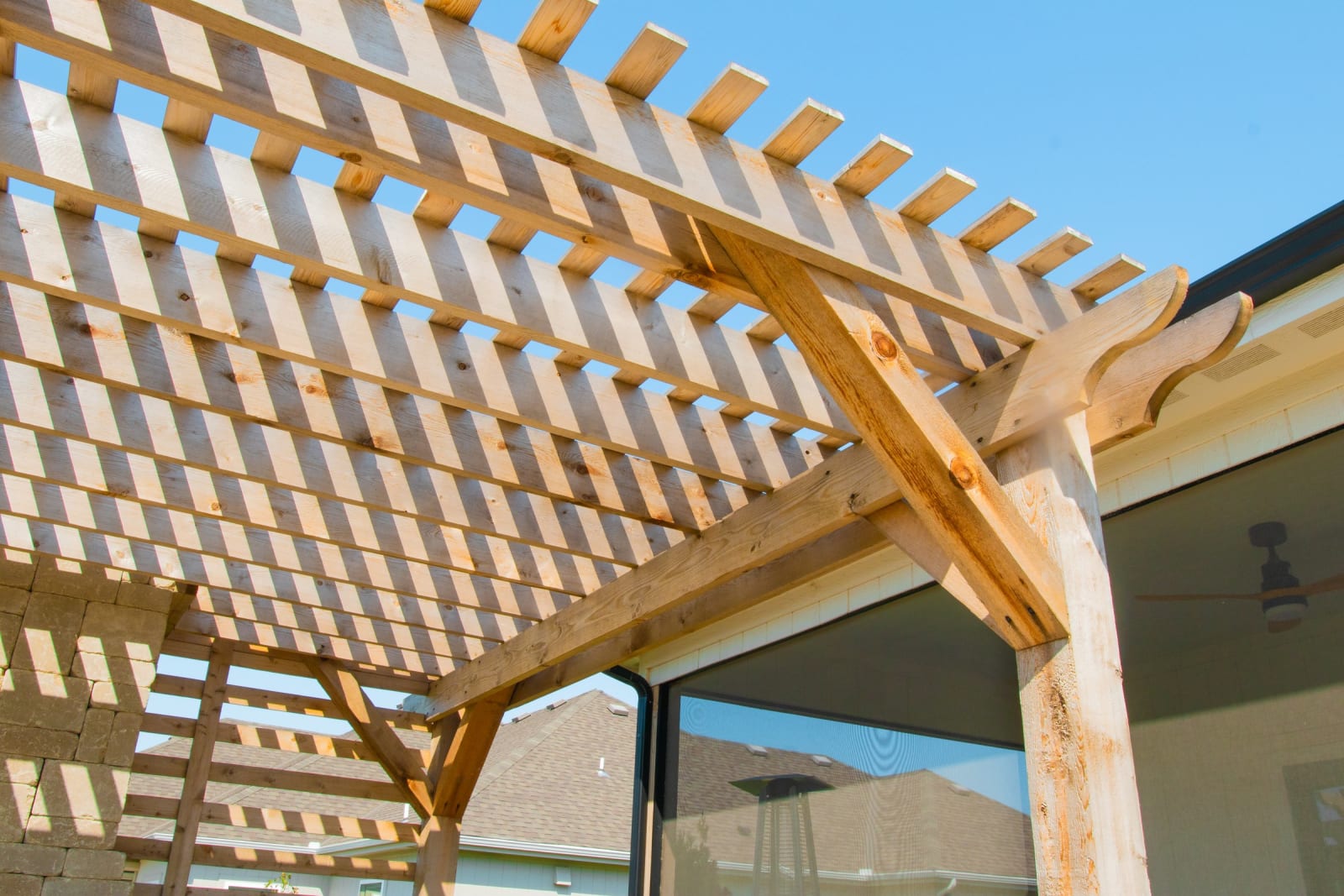
The best thing about a louvered roof is that you can adjust the shade, and when the louvers are closed they keep most of the rain off. That's a fair point in aluminum's favor.
A cedar pergola handles shade with the roof design. Open rafters give you dappled light that moves across the patio through the day. Our three layer roof adds a top layer of closely spaced purlins across the rafters, which blocks a good share of the afternoon sun. Neither one keeps the rain off. If staying dry is the goal, we'd point you toward a pavilion with a solid roof.
There's a permit angle here too. Overland Park, for example, exempts shade structures that stay at least half open on top, so an open rafter cedar pergola can fall under that exemption. A roof that closes solid, like a louvered system, is less likely to qualify. Every city handles this differently, and we check the rules for your address as part of the design.
A west facing patio takes the hardest afternoon sun, and that's where a third layer of purlins makes the biggest difference. On a north or east facing patio, open rafters are often plenty.
Continue: cost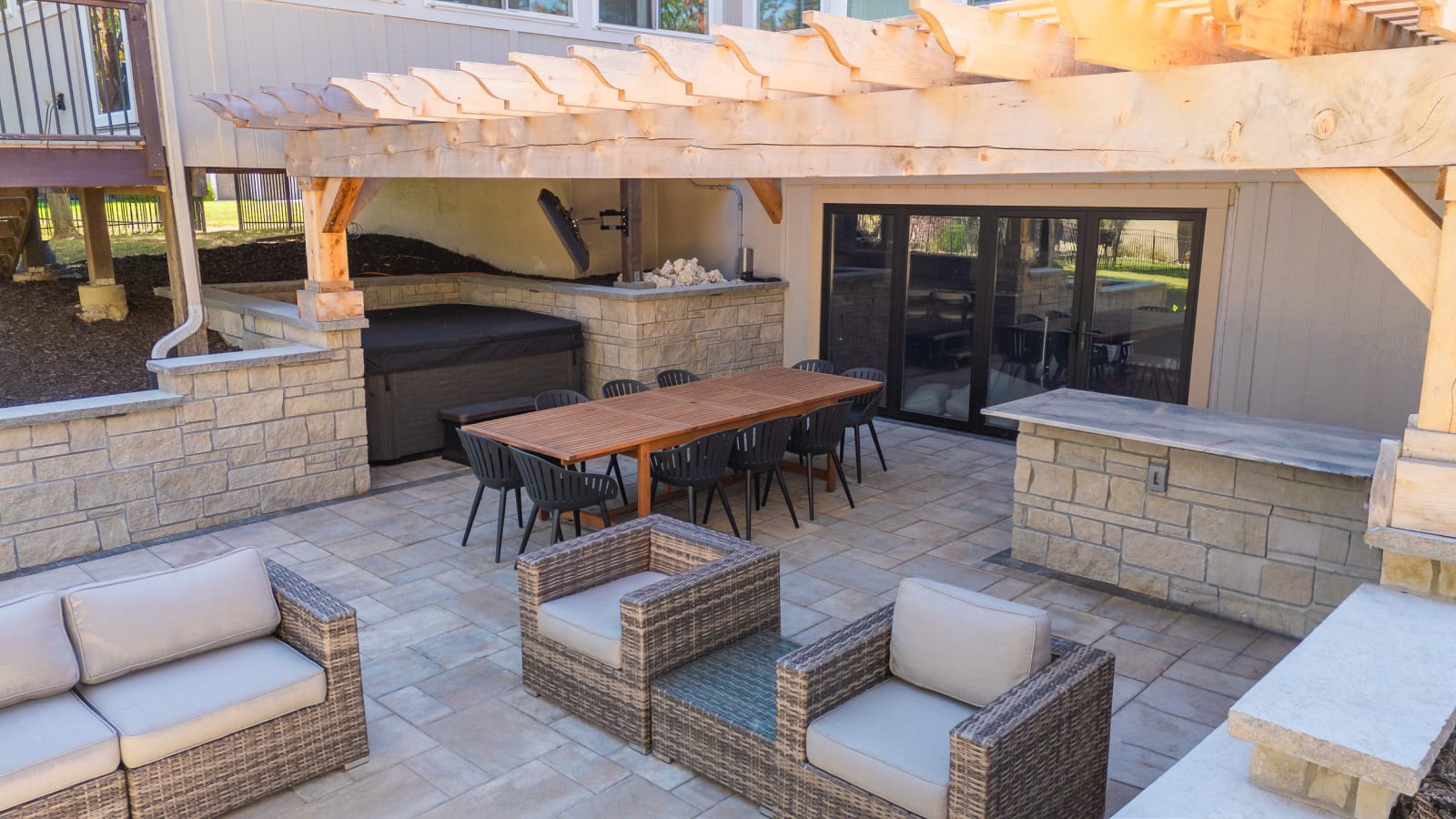
Our rough cedar pergolas start at $7,000, and most of them come in between $7,000 and $15,000. Size moves the price the most, followed by the roof style, the stain and extras like decorated piers or a privacy wall. If the pergola isn't going on an existing patio, footings add roughly $1,000 to $2,500. Lighting and heaters are best planned during design, so the wiring can run inside the posts while the pergola goes up.
Aluminum pricing covers a much wider range. A budget kit can cost a few thousand dollars before installation, and a motorized louvered system from a quality manufacturer often runs well into five figures. The budget kits are where we see most of the rust and motor problems. Once you're paying for a well-built aluminum system, a custom cedar pergola usually costs the same or less, and it's sized to your patio.
This Lenexa pergola shades the dining table along the back of the house.
A kit price often covers the pergola and nothing else. Installation, anchoring, footings, power for the motor and any permit can all be extra. Get the installed price before you compare it to a cedar quote.
Continue: what aluminum gets right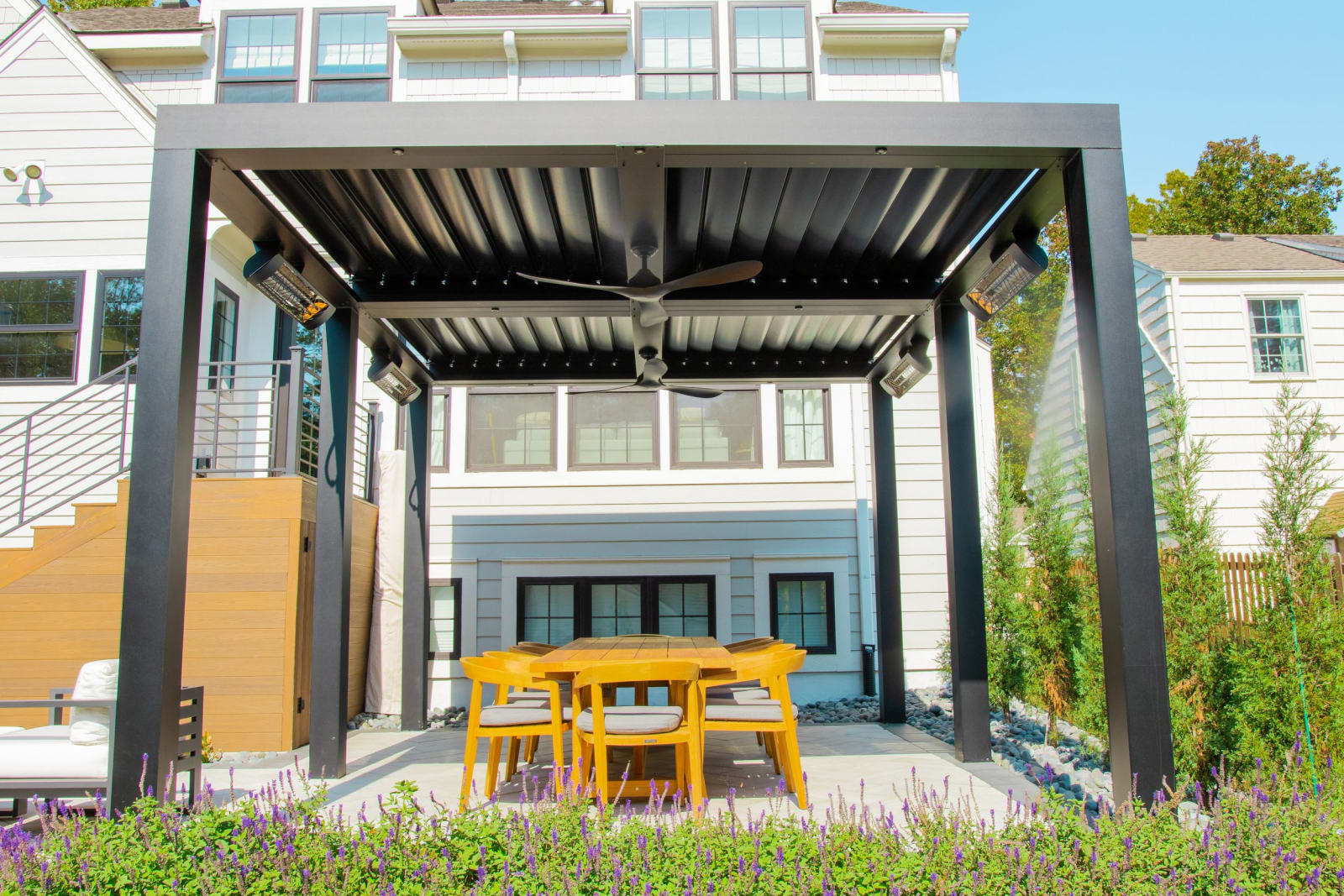
Aluminum does have a few things going for it. The black frames suit a very modern house, the louvers let you open and close the roof, and there's nothing to stain. We built this one in Prairie Village with heaters mounted under the louvers.
Even so, we don't recommend aluminum pergolas. The motor, the louvers and the factory finish are the parts that tend to wear out first, and a rough cedar pergola doesn't depend on any of them.
If the clean look of black aluminum is what caught your eye, a rough cedar pergola with a dark stain fits a modern house well, and it can be built to whatever size your patio needs.
Continue: our recommendation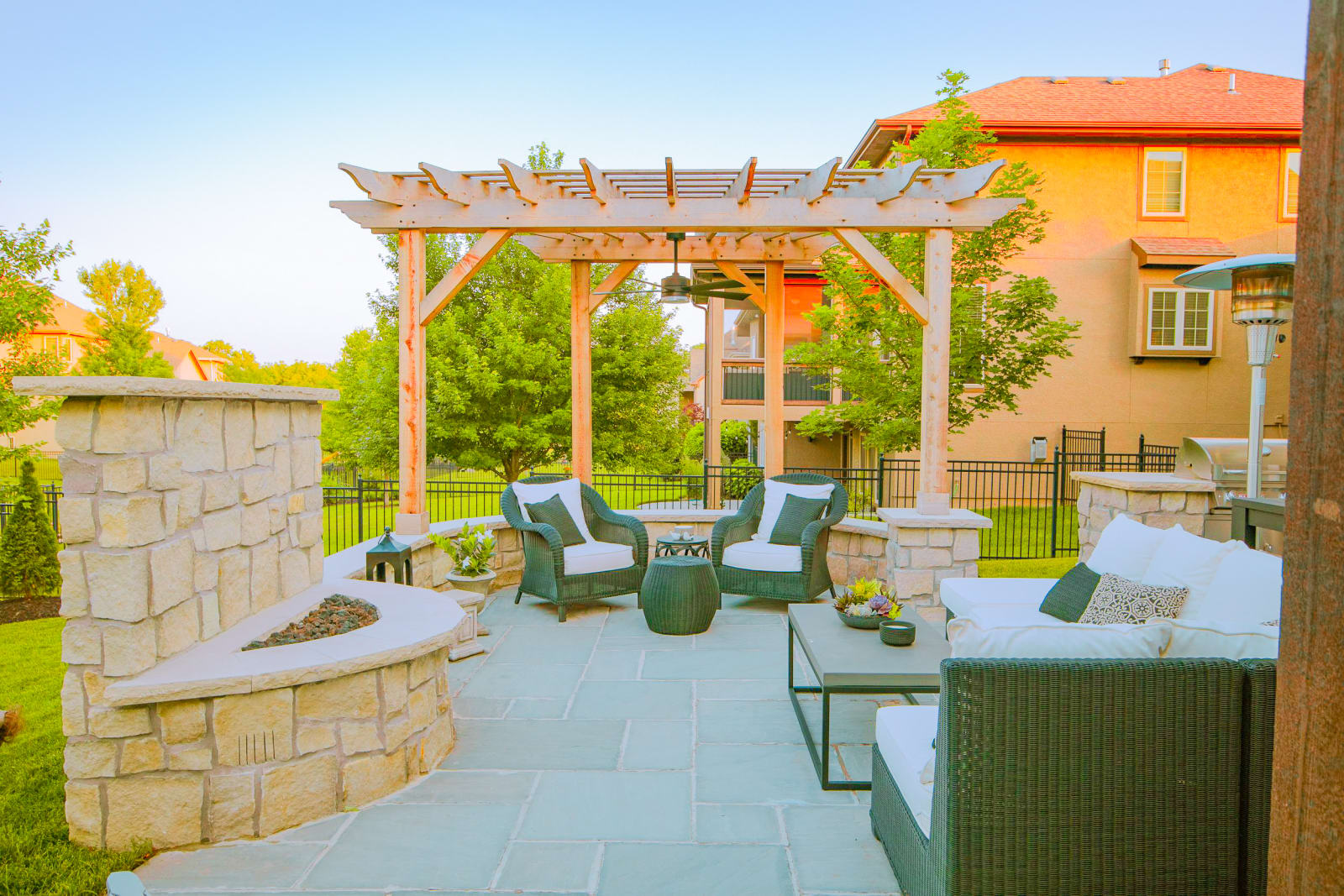
We recommend rough cedar for Kansas City backyards. It's built to fit your patio, it holds up well in our weather, any part of it can be repaired, and it usually costs less than a quality aluminum system. The open top can also make permits simpler in some cities.
Our crew cuts and assembles every pergola we build right in your yard, so the size, the height, the stain and the finishing details are all worked out around your house. A cedar pergola that's cared for keeps its good looks for a long time, and if you repaint the house or update the patio later on, the stain can be changed to match.
If you're weighing the two, we can talk through both at a free design meeting. You can also see more of our work on our pergola page.
Thirty minutes on site with our designer is all it takes to see what is possible. No pressure, no hard sell.
Schedule a Design Call