Pavilions
Starting at $18,000
Pavilions
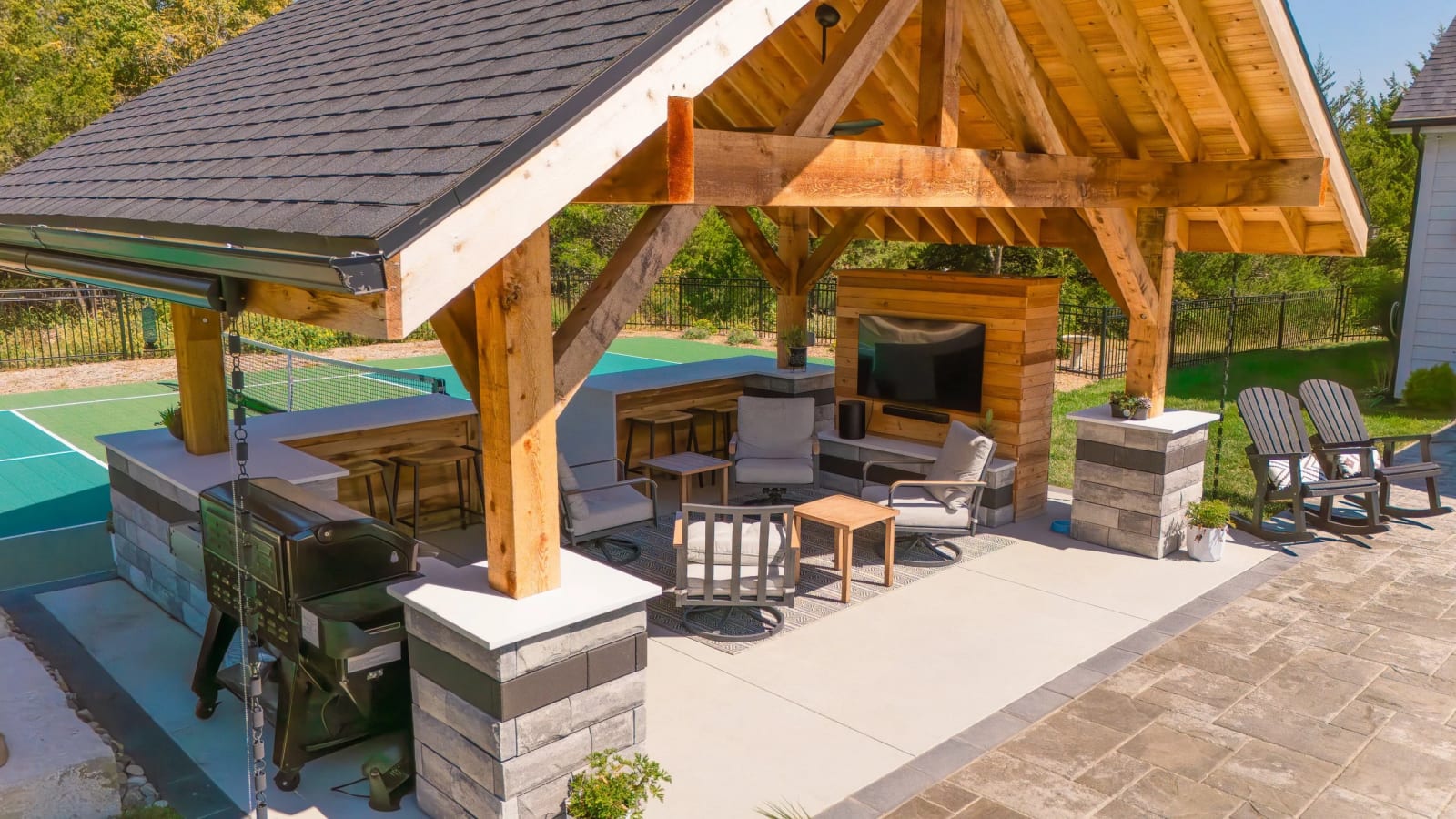
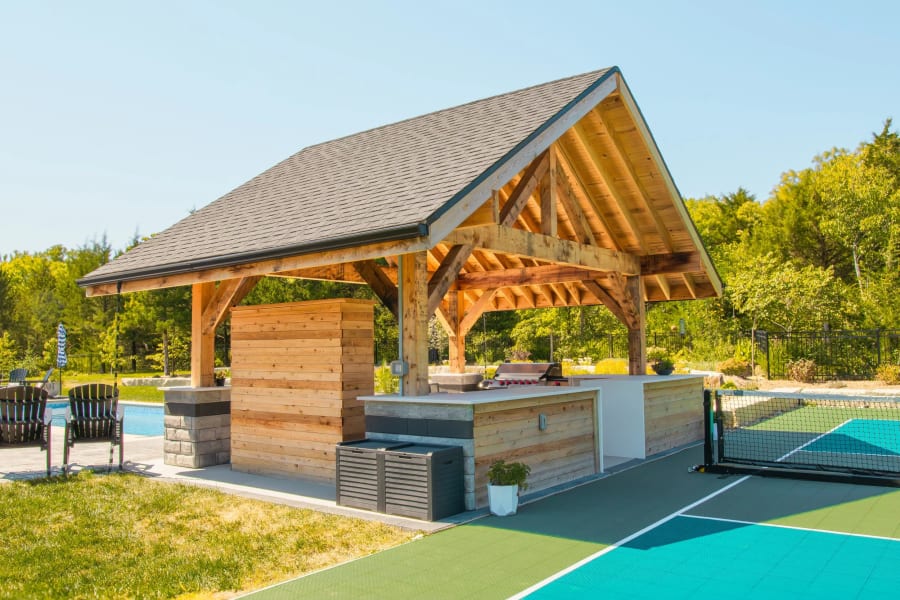
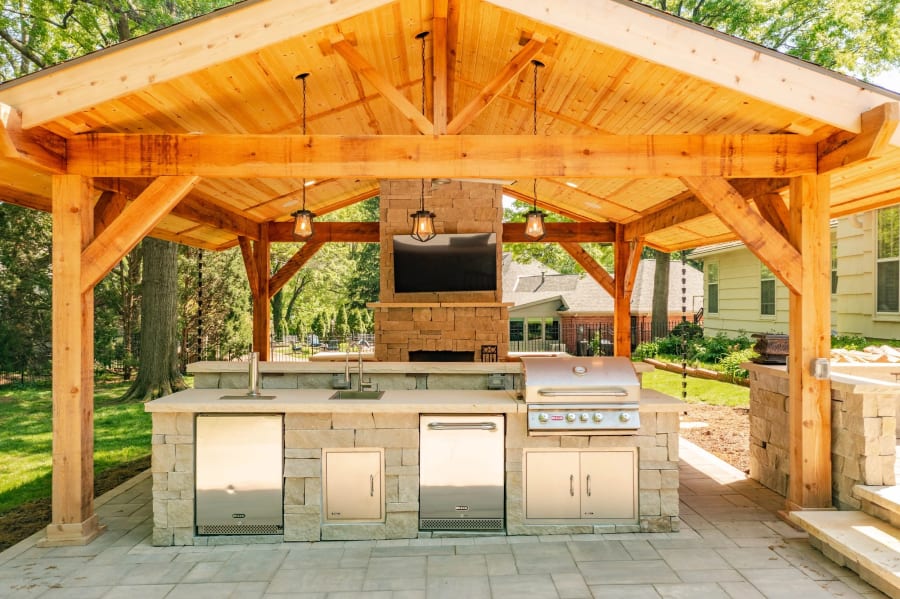
Fully covered outdoor structures that create a true outdoor room for year-round living. Our pavilions are timber-framed on concrete pier footings with pitched shingled roofs, tongue-and-groove ceilings, and integrated lighting. From simple open-air designs to elaborate builds with enclosed sides, fireplaces, and outdoor kitchens, we customize every detail to your backyard.
Popular Add-Ons
Investment
Most clients invest $40,000–$80,000
- Size and footprint (sq. ft. of coverage)
- Timber dimensions and species
- Roof pitch, shingle type, and ceiling finish
- Stone pier columns vs. concrete footings
- Add-ons: heaters, fan, TV mount, electrical, rain chain
- Site conditions and access
Drag to rotate • Scroll to zoom
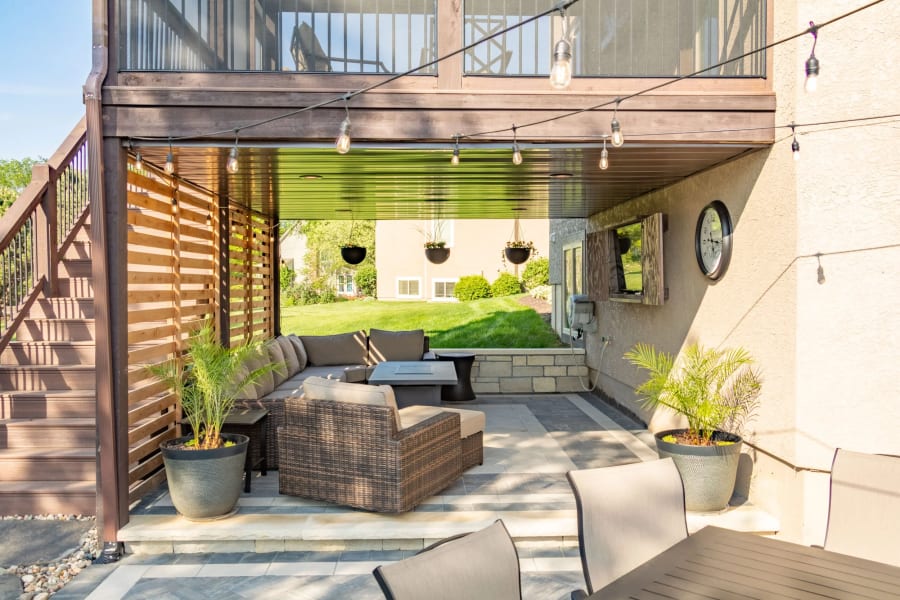
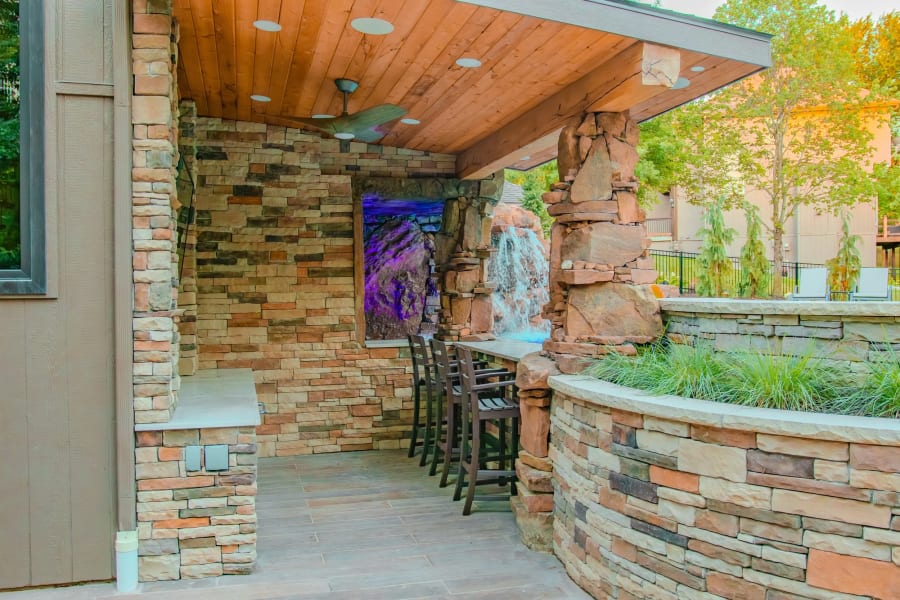
Real pavilions we've built across Kansas City
Covered outdoor living structures with all the amenities.

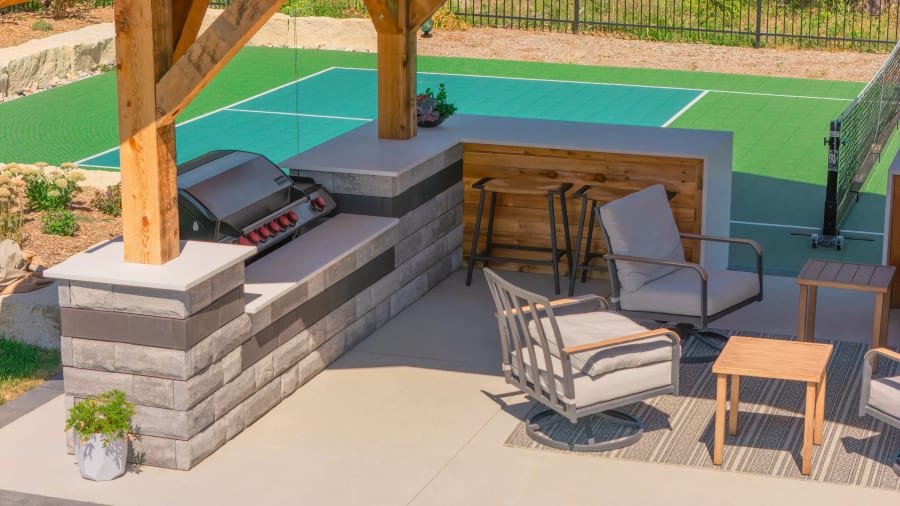
A roof changes what the space is.
When weather hits, everyone on an open patio gets sent indoors while nobody under a pavilion has to move. The furniture stays out through the season, the television stays where it is, and the grill still works on a night that would otherwise have shut the patio down.
Most of the pavilions we build start with a homeowner wanting more of the year out of their patio. A closed roof traps the warmth underneath it, keeps snow off the surface, and gives heaters and fans something solid to hang from. That is what carries a patio through the fall and into the cold months.
Sizing it for what goes underneath.
The pavilion modeled in 3D above is 24 by 18 feet, which is a comfortable size for a space doing more than one job. Under that footprint a dining table fits on one side and a seating group on the other without the two crowding each other.
Covering only a dining table, it can come down a fair bit from there. Covering a kitchen run, a bar and seating, it needs to grow. The first thing we ask is what you picture happening under there, because the answer sets the footprint, and the footprint drives most of the cost.
What makes it usable in January.
A roof by itself gets you shade and shelter. What actually gets a pavilion used in cold weather are the pieces we run wiring for while the frame is still open.
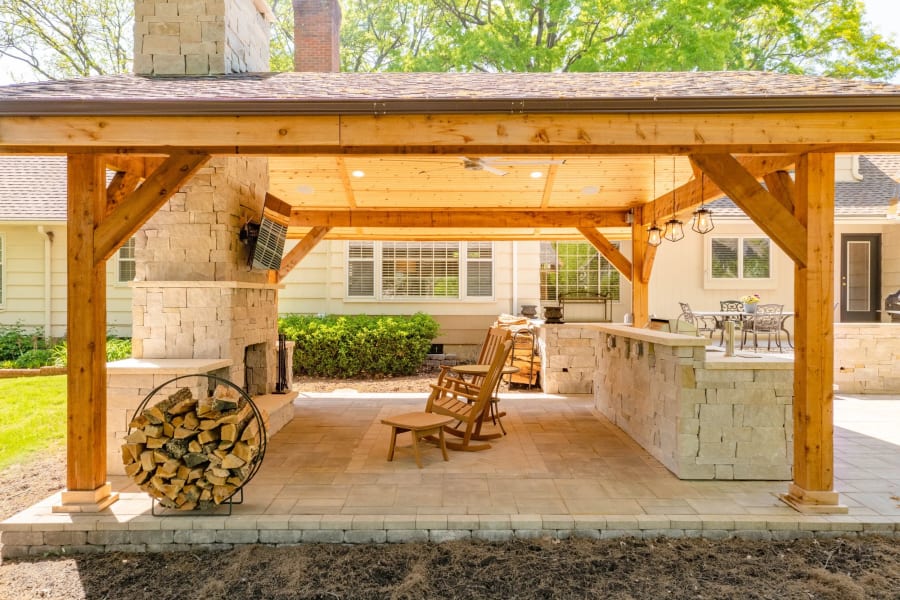
Infrared heaters mounted overhead warm the people and surfaces beneath them, which is the reason they work outdoors at all. Ceiling fans do the opposite job in August and take several degrees off what the space feels like. Drop-down screens close the sides against wind and bugs. Recessed lighting in the ceiling and a mounted television make it somewhere people stay after dark, and a stone fireplace at one end handles the rest.
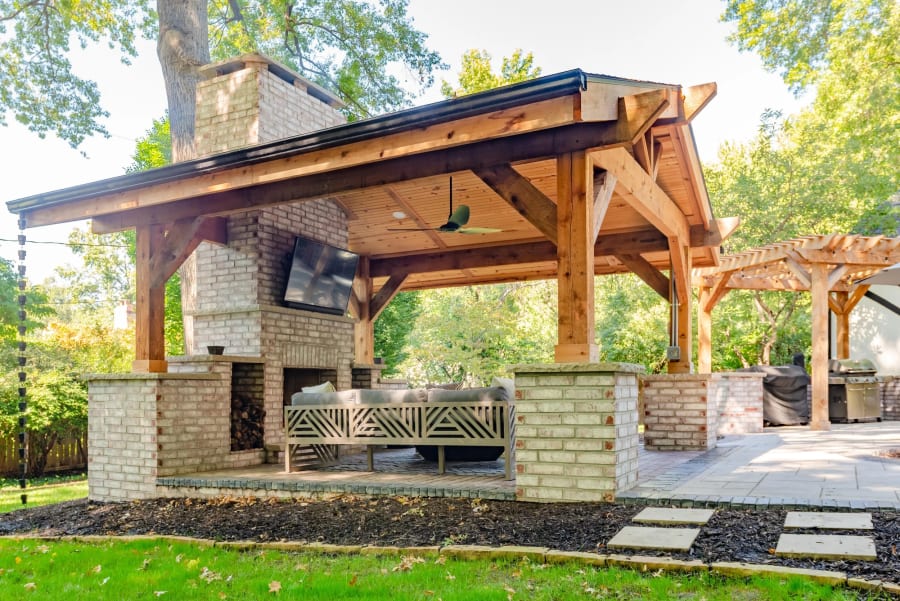
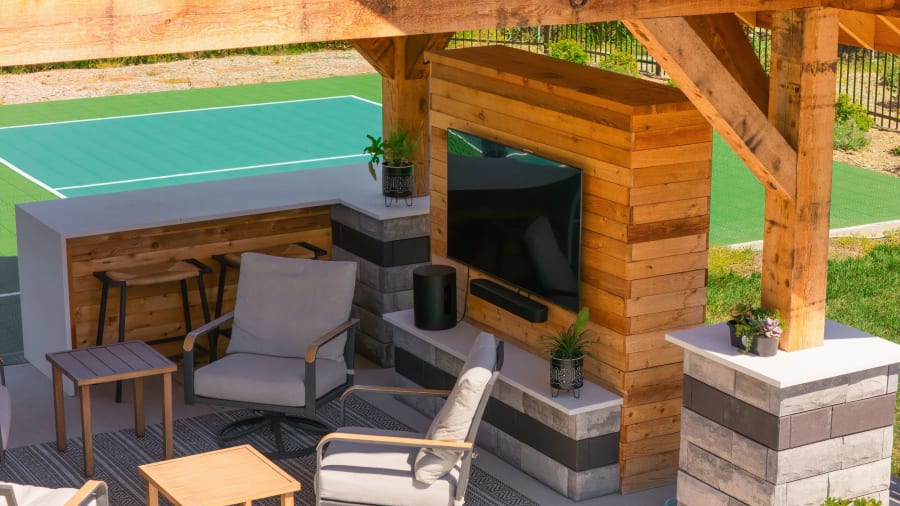
The setup we build most often is a fireplace at one end and a television mounted where everybody can see it. In Kansas City that combination earns its keep from September into January. Chiefs games and college Saturdays are the reason a good number of these get built, and once you have watched one outside with a fire going and heaters overhead, the living room is a tough sell.
We covered all of this in Embracing Football Season with Hardscape Elements, which runs through what actually matters out there on a game day. Worth a read if that is part of why you want one.
Pergola or pavilion.
Plenty of homeowners come to us undecided between the two, and budget tends to settle it before anything else does. A pavilion is a much larger investment. Most of our pergolas run $7,000 to $15,000, while pavilions land between $40,000 and $80,000, and the gap is all in the roof. Holding a real roof up through a Kansas City winter takes a heavier frame and piers in the ground to carry it.
The other difference is weather. A pergola is open overhead, so it softens the sun and lets the rain through. A pavilion is closed, so what is underneath stays dry. If shade is the whole goal and rain is not a concern, a pergola gets you there for a fraction of the money.
What a pavilion costs.
A pavilion starts at $18,000, and the majority of what we build falls between $40,000 and $80,000.
Size is the main lever, since every additional foot of roof means more frame holding it up and more material going on top of it. After that it comes down to the finish work, the pitch of the roof, whether the ceiling gets a tongue and groove treatment, and whether the posts sit on stone piers. Heaters, screens, a television and a fireplace each add to the number. Access plays a part as well, because a backyard we can get equipment into is cheaper to build in than one we have to carry everything through.
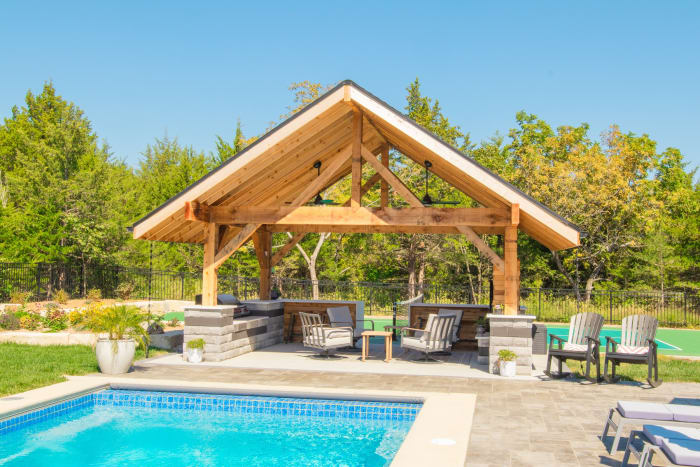
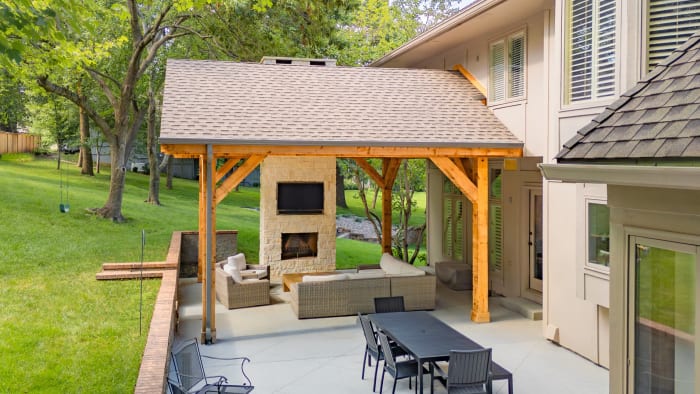
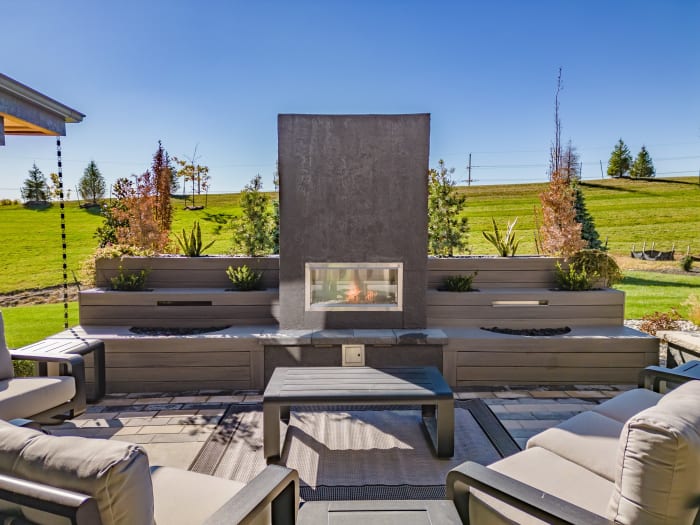
Pavilions we've built around Kansas City.
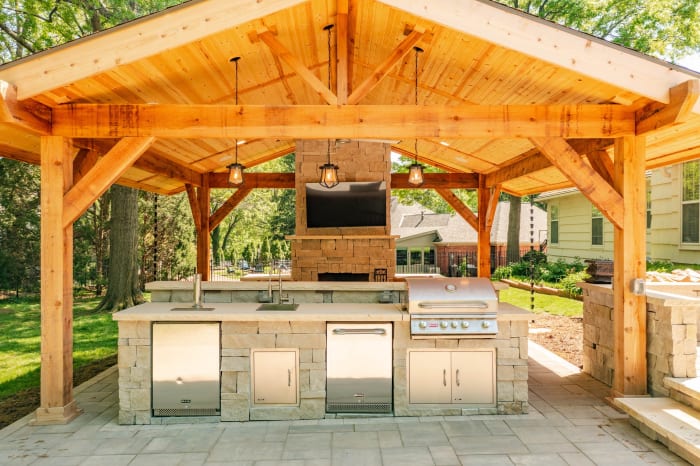
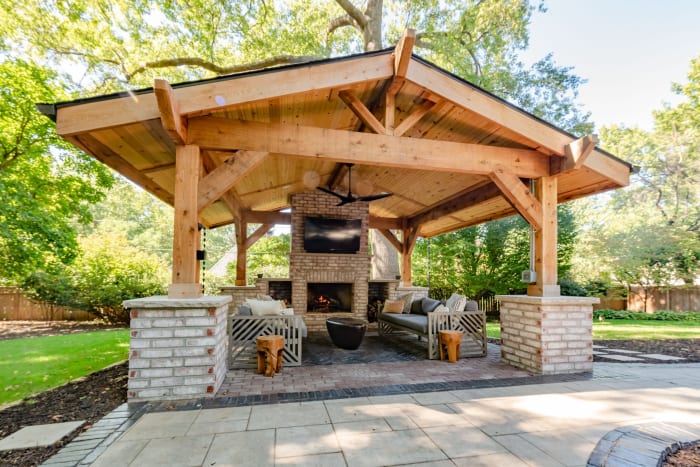
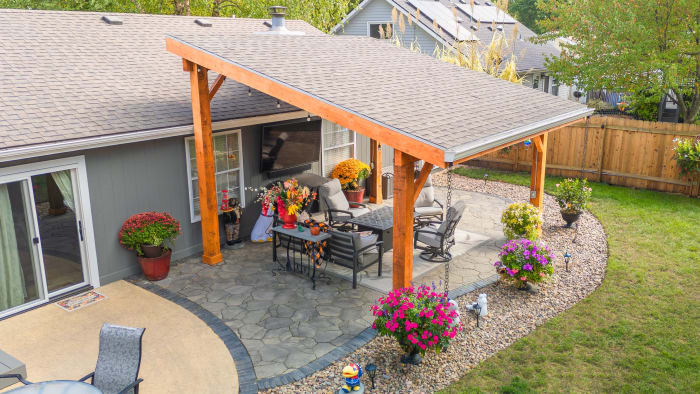
Timber frames on stone piers, roofs shingled to match the house, with outdoor kitchens, TV walls and fireplaces built in underneath.
What homeowners ask us about pavilions.
How much does a pavilion cost in Kansas City?Most of our pavilions fall between $40,000 and $80,000, with the smallest builds starting at $18,000. The footprint sets the baseline, then the roof pitch, the ceiling finish and the post detailing move it from there. Heaters, screens, a mounted television and a fireplace are the add-ons that shift the number most.
Do I need a permit for a pavilion?Almost always. A pavilion is a roofed structure on a foundation, and cities across the metro review those for setbacks, height and footings, with many HOAs wanting their own approval as well. We confirm what applies to your address during the design process, and permits are a service we provide.
What is the difference between a pavilion and a pergola?A pavilion is roofed and a pergola is not, and the rest follows from that. Because the roof has to hold a snow load and shed water, everything below it gets built stouter and set on concrete piers, and that is where the extra cost sits. In exchange you get a dry space that holds a television, heaters and finished lighting. A pergola gives you filtered shade and open sky for a good deal less.
Can a pavilion attach to my house?It can, and it is a common way to build one when the patio sits right off the back of the house. The connection has to be flashed into the wall properly so the house keeps shedding water the way it did before. The house itself can be a limiting factor as well, since the existing roofline, the height of the eaves and where the windows and doors land all affect whether an attached pavilion works and how it has to sit. That is an easy thing to sort out at the design meeting. Freestanding pavilions are just as common, and the yard usually tells us which way to go.
Can I put a television and heaters under it?Yes, and it is one of the main reasons people choose a pavilion. The solid roof and finished ceiling give the mounts something real to fasten to and keep the weather off the equipment. We run the wiring for the television, the heaters, the fans and the lighting while the frame is open, so nothing is surface mounted afterward.
What holds a pavilion up?Concrete pier footings carry the posts, and those can be wrapped in stone to match the house or the other hardscape in the yard. The roof is framed in timber and finished with shingles chosen to match your existing roof, so it looks like part of the house instead of a separate structure sitting in the yard.
Can a pavilion go over a patio I already have?Often yes, though it takes a closer look than a pergola does. The piers have to reach undisturbed soil below the existing surface, so some of the patio comes up where the posts land and gets put back afterward. We walk the patio and tell you what that involves before anything is committed to.
Paver patio cost in Kansas City
Real ranges by size, what drives the price, and the things cheap quotes leave out.
Read the guide →Hardscape contractors in Kansas City
How to evaluate quotes, spot red flags, and pick the right contractor.
Read the guide →Areas we service
Every city in the KC metro we build in, with in-depth guides for the suburbs that matter most.
See the map →Let's design your pavilion.
A 45-minute consultation is all it takes to see what's possible. No pressure, no hard sell, just experienced designers and a clear next step.