The Journal · Field Notes
A natural stone patio is built from real stone that's been quarried and cut, like flagstone, travertine or bluestone. It's been a client favorite for years, and it gives a backyard a look that's hard to get any other way. Here's what natural stone adds.
Pavers are made in a mold, so every one on the pallet looks about the same. Natural stone comes out of the ground, so each piece has its own color and markings, and no two are exactly alike.
That variation is the main reason people pick it. A stone patio has a depth to it that's hard to fake, and the color goes all the way through each piece, not just on the surface.
There are a few main types we build with. Flagstone comes in irregular shapes that get fit together by hand. Travertine comes in soft, warm shades of beige, cream and tan. Bluestone has a blue-gray color and is usually cut into rectangles, which gives a patio a more tailored look.
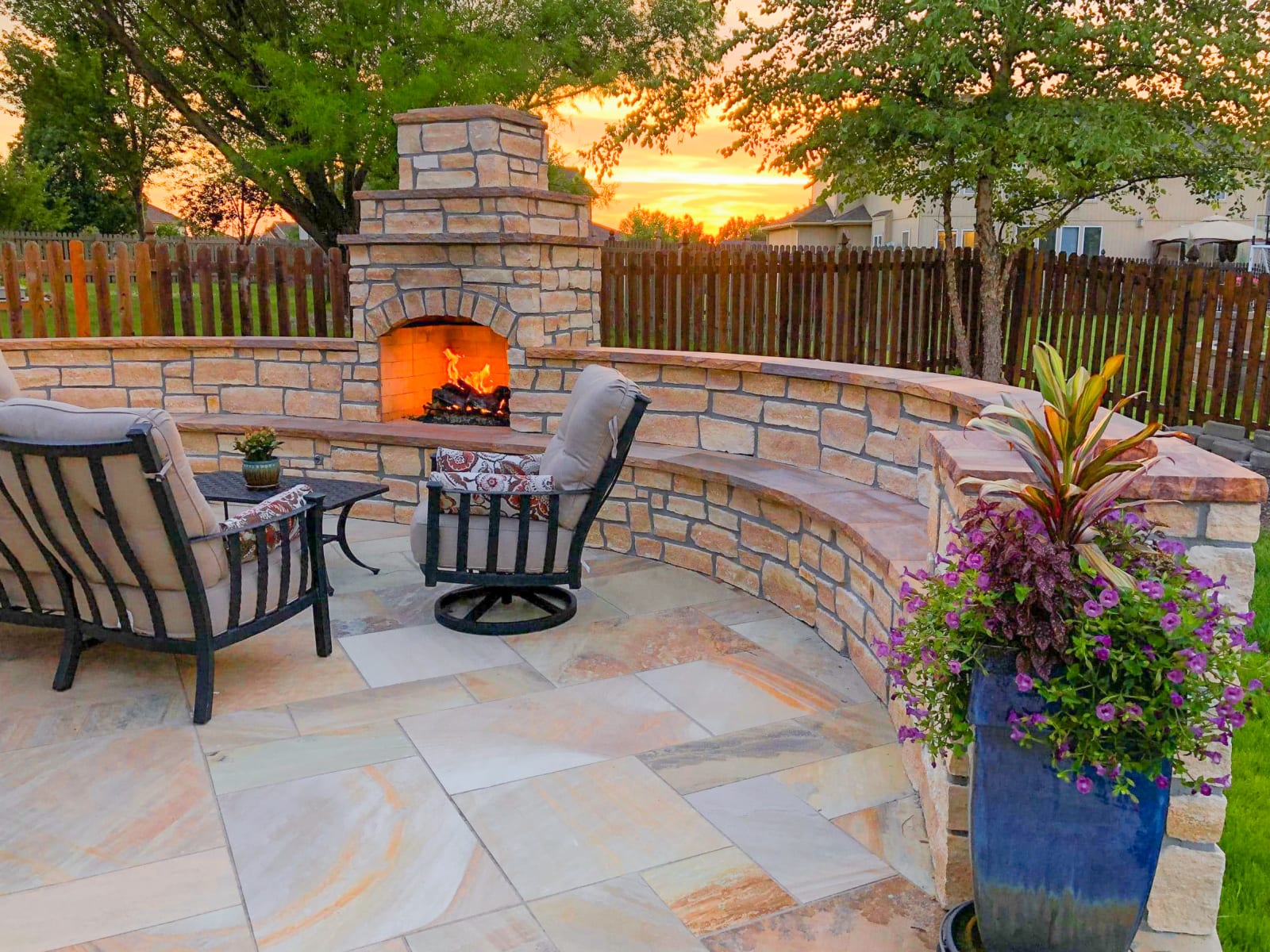
This patio we built in Kansas City uses natural stone in a mix of warm colors, with a fireplace and a curved seating wall around it.
Stone has been used around homes for a long time, so it fits in almost anywhere. On an older house especially, a stone patio looks like it's always been there.
Good stone holds its color for years, and the surface wears in a little over time, which only adds to the look.
It works on newer homes too. Cut bluestone or travertine laid in a clean pattern can look crisp and modern, and it pairs well with stone veneer on the house or a fireplace.
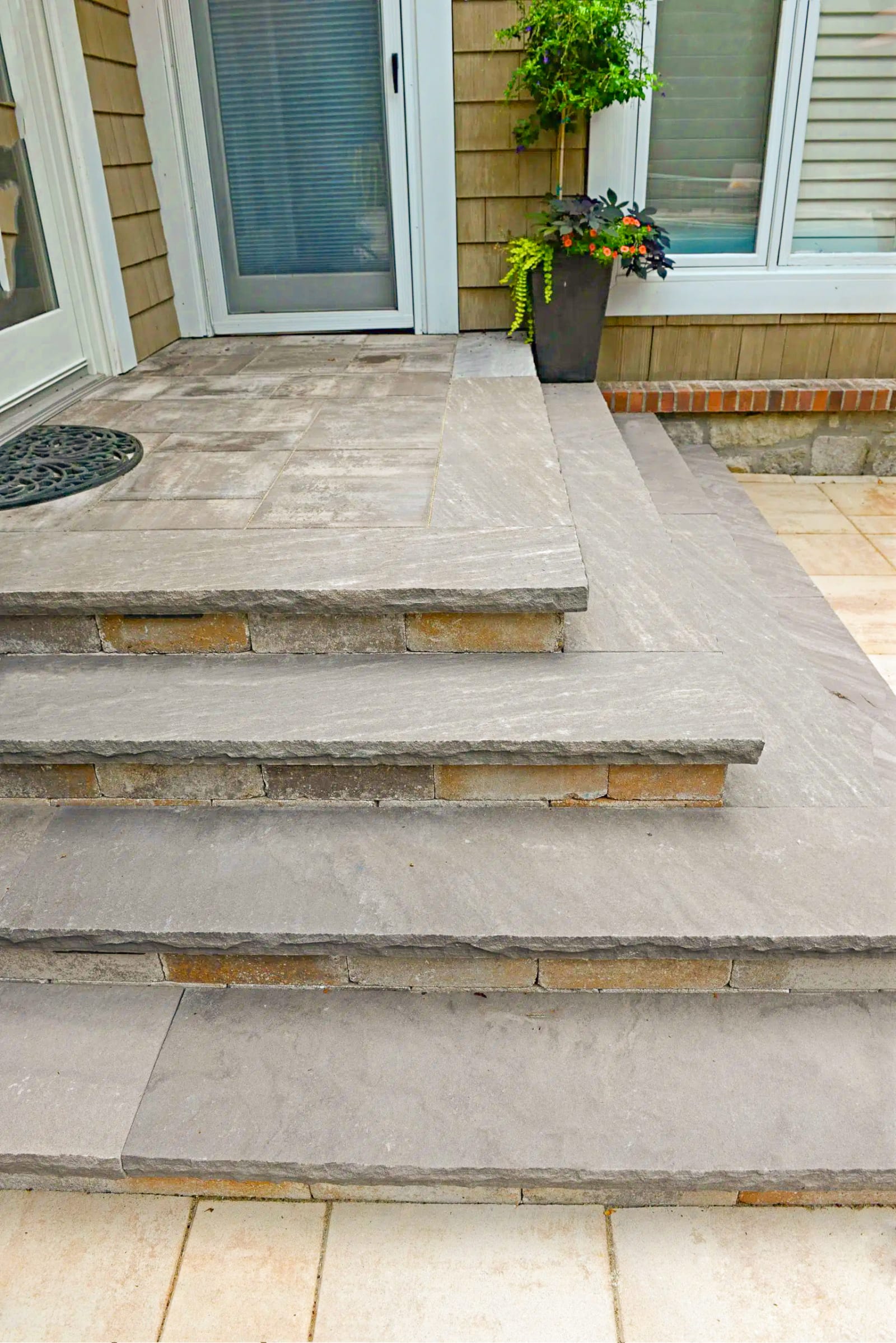
These stone steps we built in Kansas City lead down from the back door of a cedar-sided home onto the patio.
Travertine is one of the most popular choices for a pool deck, and for good reason. Its light color doesn't soak up heat the way darker surfaces do, so it's a lot easier on bare feet in July.
Its textured surface also grips well when it's wet, which matters when kids are running in and out of the pool all afternoon.
Since travertine is a softer, more porous stone, picking the right thickness and grade matters in our winters. We'll help you choose one that holds up here.
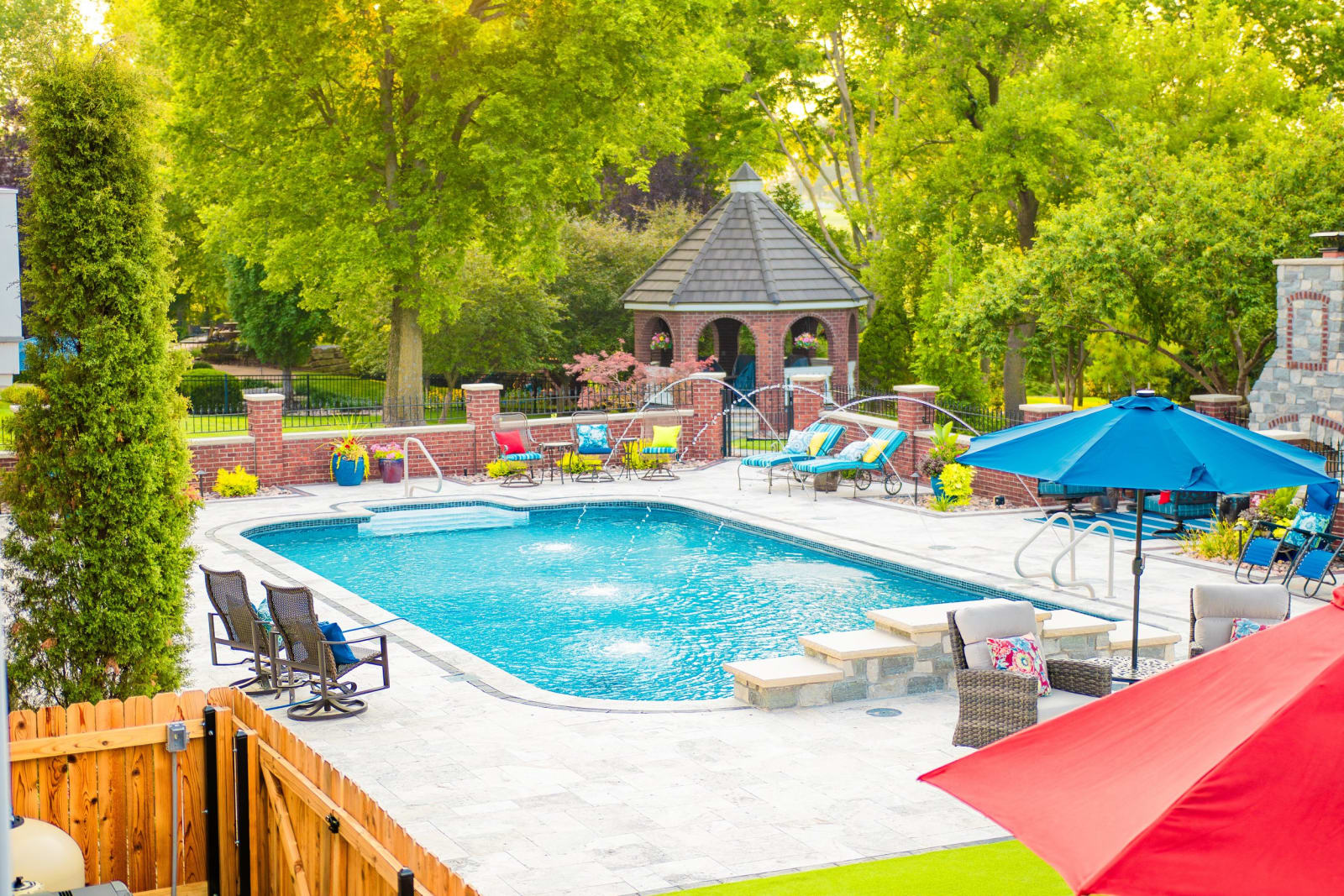
This travertine pool deck we built in Kansas City wraps around the pool, with plenty of room for lounge chairs along the edge.
Our winters are hard on stone. The ground freezes and thaws dozens of times a season, and every time water soaks into a stone and freezes, it expands a little.
Over enough winters, a soft or porous stone can start to flake and wear at the surface, and salt by the back door speeds that up. A denser stone holds up a lot better.
The base matters just as much. Kansas City clay moves with the seasons, and a stone patio needs a solid base under it to stay flat and even for the long haul.
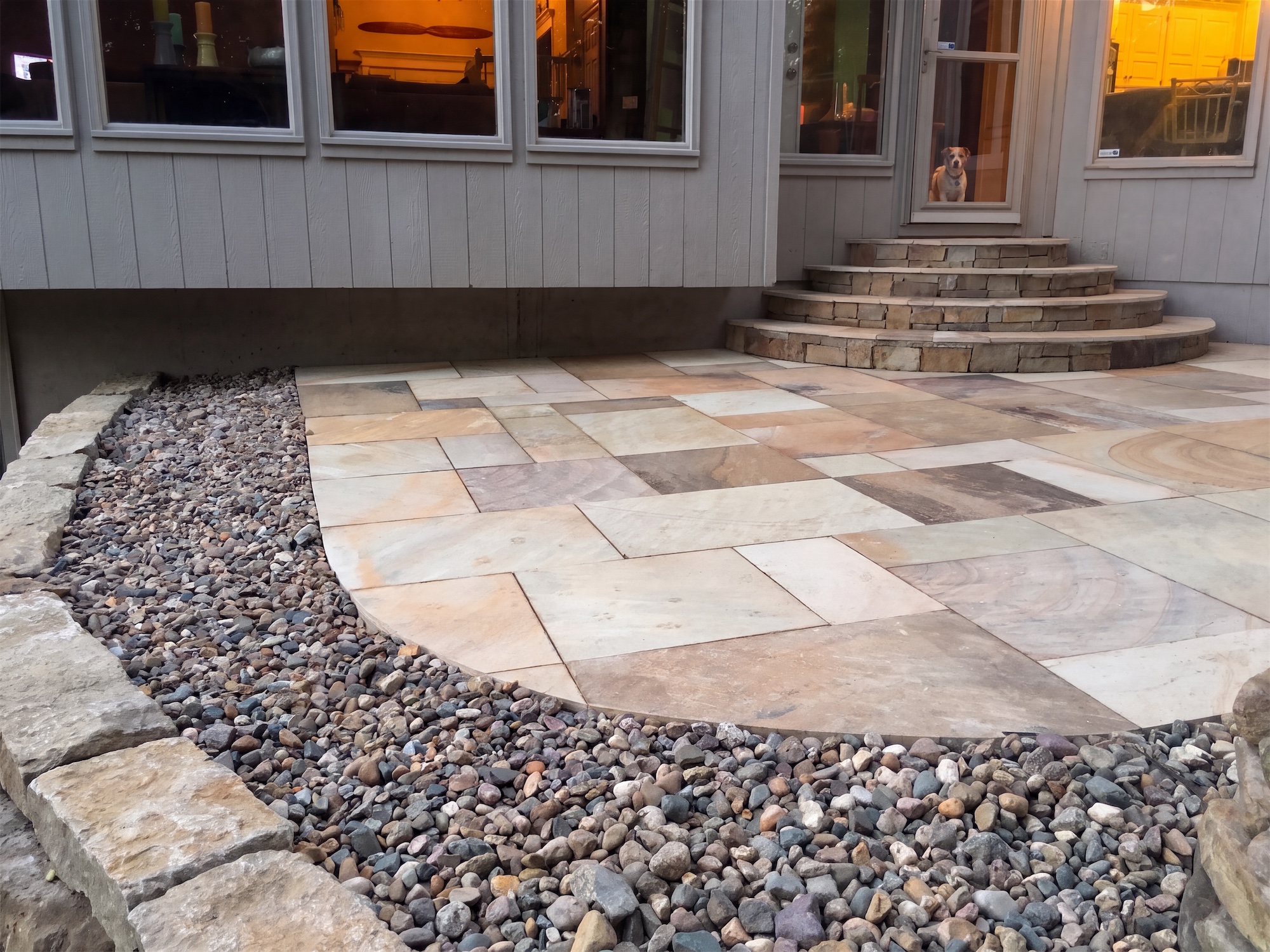
This sandstone patio we built in Parkville curves around a river rock bed, with stone steps up to the house.
Two stones of the same type can hold up very differently here. A higher grade costs a little more, but it lasts a lot longer in this climate.
Continue: through the whole yard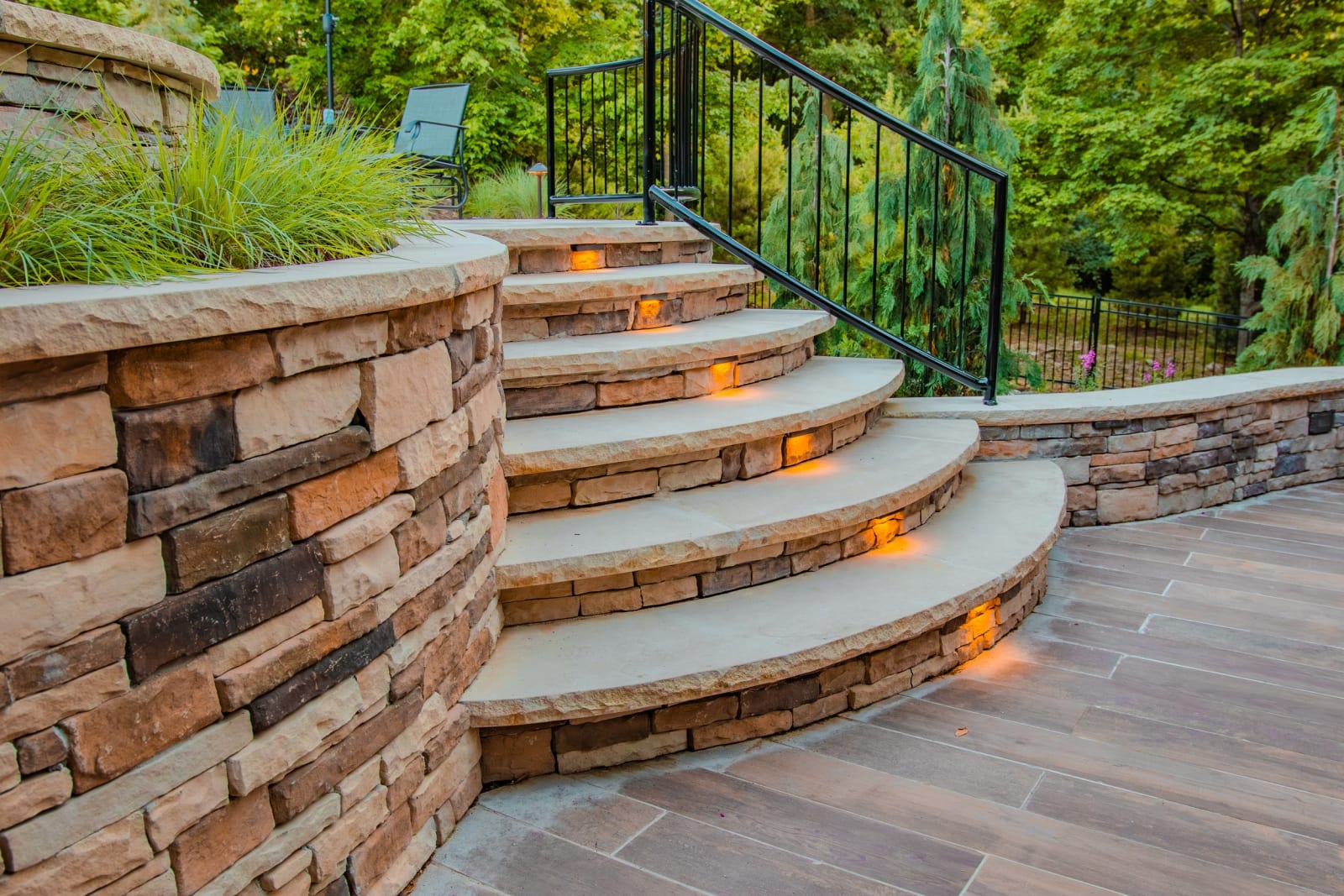
Natural stone isn't just for the patio. The same stone can go on steps, walkways and front porches, or on top of a seating wall as the cap.
Using one stone in a few places ties the whole yard together, so the patio, the steps and the walls all look like they were built at the same time.
Steps are one of the most common places we carry it. Wide stone treads look great and give you a solid place to step, especially with a light set under each one.
These steps we built in Kansas City use stone treads with stone veneer walls on each side, and a light under every step.
Stone color can shift from one batch to the next, so we order the stone for the whole project together. That way the patio and the steps match.
Continue: is it worth it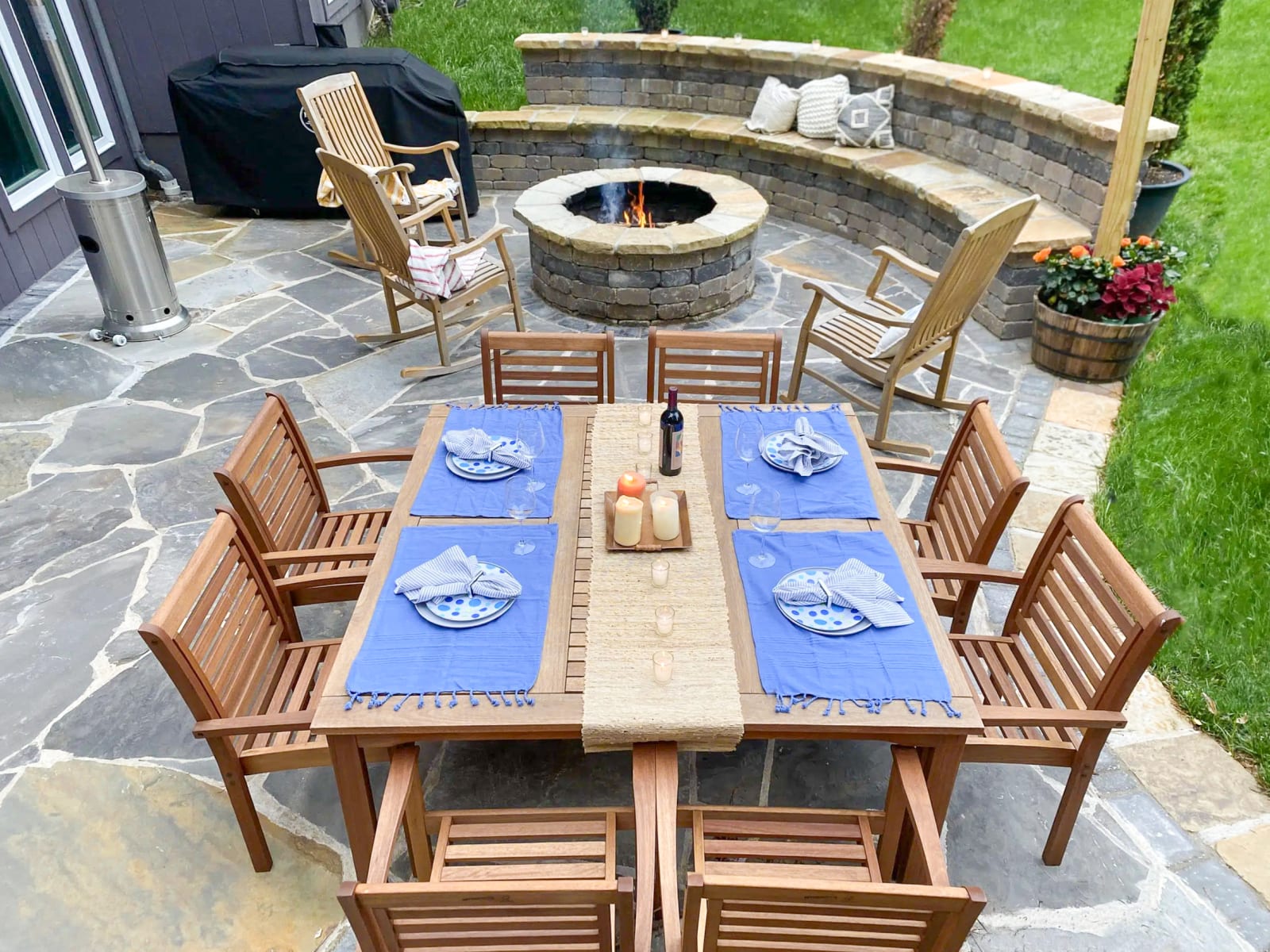
If you want a patio with a one-of-a-kind look that gets better with age, natural stone is worth it. It usually costs more than pavers, but a lot of clients feel the look is worth the difference.
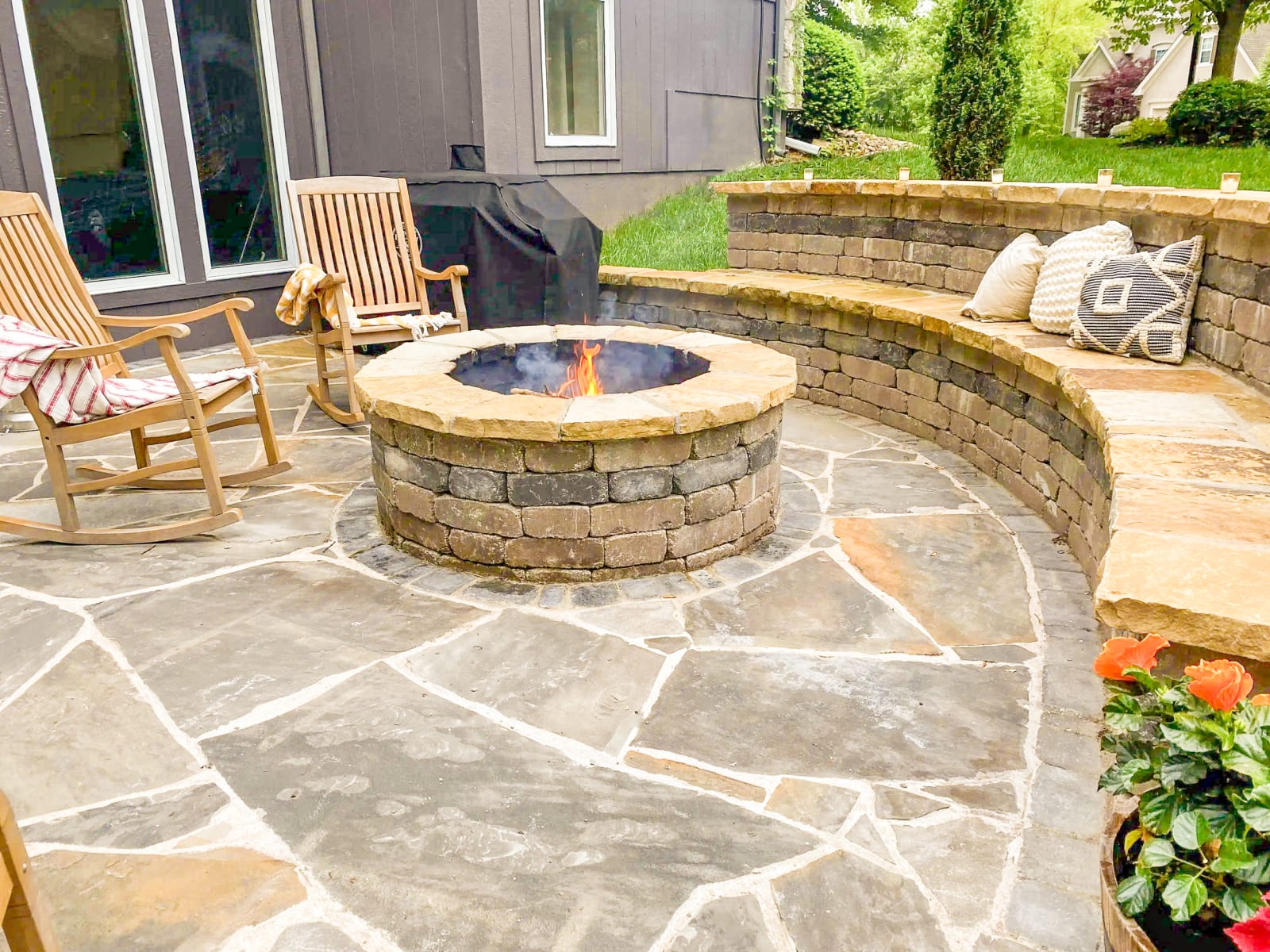
Pavers are a great option too, and our post on the benefits of a paver patio covers why. Some clients use pavers for the main patio and natural stone on the steps or the seating wall caps. This flagstone patio we built in Kansas City has room for a dining table, with a fire pit and a curved seating wall just past it.
We can show you stone options for your backyard at a free design meeting, and our stone patio page has more of the stone patios we've built around Kansas City.
Thirty minutes on site with our designer is all it takes to see what is possible. No pressure, no hard sell.
Schedule a Design Call