The Journal · Field Notes
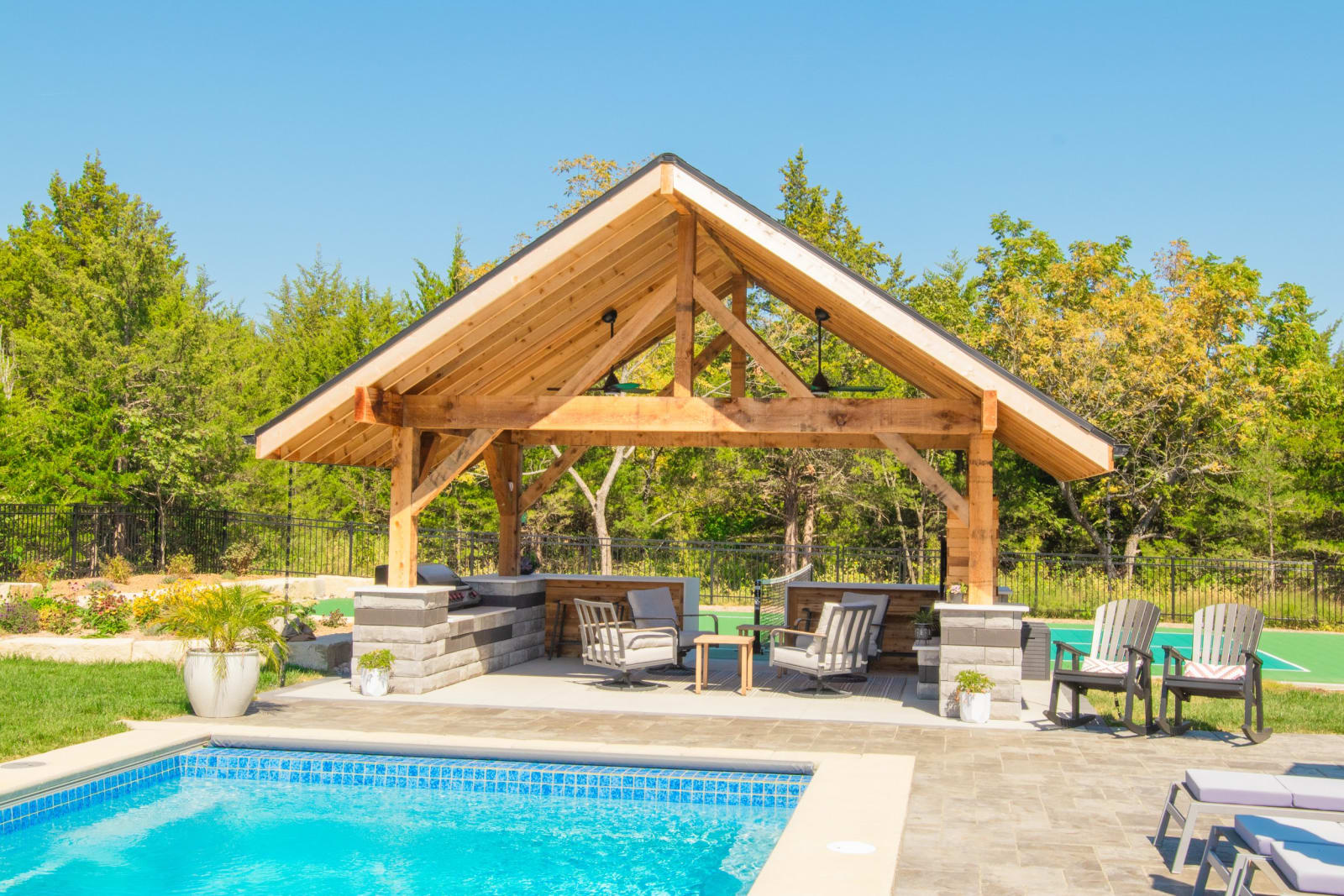
A pavilion is a covered structure built over part of your patio. The sides are open like a pergola, but the roof is solid and shingled like the one on your house, so everything under it stays dry. It's a bigger investment than a pergola, so it's fair to ask what you get for the money. Here are the benefits we see in the Kansas City backyards where we've built one.
On an open patio, a passing shower means grabbing the cushions, covering the grill and carrying the plates inside. By the time it clears up, the evening has usually moved indoors for good. Under a pavilion, everyone can stay put while it rains. The food stays dry, the conversation keeps going and the grill doesn't have to shut down.
Kansas City gets a lot of its rain in late spring and early summer, which is right when most people want to be outside. Many of those storms are quick ones, so with a roof overhead you can wait one out from your chair and pick back up once it passes.
It makes hosting easier as well. If you have a graduation party or a family cookout on the calendar, a pavilion gives the food and the guests a covered place to be, so a rainy forecast doesn't have to change your plans.
If you host big get-togethers, think about how many people you'd want under the roof during a shower. Size the pavilion with that number in mind, along with the furniture you use every day.
Continue: summer shade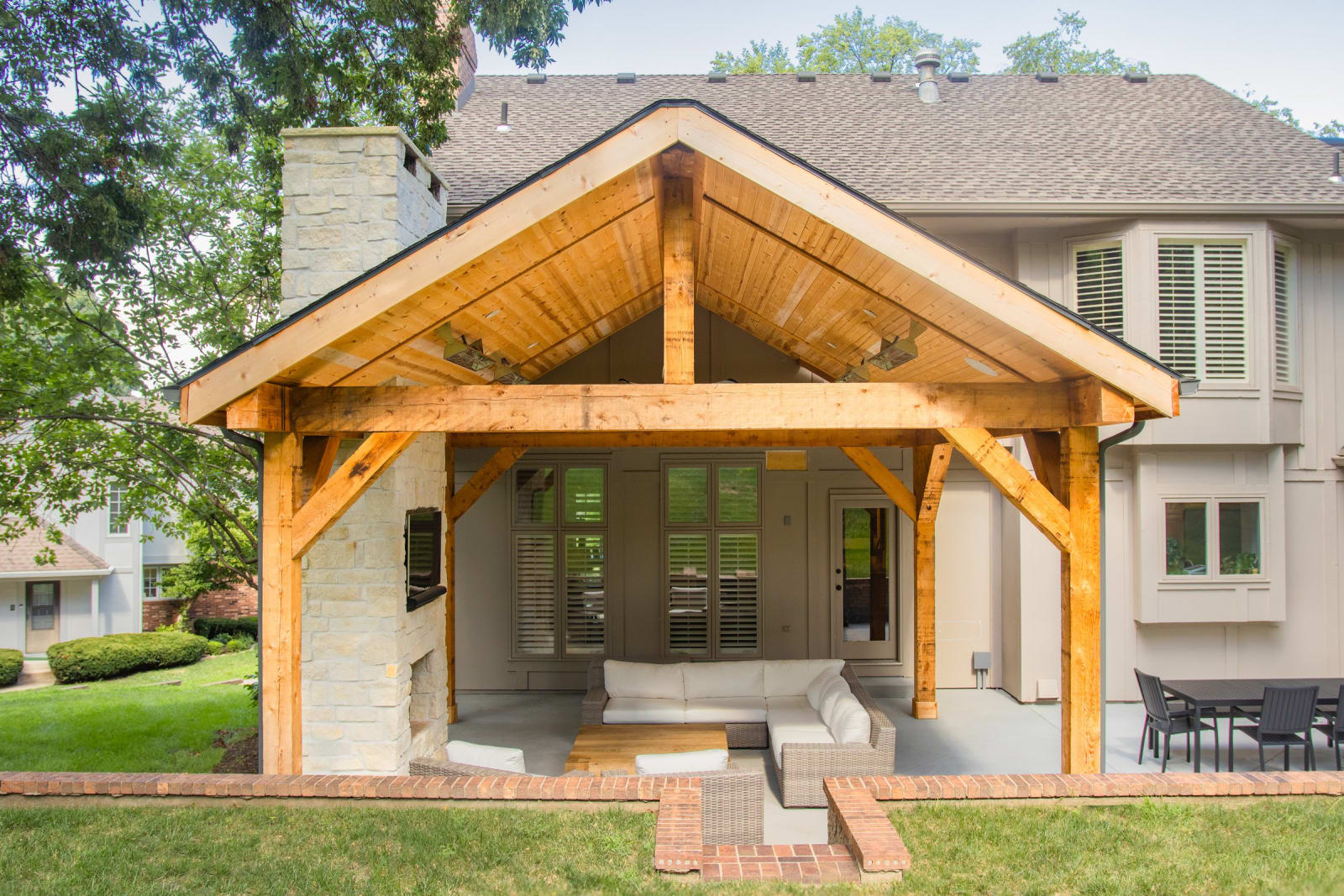
Kansas City summers often push into the upper 90s, and a patio in full sun can be too hot to use in the afternoon. Pavers and concrete soak up that heat, so the surface itself can stay warm well into the evening.
A pergola filters the sun, but a pavilion's solid roof blocks it overhead, so the shade underneath is noticeably cooler. That shade covers the furniture, the floor and everyone sitting there, which keeps the space usable through the hottest part of the year.
Add a ceiling fan or two and the air keeps moving on still, muggy days. Fans are an easy thing to plan in from the start, and they make a big difference in July and August.
Low evening sun comes in under the roof from the side. If your patio faces west, talk with your designer about where to place the pavilion, or about adding screens or a privacy wall on that side.
Continue: more months outside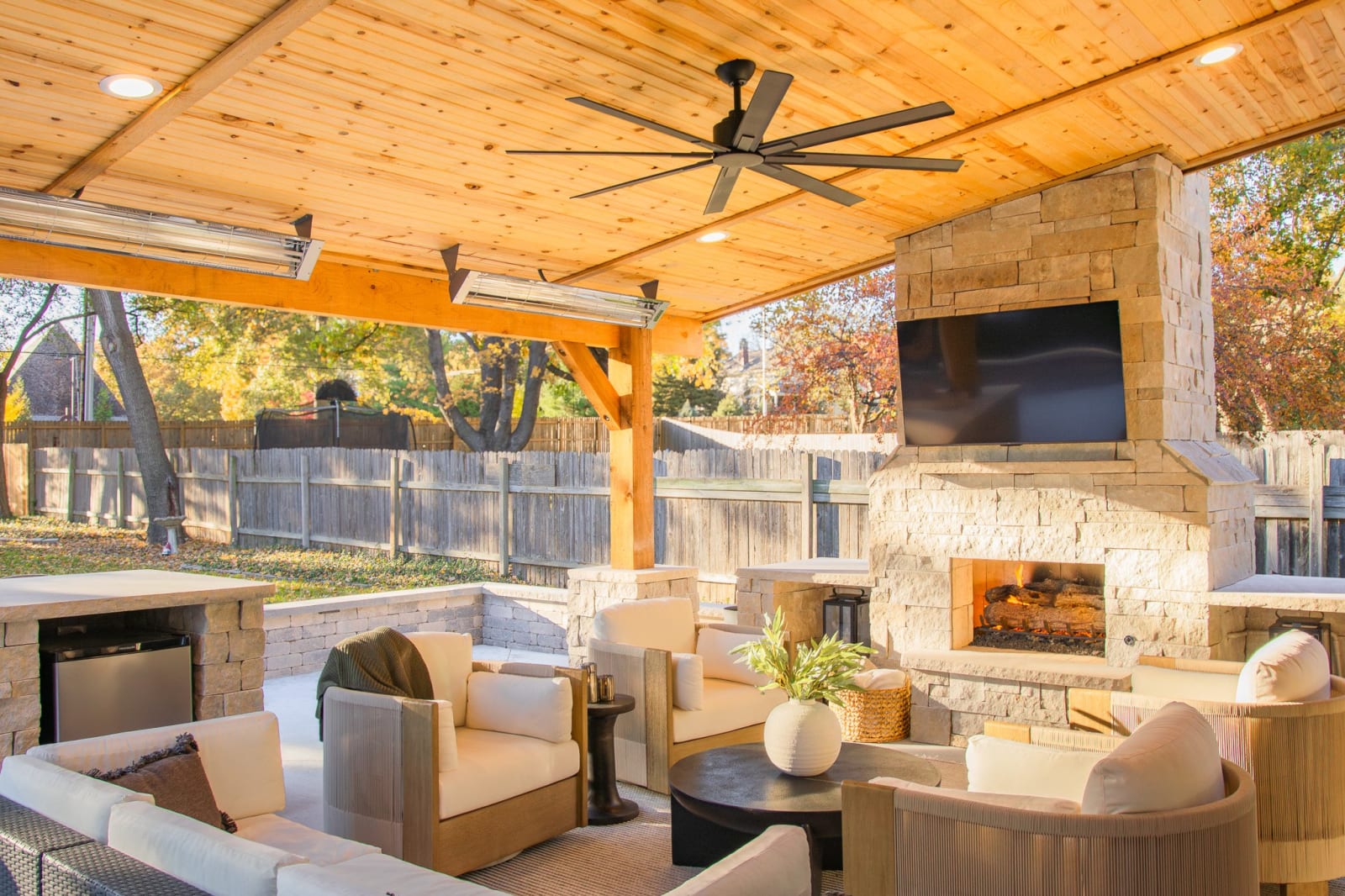
Most Kansas City patios get used from spring through early fall. Then the furniture gets covered and the backyard sits empty until April. A pavilion stretches that season on both ends.
The roof keeps frost and snow off the furniture and the floor, so the space is ready whenever the weather allows. It also gives infrared heaters a place to mount overhead, aimed down at the seating area. On a cool fall night, a couple of heaters can make it comfortable to sit out for hours.
A fireplace at one end helps even more. Many of our clients with a fireplace under their pavilion keep using the space well into the winter, especially during football season and the holidays.
If you want to sit out there in November, plan heaters over the seating area. If spring through early fall is enough, fans and lights may be all you need.
Continue: furniture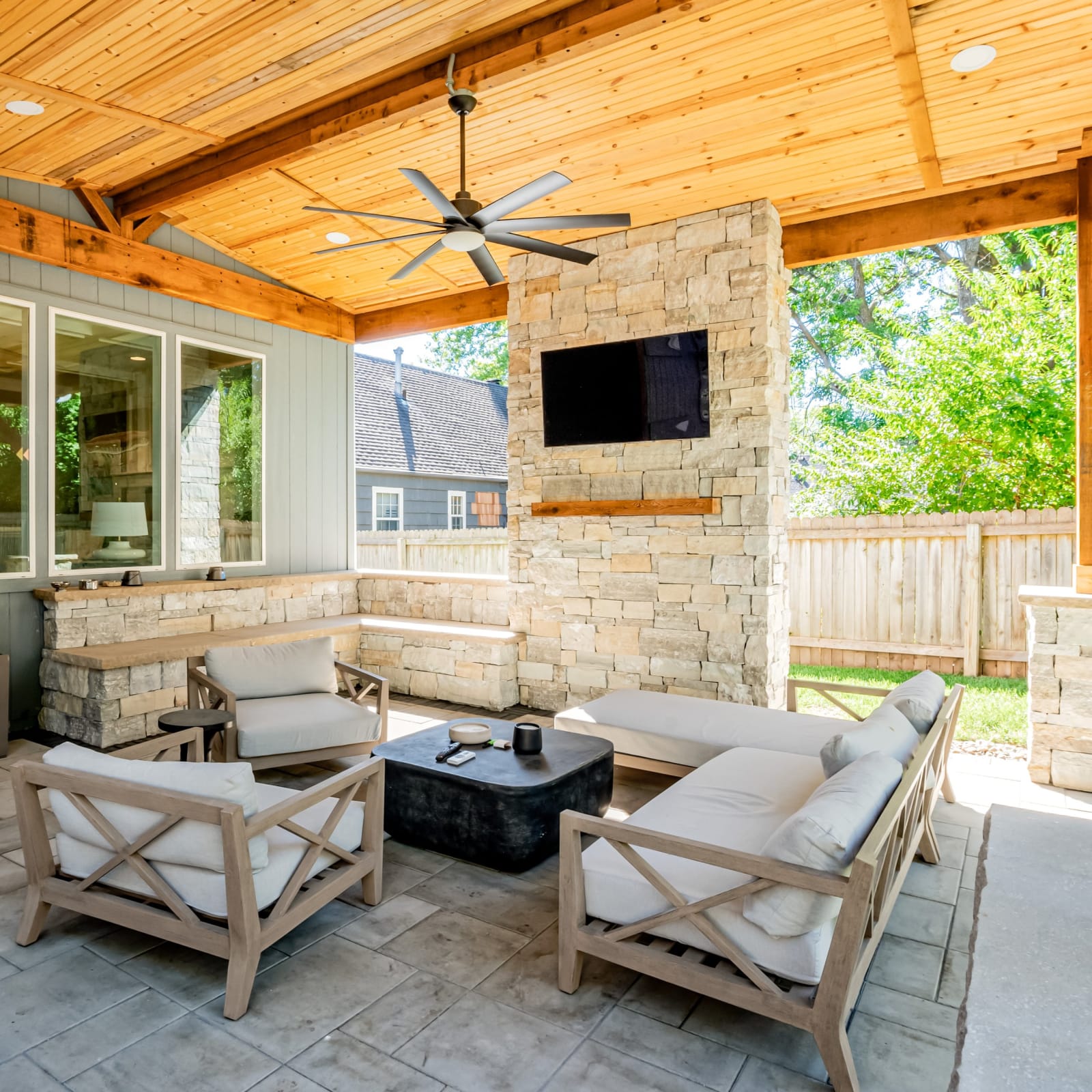
Cushions and outdoor fabrics fade in the sun and stay soggy for days after a storm. Under a pavilion they're out of both. You aren't hauling cushions into the garage every time the forecast looks bad, and they keep their color a lot longer.
It also makes nicer outdoor furniture worth buying. Deep sectionals, lounge chairs, outdoor rugs and side tables all hold up better under a roof, so the space can be furnished a lot like a living room. Several of our clients have set theirs up that way, with a sectional facing the fireplace and the TV.
You'll still want to store the cushions over the winter, but day to day the furniture can stay right where it is.
Settle where the fireplace, the TV and the walkways go first. Then shop for furniture that fits that layout, so nothing ends up blocking the view or the path to the kitchen.
Continue: the outdoor kitchen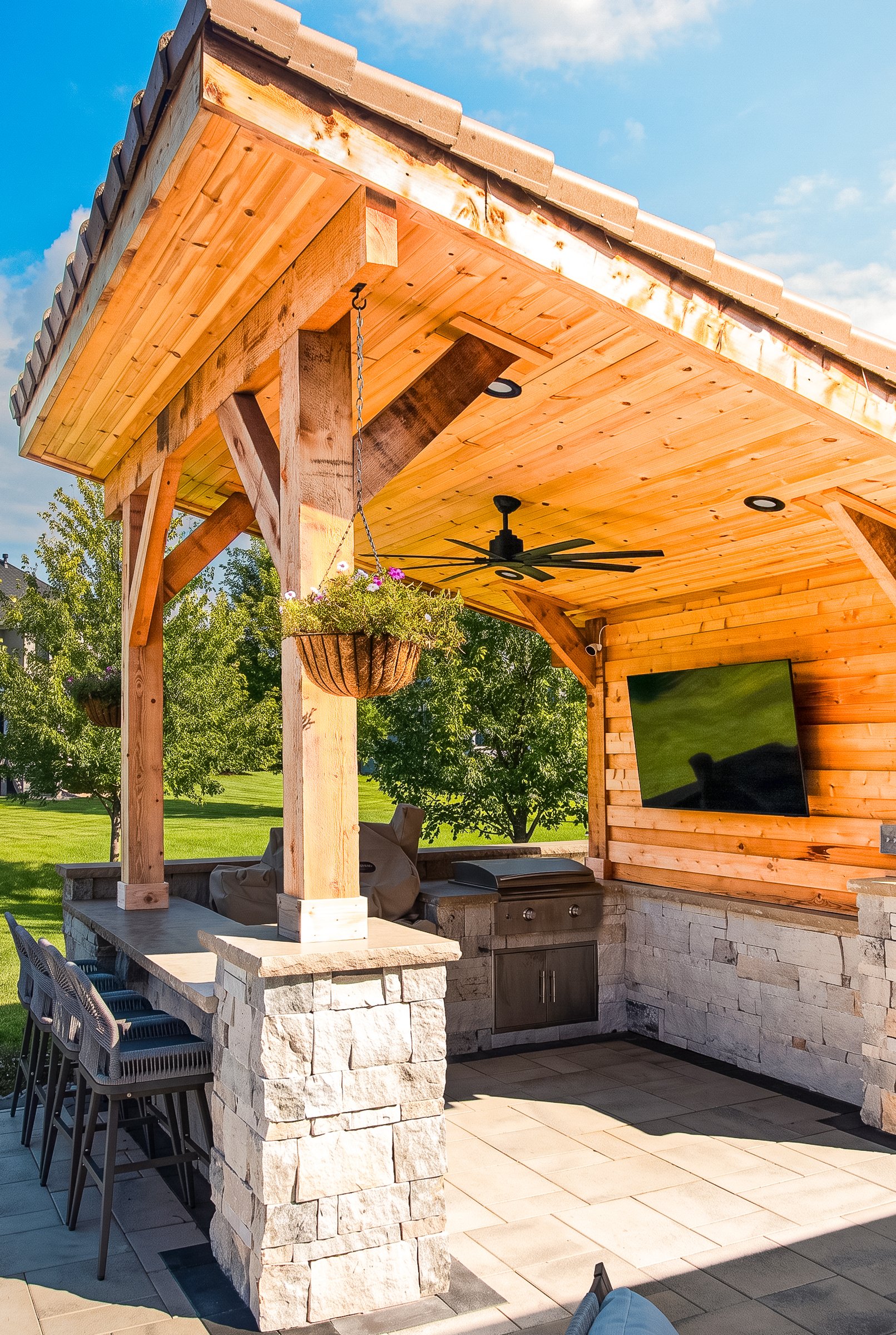
Grills, outdoor refrigerators and countertops are made to be outside, but they still last longer out of the direct sun and rain. A roof also keeps rain, leaves and bird droppings off the counters, so there's less to clean before you start cooking.
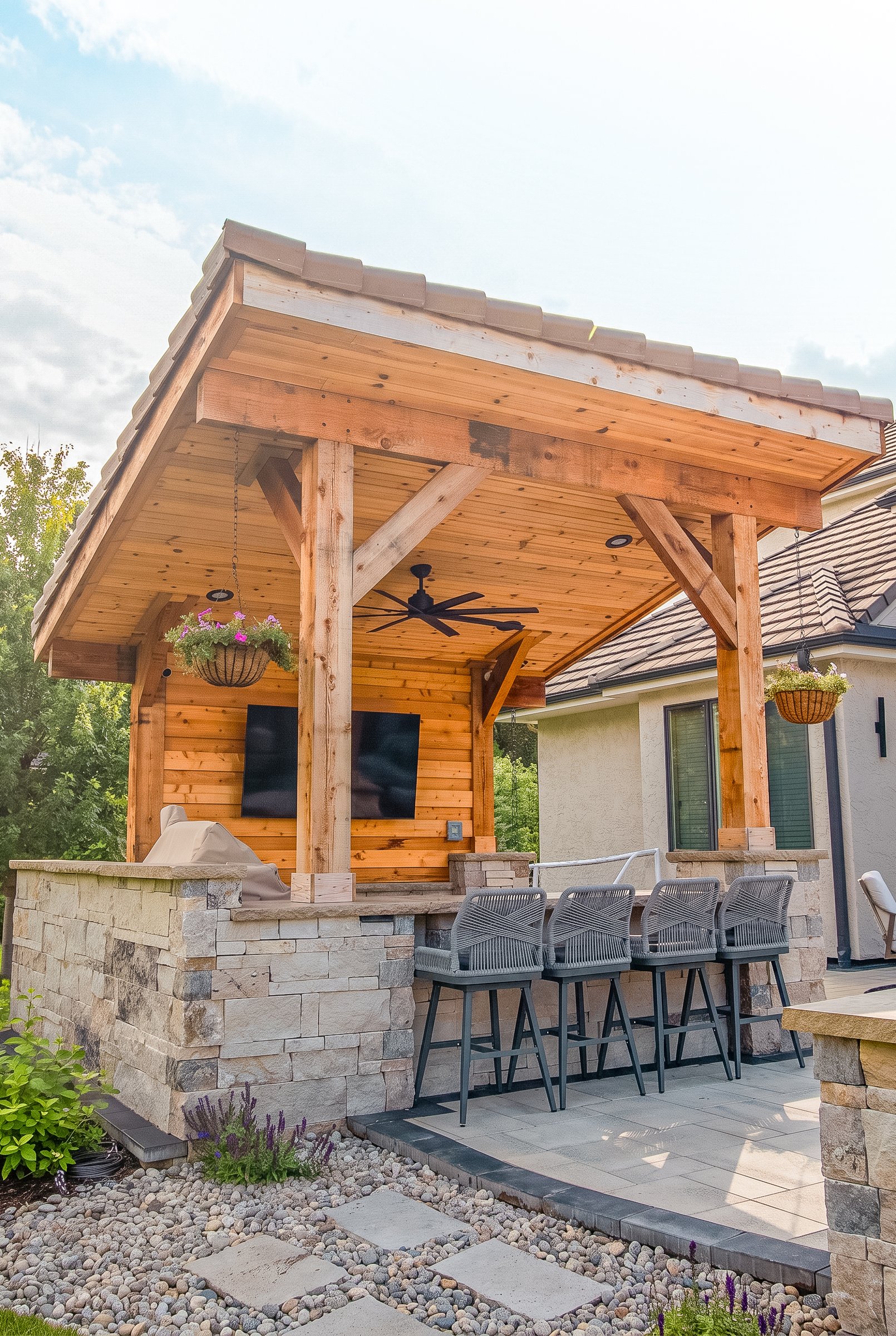
It's nicer for the person cooking, too. Under a pavilion the cook stays dry and in the shade, and recessed lights in the ceiling make it easy to see the grill after dark. With the bar seating and the rest of the group under the same roof, whoever is cooking is still part of the party.
Some of our pavilions are built around the kitchen, like this one in Lenexa with a full kitchen, bar seating and a TV under one roof. If a kitchen is part of your plans, our outdoor kitchen inspiration post has more ideas.
If you enjoy your Traeger or Blackstone and want to keep it, ask your designer about a grill alcove. It's a space built into the outdoor kitchen and sized to fit your grill, so the one you already have becomes part of the new setup.
Continue: screensDrop-down screens are one of the most popular add-ons for a pavilion. They mount along the open sides, drop down when you need them and roll back up out of the way when you don't.
Lower them on a windy night or when the mosquitoes come out at dusk, and you can keep sitting outside without fighting the bugs. Screens also cut some of the low sun on the west side and give you a little more privacy when they're down.
In the spring and fall, screens and a heater together make a big difference in how warm the space feels. The screens block the breeze, and the heater has a much easier time keeping everyone comfortable.
Even if you add screens later, it helps to plan the open sides with them in mind. Leaving room for them at the start is easier than working them in after the pavilion is built.
Continue: privacyIn a lot of Kansas City neighborhoods, the backyards are open with no fences between them, and even where there is a fence, the house next door can often see in from its second floor. Under a pavilion you're out of sight from above, which makes the space feel a lot more private.
The sides can add privacy too. A stone fireplace, a TV wall or a privacy wall on one side of the pavilion blocks the view from the yard next door, and it gives you a back wall to arrange the furniture around.
It's a lot more comfortable to relax, eat dinner or watch a game out there when you aren't in full view of the neighbors.
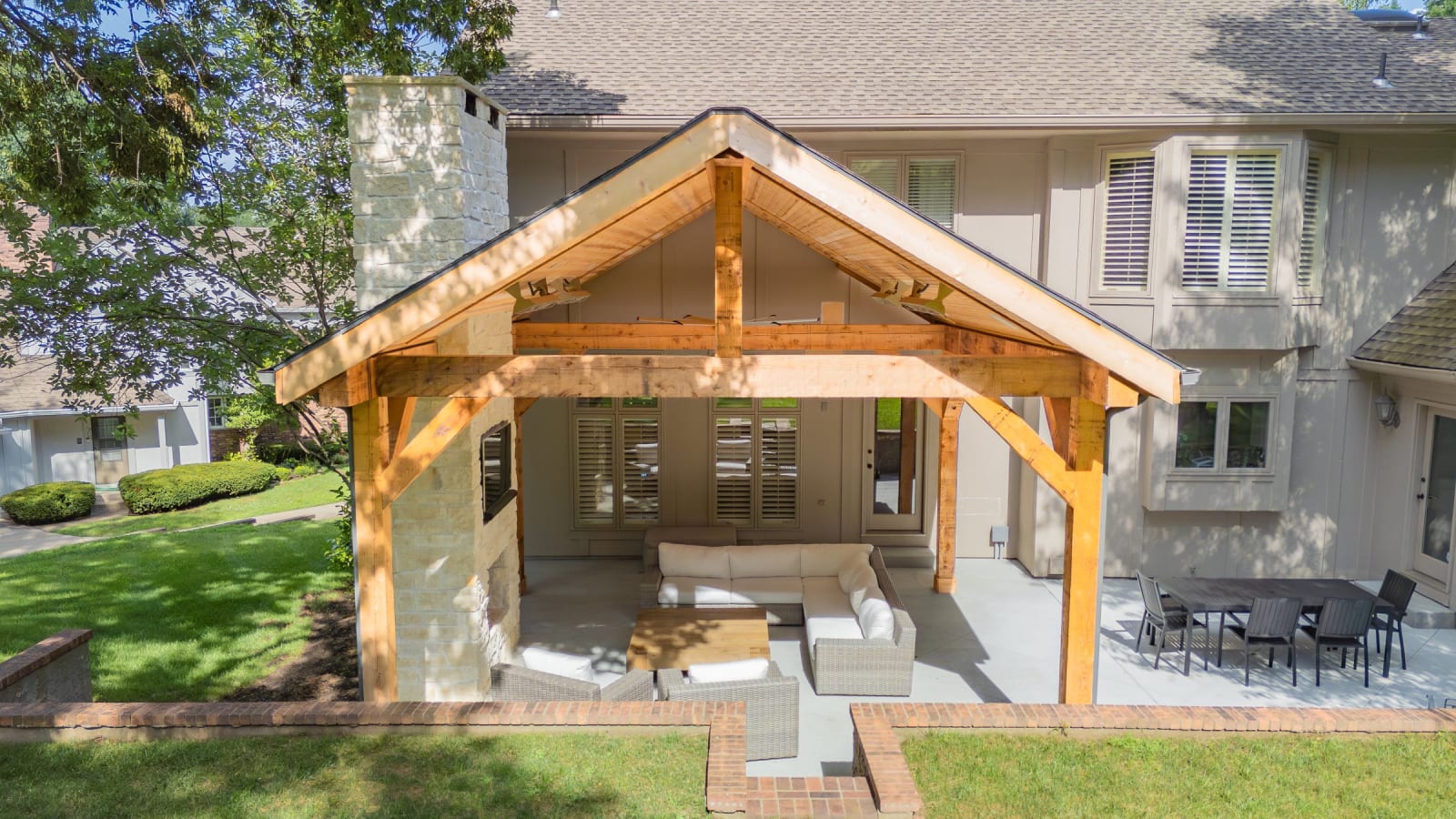
A pavilion is a big structure, so it needs to fit the style of the house. We shingle the roof to match your house and stain the rough cedar to go with your trim.
A tongue-and-groove ceiling gives the underside a finished look, and the posts can sit on stone-wrapped piers that tie in with a fireplace or the stone already on the house. The ceiling, the stain and the stone can all be picked to match what's already there.
Some of our pavilions tie into the roofline of the house, like this one in Leawood. Others stand by themselves near a pool or out in the yard, like the one we built in Olathe with its own TV wall and grill alcove.
Shingle colors vary a lot from one brand to the next. If you know the brand and color on your house, matching the pavilion roof is much easier.
Continue: Kansas City weather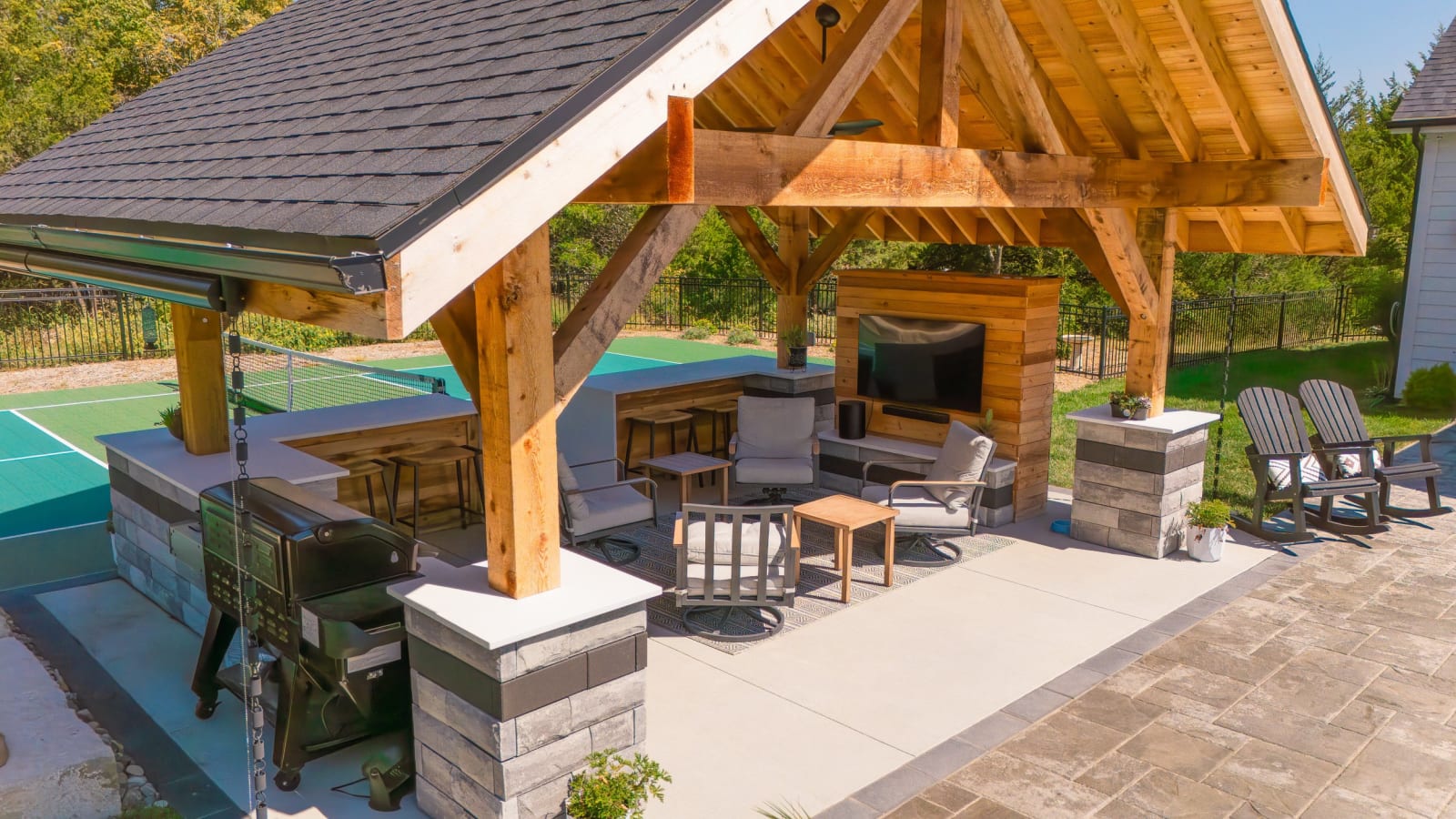
A pavilion is built a lot like a small building. Heavy rough cedar posts and beams carry a shingled roof, and the posts sit on concrete piers set in the ground, so the whole structure is made to hold up through our winters, wind and summer storms.
Rough cedar is a good wood for the job. It takes stain well, it handles moisture better than most lumber, and it has the heavy, natural look most people want in a timber frame.
The roof is built like the one on your house, with the same kind of shingles, and gutters and downspouts carry the rain off and away from the patio.
A pavilion roof sheds a lot of water in a storm. Ask where the downspouts will drain, so the runoff heads away from the patio and the house.
Continue: is it worth it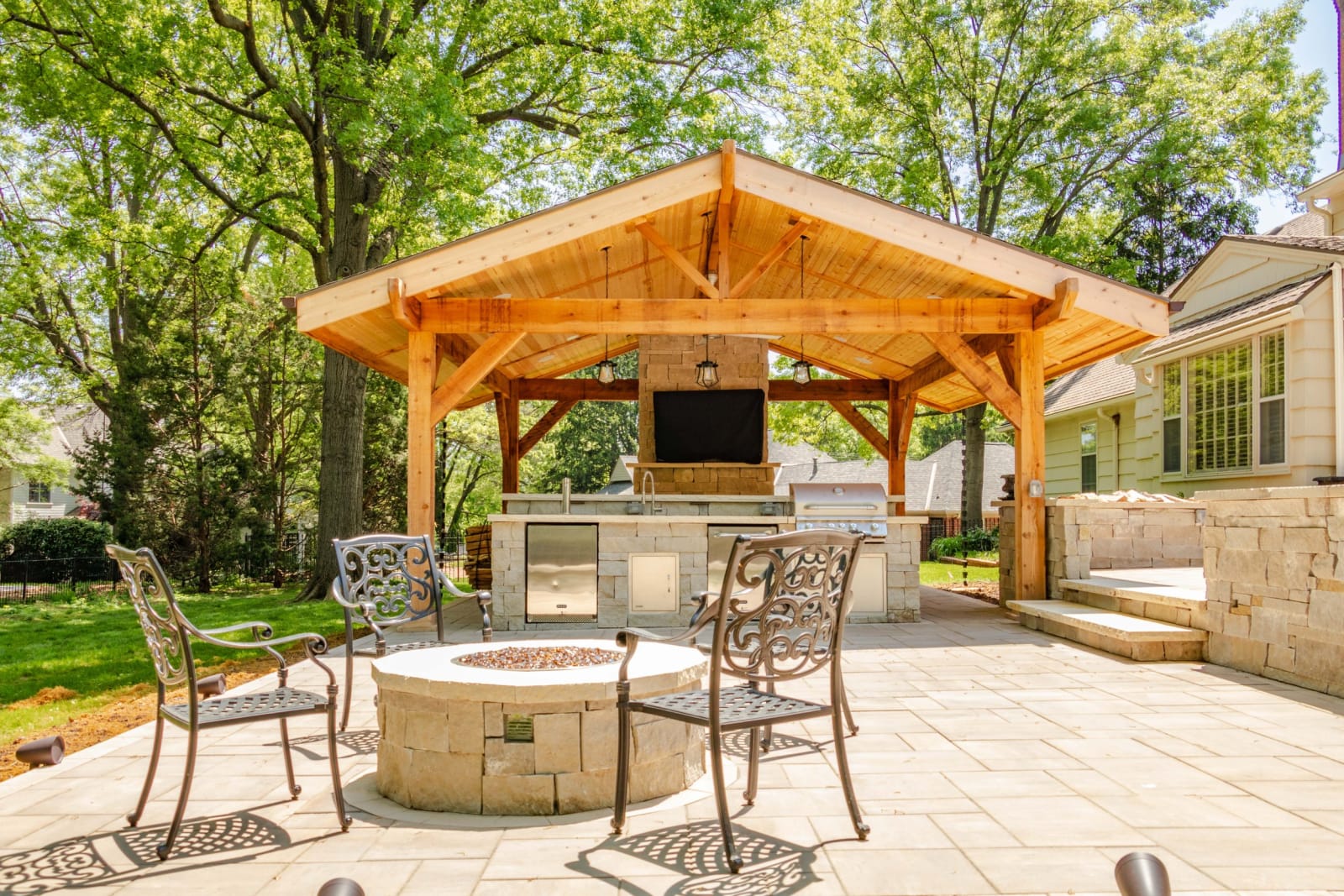
A pavilion gives you a covered place to cook, eat and relax that works in the rain, in the July heat and well into the fall. It keeps your furniture and your kitchen out of the weather, gives you more privacy, and it's built to match your house and hold up through Kansas City winters.
It's a bigger project than a patio or a pergola, so it's worth thinking through how you'll use the space before you start. If you picture yourself out there most evenings from spring through fall, hosting family or watching football under the heaters, a pavilion is usually worth it.
If you're thinking about adding one, we can walk through what would fit your yard at a free design meeting. You can also see more of our work on our pavilion page.
Thirty minutes on site with our designer is all it takes to see what is possible. No pressure, no hard sell.
Schedule a Design Call