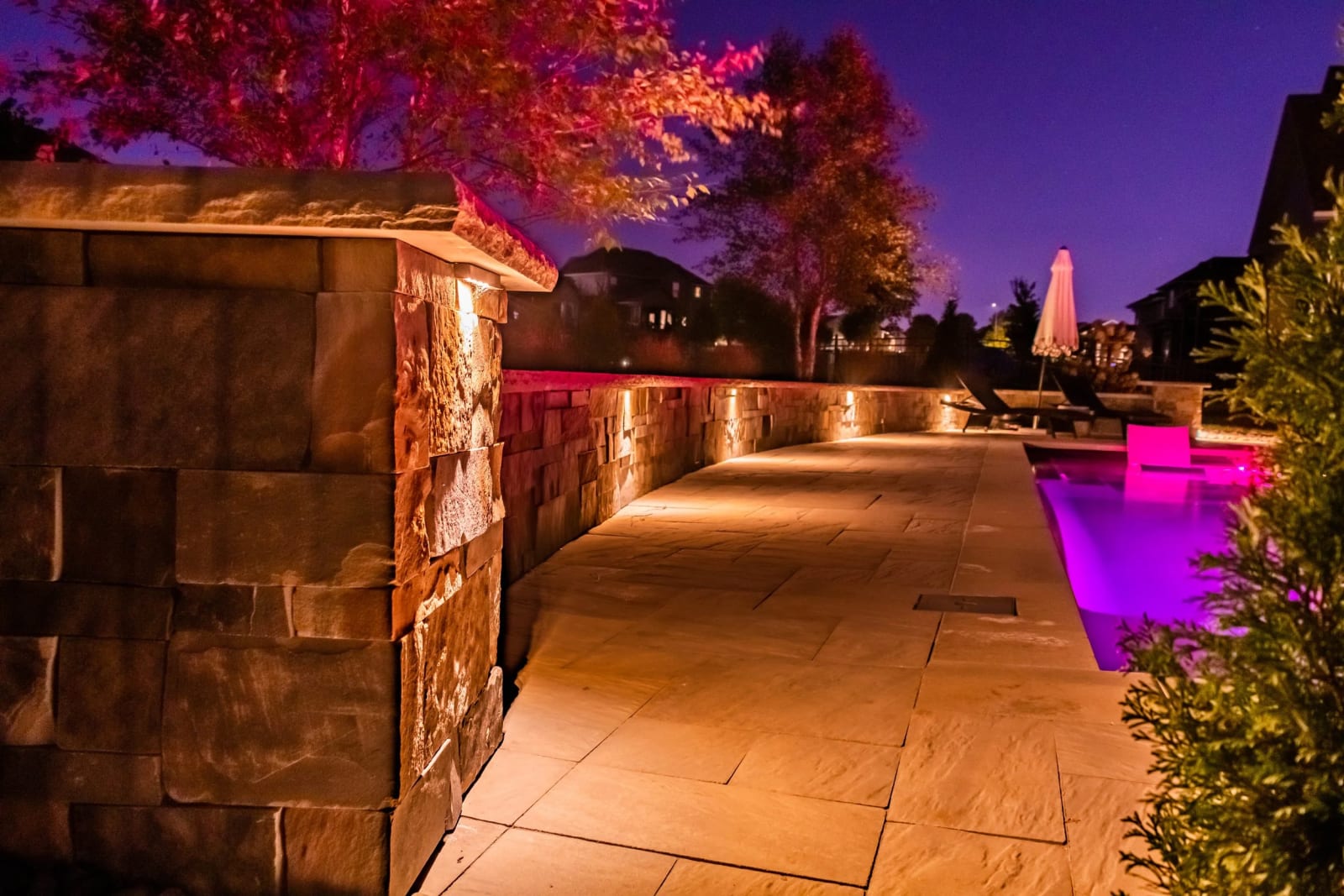
Outdoor Lighting
Starting at $1,500
Outdoor Lighting
While many of us are working hard and putting in long hours, we often don't get a chance to see our homes until after dark. Soft lighting in a dark outdoor environment is nothing short of magic. It provides a warm, inviting ambiance that beckons us outdoors. It creates mood, romance, and drama. It adds interest and intrigue to any setting.
Lighting can be one of the most important aspects of hardscape design, yet it is often overlooked or underdone. Proper outdoor lighting design allows you to highlight focal points and hide eyesores. It can also be used to enhance safety and security, to accent special trees or plantings, and to create a festive atmosphere for outdoor entertaining.
Popular Add-Ons
Investment
Most clients invest $3,000–$7,000
- Number of fixtures and zones
- Fixture type (path, up, down, wall wash, spot)
- Transformer size and smart controls
- Trenching and wire run distance
- Integration with existing hardscape
Drag to rotate • Scroll to zoom
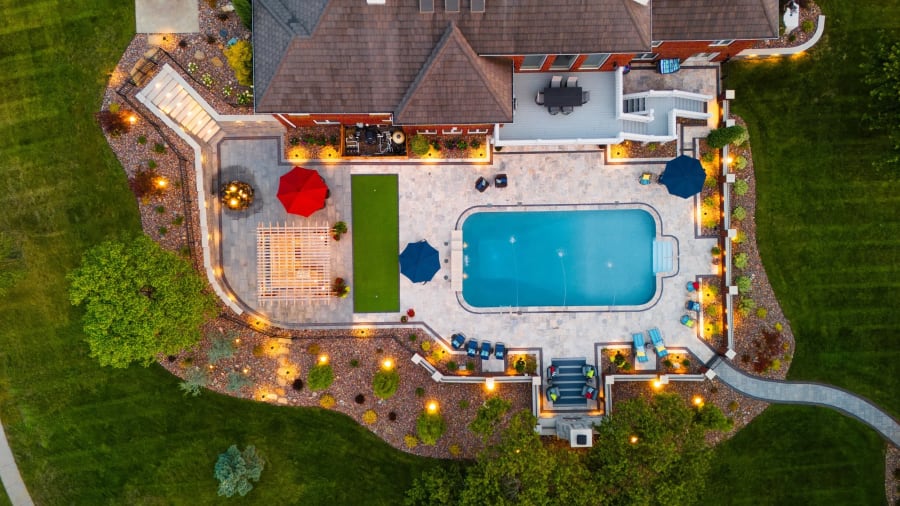
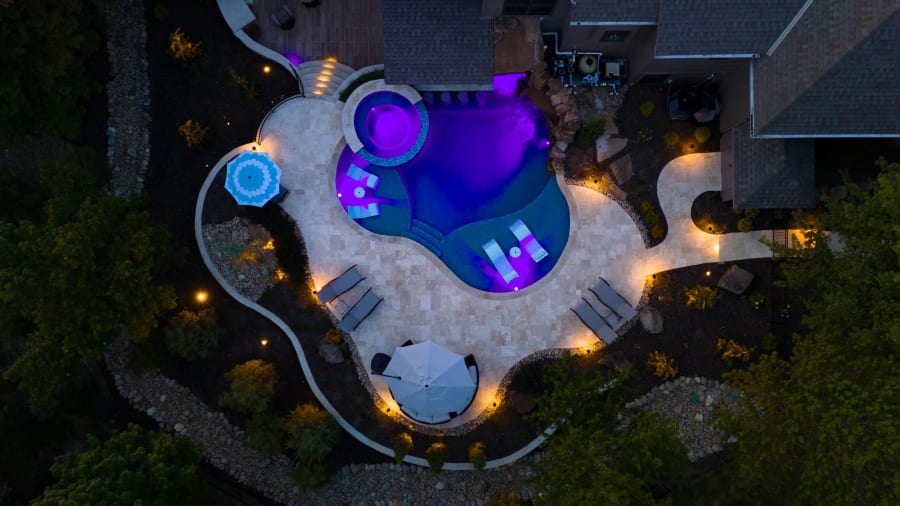
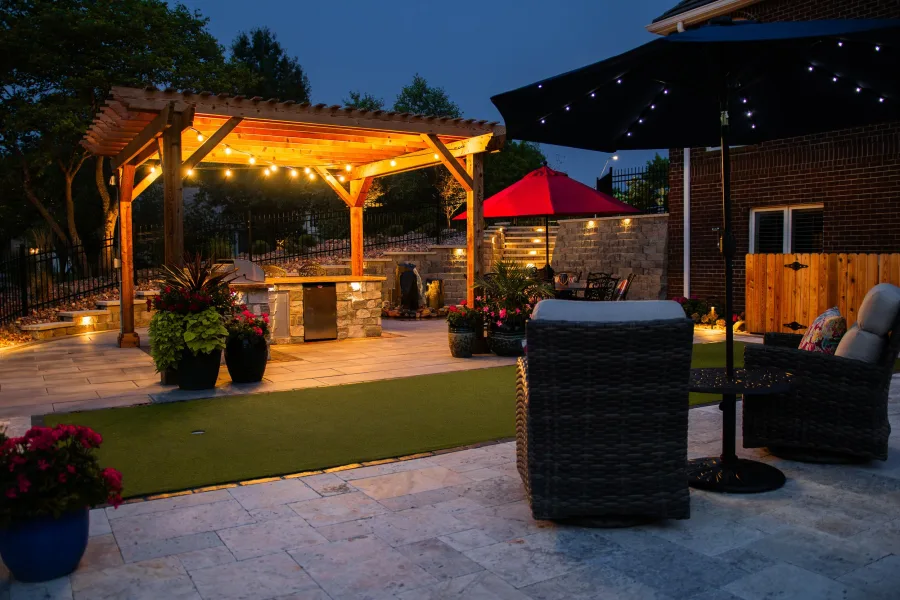
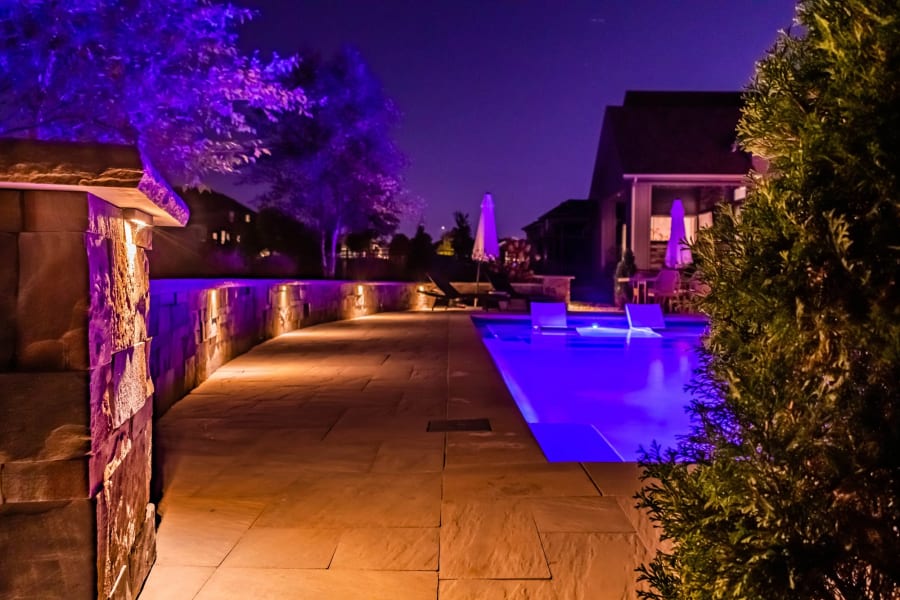
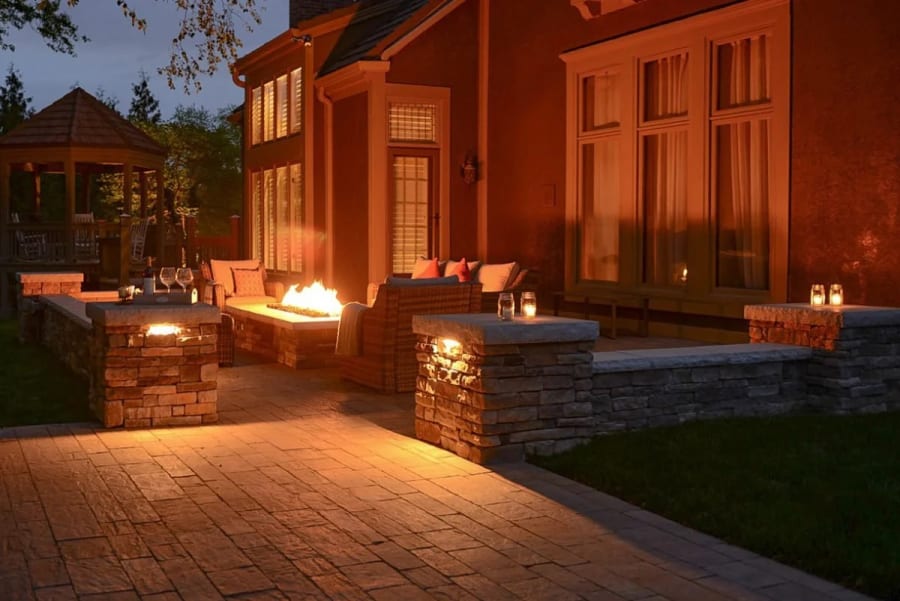
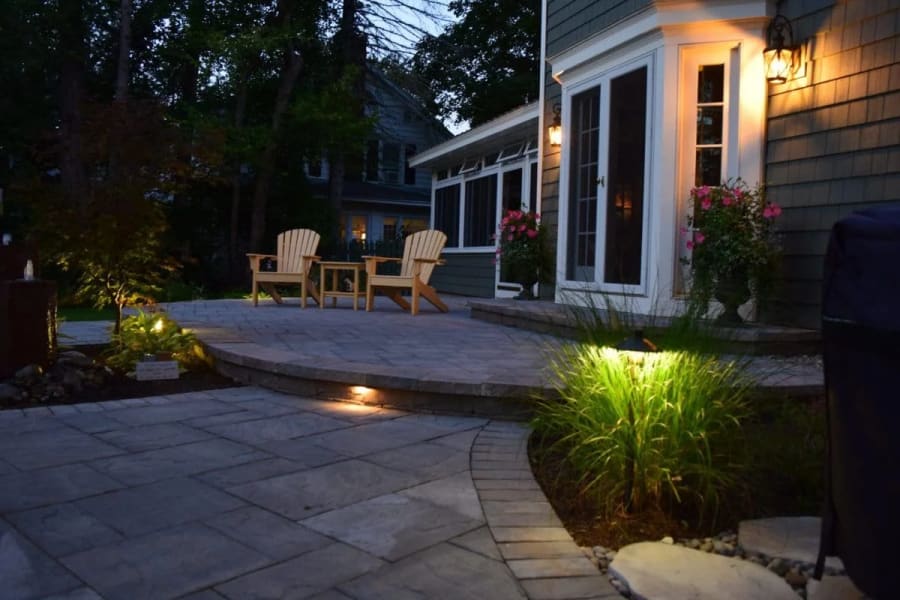
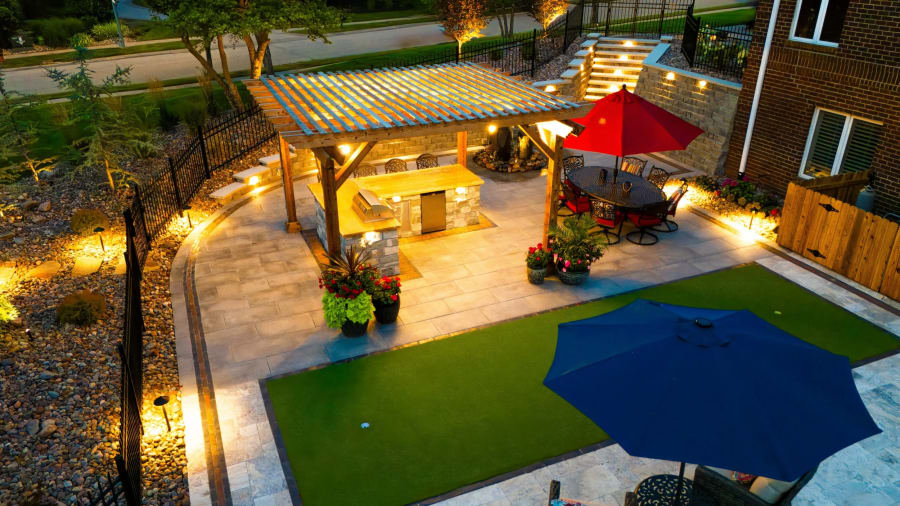
Outdoor lighting we've installed across Kansas City
Path lights, uplights, string lights, and pool lighting that bring your yard to life after dark.
The yard goes dark before you get to use it.
The sun drops around five in the evening through a Kansas City November and around half past eight in June. Either way, a patio with nothing on it after dark is a patio you use for a couple of hours at a time and then abandon for the night.
Lighting is one of the least expensive parts of a hardscape project and one of the most noticeable. It does more to change how often a space gets used than anything else you can add.
The fixture should disappear.
What separates lighting that works from lighting that does not is the design behind it, not the hardware. The usual failures are the same every time: too bright, too white, aimed at faces instead of features. A fixture doing its job goes unnoticed, tucked into the structure by daylight and lost in shadow after dark, and what registers is the wall, the stone or the tree it is washing.
Lighting everything produces the same effect as a parking lot. We light a small number of things deliberately and leave shadow in between, roughly in this order:
- Steps and grade changes first. Anywhere the elevation shifts needs light for safety, low and warm so nobody is looking into a bright source.
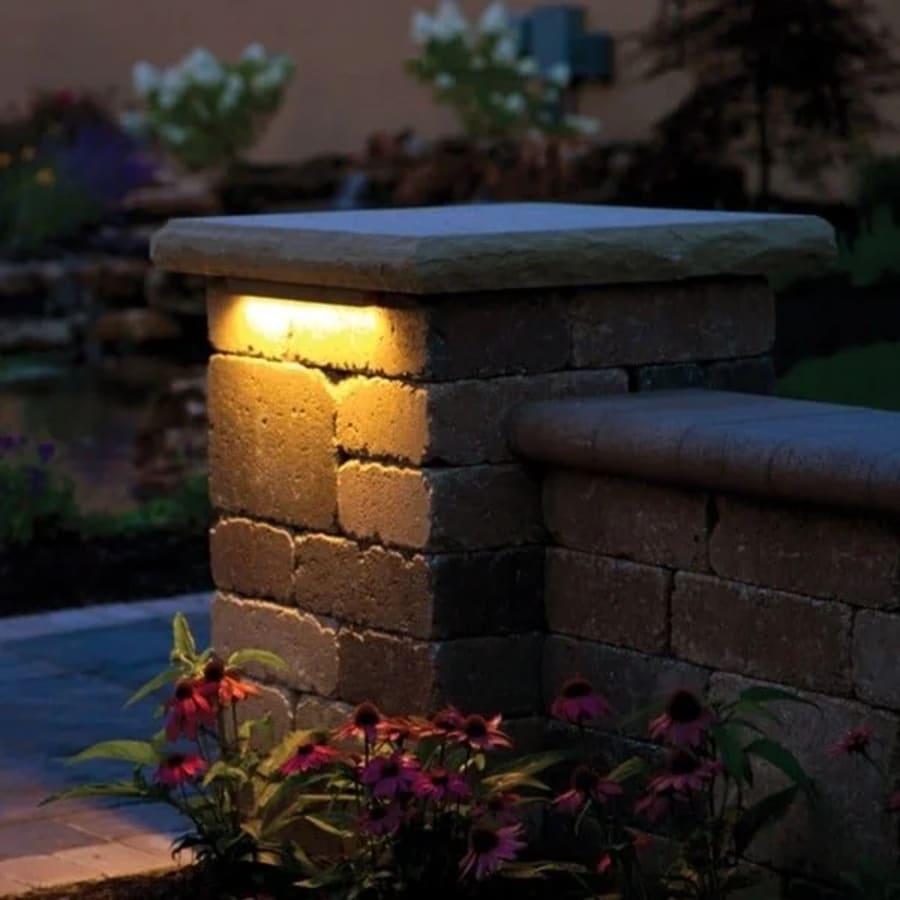
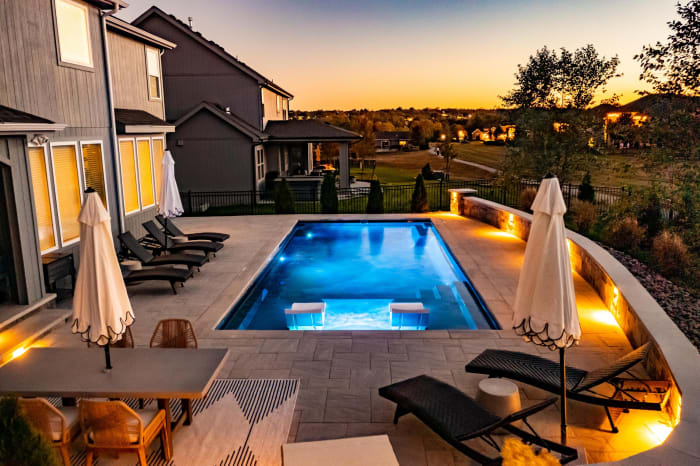
- Seating wall caps. Small downlights under the cap throw a glow across the wall face and the patio without a fixture in sight.
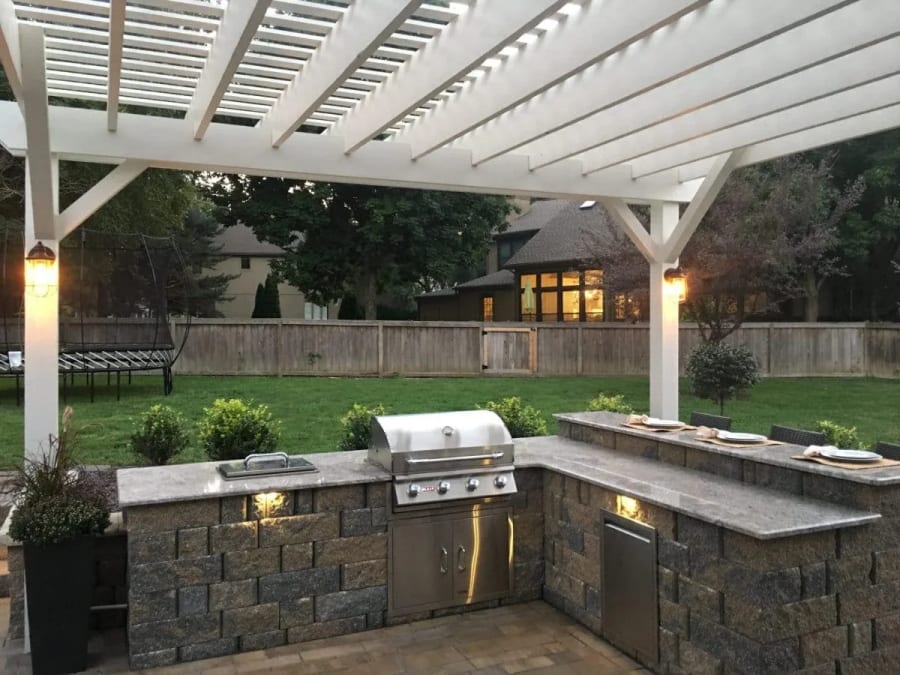
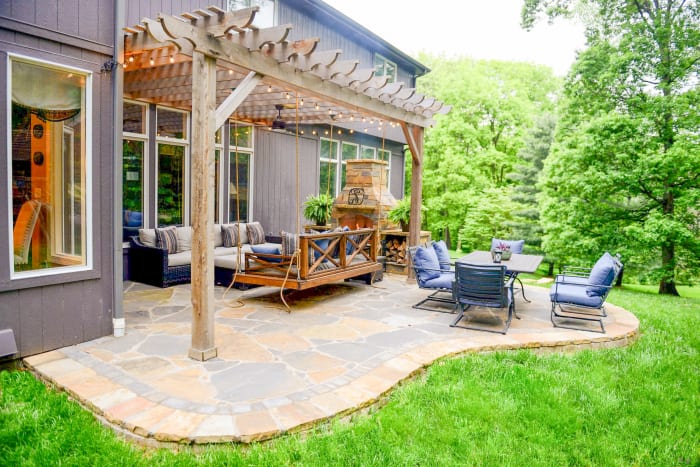
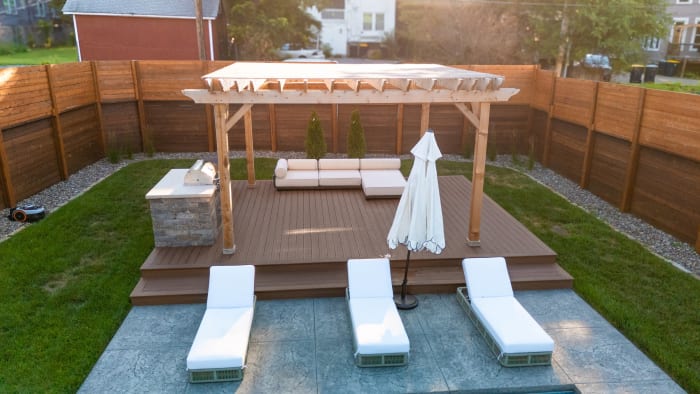
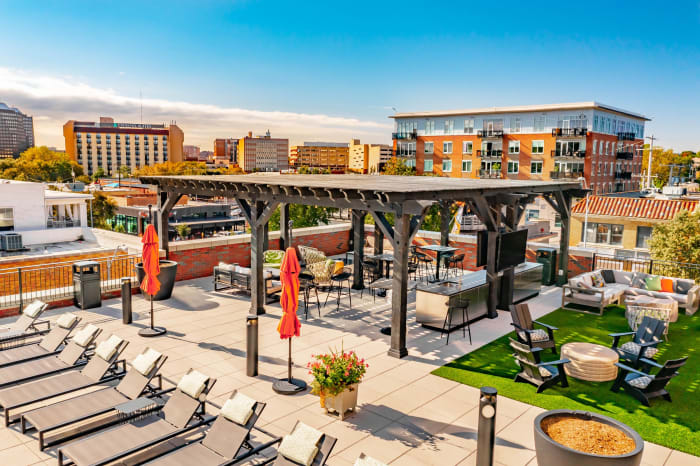
- Posts and columns. An uplight tucked under a pergola post or a stone column grazes the texture and give the space a sense of ceiling.
- Trees. A few uplights into the canopy of a mature tree give a yard depth that nothing else does.
- Paths last. The most overdone category by some distance. Spaced too tightly they read as a runway, so we generally use well under half of what people first ask for.
The number that matters is 2700K.
LEDs are sold in a range of color temperatures, and that one spec decides whether a patio feels warm or clinical. 2700K is the soft, candle colored light that flatters stone and skin. 3000K is fine. Past 3500K it starts looking institutional, and the 5000K and 6500K bulbs people buy without checking are why so many backyards feel cold at night.
We typically recommend 2700K on every fixture, and if you are buying your own it is the first spec to look at. A cheap warm bulb beats an expensive cold one every time.
The systems themselves run at 12 volts. A transformer steps the house current down, the cable gets buried, and fixtures can be added or moved later without tearing anything up. Some fixtures, pergola can lights among them, need line voltage and an electrician. Solar is the one people try first and replace within a couple of years, since the panels and batteries are small and the output fades a few hours after dusk.
Controls are a smart app and a photocell now rather than a dial timer, so the lights come on at sundown on their own, dim by zone, and shut off when you want them to.
What outdoor lighting costs.
Lighting starts around $1,500, and most systems land between $3,000 and $7,000.
The count of fixtures and how many zones they are split across drives it first. Fixture type matters after that, since a recessed step light, an uplight and a wall wash are different pieces of hardware. Then there is the transformer and the controls, how far the wire has to run, and how much trenching it takes to get there. Lighting built into hardscape while the hardscape is going in costs less than lighting added to a finished yard.
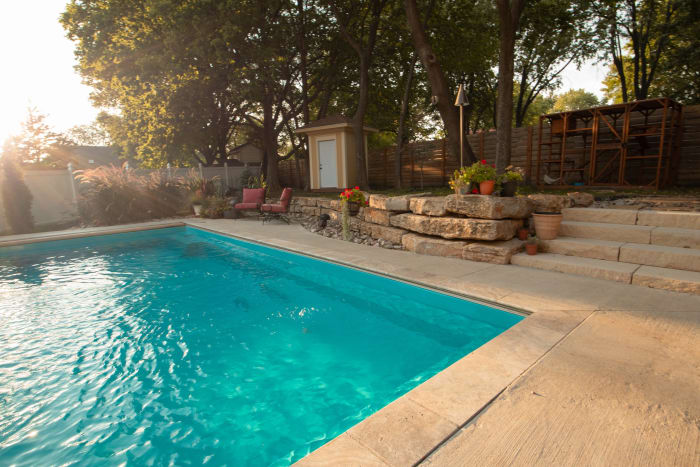
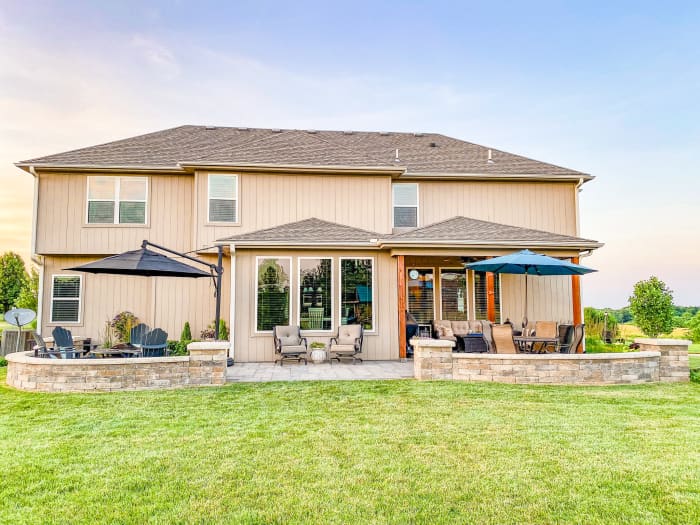
Lighting built into projects around Kansas City.
Step lights, wall cap downlights, column uplights and pergola cans, wired in while the hardscape was going up.
What homeowners ask us about outdoor lighting.
How much does outdoor lighting cost in Kansas City?Systems start around $1,500, and $3,000 to $7,000 covers most of what we install. Fixture count is the main driver, along with the hardware you pick and the distance the cable has to cover.
What color light should I use outside?2700K. It is the warm, soft tone that makes stone and skin look good, and it is what we fit unless a homeowner asks otherwise. Anything at 4000K and above reads cold and institutional outdoors, which is the single most common mistake we see on lighting people bought themselves.
Can lighting be added to a patio I already have?Yes. Because the systems are low voltage, fixtures and cable can go in around finished hardscape. It costs more than wiring during a build, since the cable runs have to be worked in after the fact instead of buried while the ground is already open.
Are solar lights worth it?Not as the lighting for a patio. Small panels and small batteries mean dim output that fades a few hours after dark, worse on an overcast day. They are fine as a temporary marker in a bed where running cable is impractical.
Can I control the lights from my phone?Yes, and that is standard on what we install now. A smart controller with a photocell brings them up at sundown on its own, dims by zone, and shuts them off on a schedule.
How many path lights do I need?Fewer than you think. Path lights are the most overused fixture in the category, and spacing them tightly gives a walkway the look of a runway. We normally spec well under half of what a homeowner first asks for.
Does lighting need its own electrician?For a low voltage system, no. The transformer plugs into an exterior outlet and everything past it runs at 12 volts. Line voltage fixtures such as pergola can lights do need an electrician, and we coordinate that as part of the project.
Paver patio cost in Kansas City
Real ranges by size, what drives the price, and the things cheap quotes leave out.
Read the guide →Hardscape contractors in Kansas City
How to evaluate quotes, spot red flags, and pick the right contractor.
Read the guide →Areas we service
Every city in the KC metro we build in, with in-depth guides for the suburbs that matter most.
See the map →Let's design your outdoor lighting.
A 45-minute consultation is all it takes to see what's possible. No pressure, no hard sell, just experienced designers and a clear next step.