Outdoor Kitchens
Starting at $11,900
A real kitchen, built outside
An outdoor kitchen is an excellent way to equip your backyard for entertaining and feeding hungry friends and family. They range from compact areas with a built-in grill to large, fully equipped kitchens complete with multiple grills, countertops, sinks, bars, and storage cabinets.
When planning your outdoor kitchen, consider how many people you intend to accommodate, your entertaining style, and your budget. From there we determine the best location, size, layout, countertop placement, and the appliances you need.
Popular Add-Ons
Investment
Most clients invest $12,000–$22,000
- Island length & layout
- Number of grills & burners
- Sink, refrigerator, & bar additions
- Countertop material
- Stone veneer selection
- Electrical, gas, & plumbing runs
Drag to rotate • Scroll to zoom
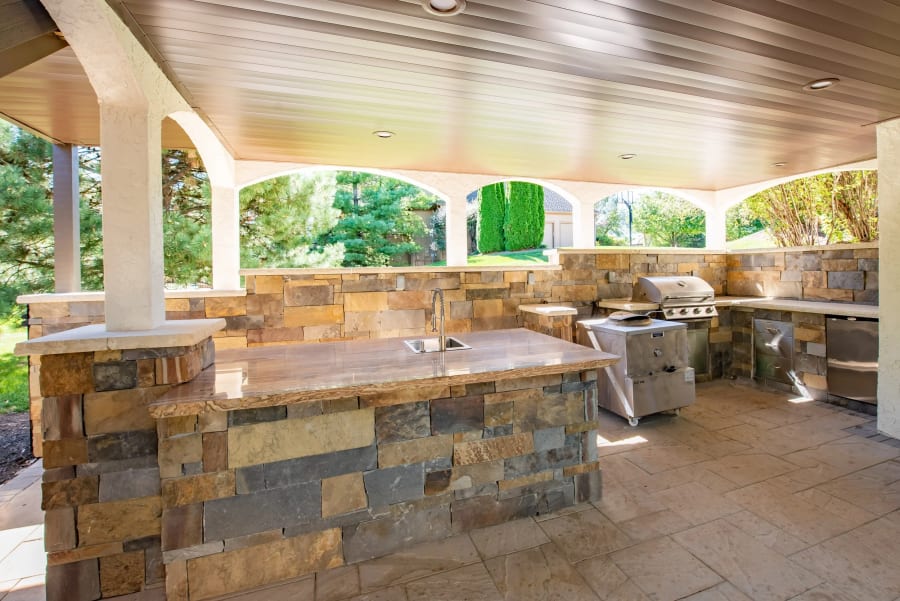
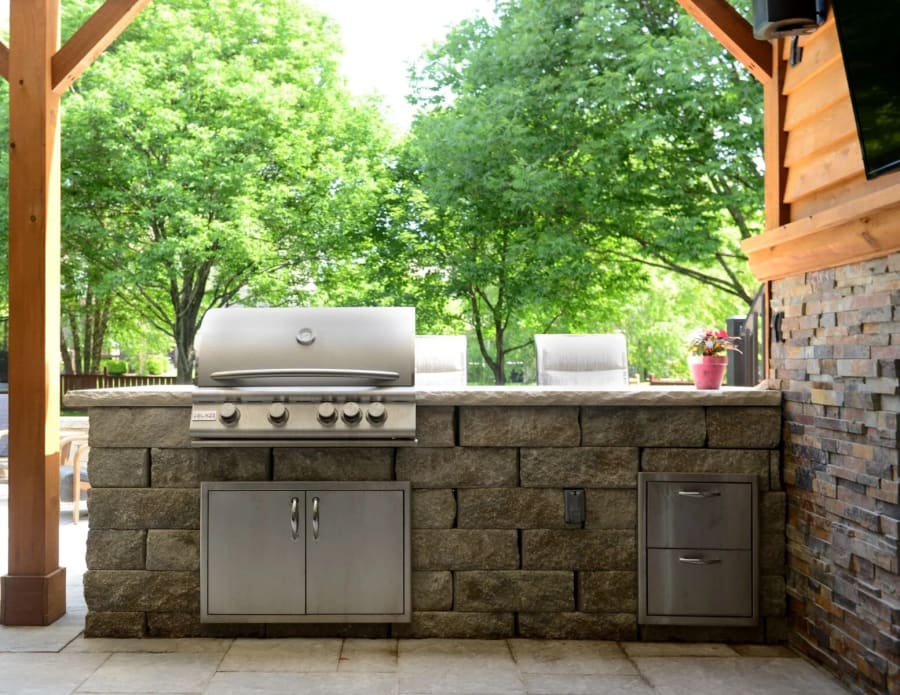
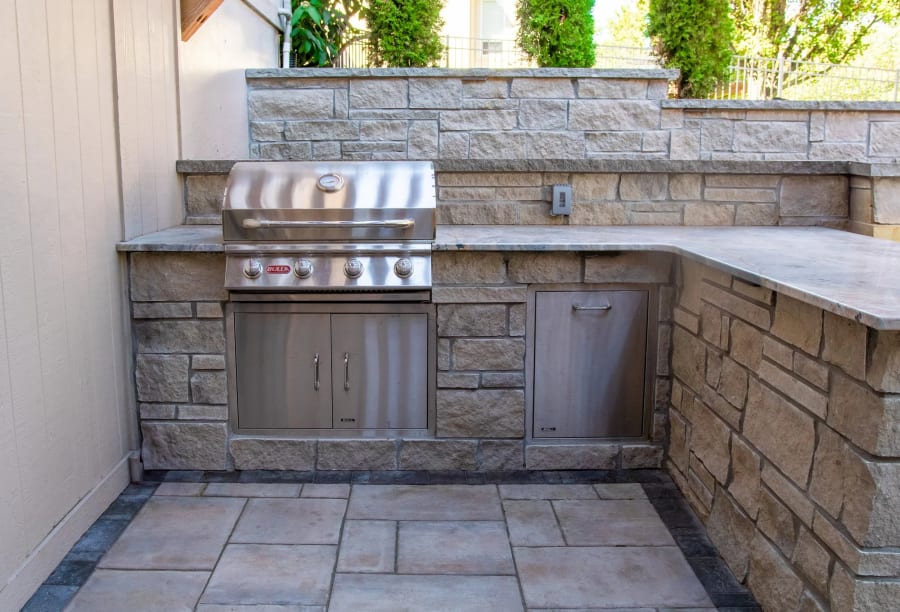
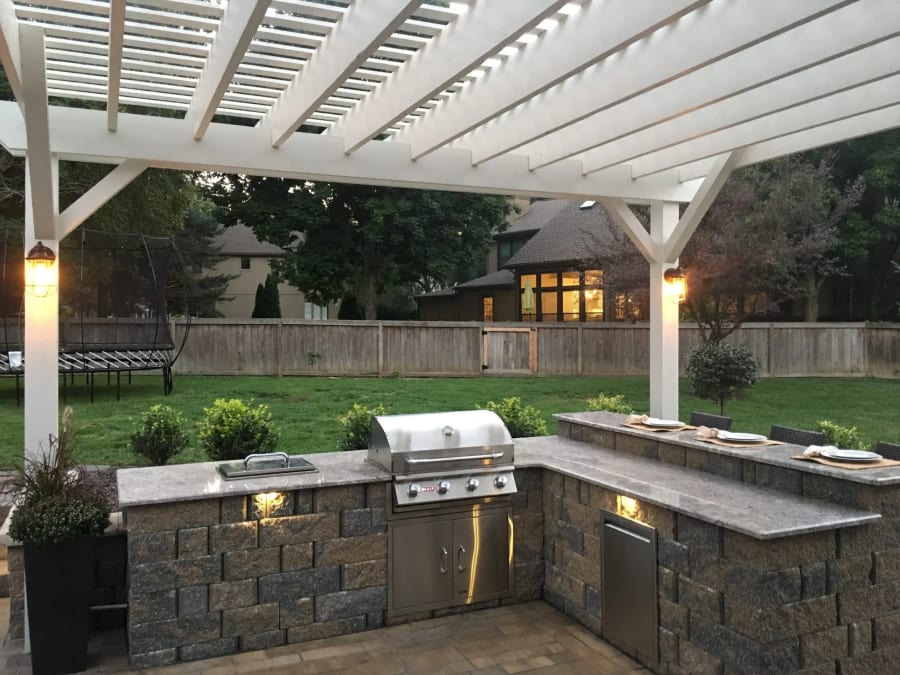
Outdoor kitchens we've built across Kansas City
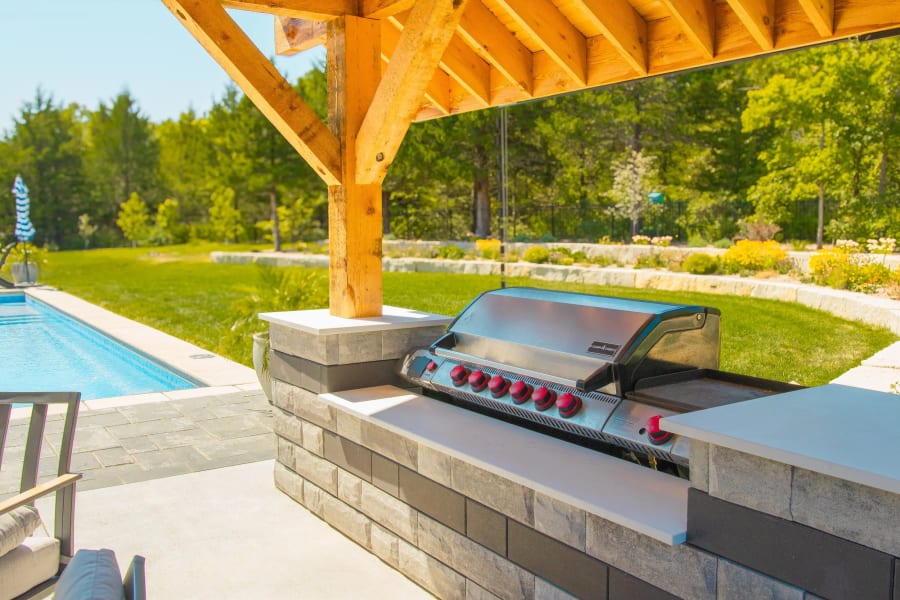
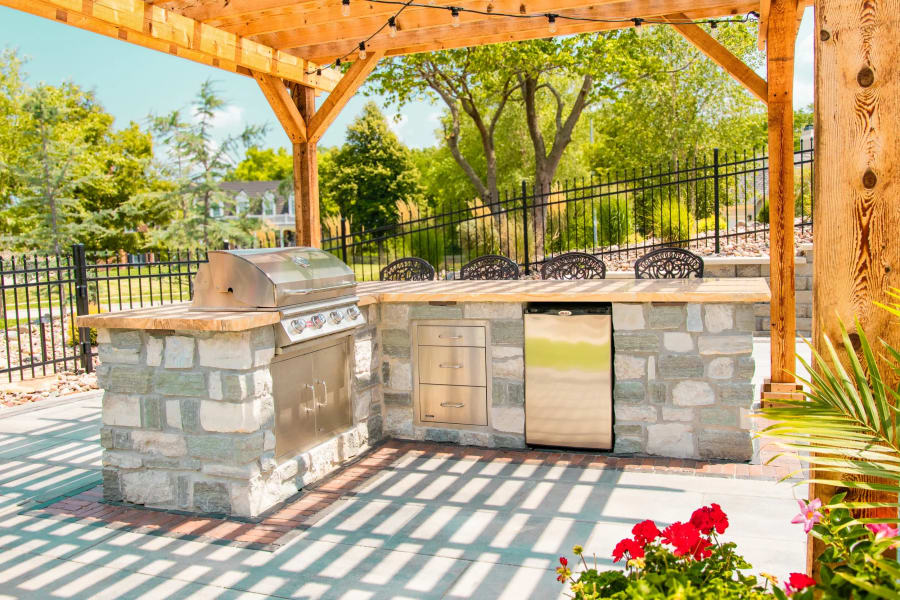
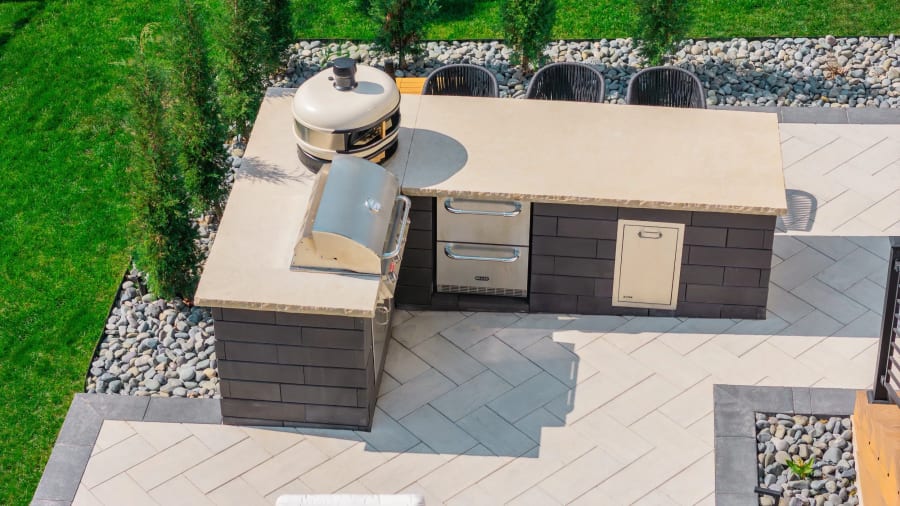
From compact grill stations to full-featured kitchens with sinks, bars, and multiple burners. Every build is custom to the homeowner.


Counter space and storage come first.
The part people underestimate is counter space. You need somewhere to set the raw platter down before it goes on the grill, and somewhere to put the food when it comes off. Without counter on both sides of the grill, that ends up being the arm of a patio chair or another trip into the house.
Storage is the other one. Doors and drawers under the counter hold the grill tools, the plates, the towels, and the propane tank if you are not on a gas line. A kitchen with nowhere to keep anything means hauling it all out every time you cook, which is the problem it was supposed to solve.
Appliances come after that. Our average outdoor kitchen runs about 6 feet long and 36 inches deep. That is not a magic number, but it has proven to be a good working length, because it fits a built-in grill with counter on both sides of it and storage doors underneath. An island is built as one piece, so going longer later means tearing out what is already there.
Where the island sits matters as much as what goes in it. An outdoor kitchen should be built where people are already going to gather, not tucked into a corner of the patio. We place the island so the cook is facing the seating and the fire feature rather than a wall, and bar seating on the far side gives people a reason to sit at the kitchen instead of drifting off to the other end of the patio.
What survives a Kansas City winter.
An outdoor countertop takes freeze and thaw all winter, full sun all summer, and grease and spills the whole time. Plenty of materials that look right in a showroom will not last outside in this climate.
We build most of our outdoor kitchen countertops in granite or natural limestone. Granite is the more durable of the two outdoors. It is dense and absorbs very little water, which is what gets it through a freeze and thaw winter, and it comes in a wide range of colors to match the stone veneer on the island.
Limestone is softer and more porous. It gives a more natural look and takes the hand-chiseled edge we use on a lot of builds, but it needs sealing, it can etch from acidic spills, and it weathers over the years. Some homeowners want that character and some do not, so it is worth deciding on purpose.
The one to avoid: quartz
Engineered quartz is the most popular countertop inside the house, so it is the first thing many homeowners ask for outside. It is the wrong choice here. Quartz is stone held together with a polymer resin, and that resin breaks down under UV, so a quartz top in Kansas City sun yellows and fades. Most quartz manufacturers exclude outdoor installation from their warranty for exactly that reason. Natural quartzite is a different material and does hold up outdoors, but the two names get confused constantly, so be clear about which one is being quoted.
Whichever stone you choose, plan on sealing it, and more often than you would indoors. Drop a little water on the surface to check: if it soaks in rather than beading up, it is time to reseal.
Countertop material is one of the larger swings in the budget, so look at samples in daylight with your other material choices in mind.
What an outdoor kitchen costs.
Our outdoor kitchens start at $11,900, and most projects fall between $12,000 and $22,000. The number moves with the length of the island and the layout first, then the number of grills and burners, then whether you are adding a sink, a refrigerator or a bar.
After that it is the finish: the countertop, the stone veneer wrapping the island, and task lighting. The piece homeowners forget is the gas, electrical and plumbing runs out to the island. That is real work, and how far the island sits from the house affects what it costs.
An outdoor kitchen is usually built as part of a larger space, alongside a paver patio, a pergola or a fire pit. Building them together costs less than coming back for a second project. For a ballpark on your own project, use our project calculator.
Outdoor kitchens we've built around Kansas City.
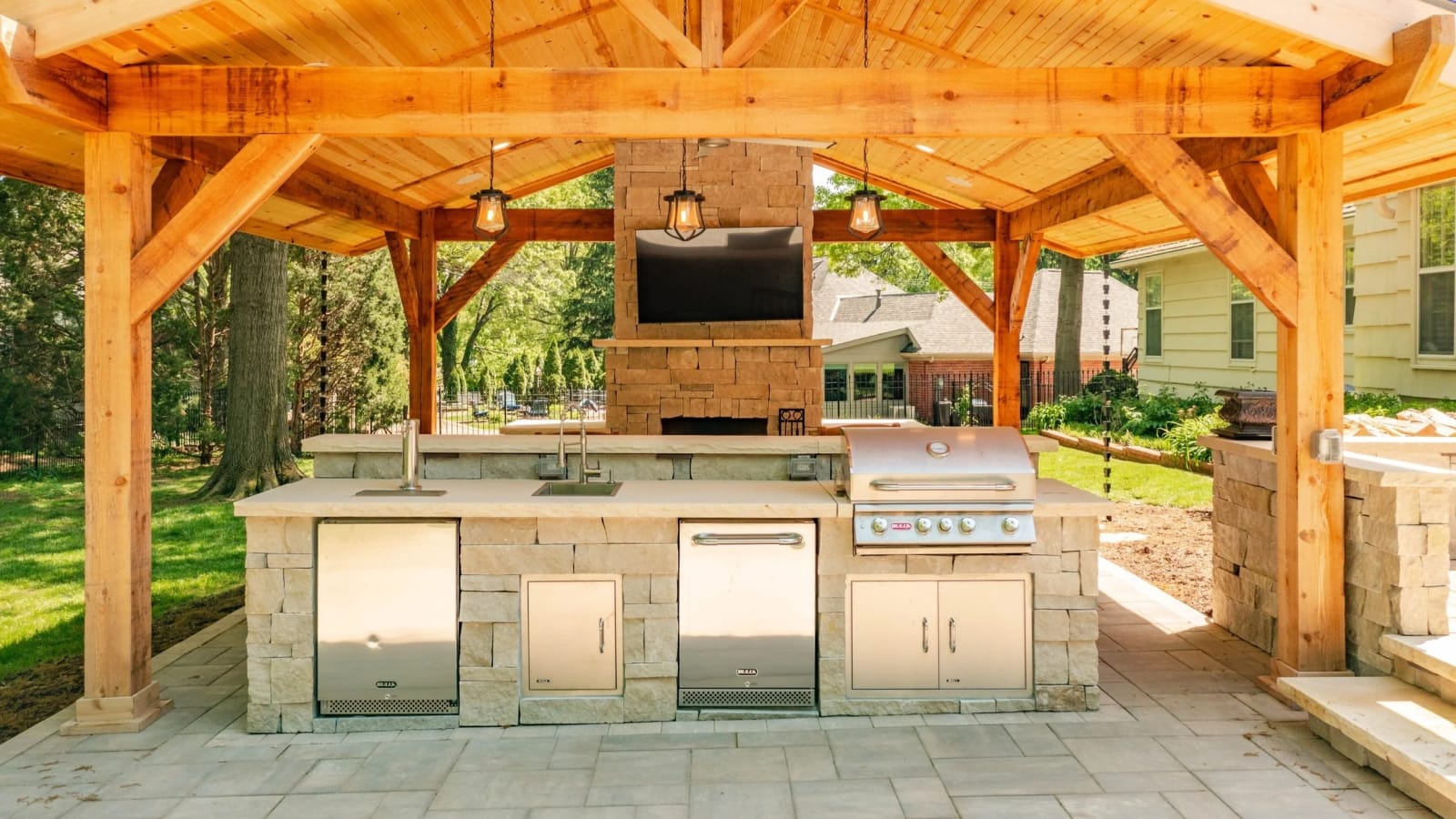
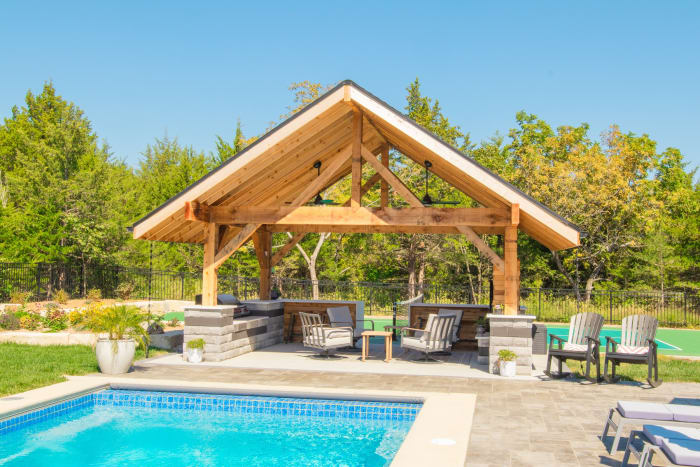
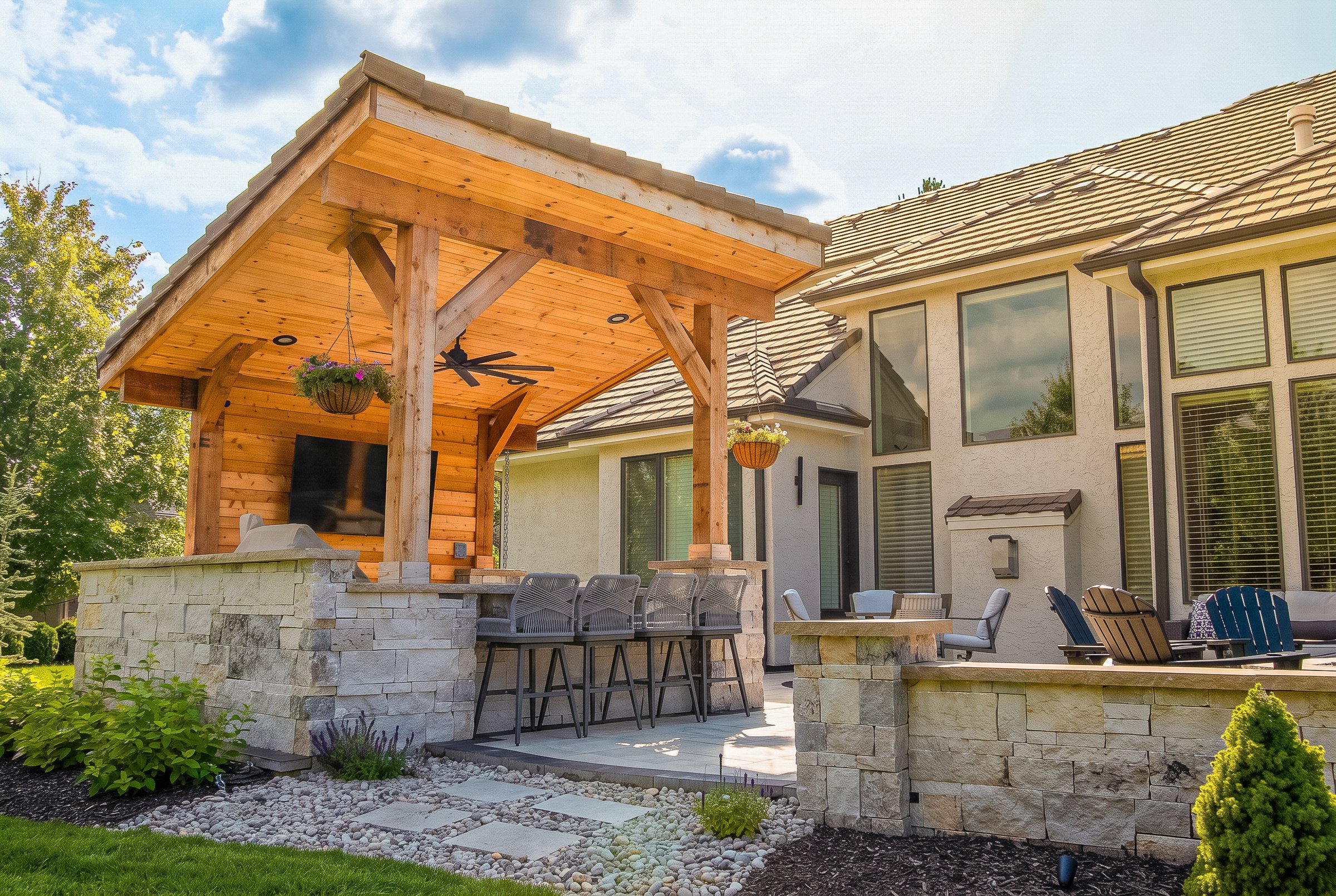
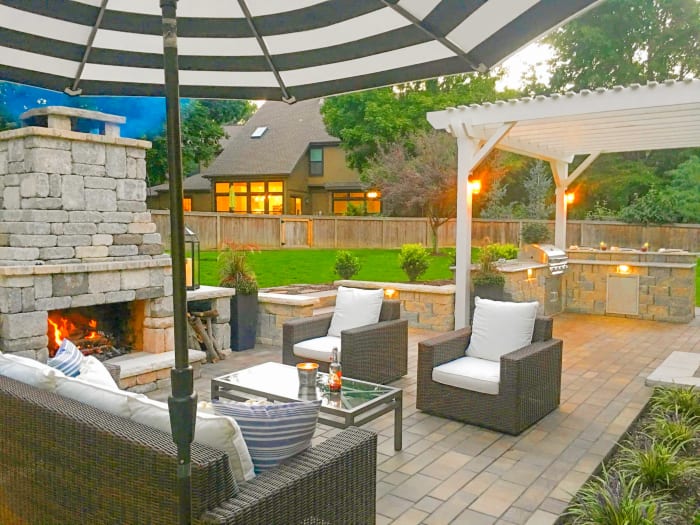
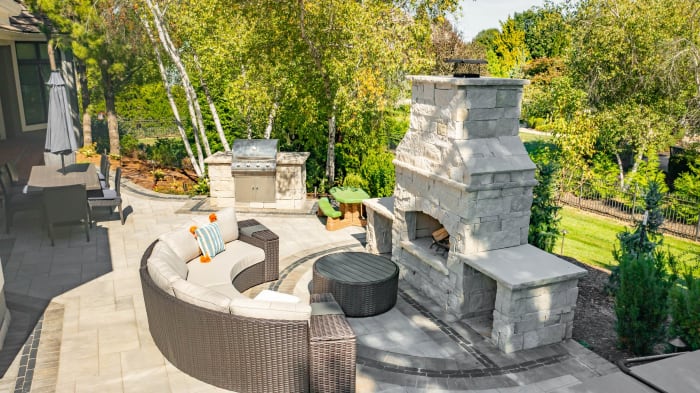
Grill stations, full kitchens with bar seating, and kitchens built into a pavilion with a television wall. Here are a few recent builds from around the metro.
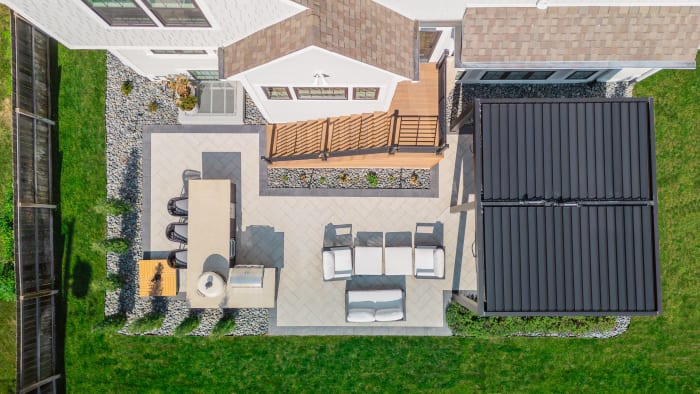
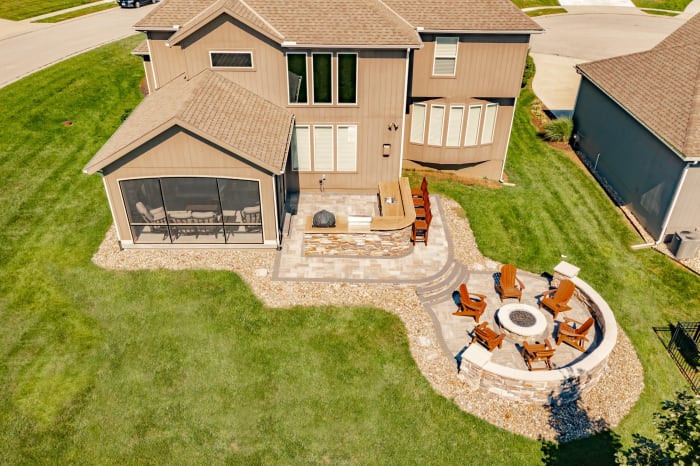
We build outdoor kitchens throughout the Kansas City metro and Johnson County, including Overland Park, Leawood, Olathe, Lenexa, Prairie Village, Shawnee, Lee's Summit, and Parkville. See every area we serve.
What homeowners ask us about outdoor kitchens.
How much does an outdoor kitchen cost in Kansas City?Our outdoor kitchens start at $11,900, and most projects fall between $12,000 and $22,000. The length of the island and the number of appliances drive most of the price, followed by the countertop material, the stone veneer you choose, and how far the gas, water and electric have to be run to reach it. You can run your own numbers through our project calculator.
What countertop holds up outdoors in Kansas City?We build most of our outdoor kitchen countertops in granite or natural limestone. Granite is the more durable of the two outdoors, because it is dense and absorbs very little water, which is what gets it through a freeze and thaw winter. Limestone is softer and more porous, so it needs sealing and it weathers over time. The material to avoid is engineered quartz: the resin that binds it breaks down under UV, so it yellows in the sun, and most quartz manufacturers exclude outdoor installation from their warranty.
Do I need gas, water and electric run out to it?It depends on what you want in the kitchen. A built-in grill needs a gas line unless you are running propane. A sink needs water and a drain. A refrigerator, kegerator or ice maker needs power, and so does task lighting. We plan those runs during design, because reaching the island is often the difference between a straightforward build and an expensive one.
How big does an outdoor kitchen need to be?Our average outdoor kitchen is about 6 feet long and 36 inches deep. That is not a magic number, but it has proven to be a good working length, because it fits a built-in grill with counter on both sides and storage doors underneath. Adding a sink, a refrigerator or a bar means adding length beyond that, and a bar top for seating adds depth on the far side as well.
Can you build an outdoor kitchen under a pergola or pavilion?Yes, and it is one of the more common ways we build them. A cover keeps the grill usable in the rain and gives you somewhere to mount a television or lighting. The cover has to be designed around the grill rather than the other way around, since a built-in grill needs clearance and venting above it.
Can I add a pizza oven, a kegerator or a TV?Yes to all three, and we have built all of them. A pizza oven needs its own footing and clearance planned from the start. A kegerator or a beverage refrigerator needs power at the island. A television needs power, a mount and a spot that is out of direct sun and weather, which usually means building it into a wall rather than hanging it on a post.
How soon can you build it?Our production schedule typically runs three to four months out. In winter that can shorten to about two months, and in peak summer it can extend to five or six. The process begins with a free 45-minute design meeting at your home.
Paver patio cost in Kansas City
Real ranges by size, what drives the price, and the things cheap quotes leave out.
Read the guide →Hardscape contractors in Kansas City
How to evaluate quotes, spot red flags, and pick the right contractor.
Read the guide →Areas we service
Every city in the KC metro we build in, with in-depth guides for the suburbs that matter most.
See the map →Let's design your outdoor kitchen.
A 45-minute consultation is all it takes to see what's possible. No pressure, no hard sell, just experienced designers and a clear next step.