Leawood is a great place to build a hardscape and an easy place to build one badly. The soil and the trees under every yard quietly decide whether a patio holds up or starts settling by year three. This is what we have learned in ten years of building here.
Why hardscaping in Leawood is not the same as hardscaping anywhere else.
Three things separate a Leawood build from a generic Kansas City build. None of them are visible from the curb, and all of them get cut by contractors who do not work in Leawood often.
The soil is heavy clay.
Most of Leawood sits on dense clay that swells when it absorbs water and shrinks when it dries. Without a deeper engineered base and a proper drainage plane, that movement transfers straight to your patio. A patio built on a four-inch base will look fine in October and have visible heave by March. For the longer list of ways a hardscape fails on clay, see our avoiding failure guide. Johnson County requires footings to sit at least 36 inches below grade, below the frost line, and we plan structural footings accordingly. We go deeper than code minimum on the patio base itself, and we lay geotextile between the clay subgrade and the base aggregate so the two layers stay separated for the life of the patio.
The trees are mature and the roots are everywhere.
The oak, maple, and sycamore canopies that make Leawood feel like Leawood come with root systems that extend well past the drip line. Building a patio under or near one without mapping the critical root zone is how you end up with a heaved corner two summers later, and how the tree ends up stressed enough to die.
Leawood codified this in Ordinance 3178 (June 2025): any tree larger than 12 inches DBH that gets removed has to be replaced on a one-to-one caliper inch ratio, unless it is dead, hazardous, or on the city's non-desirable list. Street trees are stricter, and need a Right-of-Way permit plus a replacement plan before removal.
The water table runs higher on the south end.
South of about 119th, parts of Leawood sit on lower terraces where groundwater stays close to the surface in spring. Code minimums set the floor: six inches of fall in the first ten feet away from the foundation, and a finished patio surface that slopes one quarter inch per foot. We start there and add fall where the lot needs it. Drainage gets designed before the patio so we are not retrofitting it later.

Two finished projects, both in Leawood.
These are the kinds of builds we do across Leawood. Browse the full portfolio for projects across the metro.

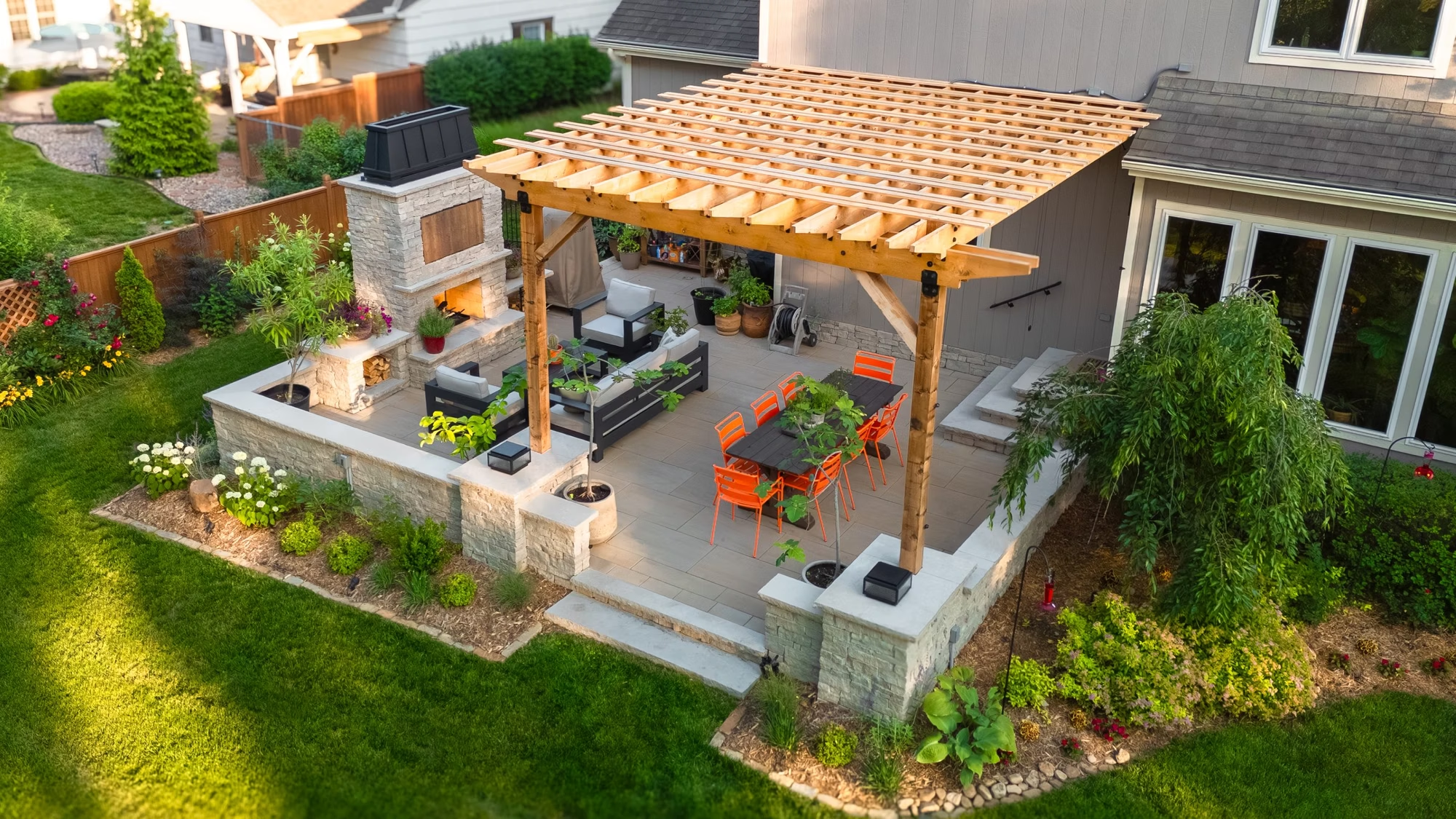
Pergola, Stone Veneer Fireplace & Paver Patio
An 18 by 20 pergola, stone veneer fireplace with matching columns, a paver patio, and retaining and seating walls tied into the grade change. Designed as one continuous outdoor room.
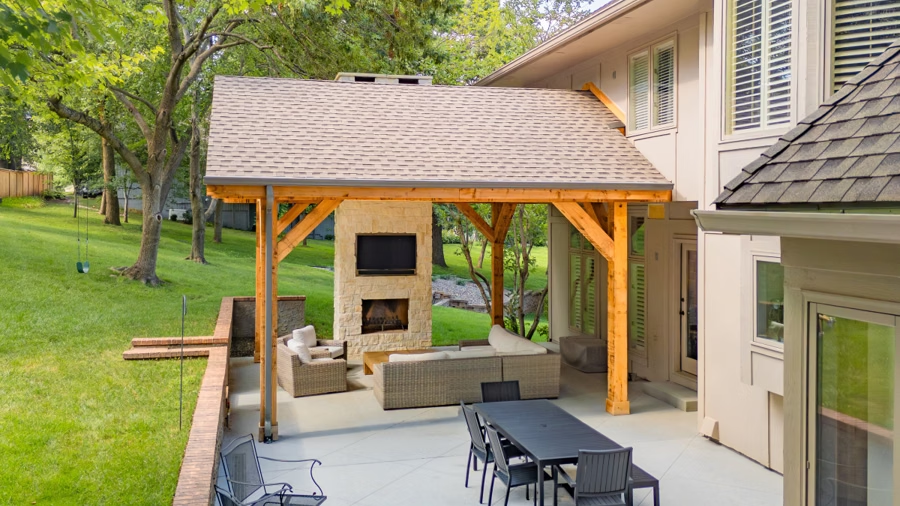
Pavilion, Fireplace & Diamond-Cut Concrete Patio
A covered pavilion with an integrated outdoor fireplace, anchored to a diamond-cut concrete patio. Drainage planned around the existing tree canopy.
Real hardscape ranges for Leawood projects.
The ranges below are the starting points from our service pages and apply across the metro. Leawood projects typically land in the upper half because of the cost drivers under the grid: tree work, drainage, permits, and site access.
What pushes a Leawood project higher.
Tree roots and demolition.
Demolition of a failing patio with significant root intrusion is not a regular tear-out. It is selective hand-excavation, root cutting coordinated with an arborist where the tree is healthy, and more truckloads of mixed debris. On a typical Leawood replacement, that adds two to five thousand dollars on top of the demolition number a generic contractor will quote.
Drainage, sized to the lot.
Every Leawood patio needs some drainage thought. Most do not need an elaborate system. A flat lot with good existing grade and well-shaped beds around it often gets there with the standard slope, a thoughtful edge detail, and not much else. A lot with a low corner, a downspout that already pools, or a finished basement we want to protect gets more: a short run of edge drain, one or two catch basins, or a tie-in to the existing storm line. Most Leawood drainage additions land in the one to four thousand dollar range, and your contractor should be able to look at the lot before quoting and tell you which end of that range you are on. The real point is not the dollar figure. It is that drainage gets planned before the patio so we are not retrofitting it later.
Site access and material handling.
Narrow driveways, mature plantings along the right-of-way, HOA rules about lawn damage, and tight rear-yard access often mean walking materials in by hand or using smaller equipment instead of a skid steer. On a backyard you can only reach through a four-foot gate, that adds several thousand dollars in labor over a corner lot with open access.
Permits, plans, and dumpster placement.
Leawood almost always requires a permit on the structural side of a hardscape build. The fees are real and belong in the budget from day one.
- Permit administration fee: $1,450. This is our flat fee to prepare the application, the drawings the city requires, the submittal package, and to manage the inspection sequence from footings to final. The fee covers our labor on the paperwork side. It does not include the actual permit fee paid to the City of Leawood.
- City of Leawood permit fee: varies. Paid directly to the city based on the project's scope and valuation. We collect and remit on your behalf as part of the application.
- Engineered plans: $2,500. Leawood requires plans sealed by a Kansas-registered professional engineer for most structures with footings (pergolas, pavilions, outdoor fireplaces, retaining walls over four feet, anything tied to the house). We coordinate the engineer directly. The fee covers a standard residential structure; complex multi-structure projects can run higher.
- Dumpster permit: required. A dumpster sitting on the street, including directly in front of your own house, needs a Right-of-Way permit from the city. Placement is not free choice. Too close to a fire hydrant, a storm inlet, a corner sight line, or an irrigation control box and it gets rejected. We plan the dumpster location before the first delivery so we do not lose a day to a stop-work conversation with code enforcement.
For a more specific number on your project, the cost calculator walks through the variables and gives a real range before you ever talk to us. To see what your space could look like before you commit, the patio visualizer renders a design from a photo. We also offer financing options on most builds. For a deeper read on paver patio pricing specifically, see our paver patio cost guide.
The paperwork side of a Leawood build.
The permit fees are covered in the cost section. The process side is here. Permits expire 180 days after issuance, so sequencing matters: if the project sits too long between contract signing and the build window, the permit can expire before the first shovel.
HOA architectural review.
The named associations homeowners ask about most: Leawood Homes Association (Old Leawood, ARC at arc@leawoodhoa.com), Leawood Estates HOA, Leawood South, Pavilions of Leawood, and Hallbrook (French Normandy character, tile roofs, brick façades, design standards built around longevity rather than trend). Each operates independently with its own forms and standards. Submit site plans, drawings, material samples, and a written project description. Approval typically lands in one to four weeks. We build this into the schedule.
One gotcha worth flagging: a City of Leawood building permit does not constitute HOA approval. The two reviews are separate and the LHA Architectural Review Committee is explicit about it. Homeowners who pull the city permit, start the build, and assume the HOA is covered can get a stop-work letter from the ARC. We run both reviews in parallel so neither one holds up the schedule.
Pool rules and pavilion roofs (the Leawood-specific code).
Two city-specific rules that catch contractors who normally work other Johnson County cities:
- Leawood does not allow above-ground pools. Period. In-ground only. (Article 10, Swimming Pool and Spa Code, built on the ISPSC with local amendments.)
- Pool barrier: minimum 4 ft, maximum 6 ft. Openings will not pass a 4-inch sphere. Pedestrian gates open outward away from the pool, are self-closing and self-latching, with the release mechanism at least 54 inches from the bottom of the gate. The fence cannot sit in front of the building line or beyond the build line on the street-side of a corner lot.
- Pavilion roofs follow the city's Approved Roofing Materials and Color List (most recently updated 5/12/2026), the same list that governs the house. A pavilion with a tile, slate, or laminate composite roof needs the material on the approved list before the inspector signs off. We confirm the spec at design.
Setbacks, easements, and utilities.
A patio or structure that crosses an easement, even slightly, can be rejected or stop-worked. Pull the plat, locate the easements before design, and call 811 to mark utilities.
Inspections.
Footings get inspected after reinforcing steel is placed and before concrete is poured. Framing gets inspected before close-up. Final inspection at completion. Each one has to pass before the next stage proceeds.
The contractors who lose Leawood projects treat the city's process as the homeowner's problem.
Two five-star reviews, both from Leawood homeowners.
Real homeowners, real projects, real words. More reviews from across the Kansas City metro are on our testimonials page.
★★★★★"It's been several months since Kansas City Hardscapes installed our new patio and we really could not be more pleased."
Angela HarseLeawood, KS
★★★★★"Kansas City Hardscapes removed our old, stamped concrete patio and installed a paver patio. Very professional."
Melissa GreensteinLeawood, KS
Frequently asked about Leawood hardscape projects.
Do I need a permit for a patio or pergola in Leawood?
Leawood requires a building permit for most hardscape structures with footings, including pergolas, pavilions, outdoor fireplaces, and outdoor kitchens. Two specific exemptions: retaining walls under four feet measured from the bottom of the footing to the top of the wall do not require a permit unless they support a surcharge, and small flat surfaces do not. Any land disturbance over 400 square feet triggers a separate land disturbance permit. Permits expire 180 days after issuance, so sequencing matters. Your contractor should handle the application and inspections as part of the project.
How much do permits and engineered plans cost in Leawood?
Our flat permit administration fee is $1,450, which covers preparing the application, the city-required drawings, the submittal package, and managing the inspection sequence. The City of Leawood permit fee itself is separate and varies based on project scope and valuation. Engineered plans, which Leawood requires for most structures with footings (pergolas, pavilions, outdoor fireplaces, retaining walls over four feet, anything tied to the house), are $2,500 for a standard residential structure. A construction dumpster placed in the street also needs a Right-of-Way permit, and placement has to clear sight lines, fire hydrants, storm inlets, and irrigation control boxes.
What does a paver patio actually cost in Leawood?
Most Leawood paver patio projects land between $25,000 and $60,000, with larger and more complex builds going higher. Leawood lot sizes, mature tree work, and the higher-end material selections common in the area push most projects into the upper half of that range.
How does Leawood's clay soil change how a patio is built?
Clay holds water, swells when wet, and shrinks when dry. Without a deeper base and proper drainage, a patio built on Leawood clay can heave in winter and settle in summer. Johnson County requires footings to sit at least 36 inches below grade, below the frost line. A correctly built hardscape goes deeper than the minimum on the base, uses geotextile to keep the clay from migrating up into the base material, and is graded to shed water before any of it can pool.
Will my HOA need to approve the project?
Most established Leawood subdivisions have an architectural review committee. The ones we hear about most: the Leawood Homes Association for Old Leawood, the Leawood Estates Homeowners Association, Leawood South, Pavilions of Leawood, and Hallbrook. Each operates independently of the city with its own forms and standards. Plan on submitting site plans, drawings, material samples, and a written description. Approval typically takes one to four weeks. One Leawood-specific note: a City of Leawood building permit does not constitute HOA approval. The LHA Architectural Review Committee is explicit that the two reviews are separate, and a stop-work letter from the ARC is a real risk if the city permit is pulled before the HOA signs off. We run both in parallel.
How long do hardscape projects in Leawood take from contract to finish?
Simple patios run a few days of build time once we are on site. Larger builds with a pergola, fireplace, or outdoor kitchen run up to three or four weeks. Total time from signed contract to finished project is longer because of design, permits, HOA review, and our build schedule, which runs three to four months out at any given time.
What should I ask a contractor before signing in Leawood?
Four questions surface most of what matters in Leawood specifically:
- How many projects have you built in Leawood, and can I drive past two of them?
- Who handles the building permit and the HOA architectural review submission?
- How are you protecting the existing trees during excavation and build?
- How is drainage handled at the edge of the patio and away from the house?
A good contractor answers all four without hesitation. A bad one gives different answers at the second meeting than the first.
Building across Leawood and the Kansas City metro.
Our shop sits east of the river in Kansas City, Missouri. We build across Leawood and the surrounding Johnson County suburbs every season. The map below shows the area we cover most often.
The shameless plug.
You made it this far. We respect that. So here it is:
- Family-owned. Ten years in Leawood.
- Same crew quotes it and builds it.
- Plat before layout. Drainage before patio.
- We do not sub the build. 10-year warranty on our scope of work.
- Punchlist guy lives twenty-five miles away.
We hope you consider us.