
Seating Walls
Starting at $2,500
Built-in seating that stays put
Seating walls turn the edge of a patio into extra seating. They wrap around fire pits, define the perimeter of an outdoor living space, and add casual seats that don't have to come out of the garage every time people show up.
We build them in two styles. Segmental concrete block is the workhorse, tough and weatherproof, in dozens of colors and textures that tie into the rest of your hardscape. Stone veneer over a structural core is the premium look, the same stacked stone you see on the nicest patios in the metro. Either way the cap on top is wide enough to actually sit on.
Popular Add-Ons
Investment
Most clients invest $2,500–$24,000
- Length of the wall and number of corners or curves
- Veneer choice (color, stone type, texture)
- Cap stone material and finish
- Integration with a fire pit, planter, or patio
- Lighting or other add-ons built into the cap
Drag to rotate • Scroll to zoom
Get inspired by real seating walls we've built
Each one is sized for the space and clad to match the rest of the hardscape. Here are a few recent seating wall builds from around the Kansas City metro.
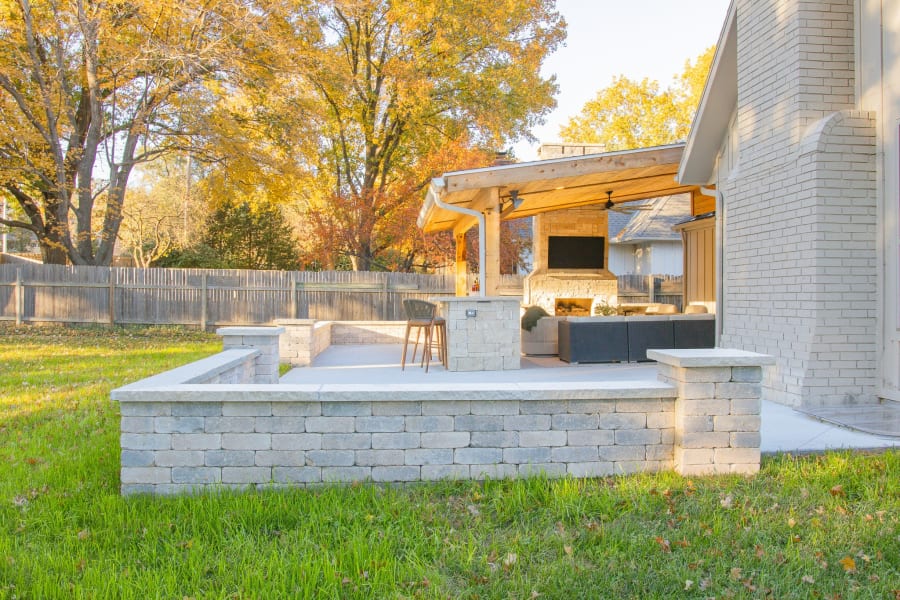
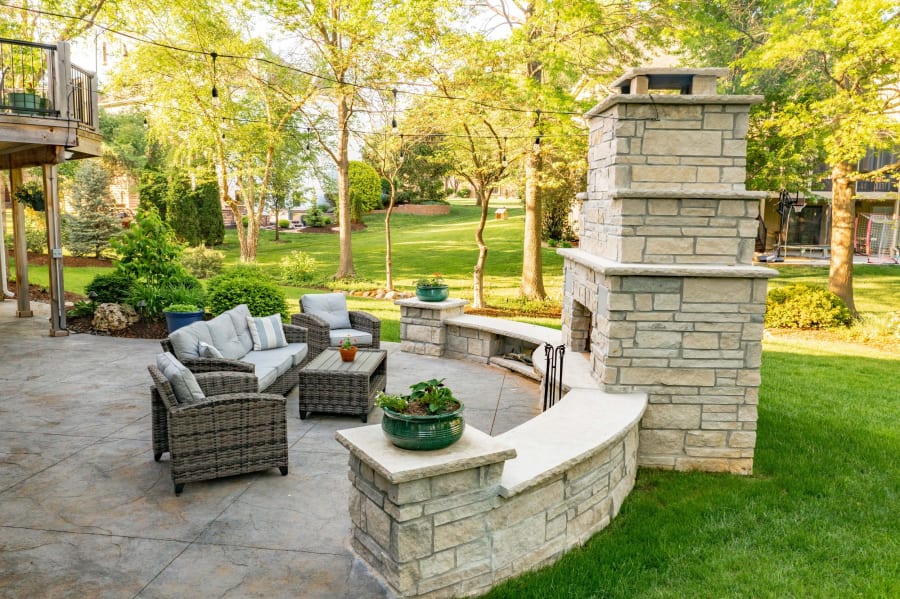
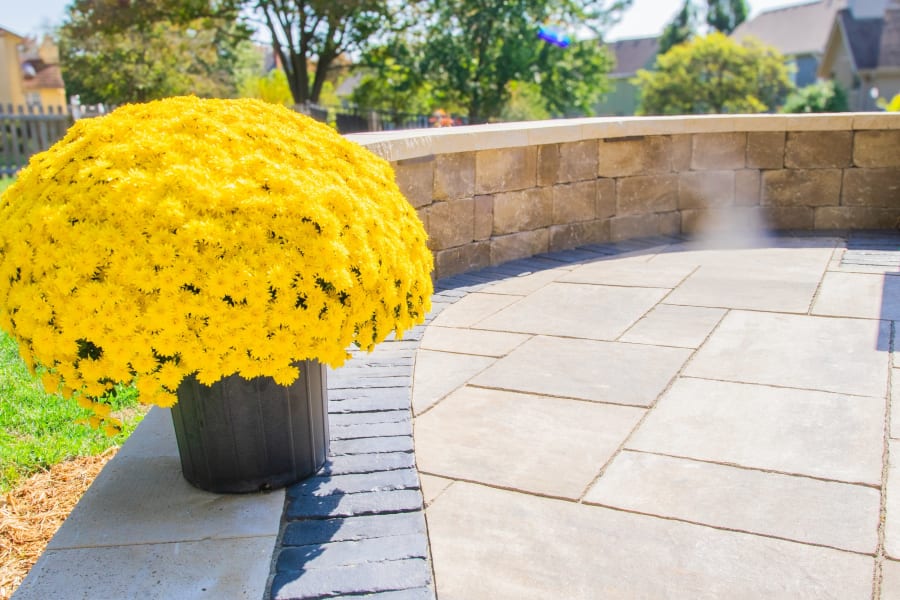
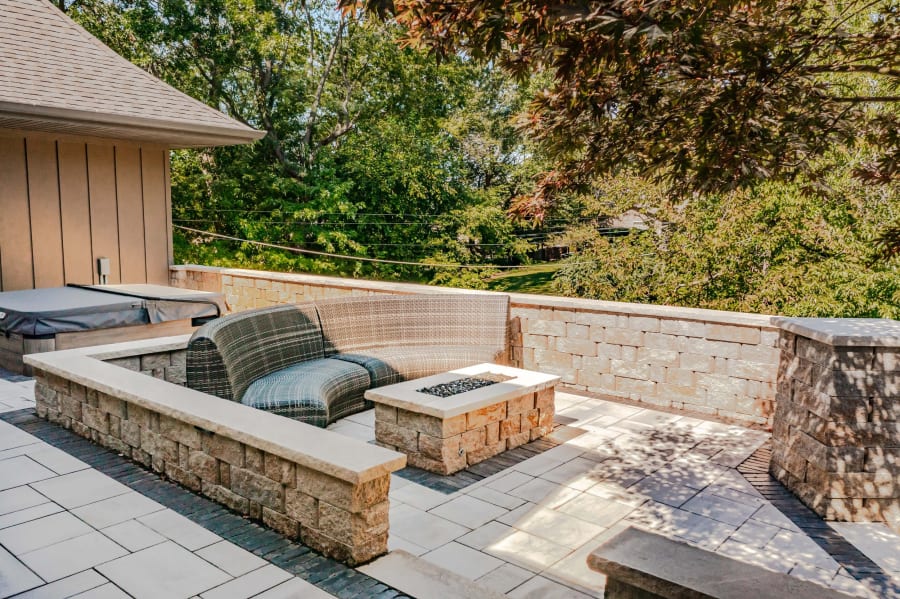
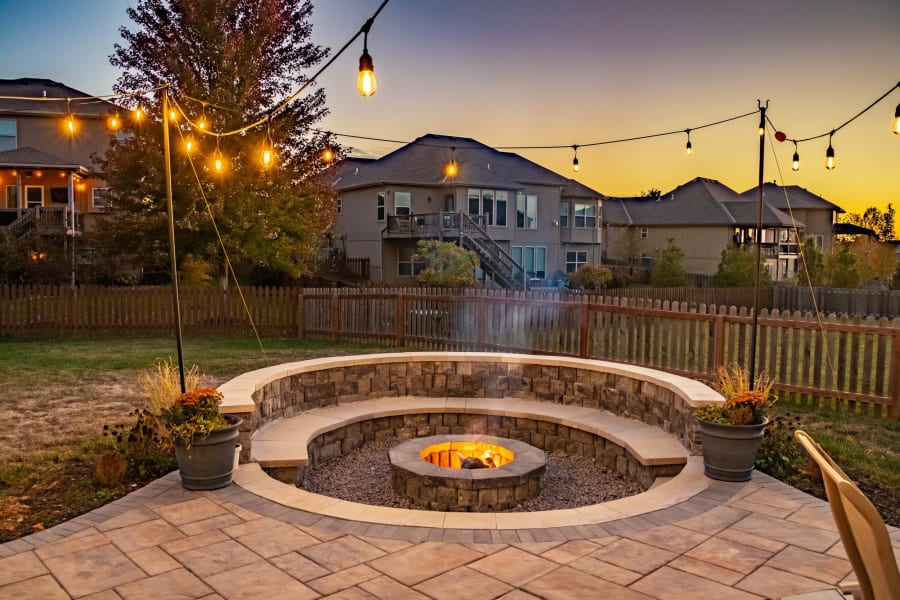

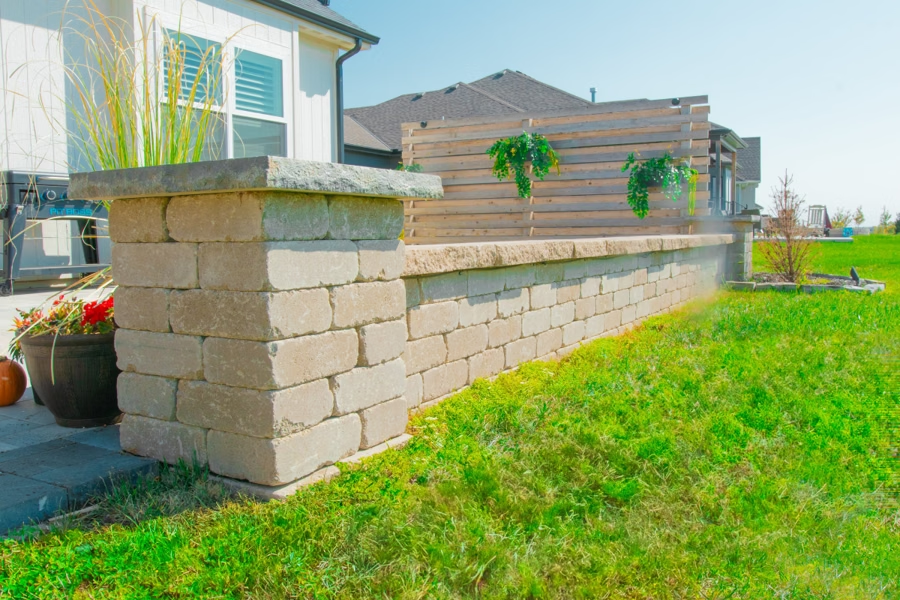
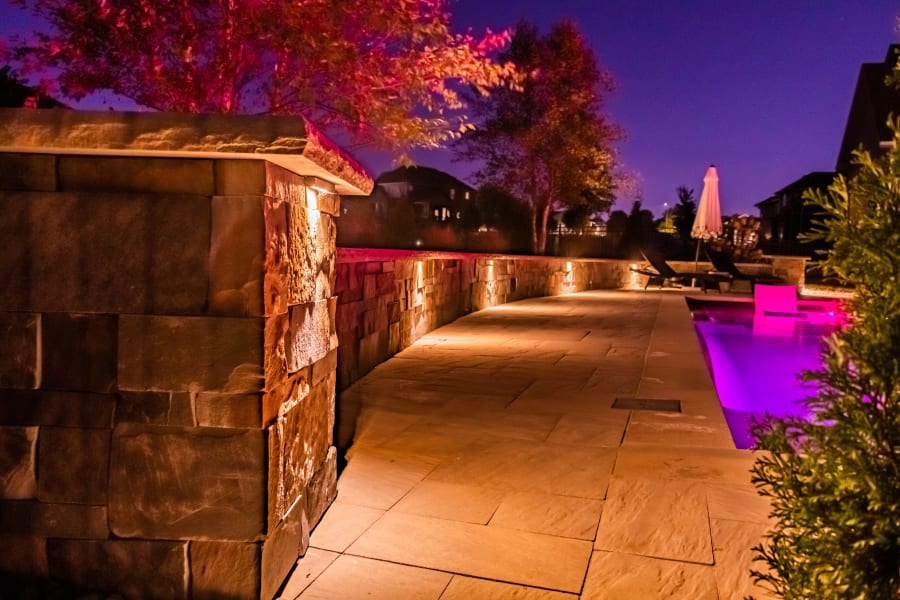
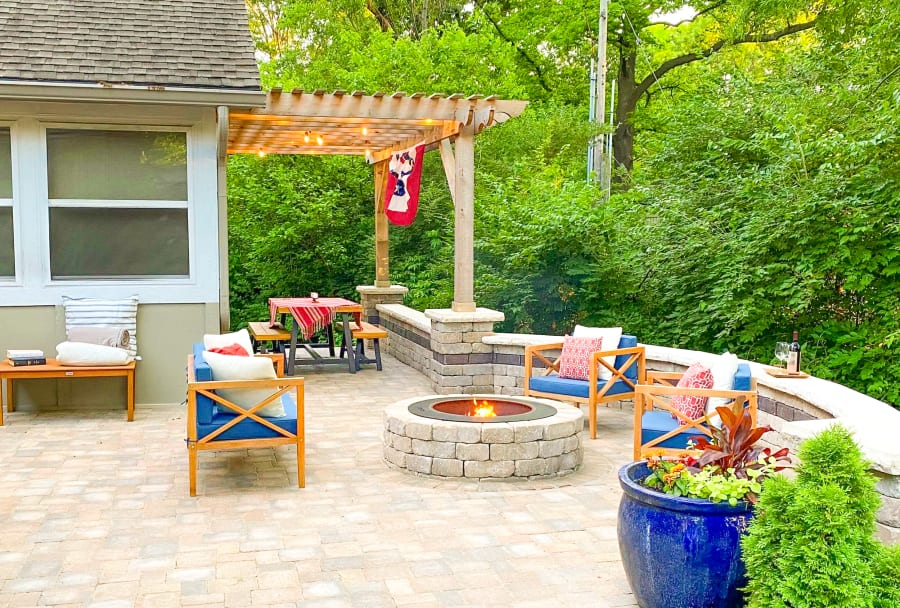
Where a seating wall earns its spot.
A seating wall works when it is built where people already gather. Around a fire pit is the most common spot, since the wall gives everyone a place to sit without dragging chairs out. Facing an outdoor television or a fireplace is the next most common, usually set back far enough that the screen is comfortable to watch. After that it is the edge of the patio itself, where the wall defines the space and keeps furniture from creeping off the pavers.
It also works well beside an outdoor kitchen or grill station, where it turns into counter-height overflow seating for whoever is talking to the cook, and at the top or bottom of steps, where it doubles as a rail people can lean on. Wherever it goes, we build at about 18 inches tall with a flat cap 16 to 18 inches deep, so it is comfortable to sit on rather than something people perch on for a minute and give up.
Walk the patio before the wall is laid out. Where people already stand and talk is usually where the seating belongs.
Seating walls and fire pits.
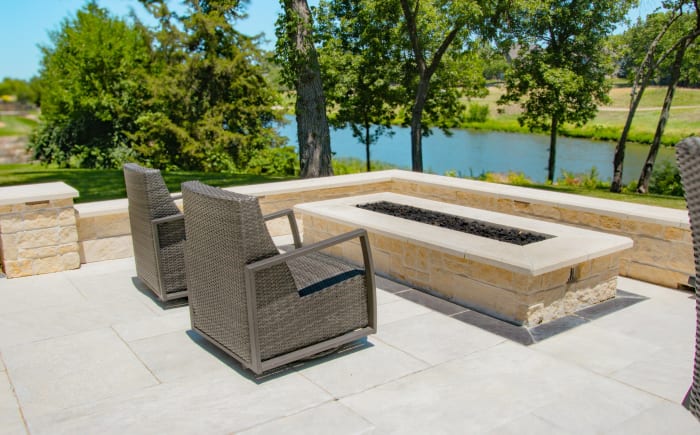
The most common seating wall we build wraps part of the way around a fire pit. Leaving one side open keeps the space from feeling closed in, gives you a spot for a pair of chairs, and makes it easy to walk in and out without stepping over anyone.
How far the wall sits from the fire matters. Too close and the seats are uncomfortable once the fire is going. Too far and nobody feels the heat. We set that distance on site, based on the size of the fire feature and how much room there is to work with. Pair it with a fire pit and the wall usually becomes the most used part of the patio.
Is it a seating wall or a retaining wall?
The two get mixed up often, and the difference is what the wall is doing. A retaining wall holds back soil, so it is finished on the face you see and built to handle the pressure behind it. A seating wall is freestanding. It is finished on both sides, built at sitting height, and carries nothing but the people on it.
They do overlap. Along the edge of a raised patio, a retaining wall that happens to land near 18 inches can be capped wide and used as seating, which is a common way to get both out of one wall. If your yard slopes, start on our retaining wall page and we will work out which one your project needs at the design meeting.
What a seating wall costs.
Our seating walls start at $2,500, and most projects fall between $2,500 and $24,000. Length drives most of it. After that it is the number of corners and curves, the veneer and cap you choose, and any add-ons such as lighting or planter pockets built into the wall.
Seating walls are almost always built alongside something else, usually a patio or a fire pit, which is the more efficient way to do it. The crew is already on site, the materials are already staged, and the wall can be tied into the patio rather than added to the edge of it later. For a ballpark on your own project, use our project calculator.
Seating walls we've built around Kansas City.
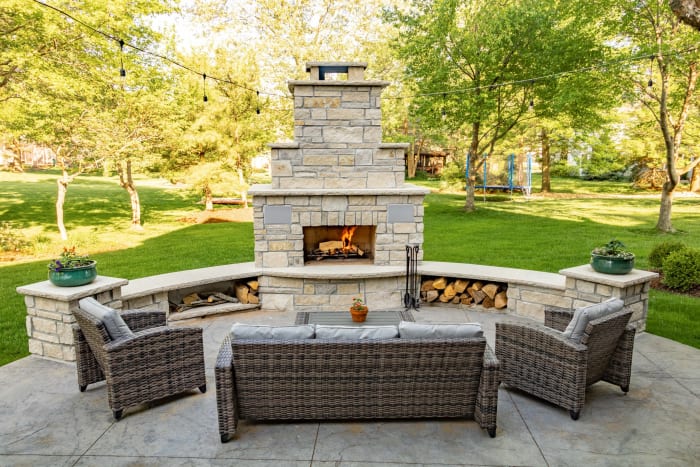
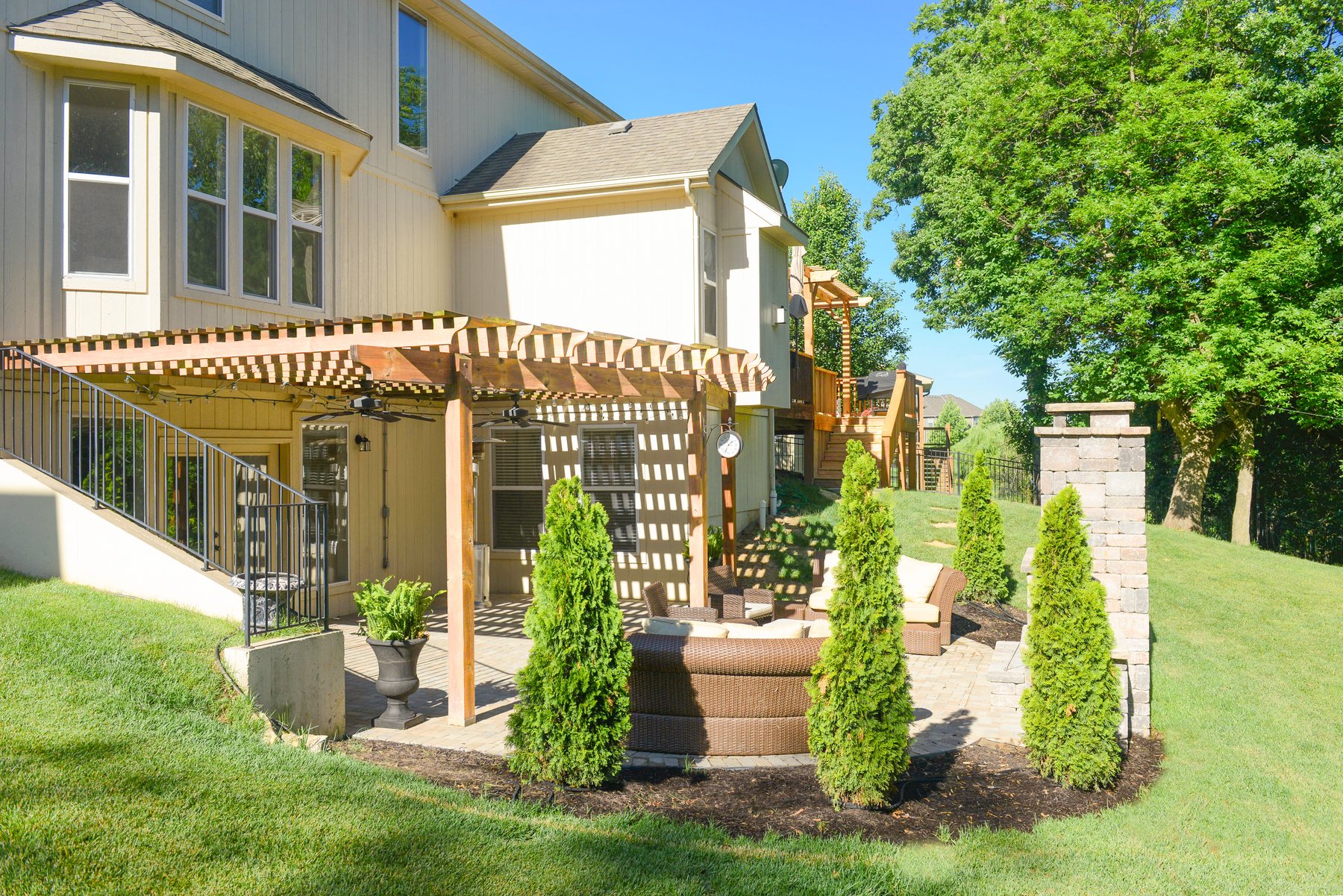
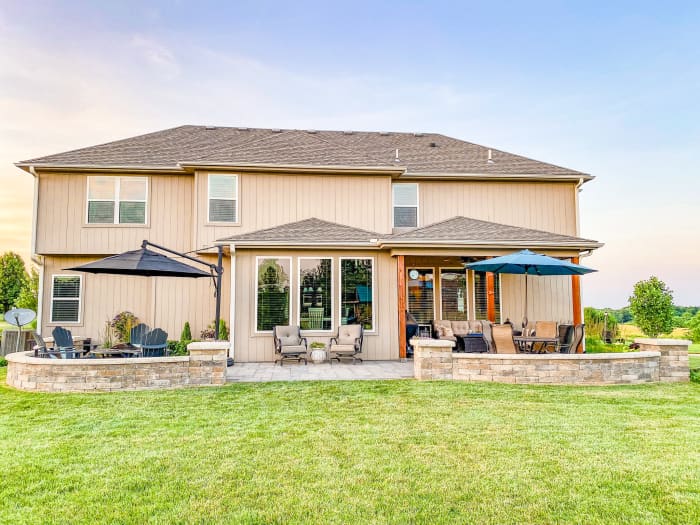
A few recent projects where the seating wall does real work: wrapping a fire pit, framing a patio, or tying into a fireplace.

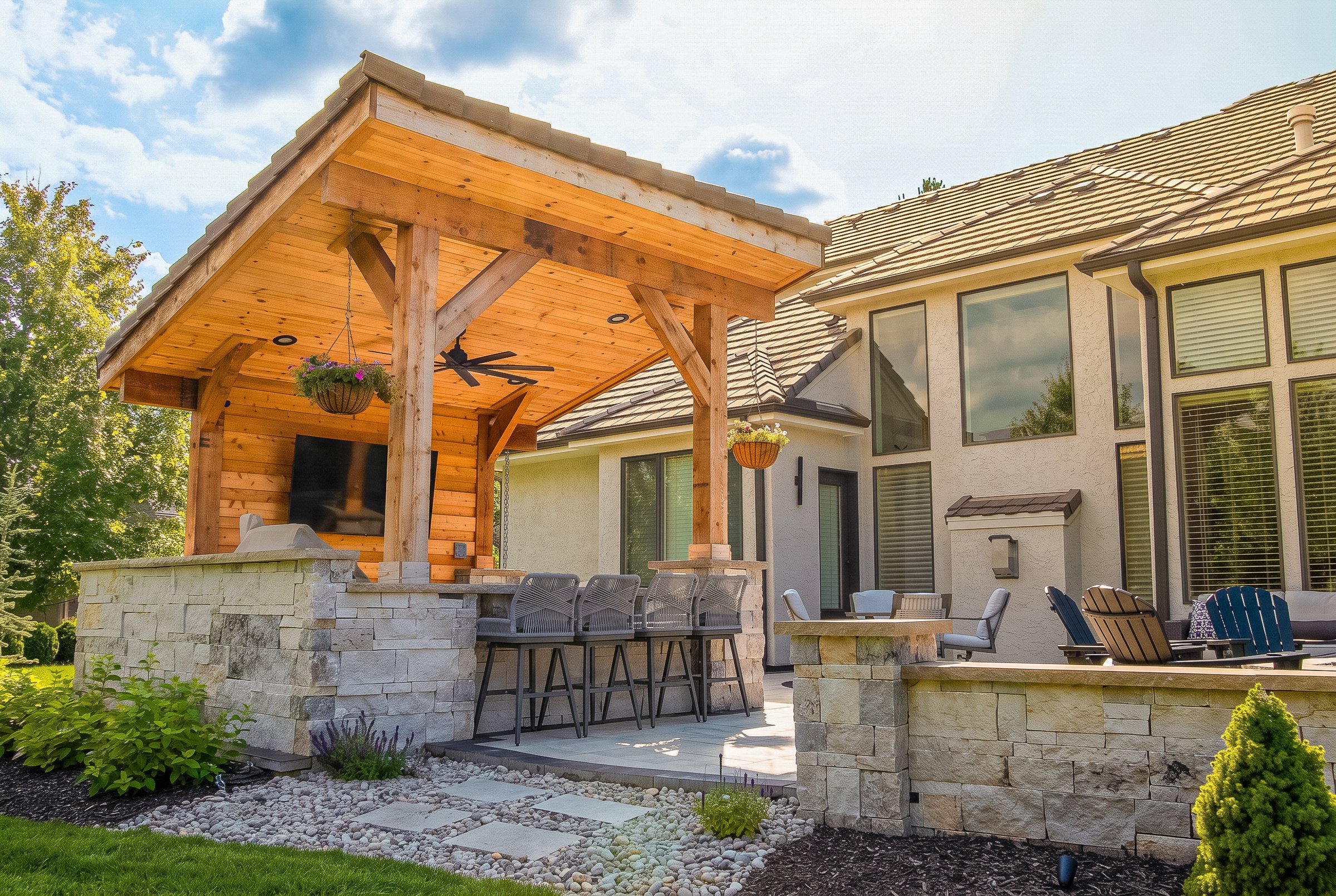
We build seating walls throughout the Kansas City metro, including Lenexa, Overland Park, Prairie Village, Leawood, Olathe, Shawnee, Parkville, and Lee's Summit. See every area we serve.
What homeowners ask us about seating walls.
How tall is a seating wall?About 18 inches, the same height as a dining chair or a bench. The cap runs 16 to 18 inches deep so there is room to actually sit back, set a drink down, or put a cushion on it.
How much does a seating wall cost in Kansas City?Our seating walls start at $2,500, and most projects fall between $2,500 and $24,000. Length is the main driver, followed by the number of corners and curves, the veneer and cap you choose, and whether lighting is built into the cap.
How many people will a seating wall hold?Plan on roughly two feet of wall for each person. A 12-foot run seats about six comfortably, and a wall that wraps most of the way around a fire pit usually seats eight to ten.
What is the difference between a seating wall and a retaining wall?A retaining wall holds back soil and is finished on the side you see. A seating wall is freestanding, finished on both faces, and built at sitting height. A retaining wall can do both jobs when it happens to be at the right height, which is common along the edge of a raised patio. More on that on our retaining wall page.
Do I need a permit for a seating wall?Usually not. A seating wall sits around 18 inches and holds nothing back, so it falls well under the four-foot threshold that triggers a permit in Kansas City, Missouri. We confirm the requirements with your city and HOA either way.
Block or stone veneer?Segmental block is the practical choice and ties in cleanly with a paver patio from the same product line. Stone veneer over a structural core costs more and gives you the stacked stone look, and it is the better option when the wall needs to match a fireplace, columns, or the stone on the house.
Can you add lighting to the cap?Yes. Low-voltage lights set under the cap wash the patio with enough light to see by without anyone looking into a bulb. It is one of the more common add-ons, and it is easiest to run while the wall is being built.
Paver patio cost in Kansas City
Real ranges by size, what drives the price, and the things cheap quotes leave out.
Read the guide →Hardscape contractors in Kansas City
How to evaluate quotes, spot red flags, and pick the right contractor.
Read the guide →Areas we service
Every city in the KC metro we build in, with in-depth guides for the suburbs that matter most.
See the map →Let's design your seating wall.
A 45-minute consultation is all it takes to see what's possible. No pressure, no hard sell, just experienced designers and a clear next step.