
Fireplaces
Starting at $13,950
The wall everything else points at
Installed for their warmth as well as their ambiance, outdoor fireplaces transform backyards into cozy outdoor living rooms where people can gather and relax even when there’s a chill in the air. For the patio, fireplaces often become a design anchor and tend to be where furniture and other elements of the outdoor living space are centered.
Outdoor fireplaces come in a variety of styles and finishes. Choosing the right fireplace for your outdoor room can be overwhelming, considering all of the options in design, size and type. It will become easier to narrow down which fireplace is right for your space after you learn more about the various features of each type.
Popular Add-Ons
Investment
Most clients invest $18,000–$30,000
- Size and height
- Stone vs. brick vs. veneer
- Gas vs. wood burning
- Hearth and mantel details
- Integrated seating walls
Drag to rotate • Scroll to zoom
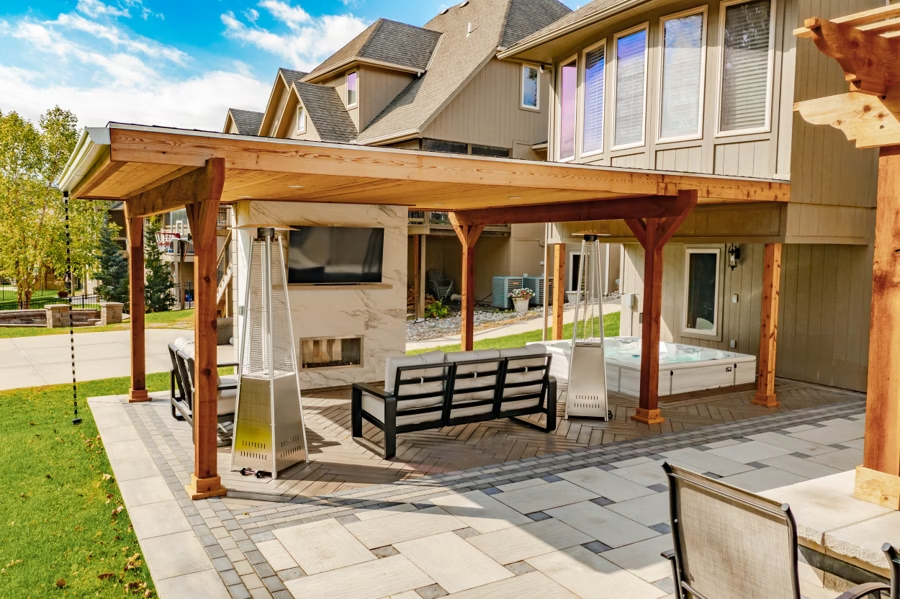
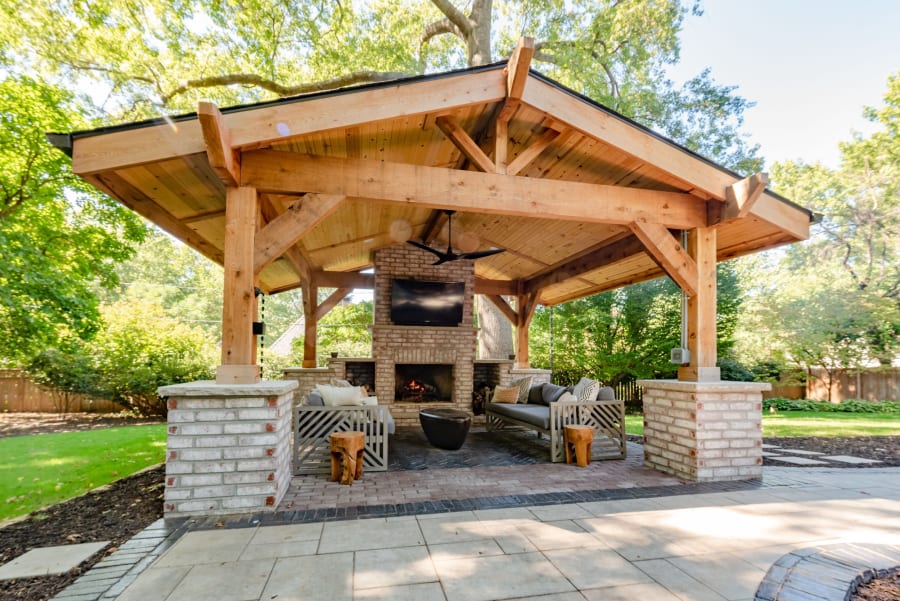
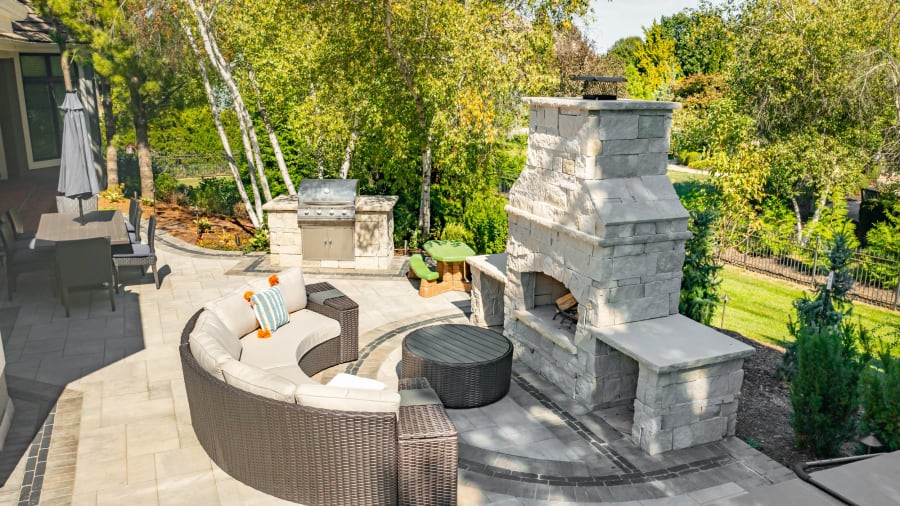
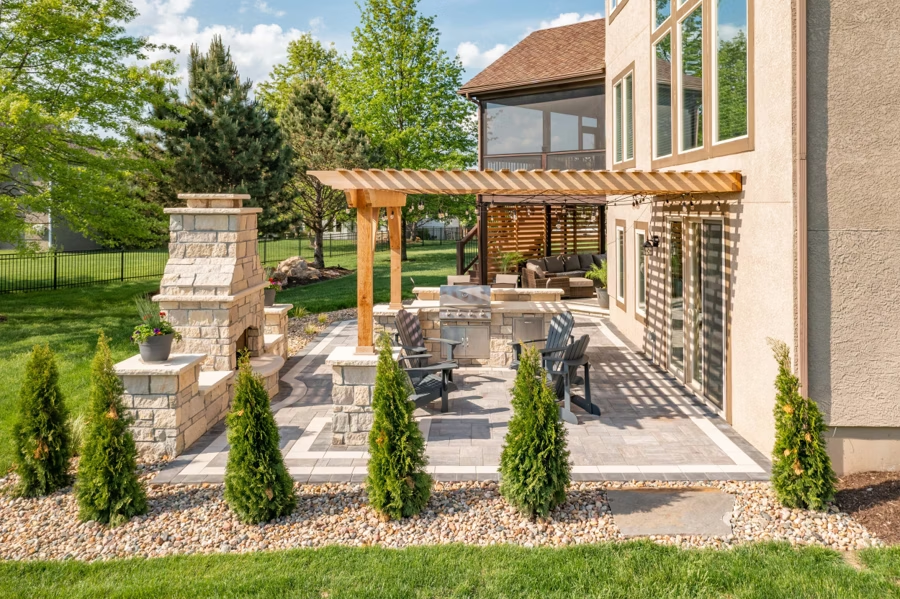
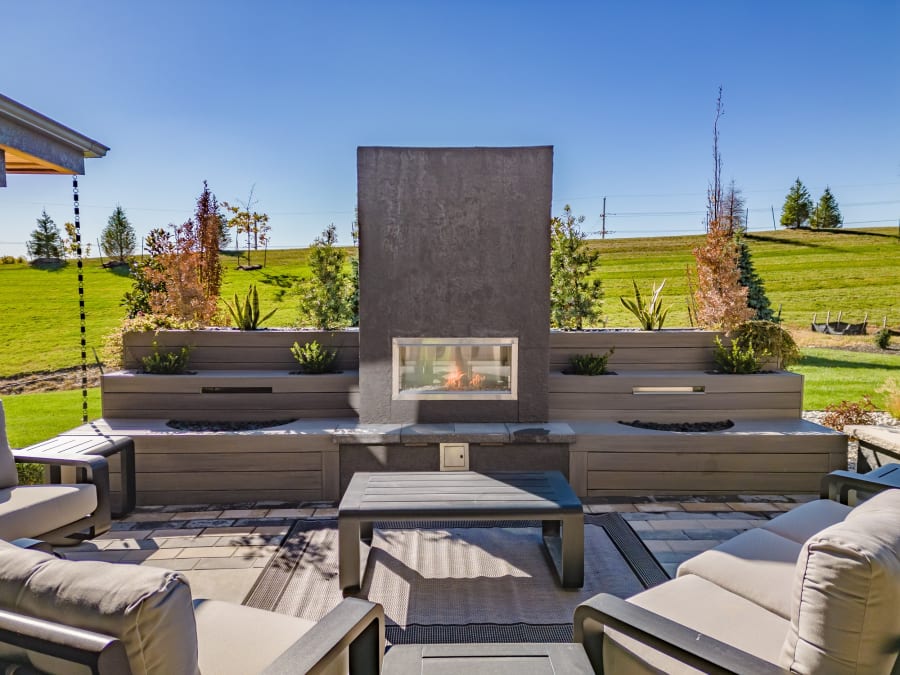
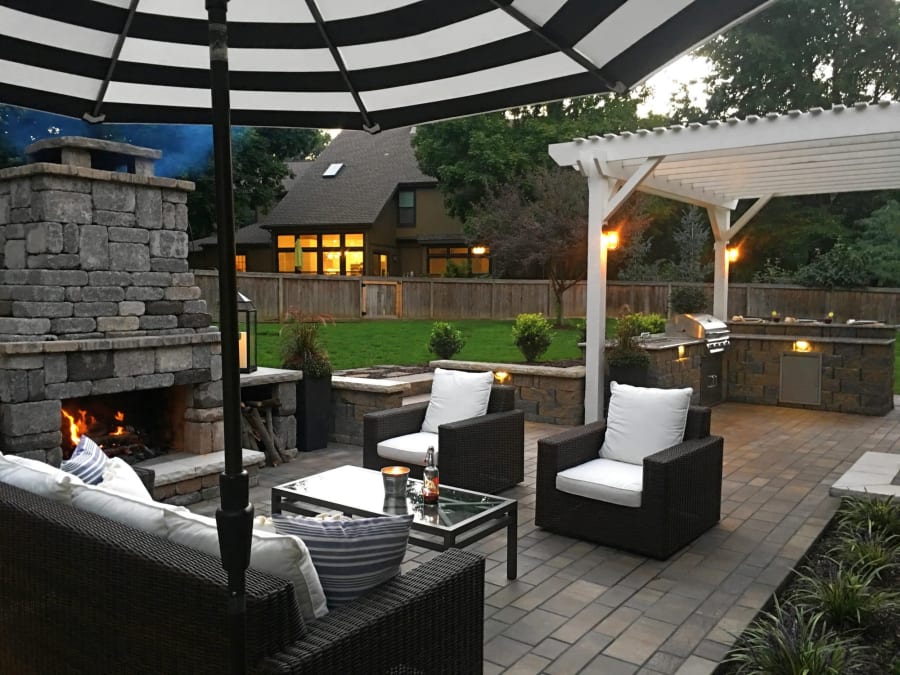
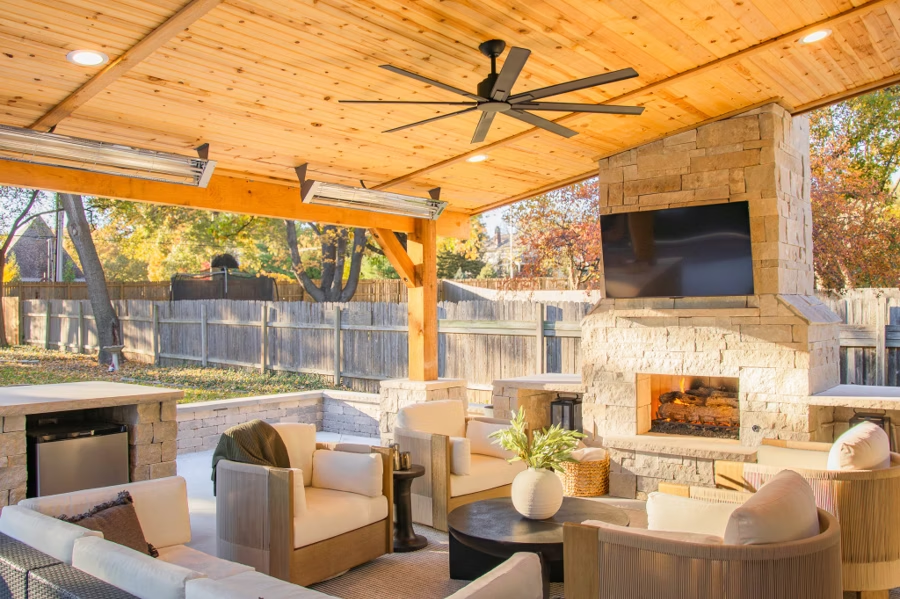
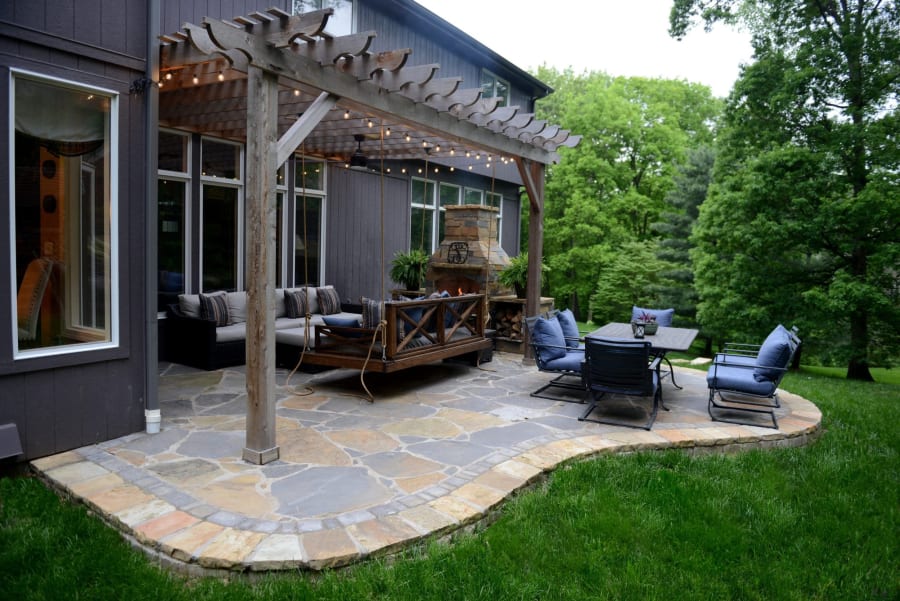
Real fireplaces we've built across Kansas City
Each one is one of a kind. Browse recent builds for styling cues, stone options, and how the fireplace anchors the rest of the outdoor living space.
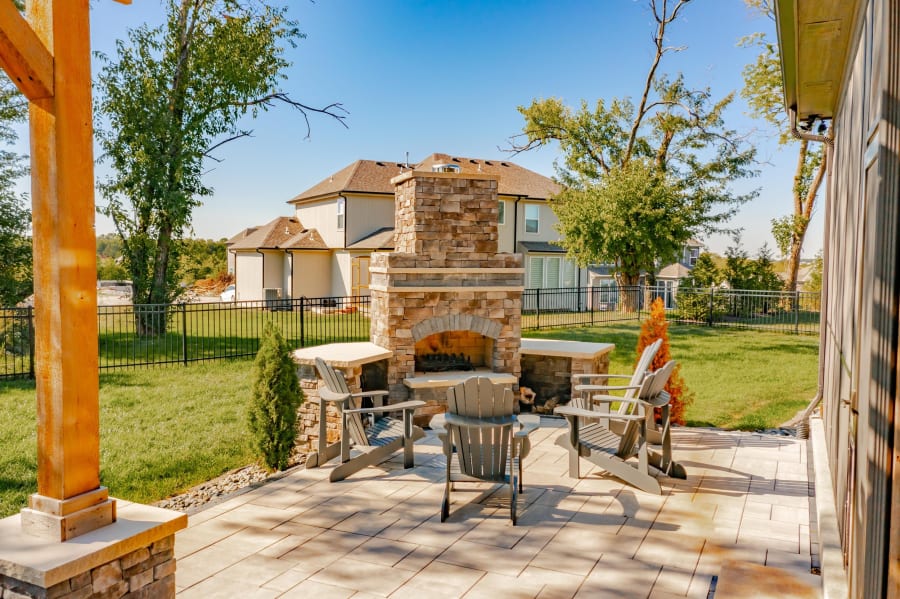
The Vertical Feature
Most of a backyard sits flat. The patio, the lawn, the seating walls, the fire pit: all of it is at or near ground level. A fireplace is one of the few pieces with real height, alongside a pergola or a pavilion, and it adds something different from either. A pergola or pavilion gives you a roof. A fireplace gives you a wall: ten feet of stone that becomes the backdrop to the patio, closes off one side of it, and gives the eye something to land on from inside the house in the middle of winter.
That height is also what turns a patio into a room. A fireplace gives the space a front, and once it has a front the furniture arranges itself the way it does indoors, with a sectional facing the fire and chairs filling the sides.
It gets used like one too. A TV niche built into the stone above the firebox is one of our more common add-ons, and it is what makes the patio the place everyone ends up on a Saturday afternoon in the fall with the fire going and the game on.
Arranging the room around it.
Point it away from the afternoon sun. Whoever faces the fireplace also faces whatever is behind it all day. On a west-facing patio that means squinting into the evening sun and a washed-out television, so where the yard allows it we put the fireplace on the east or north side. If a TV niche is going in, keep it low so the middle of the screen sits near eye level, with the seating six to nine feet back for a 55 to 65 inch screen.
The combination that gets used year round. A fireplace on its own is a three-season feature in Kansas City. Put it under a pavilion with a television and radiant heat and it stops being seasonal. The roof keeps rain and snow off the space, holds the warmth in rather than letting it go up and away, and gives the heaters something to mount to. That is the version people actually sit in during January, and it is one we build often: fireplace, pavilion, TV wall and heaters laid out together as a single space rather than added one at a time.
Know where the heat comes from. A wood burning outdoor fireplace puts out roughly 20,000 to 40,000 BTU and a gas one is lower but steadier, though outdoors a good share of it goes up the chimney. The warmth sits in front of the opening and does little for the edge of the patio, which is where radiant heaters earn their place, warming 120 to 215 square feet from as far as 16 feet away.
What is behind the stone.
An outdoor fireplace is a masonry structure, not something set on the patio. The core is concrete block on a concrete footer, the firebox is lined with firebrick so it can take the heat year after year, and the stone veneer is mortared to the outside. A full build stands around 10 feet tall and 7 feet wide and sits about 4 feet deep. The chimney is doing real work rather than decorating: it carries smoke up and away from the people in front of the fire, and it is what gives the fireplace its height.
What an outdoor fireplace costs.
Our outdoor fireplaces start at $13,950, and most projects fall between $18,000 and $30,000. Size and height move the number most, since every additional foot is more block, more veneer and more labor. After that it is the material, whether it burns gas or wood, and the details built around it: the hearth, the mantel, a TV niche, wood storage and any seating walls tied into the structure.
For comparison, our fire pits start at $2,450. That gap is not a markup, it is the difference between a seating-height circle and a ten-foot masonry structure on a footer. If you are weighing the two, we wrote about it at length in fire pit vs fireplace. For a ballpark on your own project, use our project calculator.
Outdoor fireplaces we've built around Kansas City.
Stone veneer and full natural stone, freestanding and built into pavilions, with seating walls and grill stations worked in around them.
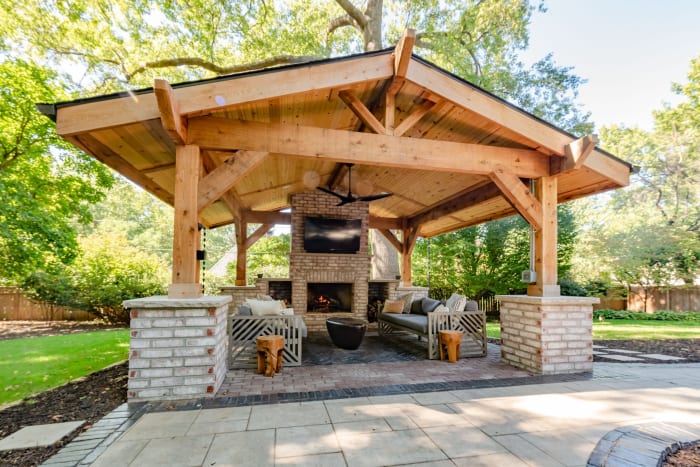
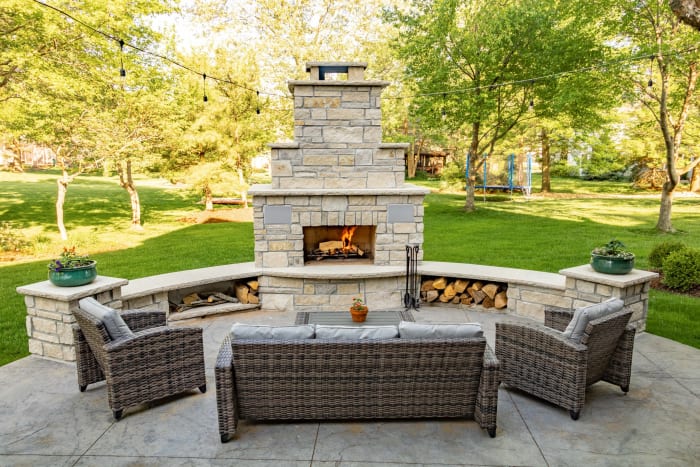

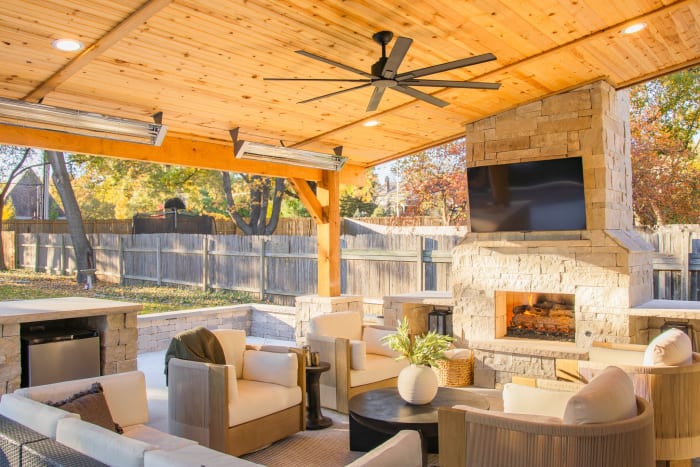
We build outdoor fireplaces throughout the Kansas City metro and Johnson County, including Leawood, Overland Park, Mission Hills, Prairie Village, Olathe, Lenexa, Parkville, and Loch Lloyd. See every area we serve.
What homeowners ask us about outdoor fireplaces.
How much does an outdoor fireplace cost in Kansas City?Our outdoor fireplaces start at $13,950, and most projects fall between $18,000 and $30,000. Size and height move the price the most, then whether it is built in stone, brick or veneer, whether it burns gas or wood, and the hearth, mantel and seating details around it. You can run your own numbers through our project calculator.
Should I build an outdoor fireplace or a fire pit?A fire pit heats more people and costs far less, because everyone sits around it rather than in front of it. Our fire pits start at $2,450. An outdoor fireplace is the better choice when you want the structure itself as the focal point of the patio, and when you want the space to feel like a room rather than an open circle. We compared the two in detail in fire pit vs fireplace, and you can see what we build on our fire pit page.
How big is an outdoor fireplace?Larger than most people expect. A full masonry outdoor fireplace stands around 10 feet tall and 7 feet wide, and sits about 4 feet deep on a concrete footer. That height is the point: most of a backyard sits flat, so the fireplace is what gives the patio a backdrop and closes off one side of it.
Gas or wood burning?We build both. Wood is the traditional choice and what most homeowners picture, with a firebrick-lined firebox and a real chimney. Gas costs more up front because a line has to be run to the fireplace, but it lights instantly and leaves no ash.
Can you put a television above the fireplace?Yes, and a TV niche is one of our more common add-ons. It has to be planned from the start, because the niche, the power and the mount all get built into the masonry while the fireplace is going up. Keep the niche low so the middle of the screen sits near eye level, and plan the seating six to nine feet back for a 55 to 65 inch television.
Do I need a permit for an outdoor fireplace?Often yes. An outdoor fireplace is a permanent masonry structure on a footer, and cities in the metro have their own rules on structures, setbacks and open flame. Many HOAs require separate approval too. We check the requirements for your address during the design process. Permits and HOA submittals are a service we provide when they are required.
Can you add a fireplace to a patio I already have?Sometimes, but it is more involved than it looks. The fireplace needs a footer below the existing surface, so part of the patio has to come up to pour it. We will tell you what that means for your patio at the design meeting.
Paver patio cost in Kansas City
Real ranges by size, what drives the price, and the things cheap quotes leave out.
Read the guide →Hardscape contractors in Kansas City
How to evaluate quotes, spot red flags, and pick the right contractor.
Read the guide →Areas we service
Every city in the KC metro we build in, with in-depth guides for the suburbs that matter most.
See the map →Let's design your fireplace.
A 45-minute consultation is all it takes to see what's possible. No pressure, no hard sell, just experienced designers and a clear next step.